I dedicate this short reflection to my students—and, by extension, to all students worldwide.
“Live as if you were to die tomorrow. Learn as if you were to live forever.”
~Mahatma Gandhi
“Live as if you were to die tomorrow. Learn as if you were to live forever” is widely attributed to Mahatma Gandhi. The exact wording is uncertain, yet the sentiment is faithful to his views. Rajmohan Gandhi, in The Good Boatman: A Portrait of Gandhi (1995), summarises his grandfather’s position as “[…] a man should live thinking he might die tomorrow but learn as if he would live forever.” Rajmohan Gandhi, incidentally, is a professor at the University of Illinois at Urbana–Champaign, with whom we established an excellent student exchange in the early 2000s.
The idea itself is far older. Isidore of Seville (c. 560–636 CE): expressed a similar exhortation in the Etymologiae: “Study as if you were to live forever; live as if you were to die tomorrow.”1 Comparable formulations appear in Islamic tradition—for example, in a Hadith often rendered as: “Live for your afterlife as if you will die tomorrow, and live for this life as if you will live forever.” Although popular, this version is not found verbatim in the canonical collections.2
Some scholars have noted parallels in the writings of Desiderius Erasmus (1466 – 1536), who likewise encouraged a readiness for death coupled with the lifelong pursuit of learning, though no primary source confirms the wording frequently attributed to him.3
Jiddu Krishnamurti noted that “the whole of life … is a process of learning,” underscoring that education does not end with formal schooling but accompanies us until death. Seneca argued that time must be used wisely so that life does not slip away unexamined—the core of living fully in the present. Socrates famously declared that “the unexamined life is not worth living,” connecting philosophical inquiry with purposeful existence.
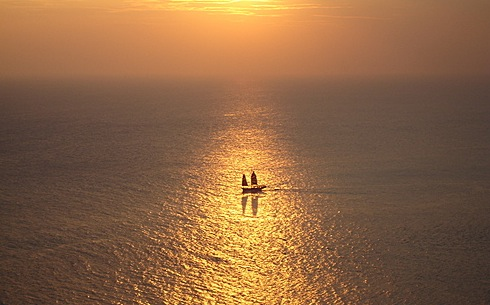
The message is timeless. Continue your quest for knowledge. Do not postpone learning; embrace it today rather than tomorrow, for even your smallest discovery joins the shared store of human knowledge. At times, it may seem no more than a single drop—but then, the vast oceans themselves are born of such drops.
Notes
- The maxim “Disce tamquam semper victurus; vive tamquam cras moriturus” has long been attributed to Isidore of Seville and appears in standard editions of the Etymologiae. Chapter numbering may vary slightly by edition, but Book III contains the traditional formulation. ↩︎
- The popular saying “Live for your afterlife as if you will die tomorrow, and live for this life as if you will live forever” is not found verbatim in the canonical Hadith collections. It appears in later moralistic literature and is classified by scholars as non-authentic (apocryphal). ↩︎
- The widely circulated maxim “Live as if you were to die tomorrow; study as if you were to live forever” does not appear in Erasmus’s authenticated works. Modern quotation collections repeat the attribution without citing an original source, and Erasmus scholars consider it a later invention reflecting themes he discussed but never expressed in this form. ↩︎
References
Gandhi attribution
Gandhi, R. (1995). The good boatman: A portrait of Gandhi. Viking Penguin. ISBN 9780670856150.
— Paraphrase on p. 154.
Isidore of Seville
Isidorus Hispalensis. (2006). Etymologiae (W. M. Lindsay, Ed.; reprint ed.). Oxford University Press. ISBN 9780199266941.
— Book III, Ch. 24.
Hadith attribution (non-canonical)
al-Sakhāwī, M. A. (1996). Al-Maqāṣid al-ḥasana fī bayān kathīr min al-aḥādīth al-mushtahira ʿalā al-alsina. Dār al-Kutub al-ʿIlmiyya. ISBN 9782745122486.
Erasmus attribution (misattribution)
Rummel, E. (Ed.). (2004). The Erasmus reader. University of Toronto Press. ISBN 9780802085841.
Krishnamurti
Krishnamurti, J. (1981). Life Ahead: On Learning and the Search for Meaning. Harper & Row.
Seneca
Seneca. (2010). On the shortness of life (C. D. N. Costa, Trans.). Penguin Classics. (Original work published ca. 49 CE.)
Socrates (via Plato)
Plato. (2002). Apology (G. M. A. Grube & J. M. Cooper, Trans.). In J. M. Cooper (Ed.), Plato: Complete works (pp. 17–36). Hackett Publishing.
Featured image: Even the great oceans are made of many tiny drops (photo by Nick Grabowski).
 Roger Abrantes