Giant Gambian Pouched finds a landmine (photo by Xavier Rossi).
JG is a rat, a Cricetomys gambianus or Giant Gambian Pouched Rat; she is also a Hero Rat, a landmine detector at Apopo in Tanzania. In December 2009, she performed uncharacteristically badly and puzzled everybody as Hero Rats don’t make mistakes. What was the problem with JG? Had she lost it? Had the trainers made a crucial mistake?
Apopo in Morogoro, Tanzania, trains rats to detect landmines and tuberculosis and the little fellows are very good at what they do. In Mozambique, Apopo has so far cleared 2,063,701 square meters of Confirmed Hazardous Areas, with the destruction of 1866 landmines, 783 explosive remnants of war and 12,817 small arms and ammunitions. As for tuberculosis, up until now the rats have analyzed 97,859 samples, second-time screened 44,934 patients, correctly diagnosed 7,662 samples and discovered 2,299 additional cases that were previously missed by the DOTS centers (Direct Observation of Treatment, Short Course Centers in Tanzania). More than 2,500 patients have since been treated for tuberculosis after having been correctly diagnosed by the rats.
In December 2009, I was working full time at Apopo in Morogoro. I wrote their training manual, trained their rat trainers, supervised the training of the animals and analyzed standard operating procedures. At the time of writing, I still do consultancy work for Apopo and instruct new trainers from time to time. Back then, one of my jobs was to analyze and monitor the rats’ daily performance and that’s when I came across the peculiar and puzzling behavior of JG in the LC3 cage.
Problem
LC3 is a cage with 10 sniffing holes in a line and the rats run it 10 times. On average, 21 holes, randomly selected by computer, will contain TNT samples. We train rats in LC3 everyday, recording and statistically analyzing each session. We normally expect the rats to find and indicate the TNT samples with a success rate of 80-85%. Whenever the figures deviate from the expected results, we analyze them and try to pinpoint the problem.
On December 19, we came across a rat in LC3 that did not indicate any positive samples placed from Holes 1 to 6. She only indicated from Holes 7 to 10. In fact, from Hole 1 to 6, Jane Goodall (that’s the rat’s full name) only once bothered to make an indication (which was false, by the way). From Hole 7 to 10, JG indicated 10 times with 9 correct positives, only missing one, but also indicated 11 false positives. Her score was the lowest in LC3 that day and the lowest for any rat for a long time. What was the problem with JG? She seemed fine in all other aspects and seemed to know what she was doing. Why then did she perform so poorly?
Giant Gambian Pouched Rat searching TNT in a line cage (photo by Silvain Piraux).
Analysis of searching strategies
Whenever an animal shows such a behavior pattern, and it appears purposeful rather than emotional, I become suspicious and suspect that there is a rational explanation.
In order to analyze the problem, I constructed simulations of two searching strategies: (1) searching ALL HOLES, and (2) SKIPPING Holes 1 to 5 (I didn’t want to be as radical in my simulation as JG). In addition, I ran simulations with two different sample placement configurations: (1) evenly distributed between the two halves, i.e. two positives in Holes 1 to 5 and two positives in Holes 6 to 10; and (2) unevenly distributed — one positive in the first five holes and two positives in Holes 6 to 10.
In order to run the simulation, I needed to assign values to the different components of the rat’s behavior. I chose values based on averages measured with different rats.
Walking from feeding hole to first hole (back walk) = 3 seconds.
Walking from covered hole to covered hole = 1 second.
Walking from uncovered hole to uncovered hole = 2 seconds.
Analyzing a hole = 2 seconds.
Indicating a positive = 4 seconds.
Walking from last hole to feeding hole = 1 second.
Eating the treat = 4 seconds.
All time variables were converted into energy expenditure in the calculation of energy payoff for the two strategies and the different configurations. Also the distance covered was converted into energy expenditure. The reinforcers (treats) amounted to energy intake. In my simulation I used estimated values for both expenditure and intake. However, we could measure all values accurately and convert all energy figures into kJ.
The results
In terms of energy, (in this simulation I make several assumptions based on reasonable values, e.g. the total energy spent is a function of distance covered and time spent), the results show that when the value of each treat is high (E gain is close to the sum of all treats amounting to the sum of energy spent for searching all holes), it pays off to search all holes (the loss of -5.50 versus -7.88). The higher the energetic value of each treat, the higher the payoff of the ALL HOLES strategy.This is a configuration with four positives (x) and six negatives (0). The results show that neither strategy is significantly better than the other. On average, when sniffing all holes, the rat receives a treat every 31 seconds, while skipping the first five holes will produce a treat every 31.5 seconds. However, there is a notable difference in how quickly the rat gets to the treat depending on which strategy the rat adopts. ALL HOLES produces a treat on average 5.75 seconds after a positive indication. SKIPPING produces a treat 3.5 seconds after a positive indication. This could lead the rat to adopt the SKIPPING strategy, but it’s not an unequivocally convincing argument.
However, when the energetic value of each treat is low, skipping holes will reduce the total loss (damage control), making it a better strategy (-17.88 versus -25.50).
However, if we run a simulation based on an average of three positives per run, with one in the first half and two in the second half (which is closest to what the rat JG was faced with on December 12), we obtain completely different results.This first analysis does not prove conclusively that the SKIPPING strategy is the best. On the contrary, it shows that, all things considered, ALL HOLES will confer more advantages.
The energy advantage is also detectable in this configuration, even when each treat has a high energetic value (a gain of 3.13 versus a loss of -0.75).With this configuration, the strategy of SKIPPING is undoubtedly the best. On average, it produces a reinforcer every 27.5 seconds (versus 28.7 for ALL HOLES) and 2.5 seconds after an indication (versus 5 seconds).
Conclusion
This second simulation proves that JG’s strategy was indeed the most profitable in principle. However, the actual results for JG are completely different from the ones shown above, as they also have to take into account the amount of energy spent indicating false positives (which are expensive).
It is now possible to conclude that the most advantageous strategy is as follows. Whenever the possibilities of producing a reinforcer are evenly distributed, search all holes. It takes more time, but on average you’ll get a reinforcer a bit quicker than if you skip holes. In addition, you either gain energy by searching all holes, or you limit your losses, depending on the energetic value of each reinforcer. Don’t be fooled by the fact you get a treat sooner after your indication when searching all holes then when skipping.
Whenever the possibilities of producing a reinforcer are not evenly distributed, with a bias towards the second half of the line, skip the first half. It doesn’t pay off to even bother searching the first half. By skipping it, you’ll get a lower total number of reinforcers, but you’ll get them quicker than searching all holes and, more importantly, you’ll end up gaining energy instead of losing it.
Finally, avoid making mistakes by indicating false positives. They cost as much as true positives in spent energy, but you don’t gain anything.
An evolutionary explanation
Of course, no rat calculates energetic values and odds for certain behaviors that are reinforced, nor do they run simulations prior to entering a line cage. Rats do not do this in their natural environment either. They search for food using specific patterns of behavior, which have proven to be the most adequate throughout the history and evolution of the species. A certain behavior in certain conditions, depending on temperature, light, humidity, population density, as well as internal conditions such as blood sugar level etc., will produce a slightly better payoff than any other behavior. Behaviors with slightly better payoffs will tend to confer slight advantages in terms of survival and reproduction and they will accumulate and spread within a population; they will spread slowly, for the time factor is unimportant in the evolution of a trait. Eventually, we will come across a population of individuals with what seems an unrivalled ability to make the right decision in circumstances with an amazing number of variables, and it puzzles us because we forget the tremendous role of evolution by natural selection. Those individuals who took the ‘most wrong decisions’ or ‘slightly wrong’ decisions inevitably decreased their chances of survival and reproduction. Those who took ‘mostly right’ or ‘slightly righter’ decisions gained an advantage in the struggle for survival and reproduction and, by reproducing more often or more successfully, they passed their ‘mostly right’ or ‘slightly righter’ decisions genes to their offspring.
This is a process that the theory of behaviorism cannot explain, however useful it is for explaining practical learning in specific situations. In order to explain such seemingly uncharacteristic behaviors, we need to recur to the theory of evolution by natural selection. This behavior is not the result of trial and error with subsequent reinforcers or punishers. It is an innate ability to recognize parameters and behave in face of them. It is an ability that some individuals possess to recognize particular situations and particular elements within those situations, and correlate them with specific behavior. What these elements are, or what this ability exactly amounts to, we do not know; only that it has been perfected throughout centuries and millennia, and innumerable generations that accumulate ‘mostly right’ or ‘slightly righter’ decisions—and that is indeed evolution by means of natural selection.
GNR officer and police dog (image by Roger Abrantes)
This is a scientific study, which is relevant to law enforcement, police dog handlers and anyone concerned with scent detection and particularly canine scent detection.
This study was conducted in 2011 at the GNR in Portugal by Roger Abrantes (PhD in Evolutionary Biology and Ethology, Ethology Institute Cambridge and special advisor to the GNR), Marco Costa Pinto (Major, Company Commander, GNR) Miguel Rodrigues (Captain, GNR) and Tiago Costa Pinto (Captain, GNR). The GNR (Guarda Nacional Republicana) is the Portuguese Military Academy trained Police.
Summary (abstract)
Our goal in this study was to evaluate how handler beliefs and other environmental stimuli influenced the indications given by police detection dogs.
We tested 16 teams: eight specialists in narcotics and eight specialists in explosives. The handlers were told that two conditions indicated with a paper marker could contain the target scent. Two of the search conditions contained decoy scents (food/toy) in order to test whether they would produce indications from the dogs. The search conditions were as follows: (1) no scent, (2) paper marker (red tape), (3) decoy scent, (4) paper marker at decoy scent, (5) target scent. The last condition was our way of controlling that the dogs were adequately trained and able to detect and indicate the desired target scents.
The dogs gave 59 incorrect indications. There were more clean runs in unmarked areas. In contrast, the distribution of clean runs did not differ between runs with or without decoy scents. No difference proved statistically significant.
Our conclusion is, therefore, that the dogs indicated the target scents independently of handler beliefs and decoy scents. Handler beliefs do seem to increase the number of false positives, but not in a statistically significant way. Decoy scents do not influence the number of indications given by the dogs.
In the condition containing a target scent, only one dog failed to detect or indicate it (the youngest, a one year old Labrador). This condition produced 10 false positives. These results are statistically significant, showing that the dogs do detect and indicate target scents and the handlers make the right calls.
You can read more about the parameters and conclusions of this study here.
Click the full-screen view icon for better reading. Zoom in and out as you please.
This paper challenges the prevailing confusion and debate around the concept of dominance in dogs and other social animals, elucidating dominance from an ethological and evolutionary perspective. It argues that dominance is an observable, behavioral characteristic shared across species, not merely a human-imposed social construct. It defines dominance and submission as dynamic, situational behaviors aimed at gaining or temporarily maintaining access to resources without injury, distinct from aggression. Hierarchies, where they exist, are Evolutionarily Stable Strategies (ESS) that arise from individuals’ dominant or submissive behavior, adapted to the context. The paper emphasizes the importance of accurate, pragmatic definitions to avoid misunderstandings and advocates for viewing relationships—e.g., human-dog ones—as partnerships built on cooperation rather than rigid hierarchies. Dominance behavior, properly understood, is instrumental in resolving social conflicts and maintaining group stability, rather than being a fixed rank or power status. The paper calls for clear, science-based reasoning rather than emotional or ideological dismissals of dominance.
A relationship is a natural thing! (Photo by Monty Sloan)
Introduction
Stable and profitable relationships are not built in the long run through a series of dominant and submissive displays. Instead, these behaviors are necessary for resolving inevitable social conflict. Both humans and dogs (and wolves, of course) form relationships based on the need for partnership in overcoming common problems related to survival and, preferably, achieving an acceptable level of comfort. Relationships are not founded on hierarchies; however, hierarchies do exist and play a significant role in certain circumstances—for humans as well as dogs (and wolves, of course)—sometimes more, sometimes less, and sometimes not at all (Schenckel, 1947; Zimen, 1976; Mech, 1999; Chase et al., 2002).
Illustration showing the possible combinations of aggressive, fearful, dominant, and submissive behavior in social canines (From “Dog Language” by Roger Abrantes, illustration by Alice Rasmussen). Copyrighted illustration.
In everyday language, dominance refers to having “power and influence over others.” It means supremacy, superiority, ascendancy, preeminence, predominance, mastery, power, authority, rule, command, and control (Cambridge Dictionary; Merriam-Webster). The term has so many meanings and connotations that we cannot simply pick a dictionary definition and employ it as a scientific term in the behavioral sciences. We need to define terms accurately to avoid misunderstandings, meaningless discussions, and nonsensical claims. Unfortunately, the scientists who use the term dominance and its derivatives (as well as those who reject it) have not satisfactorily defined it, thereby contributing to the current confusion about the nature and function of dominant behavior (Drews, 1993).
I intend to remedy this by:
(1) demonstrating that dominance is an observable characteristic of behavior, not a trait of an individual;
(2) establishing that it refers to one and the same class of behaviors independent of species;
(3) presenting a precise, pragmatic, and verifiable definition of the term, which is compatible with evolutionary theory and our body of biological knowledge;
(4) arguing that, even though it is true that a good (in terms of being profitable and stable) relationship does not rely on continuous displays of dominance/submission from the same individuals toward the same other individuals, that does not imply that dogs cannot show dominant behavior.
Denying that dominant behavior exists in dogs has become a popular argument to defend the claim that we must not ‘dominate’ our dogs.
Indeed, the discussion on dominance has run away with us. There is only one thing more absurd and futile than attempting to prove that dominant behavior exists, and that is trying to prove that it does not. In the following, I shall commit the first of these futile acts.
In a stable pack, wolves mostly display dominant and submissive behavior and seldom aggressive and fearful behavior (photo by Monty Sloan).
On the similarities and differences of species
It is absurd to argue that dominance (as an attribute or property) does not exist when we have so many words for it, varying by context and nuance. If it didn’t exist, neither would all these terms (Wittgenstein, 1953; Millikan, 1984; Saussure, 2011). The numerous synonyms and connotations suggest that while the term is difficult to define, we have recognized a behavioral property whose characteristics are distinct enough from others to warrant classification in a specific category and a name. Whether the chosen names are suitable or well-defined is a separate issue and does not affect the behavior itself. We can argue that this attribute (dominance) has been observed and that (1) it only applies to certain human relationships, or that (2) it applies to certain relationships among humans as well as some other animal species. The second option seems more appealing, given that it is unlikely that a specific condition exists in only one species. That would contradict everything we know about the relatedness and evolution of species (Darwin, 1871; Mayr, 1982).
However, there is nothing implausible about stating that the term does not apply to the behavior of a particular species. On the contrary, two species that diverged from a common ancestor billions of years ago evolve and develop their own characteristics, ultimately differing from one another and from their common ancestor. By the same token, closely related species, which diverged from a single common ancestor a few thousand years ago, will exhibit various characteristics similar to or equal to those of the common ancestor and to one another. Some species share many common attributes in terms of phenotype, genotype, and behavior (which is a phenotype); others share fewer, and some none at all. It all depends on their shared ancestry and their adaptation to the environment (Dobzhansky, 1973; Futuyma, 1998).
Wolf-dog hybrid (Image via Wikipedia).
Humans and chimpanzees (Homo sapiens and Pan troglodytes) diverged from a common ancestor about six to seven million years ago (maybe up to 13), so we can expect them to have fewer common attributes than wolves and dogs (Canis lupus lupusand Canis lupus familiaris), which only diverged from a common ancestor about 15 to 20 thousand years ago and definitely no more than 100 thousand years ago according to recent studies (Vilà et al., 1997; Savoilanen et al., 2002; Kumar et al., 2005)
The DNA of humans and chimpanzees differs more than that of wolves and dogs (which is almost identical except for a few mutations). Humans cannot interbreed with chimpanzees (Disotell, 2006; Presgraves & Yi, 2009); wolves and dogs can interbreed and produce fertile offspring. Thus, humans and chimpanzees are two entirely distinct species, whereas wolves and dogs are two subspecies of the same species (Wayne & Ostrander, 1999; Nowak, 2003).
Considering these facts, we can expect wolves and dogs to share a significant number of similarities, which indeed they do, not only physically but also behaviorally—and any layman would attest to that. Their similarities at certain levels enable them to mate, produce fertile offspring, and communicate effectively (Zimen 1981). Nobody questions that wolves and dogs share an extensive repertoire of communication behaviors, and rightly so, as multiple observations have confirmed that they communicate well (Feddersen-Petersen, 2004). Their facial expressions and bodily postures are remarkably similar. Dogs (most breeds) and wolves share similar facial musculature, although domestication has produced some structural differences in dogs that facilitate communication with humans (Coppinger & Coppinger, 2001), and dogs appear to have some limitations in producing the same range of affective facial expressions as wolves (Miklósi et al., 1998). However, these are relatively minor differences between the two subspecies, significantly smaller than the cultural differences observed among humans from geographically separated settlements.
If wolves and dogs can communicate, it suggests that the fundamental elements of their languages must be the same or very similar. That indicates that, despite evolving in seemingly different environments, they have preserved the essential aspects of their genotypic characteristics. There could be several reasons for this: (1) the common genotypes are vital to the organism, (2) the environments were not so crucially distinct after all, (3) evolution needs more time and more selective conditions (since it acts on phenotypes) for the genotypes to begin to differ radically.
Point (1) above means that there are more ways not to be alive than there are ways to be alive. In other words, evolution needs time to come up with different, viable life forms (Darwin, 1859; Mayr, 1963; Futuyma, 1998). Point (2) indicates that although wolves and (pet) dogs currently live in entirely different environments, the phenomenon is still too recent. It is only in the last century that dogs have become so over-domesticated. Before that, they were our companions, domestic animals that retained a considerable degree of freedom and relied (mainly) on the same successful selective factors as always. They were still not pets, and breeding was not predominantly controlled by human selection. Point (3) suggests that, given enough time—a million years or so—we may eventually have two entirely distinct species: wolves and dogs. By then, they will not mate, will not produce fertile offspring, and may exhibit completely different characteristics. Then, we may even change the domestic dog’s scientific name from Canis lupus familiaris to Canis civicus, or Canis homunculus. However, we are not there yet!
On similarities and differences
Recent trends suggest that “dominant behavior” does not exist in dogs (please check the internet), which poses some serious problems. There are two ways to argue in favor of this line of thinking. The first is to dismiss “dominant behavior” outright, which is absurd, as, for the aforementioned reasons, the term does exist, we have a rough understanding of what it means, and we use it in conversation. It must, therefore, refer to a class of behaviors that we have observed (Wittgenstein, 1953; Millikan, 1984; Saussure, 2011). The second way of arguing is to claim that wolves and dogs are entirely different and, therefore, even though we can apply the term to describe wolf behavior, we cannot use it to describe dog behavior. If they were completely different, the argument could be valid, but they are not, as we have seen. On the contrary, they are very similar, and, therefore, this argument is invalid (Copi, 1999).
A third alternative is to propose a brand new theory to explain how two such closely related species, as the wolf and the dog (actually a subspecies), can have developed in such a short period (thousands of years) with so many radically different characteristics in one single aspect, but not in others. This would amount to a massive revision of our entire body of biological knowledge, with implications far beyond wolves and dogs—an alternative I find unrealistic (Bromham, 2009).
That said, when comparing different species’ behavioral strategies, including social structures, we must be careful not to blindly extrapolate across species without regard for the particular ecology and evolution of each species. Comparing involves finding similarities and differences. For example, wolf societies, although similar to stray and feral dog societies in many respects, also (as expected) differ radically in others. Even within the same subspecies—wolves and dogs, respectively—societies vary slightly depending on ecological factors, such as the age of their members, pack size, and prey availability (Zimen, 1976 and 1982; Abrantes, 1997; Mech, 1999; Cafazzo et al., 2010).
Appeal to consequences
A far more appealing approach, it seems to me, is to analyze the concepts we use and define them properly. This would allow us to use them meaningfully when dealing with different species without running into incompatibilities with the entire body of science.
An accurate definition of “dominant behavior” is important because the behavior it describes is crucial to the survival of a particular type of individual, as we shall see.
Dismissing the existence of facts that underlie a term simply because that term is ill-defined or politically incorrect—meaning it doesn’t serve our immediate goals—seems to me to be a flawed approach. That is known as the appeal to consequences fallacy (argumentum ad consequentiam) and represents an error in reasoning (Copi 1999). Dominant behavior exists, but it is poorly defined (if defined at all). Most discussions involving dominant behavior are meaningless because neither party knows precisely what the other is referring to. However, we don’t need to throw the baby out with the bath water!
Definitions
Therefore, I propose that we establish precise definitions of dominant behavior and identify and define the factors necessary to understand what it is, what it is not, how it evolved, and how it functions. Thus:
Dominant behavior (or dominantness) is quantitative and quantifiable behavior displayed by an individual with the function of gaining or maintaining temporary access to a particular resource on a particular occasion, versus a particular opponent, without either party incurring injury. If any party is injured, the behavior is aggressive, not dominant. Its quantitative characteristics range from slightly self-confident to overtly assertive.
Dominant behavior is situational, individual, and resource-related. One individual displaying dominant behavior in a specific situation does not necessarily exhibit it on another occasion, either toward another individual or toward the same individual in a different situation.
Resources are what an organism considers to be life necessities, e.g., food, a mating partner, or a patch of territory. The perception of what an animal finds a resource is both species- and individual-related.
Aggressiveness (aggressive behavior) is behavior directed toward eliminating competition, while dominance (social aggressiveness) is behavior directed toward eliminating competition from a mate.
Mates are two or more animals that live closely together and depend on one another for survival. Aliens are two or more animals that do not live closely together and do not depend on one another for survival. Please note that I’m using the term ‘mate’ as it is commonly used in the UK, Australia, and New Zealand, without any sexual connotations.
Dominant behavior is particularly important for social animals that need to cohabit and cooperate to survive. Therefore, a particular social strategy evolved with the function of dealing with competition among mates, whilst conferring the greatest benefit at the least cost (Abrantes, 1997).
Animals display dominant behavior through various signals: visual, auditory, olfactory, and/or tactile.
While fearfulness (fearful behavior) is behavior directed toward the elimination of an incoming threat, submissiveness (submissive behavior), or social-fearfulness, is behavior directed toward the elimination of a social threat from a mate, i.e., losing temporary access to a resource without incurring injury.
A threat is a stimulus that most often precedes a behavior that may harm, inflict pain or injury, or decrease an individual’s chance of survival. A social threat is a threat (a threatening behavior) from another individual or group of individuals that may cause submissive behavior or flight, resulting in the temporary loss of a resource, but not injury.
Animals show submissive behavior through various signals: visual, auditory, olfactory, and/or tactile.
Dynamics of Behavior and Evolutionarily Stable Strategies
Persistent dominant or submissive behavior from the same individuals toward the same other individuals may or may not result in a temporary hierarchy of a particular configuration, depending on species, social organization, and environmental circumstances. In stable groups confined to a defined territory, temporary hierarchies will develop more readily. In unstable groups under changing environmental conditions or in undefined or non-established territories, hierarchies will not develop. Hierarchies, or rather the strategies involved, are Evolutionarily Stable Strategies (ESS), which are always slightly unstable, swinging forth and back around an optimal value, depending on the number of individuals in the group and the strategy each individual adopts at any given time (Maynard Smith & Price, 1973; Hines, 1987). Hierarchies are not necessarily linear, although in small groups and over time, non-linear hierarchies tend to become more linear (Noë et al., 1980; Chase et al., 2002).
Some individuals have a stronger tendency to exhibit dominant behavior, while others tend to show submissive behavior. That may depend on their genetic makeup, early learning, maturity, experiences, etc. There is no single factor that determines this; rather, it is a complex interplay of factors. Let us call this a natural tendency; this is not to say it is not modifiable. It is a fact that some individuals are more assertive than others, while others are less so. Neither is ‘good’ nor bad’ in a moral sense, simply more or less advantageous, depending on context. It is all a question of costs and benefits (Real, 1991; Krebs & Davies, 1993). In one-to-one encounters, all things being equal, individuals are more likely to adopt the strategy they feel most comfortable with, thereby maintaining their history of predominantly displaying either dominant or submissive behavior.
In larger groups, individuals tend to play roles that they feel most comfortable with. However, this can change due to the accidental makeup of the group. Imagine a group with a large proportion of individuals that are prone to showing submissive rather than dominant behavior, and with only a few members showing the opposite tendency. In this scenario, an individual with a tendency to primarily exhibit submissive behavior would be more likely to gain access to resources by adopting more dominant behavior. Success breeds success, and progressively, this individual, who tends to display submissive behavior, increasingly opts for a dominant strategy. If the scenario prompts one individual to change its preferred strategy, then others will also have the same opportunities. The number of individuals exhibiting dominant behavior will increase, but only to a point, as the group cannot sustain too many individuals adopting a dominant strategy. To avoid the risk of injury, it will eventually be more advantageous to adopt or revert to a submissive strategy, depending on the incurred benefits and costs (Maynard Smith & Price, 1973; Houston & McNamara, 1991; McNamara et al., 1991).
Therefore, the number of dominant and submissive individuals in a group (i.e., individuals adopting one of the two strategies as their preferred strategy) depends not only on individuals’ natural tendencies but also on the proportions of behavioral strategies within the group. Whether it pays off to play a dominant or a submissive role is ultimately a function of benefits and costs, as well as the number of individuals who adopt one particular strategy.
Understanding the relationship between dominant and submissive behavior as an ESS (Evolutionarily Stable Strategy) opens up exciting perspectives and could help explain the behavior adopted by any given individual at any given time. An individual will learn to display submissive behavior toward those who act more dominantly and display dominant behavior toward those who act more submissively. That means that no individual always behaves dominantly or submissively as a principle; instead, it all depends on the opponent’s choice of strategy and, of course, the value of the potential benefits and estimated costs (Maynard Smith, 1982; Gross, 1996; Dugatkin & Reeve, 1998).
As a corollary, hierarchies (when they exist) will always be slightly unstable, depending on the strategies adopted by individuals in the group; and will not be linear, except in small groups or subgroups (Chase, 2002).
In the opinion of this author, the mistake we have committed hitherto has been to regard dominance and submission (or, more correctly, dominantness and submissiveness) as more or less static. We haven’t taken into account that these behavioral characteristics, like all phenotypes, are constantly under the scrutiny and pressure of natural selection. They are adaptive, highly variable, and highly quantitative and quantifiable (Fisher, 1930; Lande, 1976; Roff, 1997)
As such, dominance and submission are dynamic features that depend on various variables, a view that is compatible with the ontogeny of behavior at the individual level, including the interaction of genetic predispositions and environmental factors, learning processes, adaptations, and, not least, the broader framework of evolutionary theory.
Dominance and submission are beautiful mechanisms from an evolutionary perspective. They enable (social) animals to live together and survive until they reproduce and pass their (dominant and submissive behavior) genes to the next generation. Without these mechanisms, we wouldn’t have social animals such as humans, chimpanzees, wolves, and dogs, among others.
Suppose an animal resolved all inter-group conflicts with aggressive and fearful behavior. It would be exhausted when subsequently compelled to find food, a mating partner, or a safe place to rest or take care of its progeny (all of which decrease the chances of its own survival and that of its genes). Thus, the alien and mate strategy originated and evolved (see my definitions above). It is impossible to fight everybody all of the time, so a mate is confronted using energy-saving procedures.
Submissive and dominant behavior also control population density, since they rely on individual recognition. The number of individuals an animal can recognize is limited by constraints on brain size and information-processing capacity (Dunbar, 1998; Cheney & Seyfarth, 1990). If this number exceeds a certain level, recognition becomes inefficient and hinders the alien/mate strategy; fearful/aggressive displays then replace submissive/dominant behavior.
The strategy of submission is sound. Instead of vainly engaging in a desperate fight, waiting may prove more rewarding. By employing pacifying and submissive behavior strategies, subordinates often shadow dominantly behaving animals and gain access to vital resources. By exhibiting submissive behavior, they retain their membership in the group, which also confers them several advantages—particularly defense against rivals.
Hierarchies
Hierarchies work because a subordinate will often move away, showing typical pacifying behavior, without too obvious signs of fear. Thus, the higher-ranking animal may displace a lower-ranking animal when feeding or at a desirable site. Hierarchies in nature are often subtle, making them difficult for an observer to decipher. The reason for this subtlety is the raison d’être of the dominance-submission strategy itself: the lower-ranking animal (adopting the submissive strategy) generally avoids conflicts, and the higher-ranking (adopting the dominance strategy) is not too keen on running into skirmishes either.
Fighting involves a certain amount of risk and can lead to serious injury or even death. Evolution, therefore, tends to favor the development of mechanisms that restrain the intensity of aggressive behavior. Most species exhibit clear signals indicating acceptance of defeat and an end to combat before injury occurs (Matsumura & Hayden, 2006; Natarajan & Caramaschi, 2010).
Sign stimuli, a venerable ethology term, designate specific stimuli that trigger instinctive behavior sequences (Tinbergen, 1951 and 1952). For infants, recognizing these sign stimuli is crucial for their survival immediately after birth. After mastering these essential life-saving responses, the most relevant lesson a social youngster learns is compromise. This skill is vital to maintaining a group’s cohesion and fitness. Natural selection has proven this, favoring those individuals who develop the particular behaviors that enable them to stay together when necessary for their survival and reproduction. In contrast, solitary predators, for example, need no such social traits as they have evolved alternative strategies to ensure their survival and reproduction.
Learning to be social
Learning to be social involves mastering the art of compromise. Social animals spend significant amounts of time together, making conflicts inevitable. It is therefore crucial for them to develop efficient mechanisms to manage hostilities. Limiting aggressive and fearful behavior through inhibition and ritualization is only partially efficient (and safe). For highly social, potentially aggressive animals, it is crucial to have more advanced mechanisms in place to prevent injury. Inhibited aggression is still a form of aggression—it’s like playing with fire on a windy day. It works reasonably well for less social or less potentially aggressive animals. However, animals that are both highly social and potentially highly aggressive need better strategies to ensure that the benefits of group living outweigh its costs (Alexander, 1974; Wilson, 1975; Creel & Creel, 1995).
In the long run, relying on aggression and fear to constantly address trivial problems would become too dangerous and exhausting. Animals exhibit signs of pathological stress when they face persistent threats or are repeatedly forced to attack others. That suggests that social predators require mechanisms beyond mere aggressiveness and fearfulness to resolve social animosities. I suggest that, through the ontogeny of aggressiveness and fearfulness, social animals have also developed two other equally important social behaviors. If the function of aggression is to convey “go away, drop dead, never bother me again,” then the function of social-aggression is to communicate “go away, but not too far, or for too long.” Similarly, social fear expresses “I won’t bother you if you don’t hurt me,” whereas existential fear leaves no room for compromise—“It’s either you or me.”
The key difference between the two types of aggressive behavior lies in their functions. Aggressiveness is directed toward an alien, whereas social aggressiveness is directed toward a mate. Conversely, fearfulness and social fearfulness pertain to the alien and the mate. These are qualitative distinctions that justify the coining of new terms, hence dominance (dominantness) and submission (submissiveness).
What implications does all this have on how we understand and connect with our dogs?
We, as all highly social animals, display dominant behavior (i.e., self-confident, assertive, firm, forceful) as well as submissive behavior (i.e., insecure, accepting, consenting, yielding) depending on many factors including our state of mind, social position, available resources, health status, and the presence of a particular opponent—humans as well as dogs (and wolves, of course). There’s nothing inherently wrong with exhibiting either behavior, except when we display dominant behavior where it would be more beneficial to show submissive behavior, or the other way around. Sometimes we may act more dominantly or submissively, and other times, less so. Our tendencies to act dominantly or submissively vary widely, influenced by numerous factors, since these behaviors are highly quantitative and quantifiable. There is no single, universally correct strategy. Like all Evolutionarily Stable Strategies (ESS), the appropriate behavioral strategy depends on the costs and benefits incurred and on the strategies adopted by others. One strategy cannot exist without the alternative(s). Each strategy keeps the others honest (Maynard Smith, 1982).
Stable and profitable relationships do not develop in the long run through a series of dominant and submissive displays. Instead, these behaviors are necessary for resolving inevitable social conflict. Both humans and dogs (and wolves, of course) form relationships out of a need for partnership in overcoming shared problems related to survival and, preferably, achieving an acceptable level of comfort. Relationships are not necessarily built on hierarchies, but hierarchies do exist and they play a crucial role in certain circumstances—for humans as well as dogs (and wolves, of course)—sometimes more, sometimes less, and sometimes not at all (Chase et al., 2002).
Epilogue (a kind of)
We establish a positive relationship with our dogs based on partnership. Our dogs provide us with a sense of accomplishment we often can’t find elsewhere. In return, they rely on us for essential needs such as food, protection, healthcare, a safe environment, and companionship, as they are social animals. It’s too hard to be a little dog all alone out there in the big world! Sometimes, in this relationship, one of the parties resorts to dominant or submissive behavior, and there’s nothing wrong with that, as long as they do not both show the same behavior at the same time. If both resort to the same behavior, they have a problem: they either run into a conflict that they will usually resolve without injury (the beauty of the dynamics of dominance and submission), or one of them will have to get their act together and find their bearings for both.
A good relationship with our dogs does not involve any mysterious mechanisms. It’s basically the same as in all good relationships, whilst taking into account the particular characteristics of the species and individuals involved. We need no new terms. We need no new theories to explain it. We aren’t, after all, that special, nor are our dogs. We are all made from the same fundamental components: phosphate, deoxyribose, and four nitrogen bases (A, T, G, C) (Alberts et al., 2002).
All we need are clear definitions and a more rational, less emotional approach. Use your heart to enjoy life with other living beings (including your dog), and your reason to explain it (if you need to)—not the other way around. If you don’t like my definitions, feel free to propose better ones (with more advantages and fewer disadvantages), but don’t waste your time, or anyone else’s, on meaningless discussions and knee-jerk reactions. Life is precious, and like with a tasty cake, every moment you waste is like one bite of that yummy cake that you’ve devoured without even realizing it.
Cafazzo, S., Valsecchi, P., Bonanni, R., & Natoli, E. (2010). Dominance in relation to age, sex, and competitive contexts in a group of free-ranging domestic dogs. Behavioral Ecology, 21(3), 443–455. https://doi.org/10.1093/beheco/arq001
Chase, I. D., Tovey, C., Spangler‑Martin, D., & Manfredonia, M. (2002). Individual differences versus social dynamics in the formation of animal dominance hierarchies. Proceedings of the National Academy of Sciences, 99(8), 5744–5749. https://doi.org/10.1073/pnas.082104199
Chela‑Flores, J. (2007). Testing the universality of biology: A review. International Journal of Astrobiology, 6(3), 241–248. https://doi.org/10.1017/S147355040700376X
Cheney, D. L., & Seyfarth, R. M. (1990). How monkeys see the world: Inside the mind of another species. University of Chicago Press.
Copi, I. M. (1999). Symbolic logic (5th ed.). Pearson.
Coppinger, R., & Coppinger, L. (2001). Dogs: A new understanding of canine origin, behavior, and evolution. University of Chicago Press.
Creel, S., & Creel, N. M. (1995). Communal hunting and pack size in African wild dogs, Lycaon pictus.Animal Behaviour, 50(5), 1325–1339. https://doi.org/10.1016/0003-3472(95)80048-4
Creel, S., Creel, N. M., Mills, M. G. L., & Monfort, S. L. (1997). Rank and reproduction in cooperatively breeding African wild dogs: Behavioural and endocrine correlates. Behavioural Ecology, 8(3), 298–306. https://doi.org/10.1093/beheco/8.3.298
Darwin, C. (1872). The expressions of the emotions in man and animals (original edition). John Murray.
Disotell, T. R. (2006). ‘Chumanzee’ evolution: The urge to diverge and merge. Evolutionary Anthropology, 15(6), 229–237. https://doi.org/10.1002/evan.20148
Dobzhansky, T. (1973). Nothing in biology makes sense except in the light of evolution. The American Biology Teacher, 35(3), 125–129. https://doi.org/10.2307/4444260
Drews, C. (1993). The concept and definition of dominance in animal behaviour. Behaviour, 125(3–4), 283–313. https://www.jstor.org/stable/4535117
Dugatkin, L. A., & Reeve, H. K. (1998). Game theory and animal behavior. Oxford University Press.
Eaton, B. (2011). Dominance in dogs—fact or fiction? Dogwise Publishing.
Estes, R. D., & Goddard, J. (1967). Prey selection and hunting behavior of the African wild dog. Journal of Wildlife Management, 31, 52–70.
Feddersen‑Petersen, D. (2004). Hundepsychologie: Sozialverhalten und Wesen [Dog psychology: Social behavior and character]. Verlag Eugen Ulmer.
Fentress, J. C., Ryon, J., McLeod, P. J., & Havkin, G. Z. (1987). A multidimensional approach to agonistic behavior in wolves. In H. Frank (Ed.), Man and wolf: Advances, issues, and problems in captive wolf research. Dr. W. Junk Publishers.
Fisher, R. A. (1930). The genetical theory of natural selection. Clarendon Press.
Fox, M. (1971). Socio-ecological implications of individual differences in wolf litters: A developmental and evolutionary perspective. Behaviour, 41, 298–313.
Fox, M. (1972). Behaviour of wolves, dogs, and related canids. Harper and Row.
Futuyma, D. J. (1998). Evolutionary biology (3rd ed.). Sinauer Associates.
Gollery, M., Harper, J., Cushman, J., Woolsey, J., Hegeman, A., Liu, J., & Yao, J. (2006). What makes species unique? The contribution of proteins with obscure features. Genome Biology, 7(7), R57. https://doi.org/10.1186/gb-2006-7-7-r57
Gross, M. R. (1996). Alternative reproductive strategies and tactics: Diversity within sexes. Trends in Ecology & Evolution, 11(2), 92–98. https://doi.org/10.1016/0169-5347(96)81050-0
Hines, W. G. S. (1987). Evolutionarily stable strategies: A review of basic theory. Theoretical Population Biology, 31(2), 195–272. https://doi.org/10.1016/0040-5809(87)90029-3
Houston, A. I., & McNamara, J. M. (1991). Evolutionarily stable strategies in the repeated hawk–dove game. Behavioral Ecology, 2(3), 219–228. https://doi.org/10.1093/beheco/2.3.219
Krebs, J. R., & Davies, N. B. (1993). An introduction to behavioral ecology (3rd ed.). Blackwell Science.
Kumar, S., Filipski, A., Swarna, V., Walker, A., & Hedges, S. B. (2005). Placing confidence limits on the molecular age of the human–chimpanzee divergence. Proceedings of the National Academy of Sciences, 102(52), 18842–18847. https://doi.org/10.1073/pnas.0509585102
Lopez, B. H. (1978). Of wolves and men. J. M. Dent and Sons.
Maynard Smith, J. (1982). Evolution and the theory of games. Cambridge University Press.
Maynard Smith, J., & Price, G. R. (1973). The logic of animal conflict. Nature, 246(5427), 15–18. https://doi.org/10.1038/246015a0
Mayr, E. (1982). The growth of biological thought: Diversity, evolution, and inheritance. Harvard University Press.
Matsumura, S., & Hayden, T. J. (2006). When should signals of submission be given? A game theory model. Journal of Theoretical Biology, 240(3), 425–433. https://doi.org/10.1016/j.jtbi.2005.10.002
McNamara, J. M., Merad, S., & Collins, E. J. (1991). The hawk–dove game as an average-cost problem. Advances in Applied Probability, 23(4), 667–682. https://doi.org/10.2307/1427669
Mech, L. D. (1970). The wolf: The ecology and behavior of an endangered species. Doubleday Publishing Co.
Mech, L. D. (1988). The arctic wolf: Living with the pack. Voyageur Press.
Mech, L. D., Adams, L. G., Meier, T. J., Burch, J. W., & Dale, B. W. (1998). The wolves of Denali. University of Minnesota Press.
Mech, L. D. (1999). Alpha status, dominance, leadership, and division of labor in wolf packs. Canadian Journal of Zoology, 77(8), 1196–1203. https://doi.org/10.1139/z99-099
Mech, L. D., & Boitani, L. (2003). Wolves: Behavior, ecology, and conservation. University of Chicago Press.
Mech, L. D. (2000). Alpha status, dominance, and division of labor in wolf packs. Northern Prairie Wildlife Research Center.
Millikan, R. G. (1984). Language, thought, and other biological categories: New foundational essays on the philosophy of language. MIT Press.
Miklósi, Á., Polgárdi, R., Topál, J., & Csányi, V. (1998). Use of experimenter-given cues in dogs. Animal Cognition, 1(2), 113–121. https://doi.org/10.1007/s100710050016
Noë, R., de Waal, F. B. M., & van Hooff, J. A. R. A. M. (1980). Types of dominance in a chimpanzee colony. Folia Primatologica, 34(1–2), 90–110. https://doi.org/10.1159/000155949
Nowak, R. M. (2003). Wolf evolution and taxonomy. In L. D. Mech & L. Boitani (Eds.), Wolves: Behavior, ecology, and conservation (pp. 239–258). University of Chicago Press.
O’Heare, J. (2003). Dominance theory and dogs. DogPsych Publishing.
Packard, J. M., Mech, L. D., & Ream, R. R. (1992). Weaning in an arctic wolf pack: Behavioral mechanisms. Canadian Journal of Zoology, 70, 1269–1275.
Presgraves, D. C., & Yi, S. V. (2009). Doubts about complex speciation between humans and chimpanzees. Trends in Ecology & Evolution, 24(10), 533–540. https://doi.org/10.1016/j.tree.2009.04.007
Real, L. A. (1991). Animal choice behavior and the evolution of cognitive architecture. Science, 253(5023), 980–986. https://doi.org/10.1126/science.1887231
Roff, D. A. (1997). Evolutionary quantitative genetics. Chapman & Hall.
Rothman, R. J., & Mech, L. D. (1979). Scent-marking in lone wolves and newly formed pairs. Animal Behaviour, 27, 750–760.
Scott, J. P., & Fuller, J. L. (1998). Genetics and the social behavior of the dog. University of Chicago Press.
Saussure, F. de. (2011). Course in general linguistics (W. Baskin, Trans.). Columbia University Press. (Original work published 1916)
Savolainen, P., Zhang, Y. P., Luo, J., Lundeberg, J., & Leitner, T. (2002). Genetic evidence for an East Asian origin of domestic dogs. Science, 298(5598), 1610–1613. https://doi.org/10.1126/science.1073906
Tinbergen, N. (1951). The study of instinct. Oxford University Press.
Tinbergen, N. (1952). The Herring Gull’s World: A study of the social behavior of birds. Oxford University Press.
Van Hooff, J. A. R. A. M., & Wensing, J. A. B. (1987). Dominance and its behavioral measures in a captive wolf pack. In H. Frank (Ed.), Man and wolf: Advances, issues, and problems in captive wolf research. Dr. W. Junk Publishers.
Vilà, C., Savolainen, P., Maldonado, J. E., Amorim, I. R., Rice, J. E., Honeycutt, R. L., Crandall, K. A., Lundeberg, J., & Wayne, R. K. (1997). Multiple and ancient origins of the domestic dog. Science, 276(5319), 1687–1689. https://doi.org/10.1126/science.276.5319.1687
Wayne, R. K., & Ostrander, E. A. (1999). Origin, genetic diversity, and genome structure of the domestic dog. BioEssays, 21(3), 247–257. https://doi.org/10.1002/(SICI)1521-1878(199903)21:3<247::AID-BIES9>3.0.CO;2-Z
Wilson, E. O. (1975). Sociobiology. Belknap Press of Harvard University Press.
Wittgenstein, L. (1953). Philosophical investigations (G. E. M. Anscombe, Trans.). Blackwell. (Original work published 1953)
Zimen, E. (1975). Social dynamics of the wolf pack. In M. W. Fox (Ed.), The wild canids: Their systematics, behavioral ecology and evolution (pp. 336–368). Van Nostrand Reinhold.
Zimen, E. (1981). The wolf: His place in the natural world. Souvenir Press.
Zimen, E. (1982). A wolf pack sociogram. In F. H. Harrington & P. C. Paquet (Eds.), Wolves of the world. Noyes Publishers.
Thanks to Simon Gadbois (merci), Tilde Detz (tak), Victor Ros (gracias), Sue McCabe (go raibh math agate), Parichart Abrantes (ขอบคุณครับ), and Anna Holloway (thank you) for conversations, exchange of messages, and suggestions to improve this paper. Any remaining flaws are mine, not theirs.
Note from the author: In September 2025, I have edited a few paragraphs to correct typos and improve clarity and conciseness.
There are many skills that your puppy must learn in order to enjoy a good doggy life in our human world. It is your responsibility to teach your puppy these skills. Opinions may differ as to what are the most fundamental skills to teach your puppy. In my opinion, you should focus on the ten skills I describe here so that both you and your puppy enjoy being together and can safely begin to discover the world.
There are many ways to teach your puppy the skills I mention below and one method is not necessarily better than another. There are many ways to reach the same goal and you should choose the method or variation that best suits you, your lifestyle and your puppy’s temperament. The training methods I describe here have worked very well for the many owners and puppies we have coached at the Ethology Institute Cambridge over the years, but remember that they are only rough guidelines and you should adapt them to your own puppy as you see fit.
Dogs understand our friendly facial expressions (a slight pouty mouth and slightly closed eyes). They may even offer us a ‘lick,’ which is a friendly behavior in dogs (Picture from PetTastics)
The first ten skills
1. The puppy’s name
2. Yes
3. No
4. Come
5. Sit
6. Walking on leash
7. Hygiene
8. Socialization
9. Environmental habituation
10. Home alone
Two principles (=> means implies or is followed by)
One signal => one behavior: Give only one signal for each behavior that you want the puppy to display. Example: you give the signal ‘sit’ by means of ‘sound’ and ‘hand movement’ and expect the behavior of your puppy sitting. Strictly speaking, you’re giving two signals, but they both intend to produce the same behavior, which is all right.
One signal => one behavior => one consequence: Your puppy’s behavior will change according to the consequences immediately following the behavior. If you give it a treat when it sits, it will sit more often. If you don’t give it a treat and ignore it, it will sit less frequently.
Your training tools
A signal is everything that changes a behavior. It indicates to your puppy that if it does something, it will get something. Remember: One signal => one behavior => one consequence. A signal can be a sound (a word), a hand movement, a body posture, and a facial expression.
Areinforcer is everything that increases the frequency, intensity and/or duration of a behavior of your puppy—it reinforces the behavior and that’s why it is called so. You use reinforcers to reinforce the behavior you wish to be repeated. Reinforcers are, therefore, the consequences of what you consider to be good behavior. They can be a food treat or a word of your choice. Most people say “good-dog,” or “good-job.” My chosen word is “dygtig,” (which means “clever” or “competent” in Danish) as I find that the sound of it works efficiently as a reinforcer. A “click-sound” can also be a reinforcer if you have repeatedly associated it with a treat, but you won’t need the clicker for these first skills. Remember that a treat is only a reinforcer if the puppy is hungry and that your chosen word is only a reinforcer if you associate it with a doggy friendly body language and facial expression and say it in a pleasant tone.
Doggy friendly body language consists of deliberate movements (not quick, not jerky and not as slow as stalking). Don’t bend too much over the dog. Give the dog some personal space. When you walk, do it rhythmically: don’t change pace or direction abruptly. A doggy friendly facial expression consists of a quiet and self-confident expression. Don’t make big eyes. Dogs interpret closed mouths with lips together (as when you are going to give a kiss) as a friendly expression (I think this is why the sound dygtig works so well).
Important: Treats, toys and training devices are useful and sometimes necessary, but the greatest learning tool of all is the way you use yourself, your body language and your facial expressions.
You will need treats (if you use dry food, use some of it as treats), a collar and a leash (for skill 6).
Some terms and expressions:
DLO means Desired Learning Objective.
POA means Plan of Action
QC means Quality Control and indicates the number of times in a row (or similar criteria) you must have accomplished your DLO successfully before you move to the next level.
=> means implies.
To fail to plan is to plan to fail. Therefore, you’ll find that I’ve organized each plan to train a skill like a ‘quick guide.’ Read each one carefully and make sure that you know exactly what you must do before you begin a training session.
1. The Puppy’s Name
DLO — to teach the puppy to look at you when you say its name.
The puppy’s name is important because you’ll need to have the puppy look at you on many occasions. The name of the puppy is not the same as “come,” but you can give it that meaning if you want, in which case, you don’t need to teach the puppy the signal “come.” However, I recommend you keep these two signals separate. Later on, depending on how much you would like to teach your puppy, you may need a signal for the puppy to look at you without coming to you.
Tools you need:
Name (means look at me) — choose a clear sounding name; a name with two syllables works well (in our example the name is “Bongo”).
Reinforcers — You’ll need two types of reinforcers, a word (I use “dygtig” in the examples below) and food treats.
Your POA:
Level 1 — Stay close to the puppy, no leash.
Say, “Bongo” and clap your hands.
The puppy looks at you => say “dygtig,” show doggy friendly body language and a doggy friendly facial expression, and give the puppy a treat.
QC: Repeat until the puppy looks at you ten consecutive times. Take a small break and then continue.
Level 2 — Move 5-6 steps away from the puppy and repeat steps 1 and 2.
QC: Repeat until the puppy looks at you ten consecutive times. Again, take a break.
Level 3 — Move 5-6 steps away from the puppy and repeat steps 1 and 2, but without clapping your hands. Just say the puppy’s name.
QC: Repeat until the puppy looks at you ten consecutive times.
2. Yes
DLO — to teach the puppy the meaning of the sound “Yes.”
“Yes” is a very important signal. It means, “continue doing what you are doing.” It is a signal you teach the puppy from day one by using it. Initially it does not mean much to the puppy but, as the puppy associates it with your body language, it will begin to understand what you want.
Your POA:
You teach the puppy “yes” by using it repeatedly any time the puppy does what you want, such as running towards you.
When the puppy responds to your “yes,” say “dygtig” and show doggy friendly body language and a doggy friendly facial expression. You can give it a treat, if you have one, but it not necessary. Your friendly body language and facial expression are enough reinforcement.
3. No
DLO — to teach the puppy the meaning of the sound “No.”
“No” is also a very important signal. It means, “stop what you’re doing.”
Your POA:
You teach the puppy “no” by using it any time the puppy does something you don’t want it to do.
If and when the puppy stops, say “dygtig” and show doggy friendly body language and a doggy friendly facial expression.
If the puppy doesn’t stop, say “no” again with a harsher voice and maybe a slight foot stamp on the floor. As soon as the puppy stops, say “dygtig” and assume doggy friendly body language and a doggy friendly facial expression.
Important: Don’t shout “no.” You don’t want to scare the puppy, only startle it slightly so that it looks as you. Remember that no is a signal as any other and it should not elicit any unpleasant connotations. You should always say your “no” confidently and politely as in “No, sir,” or “No, ma’am.”
4. Come
DLO — to teach the puppy the meaning of the sound “Come.”
Tools you need:
Name (means look at me) — Teach the puppy “come” once the puppy is reacting promptly to its name, which it should be doing after skill 1.
Come (means move directly towards me).
Yes (means continue what you’re doing) — already taught in skill 2.
Reinforcers — You’ll need two types of reinforcers, “dygtig” and food treats.
Your POA:
Level 1 — Indoors in a quiet environment. Stand 5-6 steps from the puppy, no leash.
Say “Bongo” and then when the puppy looks at you, say, “come” clapping your hands.
While the puppy runs to you, repeat the signal “yes” as many times as necessary.
Say “dygtig” when the puppy is in front of you, show doggy friendly body language and a doggy friendly facial expression and give it the treat you are holding between your fingers.
QC: Repeat until the puppy comes to you ten consecutive times.
Level 2 — Indoors with one or two other people present, no leash. Repeat steps 1 and 2.
QC: Repeat until the puppy comes to you ten consecutive times.
Level 3 — Outdoors in a quiet, closed environment, no leash. Repeat steps 1 and 2.
QC: Repeat until the puppy comes to you ten consecutive times.
5. Sit
DLO — to teach the puppy the meaning of the sound “Sit.”
Tools you need:
Sit means put your butt on the floor and keep it there until you get another signal. You will be using two signals for sit, one is the sound “sit” and the other is your hand movement.
Free (means move now). You say “free” and, initially, you move around a bit to encourage the puppy to move as well. In the beginning, you are therefore using two signals—the sound “free” and your movement.
Reinforcers — You’ll need two types of reinforcers, “dygtig” and food treats.
Your POA:
Level 1 — Indoors in a quiet environment, no leash. Stand or kneel in front of the puppy.
With a treat between your thumb and pointing finger make a smooth movement upwards right in front of the puppy’s nose and say “siiit” at the same time.
When the puppy sits, say “dygtig” and give the puppy the treat you are holding.
Wait a couple of seconds, say “free” and when the puppy moves, say “dygtig” and give it a treat.
QC: Repeat until the puppy sits five consecutive times and moves on your “free.”
Level 2 — Indoors, stand 2-3 steps away from the puppy, no leash. Repeat steps 1 and 2.
QC: Repeat until the puppy sits five consecutive times and moves on your “free.”
Level 3 — Outdoors in a quiet, closed environment, no leash. Repeat steps 1 and 2.
QC: Repeat until the puppy sits five consecutive times and moves on your “free.”
6. Walking on Leash
DLO — to allow the puppy to get used to walk with a collar and leash.
Tools you need:
Reinforcers — You’ll need two types of reinforcers, “dygtig” and food treats.
Collar and leash.
Your POA:
Walk 3-4 slow, but steady, steps in one direction and then change direction several times, all in a smooth, rhythmical movement.
Don’t wait for the puppy—the puppy will understand after a few trials that it has to follow you.
In the beginning, for every change of direction, give the puppy a treat, then for every second change of direction give the puppy a treat.
Keep eye contact with the puppy and show friendly body language and facial expression.
Say “dygtig” whenever the puppy follows you.
QC: Repeat until the puppy follows you freely 8-10 steps.
7. Hygiene
DLO: to teach your puppy not to urinate and defecate indoors.
Your POA:
There is no standard way to teach your dog cleanliness. However, the following advice has helped many puppy owners, including myself. Dogs develop preferences for spots as well as surfaces on which to urinate and defecate. It is important we give them these preferences early on. You need to choose a suitable place outside your house where your puppy can relieve itself. This place should be relatively quiet, without too many distractions. Get your puppy acquainted with that area, but don’t make it a play area. When your dog has relieved itself, move away from the area. Allow the puppy to relieve itself without disturbing it. Do not reinforce the behavior. If you do, the puppy may associate the behavior of urinating and defecating with getting attention from you and will do it later to achieve that.
Take the puppy to its chosen doggy toilet area as soon as it has eaten, played vigorously for a while or has just woken up.
If you discover that the puppy has urinated or defecated indoors, just clean it up thoroughly, removing all odor. There is no point scolding the puppy or giving it any explanations.
If you see the puppy urinating elsewhere, pick it up right away and go to your chosen doggy toilet area.
Be patient.
8. Socialization
DLO: to teach your puppy how to live in our human world.
Your POA:
Socialization is the process by which individuals acquire the knowledge and skills necessary to conform to the norms required for integration into a group or community.
There is no standard way to socialize your puppy.
You must start socializing your puppy from day one, as soon as you get it. The opportunity for socialization is at its peak between 8 and 16 weeks of age and remains until the puppy is about six months of age. You must not waste this period. If you do, you will not be able to re-gain what you lost, only attempt to repair it.
It is not enough for your puppy to feel comfortable at home and in your favorite dog park where it goes for a walk every day, plays with the same playmates and greets the same people. You need to expose the puppy to (many) strangers, people as well as dogs, and to new environments.
Exposure to novel stimuli should happen gradually.
Allow your puppy to play with other puppies as well as (sociable) adult dogs. Growling, snarling, barking are all normal canine expressions and there’s nothing wrong with it. Rough play with other puppies teaches your puppy the boundaries of social interactions. Your puppy learns self-control by playing with others. It learns good manners and when enough is enough.
Your puppy should go out every day and have pleasant experiences with all different types of friendly people (adults and children) and friendly dogs (of many different sizes, shapes and ages).
9. Environmental habituation
DLO: to habituate your puppy to the environment.
Your POA:
Since our world contains many different stimuli, you should habituate your puppy to as many stimuli as possible, such as sounds, motions, people, animals, objects. Allow the puppy to discover the world. Do not control everything. You should coach, not control.
If the puppy has a bad experience, your role is to downplay it. Don’t give the puppy explanations that it cannot understand. Just proceed engaging it in some other familiar activity.
10. Home alone
To teach your dog to be home alone, please read “Teach Your Dog to be Home Alone in Five Steps” at http://wp.me/p1J7GF-6P.
Remember that your puppy is a living being with its own characteristics and that, independently of how well or badly it fares in its learning process, it deserves to be respected.
Enjoy your puppy training!
R-
FAQ
Q. When can I begin training my puppy?
A. Right away. The methods I describe here are so doggy friendly that you can use them as soon as your puppy comes home, when the puppy is eight weeks of age.
Q. What is the most important to teach a puppy?
A. To learn how to learn, which means to learn how to change its behavior in order to achieve the desired consequences, and to feel good about it. Life is a challenge and you should teach your puppy to enjoy being challenged. Coach your puppy; don’t solve all its problems for it.
Q. When can I go out and let my puppy meet other puppies?
A. Preferably right away. Socialization is a crucial factor in the puppy’s development and is time limited. Talk to your vet about vaccinations and other health precautions you should take.
Q. What about punishment? —Surely I will need to punish the puppy occasionally?
A. A punisher is everything that decreases the frequency, intensity and/or duration of a behavior. Remember that punishment has nothing to do with violence, pain or revenge; and it has nothing to do with the individual, only the behavior. You punish the behavior, but never the puppy. If your puppy is hungry, you can offer it a treat if it sits. If it doesn’t sit, you don’t give it the treat (this is called a negative punisher because you negate, take away something). If your puppy is not hungry, not giving it the treat will not be a punisher. Sometimes, to have the puppy stop doing something, you may need to use a startling sound, like a foot stamp or a particularly loud clapping of your hands. This is called a positive punisher because you posit, put forward, add something. However you may occasionally need to punish a behavior, remember that the best strategy is always prevention rather than cure. Creating good habits from day one will considerably decrease your need to punish unwanted behavior. Warning: violent or painful stimuli may not decrease the behavior (hence, are not punishers), but may elicit evasive behavior, traumas, or aggressive behavior.
Q. Do I need to train every day?
A. It depends on what you consider training to be. Living with a puppy you are training it constantly. Beware: the most important training happens when you are not training your puppy. Everything you do has consequences.
Q. Do I need a lot of time to train my puppy?
A. Again, it depends on what you consider training to be. Initially, your puppy will require a lot of your attention because you should be preventing unwanted behavior and creating good habits, which means that you’ll have to watch the puppy most of the time. If your life is stressful, you have too many responsibilities and you don’t think you can allow yourself enough time-out to dedicate yourself solely to the puppy with a relaxed, positive mindset, you shouldn’t get a puppy.
Q. Do I need to be bossy for my puppy to respect me?
A. You should lead by example. If you show your puppy that you are good at solving problems, the puppy will follow your directions more readily. If you lead by force, you create animosity that may one day turn against you. If you lead by example, you’ll be active and create opportunities for the puppy to expend its energy and develop its skills. If you do not, the puppy will find other ways to stimulate itself, which you might not find appropriate (the first step in creating a problem dog).
Q. Do I need to join a dog training class?
A. You don’t need to, but it’s a good idea. Good dog training classes are beneficial to both you and your puppy. You will receive coaching and your puppy will have a wonderful opportunity to meet a variety of dogs and people as well as be challenged. Be critical when you choose a dog training class, or a dog trainer to coach you, and remember that you are the one who decides in the end. Like in all professions, there are many excellent dog trainers out there, using different methods but all with good results—whilst, unfortunately, there are also many bad dog trainers, using bad methods with bad results. Choose carefully.
Mission SMAF—Bringing Scientific Precision Into Animal Training
This is the SMAF manual, latest update. The SMAF manual is in a way a super concentrated course in animal learning. This is only a booklet, but it will take you time to read and digest. Don’t rush thru it.
We update this manual regularly, sometimes even daily. Come back often to check if there are any new updates. Each manual has a version number (v.YYMMDD).
Changes in this version v.120302:
Updated and improved syntax with some new symbols.
Updated examples of how to transcribe the teaching of skills in SMAF.
New Chapter 4 “Quick guide to designing a POA in SMAF.”
Enjoy your reading!
R-
Click the full-screen view icon for better reading. Zoom in and out as you please.
Definition of command with example, page 10: “While a signal is everything that intentionally changes the behavior of the receiver, a cue is everything that unintentionally changes the behavior of the receiver. A command is a signal that changes the behavior of the receiver in a specific way with no variations or only extremely minor variations.”
SMAF syntax corrected, page 22: “25.2. Example 1: Sit,sound + Sit,hand + γSit,treat ⇒ The dog sits ⇒ “!+sound” + “!-food”.” (The second ⇒ was missing).
Secondary sexual traits, as the mane of the male lion, are powerful cues (Image via Wikipedia).
In the behavioral sciences, there is some confusion about the meaning of the terms signal and cue (as with so many other terms) and some authors use it interchangeably. To make it even more difficult, communication theory also uses the same terms with slightly different meanings and in the theatre and movies world a ‘cue’ is actually a ‘signal.’
However, in behavioral sciences, the general consensus (see references below) is that signal and cue have the following meanings.
A signal is a perceivable behavior or feature that has evolved and has acquired the specific characteristic of conveying information about the signaler or the signaler’s environment. Information (communication) changes the behavior or the beliefs of the receiver.
This definition of signal implies that if a signal changes the behavior of an organism, this change of behavior must be profitable to both sender and receiver more often than not, or otherwise, signalers would cease to send the signal and receivers would cease to respond. This definition distinguishes, in principle, a signal from coercion, although some signals may be coercive, e.g. threats.
In general, signals must be honest and reliable, or otherwise they cease to have any effect (receivers don’t behave appropriately) and they undermine communication (honest senders will not benefit from sending the signals). However, some signals can tolerate a certain degree of dishonesty, all depending on the costs and benefits for all parties. H. W. Bates discovered in 1861 that some (palatable) butterflies had an advantage in mimicking (Batesian mimicry) poisonous butterflies, which is detrimental to the poisonous butterflies inasmuch as it turns their signals of unpalatability less reliable. On the other side, some species use the same signals to convey the same information and they all benefit from it (Mullerian mimicry).
A cue is any feature that an organism can use as a guide to display a particular behavior or series of behaviors. The classical example is the mosquito seeking a mammal to bite and flying up wind when it detects CO2. The CO2 is a cue for the mosquito, but it is surely not a signal sent by the mammal, which would prefer to remain undetected and not be bitten. Intentionality is the key element to distinguish signals from cues.
A cue is a regularity, a pattern that either is permanently ‘on,’ or is ‘on’ and ‘off” depending on specific conditions, e.g. a rock, a tree, or the position of the sun in the sky cues us of directions, and dark clouds cues us of impending rain. The rock, the tree, the sun and the clouds are not there to give us information, but they do if we interpret them correctly. A signal is more malleable, more intentional and we can turn it ‘on’ and ‘off’ in response to relevant cues in the environment, e.g. the warning cry that many species (signal) issue in response to the appearance (cue) of a feared predator.
Cues are traits or actions that benefit the receiver exclusively. The sun and the rock do not profit from us getting our bearings. When a mouse by accident makes a rustling sound in the leaves and attracts a predator increasing the risk of being killed, the sound is a cue for the predator about the location of its prey. When an alert animal deliberately gives a warning call to a stalking predator resulting in the predator giving up the hunt, this sound, the alert call, is a signal both for conspecifics and the predator. Different species can, thus, communicate by means of signals which both recognize and behave accordingly.
Secondary sexual traits are features that distinguish the two sexes of a species, but that are not directly part of the reproductive system. They are probably the product of sexual selection for traits, which give an individual an advantage over its rivals in courtship and competitive interactions. Secondary sexual traits are also cues for the opposite sex. They are not directly related to a better production of offspring, but are normally good indicators of better sperm quality or egg production, e,g, manes of male lions (Panthera leo) and long feathers of male peacocks (Pavo cristatus). In humans, visible secondary sexual traits include enlarged breasts of females and facial hair on males.
The study of signals and cues is more complex that it may appear at first sight. Cues can become signals. In 1952, Niko Tinbergen described ritualization as the evolutionary process whereby a cue may be converted into a signal, e.g. the canine behavior of baring teeth. In 1975, Zahavi described thehandicap principle where the reliability of some signals is ensured because they advertise greater costs than absolutely necessary, e.g. the exaggerated plumage of the peacock.
We must understand correctly what the intentionality of signals means and not to confound the intentionality of the signal itself with its origin, development and evolution. Signals do not origin by design with a determined purpose. Some features or behaviors just happen at a certain time to be efficient for an organism in generating in another organisms the right behavior at the right time. If they convey an advantage to these organisms in their struggle for survival (and reproduction), they will spread in the population (provided these organisms reproduce). With time, they gain intentionality and become true signals, but their origin was accidental like everything else. This is the reason why I had to modify (some extensively) the definitions I use in this text and I had to create new ones—to make them compatible with the Darwinian theory of evolution.
Applying the principle of simplicity, as always, I suggest the following definitions:
A signal is everything that intentionally changes the behavior of the receiver. A cue is everything that unintentionally changes the behavior of the receiver.
These definitions open for the possibility to better distinguish between the intentional signals (proper signals) we send and the unintentional ones (which are cues). For example, many dog owners say “no” to their dogs meaning “stop what you are doing,” but their (unintentional) body language (cue) says “yes.”
In conclusion: signal is the most correct term to denominate what we use when we communicate with our animals; and signals may assume many forms, auditory (the words we use), visual (the hand movements and body language we use), olfactory (in canine detection work), tactile (a touch, very common in horse training) and probably also palatable.
So, enjoy the consequence of your (intentional) signals and be careful with any cues you may be (inadvertently) sending to your favorite animal. Enjoy as well your further studies of this fascinating topic: animal communication.
Keep smiling!
R-
References and further readings
Dawkins, M. S., and T. Guilford (1991). The corruption of honest signalling. Animal Behaviour 41:865–873.
Donath, J. (2007). Signals, cues and meaning (February draft for Signals, Truth and Design. MIT Press)
Hasson, Oren (1997). Towards a general theory of biological signaling. Journal ofTheoretical Biology 185: 139-156.
Hauser, Marc D. and Mark Konishi, eds. (1999). The design of animal communication. Cambridge: Bradford/MIT Press.
Maynard Smith, John and David Harper (1995). Animal signals: Models and terminology. Journal of Theoretical Biology 177: 305-311.
Maynard Smith, John and David Harper (2003). Animal signals. Oxford University Press, UK.
McFarland, D. (1999). Animal Behaviour. Pearson Education Limited, UK.
Otte, D. (1974). Effects and functions in the evolution of signaling systems. Annual Review of Ecology and Systemat- ics 5:385–417.
Saleh, N et al. (2007) Distinguishing signals and cues: bumblebees use general footprints to generate adaptive behaviour at flowers and nest. Arthropod-Plant Interactions, 2007, 1:119–127
Schaefer, H. M. and Braun, J. (2009). Reliable cues and signals of fruit quality are contingent on the habitat in black elder (Sambucus nigra). Ecology, 90(6), 2009, pp. 1564–1573.
Searcy, W. A., and S. Nowicki (2005). The evolution of animal communication. Princeton University Press, Princeton, New Jersey, USA.
Tinbergen, N. (1952). The curious behavior of the stickleback. Scientific American December 1952.
Zahavi, A. (1975). Mate selection: a selection for a handicap. Journal of Theoretical Biology 53:204–214.
Do you use signals or commands to communicate with your dog? (Image via Wikipedia)
Commands or signals, corrections or punishers, praise or reinforcers—does it matter what we call them?
If you think it doesn’t matter, there’s no need to read any further. If you think it does matter, please continue reading because I’d like to help you. I noticed some inconsistencies in contemporary dog training terminology and will proceed to argue that they need correcting. Trainers use too many terms that either are badly defined, not defined at all or already exist and mean something else.
Why is it important to agree on one single terminology? Because only then can we have a meaningful discussion and avoid falling out with people with whom we might otherwise like to cooperate.
For example, the majority of “positive” dog trainers have no problems using the word command and yet a command means “an authoritative direction or instruction to do something,” or “a line of code written as part of a computer program.” To command means “to exercise authoritative control or power over.” The word has connotations of the military, the police and of authority in general. Of course, we may use the word command but it beats me why we ban the terms dominance (without defining it properly) and punisher (whilst disregarding the correct, technical definition of the term) and use command with no concern whatsoever.
Personally, I have a problem with the use of command in dog training for several reasons. A command implies the obligation to execute a behavior in a very precise way. We give computers commands to execute actions in exactly the same way every single time, no variations allowed (that’s what we want from our computers). Army officers issue commands they want obeyed with no questions asked and disobedience is severely punished.
Is this what we want from our dogs? No, it is not. We want them to perform a behavior within a particular class of behaviors where variations are both inevitable and acceptable. There are many ways to sit correctly, but not many ways to “copy” or “paste”. The authoritarian aspect also bothers me; it implies subjugation. I don’t want my dog so much to obey me as to understand what I want him to do. The essence of communication is to convey information, not to enforce it. When we communicate, we use signals, and signals are understood, not obeyed and not commanded. I can’t say “I command you to understand.” A command is a signal before becoming a command, only we don’t need to issue commands to our dogs if we’ve done our job properly.
Signal seems to me undoubtedly the right term and has much better connotations than command. Your dog is not a computer, nor a soldier (PS—I have nothing against computers nor soldiers).
The same goes for the term punisher. You’ll find “positive” trainers using the word command without blinking, but demonizing you if you dare as much as whisper the word punisher, which doesn’t make any sense at all to me. If we are sensitive about the connotations of one term, it seems that we would also be sensitive about those of the other. Whilst blithely employing the word command, some trainers substitute punisher with correction, which doesn’t make any difference, it still means the same and is interchangeable with punisher in some senses.
Then, there is praise. Praise means “an expression of approval and commendation,” “applaud,” “pay tribute to,” “compliment.” It is true that praise can influence learning in humans, but I doubt it very much that it has any value in animal training. Praise and reinforcer are two different things. We use reinforcers in dog training, not praise. “Positive” animal training claims to be a more humane way of training animals (meaning showing compassion or benevolence), to be more scientific than the “old-fashioned” training, and to know all about “classical conditioning” and “operant conditioning.” If this is true, why don’t we show it and educate people accordingly? Why don’t we use the proper scientific terms?
Some claim that the right scientific terms are too difficult. I fail to see what’s more difficult in reinforcer than in reward, in signal than in command, but even if it were true, this appears to me to be one of the situations where the end justifies the means. It would be a small price to pay in order to gain more clarity and avoid misunderstandings. Using technical terms instead of everyday words would also help people fully understand and use the various learning tools correctly. Sometimes, in trying to simplify things, we miss the point completely. Most dog owners don’t know that praise in dog training means “everything that increases the frequency, intensity and/or duration of a behavior when presented simultaneously or immediately after the behavior takes place” (= reinforcer). Dog owners are not more stupid than dog trainers and if the latter can learn it, so can the former. It’s up to us to motivate them. We were all dog owners before we became dog trainers. Did we like condescending dog trainers back then?
As far as I can see, we only have two options: (1) to claim that it doesn’t matter what we call things, in which case nobody should be labelled for using terms such as punisher, dominance, etc., and we can all be “positive” nevertheless; (2) to use, teach, encourage and propagate the use of correct, well-defined terms, starting with ourselves, in order to be consistent with ideology and methodology.
Personally, I am not worried by the terms you use and I will not label you solely on your choice of words. The only concern I have is that (unless I know you) when you say command I’m not so sure you know about the intricacies of signals, and when you say praise I’m not certain that you fully appreciate the function of reinforcers (and punishers). I understand that you don’t like the word punisher because you are a good person, but I’m not sure that this is the right way to manifest it. Changing a term doesn’t change an attitude. Sometimes, quite on the contrary, if you used the word punisher, you’d have an opportunity and a reason to emphasize that it has nothing to do with violence and abuse.
On the other side, I do have worries that we label good, humane, “positive” dog trainers otherwise because of their correct use of the scientific terms; and that we label good, humane, “old-fashioned” trainers abusive due to their ignorance of the terminology that is fashionable nowadays. Before you even think of labeling me on the basis of my comments here, I would like to remind you that my first book on dog training, published in 1984 and entitled “The Dog, Our Friend—Psychology rather than Power,” was a revolution in dog training at the time; it was the first book (as far as I know) to describe exactly how to teach a dog sit, stand, down, come, heel, jump, slalom, treat-on-the-nose, retrieve, etc., without the use of any force at all. I showed even pictures of the clicker (except that we used a whistle) and of the precursor of these so fashionable toys that you fill with treats to stimulate the dog. Since then, many have followed in the same spirit: respect for the dog as a species and as an individual.
The bottom-line is that we should define terminology and implement it consistently. As it stands now, I’m afraid we’ll lose many good people for our cause of “a better world for dogs and dog owners” because of fashionable trends and pettiness.
Positive and negative reinforcers, positive and negative punishment— these terms are no doubt familiar to you but the definitions are confusing or you may be unsure of how and when to use each. I shall endeavor to explain. As a biologist and an ethologist, I study and explain such topics irrespective of political correctness, commercial interests, or fashion trends.
Except for reflexes, the behavior of all living creatures changes as a result of its consequences; and there are only two ways in which behavior can change: there can be more of it or less of it. Even what we call new behavior is nothing more than an increase in frequency, intensity and/or duration of components of an individual’s behavioral repertoire. New behavior sometimes amounts to the recombination of well-practiced elements. We may alter its frequency, its intensity, its duration and we may associate it with new stimuli, but if that particular element of behavior is not present in the behavioral repertoire of the animal, it will not be displayed.
As most people know, reinforced behavior tends to increase in frequency, intensity and/or duration and punished behavior tends to do exactly the opposite, i.e. it decreases in frequency, intensity and/or duration.
As most people should also know, a reinforcer is not a reward, like the bonus our boss gives us at the end of the year because he earned a lot of money. A reinforcer is anything that somehow increases a certain behavior. It may not increase the behavior of every individual, or every behavior. A reinforcer is thus only a reinforcer in relation to a specific behavior and a particular individual. It may also work, as reinforcers often do, in circumstances other than those originally envisaged, and on a class of individuals, but this is incidental (an added extra), not a requirement.
In contrast, a punisher tends to decrease the frequency, intensity and/or duration of a behavior. Again, punishers are particular to specific behaviors and individuals, and need not operate on various individuals or behaviors. There is a tendency to relate punishers to violence, but a punisher is simply an aversive, i.e. something, one would like to avoid in a specific context, and does not necessarily have anything to do with violence. For example, I immensely dislike mayonnaise, which implies that any restaurant that serves me a sandwich with mayo will decrease the frequency of my visits to that specific restaurant. Unbeknown to him, the chef is actually punishing me (or rather my behavior of visiting his restaurant). When I open a window and am almost blown away by gale force wind, I hasten to shut it again. The natural elements punished me for my opening-the-window-behavior.
In short, reinforcers and punishers are everywhere and we are exposed to them by simply living and interacting in this world. There’s no way of avoiding them completely. You can learn how to control them, by controlling your behavior, so you are reinforced more often than you are punished if that’s what you want, but even experienced people, wolves, bears, wombats, jellyfish and, of course, dogs, sometimes display behaviors, which are instantly and duly punished. Behavior punished and behavior reinforced—that is how we all learn and it’s a fact of life whether we like it or not.
In terms of learning theory, the scientific definitions of reinforcers and punishers are:
A reinforcer is everything that increases the frequency, duration, and/or intensity of a particular behavior when presented or removed simultaneously or immediately after that behavior takes place. Reinforcement is the presentation of a positive reinforcer or the withdrawal of a positive punisher (an aversive).
A punisher is everything that decreases the frequency, duration, and/or intensity of a particular behavior when presented or removed simultaneously or immediately after that behavior takes place. Punishment is the presentation of a positive punisher or the withdrawal of a positive reinforcer.
Bottom line: in principle reinforcers and punishers are neither good nor bad, they are not things we like or don’t like, they are just stimuli that either increase or decrease the frequency, intensity and/or duration of a behavior. A reinforcer may be a punisher one day and a reinforcer another, whilst a reinforcer for you may be a punisher for me. Consider the following example: your dog is standing in front of you and you hold a treat in front of his eyes. You look at the dog and you say ‘sit’. The dog doesn’t sit; he just plays around and barks at you. You then, you put your serious face on, emit a grunting sound, and remove the treat. The dog sits and looks as innocent as ever. You hasten to say ‘good’, you get rid of your serious face and present the dog with your friendliest expression of the day, and give the dog the treat you were holding in front of his eyes, the one you removed when he was being silly. This is a situation that I’m sure all dog owners and trainers have experienced countless times. Is there anything wrong with it? Not at all, right? Ok, let’s take a closer look at it. You say ‘sit’, the dog doesn’t sit, and you remove the treat and put on your serious face. The technical term for the removal of the treat is negative punishment and the serious face is a positive punisher. The dog then sits; you remove your serious face and give the dog a ‘good’ and the treat. The removal of your serious face is negative reinforcement and the presentation of ‘good’ and the treat are positive reinforcements. In two seconds you’ve used all four tools (correctly).
Reinforcers and punishersmust have the right intensity in order to function. This is a key feature of both. A stimulus of too low an intensity will not increase or decrease a behavior. Hence, such a stimulus is not a reinforcer or punisher. Conversely, a reinforcer with too high an intensity may create another behavior. If it does, it is no longer a reinforcer for the behavior you wanted to reinforce. For example, showing the dog a treat increases its sitting behavior, but if the treat is too good (particularly yummy or the dog is very hungry), it may overexcite the dog and produce jumping up behavior. Equally, a punisher of too high an intensity will not decrease the behavior you want to decrease and instead may produce a completely different behavior. If this is the case, what you thought was a punisher for a particular behavior becomes instead a reinforcer for another, undesired behavior. For example, saying, “stop” to your dog with an unpleasant tone of voice and stern face decreases its barking behavior, but if you shout or become violent, you may produce fleeing or aggressive behavior.
Reinforcers and punishers are stimuli that have a determined window of opportunity and sometimes this window is very narrow. You have to adjust them to the individual animal you are working with, the environmental conditions and the behavior in question. Remember that you never ever reinforce or punish the animal, only its behavior. For example, you still love your dog equally, independently of whether the dog displays a behavior to your liking or not. If it does, fine. If it doesn’t, you’ll have to work a bit more on that.
If you don’t like the terms reinforcer and especially punisher, we can change them. I once suggested calling them increasers and decreasers, positive reinforcers thus becoming add-on increasers and negative reinforcers turning into take-away increasers. What do you think about using add-on decreasers and take-away decreasers? They certainly don’t have the same connotations as punishers, do they? If you’re a good dog trainer, I’m sure you use these techniques. If we substitute the terms reinforcer, punisher, positive and negative with my suggestions, the famous table for the four operant procedures looks like this:
So, life is all about learning how to control the consequences of our behavior—and this is a very apt description of our job as dog trainers. We must help our dogs to learn how to control the consequences of their behavior, which is not the same as avoiding them. If, as a rule, we either only reinforce or only punish everything they do, we are indeed doing a poor job, and we are certainly not preparing them for real life where both reinforcers and punishers (increasers and decreasers) are a reality, depending on circumstances and one’s behavior. If you like my table with the alternative names, you’re welcome to use it. A warning though: the terminology doesn’t make any difference to the dog. It may make a difference, however for dog owners and dog trainers with no, or only rudimentary, knowledge of learning theory. I believe it is our duty to educate dog owners and dog trainers to distinguish between the various stimuli and teach them how to use them correctly.
Learning is changing behavior according to its consequences, and as simple as it may seem, it proves undeniably more complicated in a practical learning situation. To be a good animal trainer, or teacher, we need to master the science of learning theory and behavior modification, as well as the art of applying it at the right time, in the right dose, for the right reason. We need to be able to exercise reason and manage our emotions.
Enjoy your training session!
R—
FAQ
Q. Can I train my dog without punishers at all?
A. Yes, you can, (we have tried it) but it is extremely difficult if not unrealistic. Sooner or later something will disturb you and your dog and you’ll at least have to withdraw the positive reinforcer, which amounts to negative punishment.
Q. Can I at least avoid using positive punishers?
A. Yes you can, but you might not get as reliable a behavior. If there is no consequence for not displaying a behavior and the dog is not interested in what you can offer as reinforcers, there is no reason for the dog to display the behavior you want. It’s up to you, but don’t expect something that you have not taught the dog.
Q. Are punishers bad things?
A. No. Punishers just decrease a behavior. A reinforcer may be a punisher another day and vice versa.
Q. Do punishers hurt?
A. No. Punishers and violence and two different things. Violence may decrease a behavior, but may also result in increased intensity of the same behavior. You should never recur to violence in animal training.
Q. Are reinforcers good for the dog?
A. Reinforcers are neither good nor bad, they simply increase the behavior in one way or another. We presume the dog likes them, but that is not the essence of a reinforcer.
Q. What happens if I use too many punishers, can I hurt my dog?
A. Yes, you can. You should always teach your dog the desired behavior as a first option by reinforcing it. A punisher is a last resort, a necessity, not a choice. Life is not fun if you’re punished all the time (even if it has nothing to do with violence). Punishers inhibit your behavior. Reinforcers enhance your repertoire of behaviors.
Q. What about reinforcers, can I also hurt my dog if I reinforce everything?
A. Yes, you can. Life is not a bed of roses. Your dog must also learn to cope with adversity. It’s all a question of balance and for you as an educator to use the right tool for the right job.
Q. How do I use what we know about reinforcers and punishers to plan my training?
A. When planning your training, you should devise ways of motivating your dog to display the behavior you want and reinforce its behavior. Your dog’s motivation to do what you wish is your most efficient tool. Punishment should only be an emergency measure. If you plan your training properly, you may not need to use punishers at all, which is the optimal strategy.
Further reading
Abrantes R A. 1997. Dog Language – An Encyclopedia of Canine Behavior.
Abrantes R A. 2011. Animal Trainers Handbook (not published yet).
Bailey J. S. & Burch M R. 1999. How Dogs Learn.
Catania C.1975. Learning.
Chance P. 1999. Learning and Behavior (4th ed.)
Dickinson A. 1980. Contemporary Animal Learning Theory.
Donaldson J. 1999. The Culture Clash.
Dunbar I. 1998. How to Teach an Old Dog New Tricks.
Holland J G & Skinner B F. 1961. The Analysis of Behavior.
Lindsay S. 2000. Handbook of Applied Dog Behavior and Learning.
Pryor K. 1999. Don’t Shoot the Dog.
Ramirez K. 1999. Animal training: Successful animal management through positive reinforcement (don’t get fooled by the title, just read the foreword).
Dogs are social animals; they enjoy company and dislike being alone. We must teach our puppies to be home alone to avoid serious problems later (photo by Roger Abrantes).
You can teach your dog to be home alone in five steps. The earlier you begin, the better.
Number one canine problem behavior is “home alone.” Don’t panic if someone tells you that your dog suffers from separation anxiety. It’s probably not the case. Anxiety is a severe disorder, and most dogs don’t have any anxiety when left alone. They are either under-stimulated and burn their surplus energy by wrecking the furniture, they’re having fun and don’t know that it is wrong to destroy human possessions, or the owners have not taught them the desired routines when left home alone. There is a good chance that you can solve the problem with my five-step program.
You’re not alone. Problems with dogs that can’t be home alone (I call it CHAP=Canine Home Alone Problem) are the most common issue worldwide when we keep dogs as pets. Everybody seems to have a different idea of how to solve the problem. Remember the principle: too many cooks spoil the broth. If you choose to follow some other method, please do it and don’t even bother reading the following. If you decide to follow my five-step method, stick to it and don’t listen to what others tell you.
Teach your dog to be home alone in five steps:
DLO means desired learning objective.
QC stands for Quality Control and refers to the number of consecutive times (or similar criteria) you must successfully complete your DLO before advancing to the next step.
1. Teach the dog to associate the bed (crate, blanket, spot, or whatever you have chosen) with positive experiences.
DLO: The dog likes to lie down on the bed.
QC: The dog often and voluntarily goes to its bed.
Throw a couple of treats on the dog’s bed (without the dog seeing it) whenever there are none left.
Whenever the dog lies on the bed, reinforce it verbally (don’t exaggerate, so that the dog gets up).
Sometimes, pet the dog when it lies on the bed (calmly).
Send the dog to bed with a specific signal, such as “bed,” 10-20 times daily.
Send the dog to its bed often when you watch TV, read the news, do computer work, etc.
2. Teach the dog the meaning of the word “bed.”
DLO: The dog goes to the bed after you say “bed” without any problems.
Send the dog to the bed by saying “bed” and pointing to it or throwing a treat on it.
Use only the word “bed.” Don’t say anything else.
Reinforce it verbally, calmly, so it remains on the bed.
3. The dog lies down on the bed even if you walk away.
DLO: The dog lies down on the bed even if you walk away.
QC: Ten successive correct behaviors.
Tell the dog to go to the bed with the word “bed.”
Reinforce it verbally, calmly, so it remains on the bed.
Stop reinforcing it immediately if it should leave within 10 seconds, and ignore it for a couple of minutes. (Important: those two minutes must be particularly boring for the dog).
Start over until the dog stays on the bed even when you walk away.
4. Teach the dog to stay on the bed.
DLO: The dog lies on the bed for three minutes after you leave the room.
QC: Ten successive correct behaviors.
Reinforce the dog verbally as soon as it lies on the bed after you say “bed.” Be calm.
When the dog lies quietly on the bed, leave the room for two seconds, then come back.
Repeat, leaving the room at irregular intervals and for irregular periods, e.g., 5 s, 30 s, 4 s, 1 minute, etc.
If the dog remains on the bed, do nothing.
Should the dog leave its bed, send it back and start all over.
5. Teach the dog to stay on the bed when you leave the room and close the door.
DLO: You can leave the dog and close the door without any problem.
QC: Ten successive correct behaviors.
As soon as you can leave the room for three minutes without the dog leaving its bed, repeat procedures in point 4, but begin to close the door.
The first few times, don’t close the door; just touch it.
The following times, leave the door ajar.
Then, leave the room, close the door for two seconds, open it, and enter the room. If all is all right, ignore the dog. Otherwise, start all over with point 5.
Finally, leave the room, close the door, stay out for irregular periods, open it, and enter the room. If all is all right, ignore the dog.
Maintaining good behavior
Even when you’re home, you sometimes leave the dog alone. Do not constantly pay attention to it.
Always stimulate the dog properly before leaving. Remember: too little and too much are equally wrong.
Give the dog something to do when you leave. You don’t even need to invest in expensive toys. A plastic bottle full of treats will keep the dog busy for a while, figuring out how to take them out (watch the dog the first couple of times and encourage it, if necessary, to toss the bottle around and not bite it).
Place the dog’s bed in a central place in the house (living room). Most dogs don’t like to feel isolated.
Continue using “bed” and continue making the bed attractive with occasional treats, verbal reinforcement, and petting (all very calmly).
Make sure the bed is not too clean (most dogs don’t appreciate our fragrance-drenched laundry), nor too dirty, and is doggy-comfortable.
Pick up your keys often (or put on your shoes, cap, or whatever you usually do before you leave) so that the dog disassociates these cues with being left alone.
Here is some explanation for those of you interested in the principles of the five-step method:
We create a positive association with the bed so that the dog will often and voluntarily go to its bed.
We get the dog used to lying on the bed when we are at home, either relaxing or doing our homework. After all, the ideal dog is the dog that is quiet at home and active when out.
We teach the dog the meaning of the word “bed.”
We got the dog used to us leaving the room and coming back as part of our regular routine.
We teach the dog to associate the door with a regular routine.
We create a routine for the dog so that, when there’s nothing to do at home, the best thing is to go to bed.
You maximize your chances of speedy success if:
The dog sleeps on its bed at night, and (even better) if it doesn’t sleep in the same room as you.
The dog is routinely well stimulated (under-stimulated dogs are more challenging to teach to be home alone)
The dog is not hyperactive or overstimulated (overstimulated dogs have difficulties remaining in the same spot for long periods).
Important for you:
Be calm, no matter what you do.
Advance step by step.
Be patient.
Control your emotions and behavior when you succeed as well as when you fail.
If you haven’t anything important to say to the dog, be quiet.
It’s your responsibility alone to understand and implement this five-step program and to adjust it if needed, not the dog’s.
If my five-step method doesn’t seem to solve the problem, it may be that your dog shows genuine separation anxiety, in which case you must contact a competent specialist.
Enjoy training your dog and remember that you train your dog primarily for the dog’s sake, not yours!

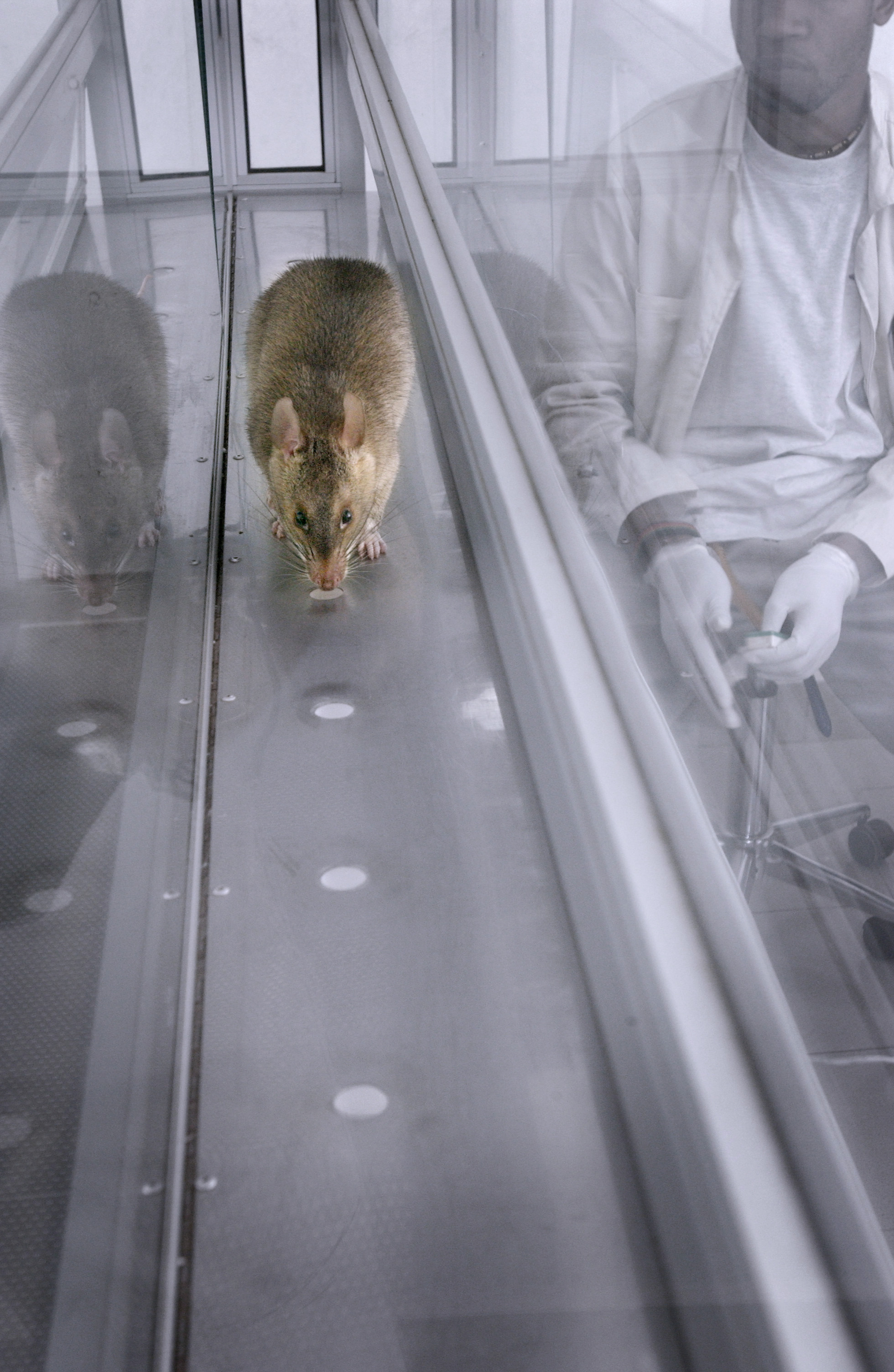


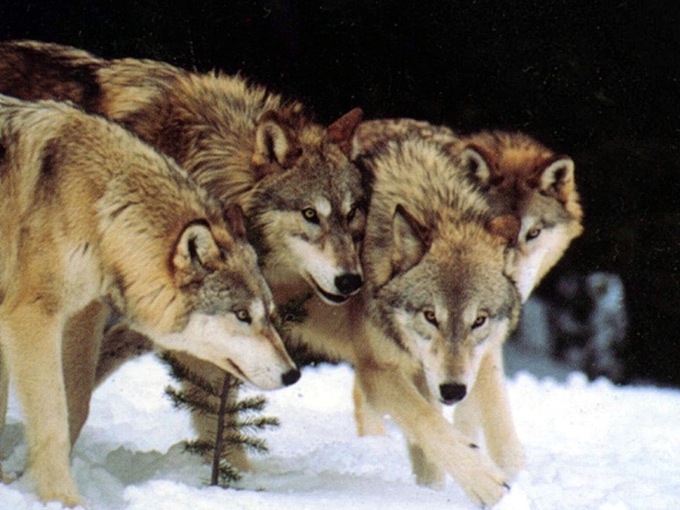


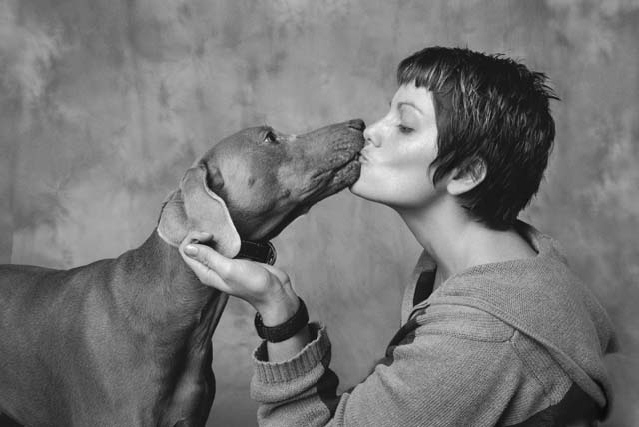



 Roger Abrantes