Stress Helps Learning and Bonding

Abstract

Stress is often portrayed as harmful, yet moderate, acute stress can enhance learning, memory retention, and social bonding. Recent epigenetic research reveals that stress hormones modulate gene expression in key brain regions, strengthening memory consolidation and attentional processes. Unpleasant or intense experiences tend to form long-lasting memories, an adaptive mechanism for survival. Beyond cognition, stress can facilitate social bonding through oxytocin-mediated social buffering, as demonstrated in mammals, including domesticated dogs, although effects are highly context-dependent. Excessive or chronic stress, however, disrupts these processes, impairing memory, social interactions, and overall well-being. This paper emphasizes the nuanced, dual role of stress, highlighting its adaptive functions and underscoring the importance of understanding stress within an evolutionary and behavioral framework, not least because such understanding can inform more efficient animal behavior modification.

duckling-climbing-stress-helps-learning

Stress Helps Learning and Bonding

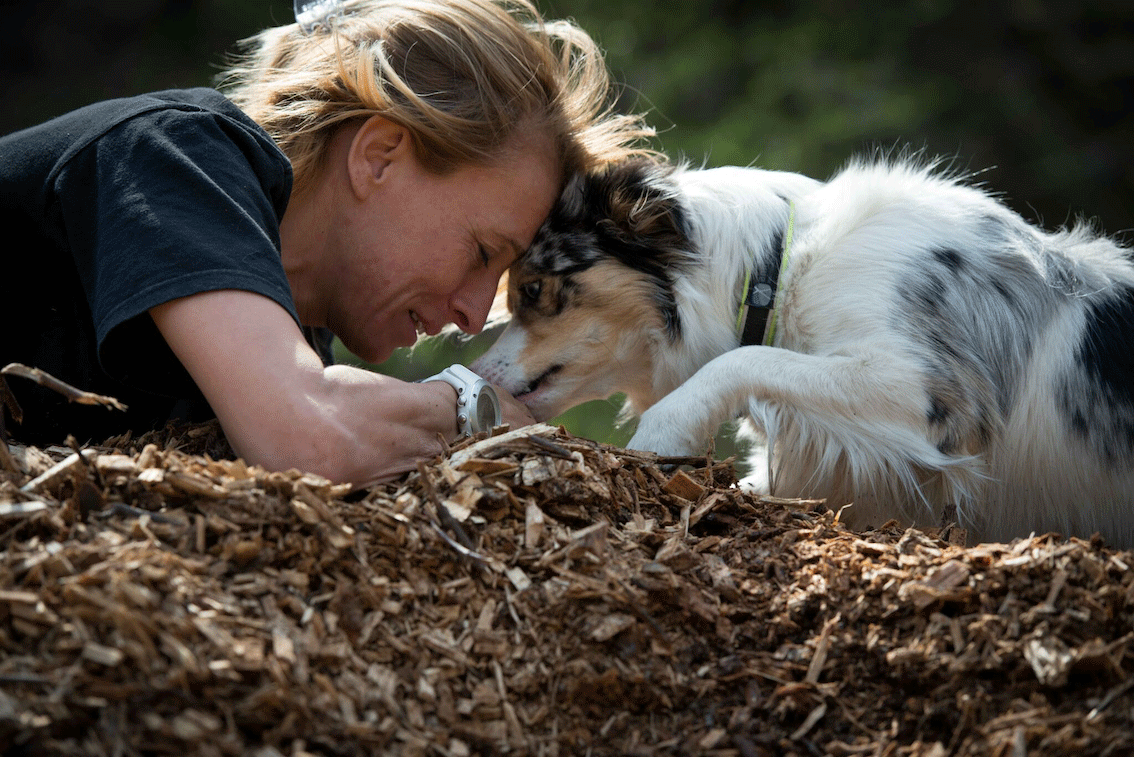
A tough nut to crack is an everlasting memory that binds the parties together, and there is a reason for that. Moderate stress heightens arousal and sharpens attention, facilitating learning and the formation of durable memories (Roozendaal, McEwen, & Chattarji, 2009; McGaugh, 2015). Studies show that stress-related hormones and neuromodulators can also strengthen certain social bonds, depending on context, species, and prior history (Carter, 2014; Hostinar, Sullivan, & Gunnar, 2014).

Fig. 1 — Illustration of the hypothalamic-pituitary-adrenal (HPA) axis during the stress response: the hypothalamus detects stress and releases corticotropin-releasing hormone (CRH), which stimulates the pituitary gland to release adrenocorticotropic hormone (ACTH). ACTH triggers the adrenal glands to produce cortisol, the body’s key stress hormone. Cortisol’s effects on the body feed back to regulate this system, maintaining balance through a negative feedback loop.

The Term Stress Is Dangerously Ambiguous

We need to be careful, though. The term stress is dangerously ambiguous. Richard Shweder once described stress in a 1997 New York Times, Week in Review essay, as “a word that is as useful as a Visa card and as satisfying as a Coke. It’s non-committal and also non-committable.” Here, we adopt a biological definition:

Stress is the organism’s coordinated physiological response to a real or perceived challenge to homeostasis, involving the activation of the sympathetic nervous system and the hypothalamic–pituitary–adrenal axis to restore equilibrium (see fig. 1).

This distinction—between colloquial and biological uses—is crucial because the physiological and behavioral mechanisms engaged differ depending on whether the stressor is acute or chronic, controllable or uncontrollable. In this context, Koolhaas et al. (2011, p. 1291) propose that “the term ‘stress’ should be restricted to conditions where an environmental demand exceeds the natural regulatory capacity of an organism, in particular situations that include unpredictability and uncontrollability,” emphasizing the adaptive and context-dependent nature of the stress response (McEwen & Wingfield, 2010; Koolhaas et al., 2011).

What Is the Function of Stress?

Being an evolutionary biologist, when contemplating a mechanism, I always ask: “What is the function of that? What is that good for?” A mechanism can originate by chance (most do), but unless it provides the individual with some extra benefits in survival and reproduction, it will not spread in the population. From an evolutionary perspective, the stress response and the modulation of memory under stress increase the probability of survival (Nesse & Ellsworth, 2009; McEwen, Nasca, & Gray, 2016).

Why Do Unpleasant Memories Persist?

Emotionally intense, threatening, or highly arousing situations produce stronger, more persistent memory traces. Biologically, remembering potentially harmful events helps self-preservation. Negative or threatening events recruit the amygdala–hippocampal network more strongly, with the amygdala modulating hippocampal consolidation via noradrenergic and glucocorticoid-dependent mechanisms (Johansen, Cain, Ostroff, & LeDoux, 2011; McGaugh, 2015; LeDoux & Pine, 2016).

Stress006
Fig. 2 — Sequence of events from exposure to a stressor through activation of the body’s physiological and behavioral stress response system (including the HPA axis), resulting in molecular and epigenetic changes such as DNA methylation and altered gene expression in stress-related genes. These epigenetic modifications influence future stress responsiveness and can affect health outcomes over the long term.

Epigenetic Effects

One of the most exciting scientific discoveries of late is the role of epigenetics (see fig. 2). Epigenetics—the study of modifications in gene activity that occur without altering the DNA sequence—has become central to contemporary models of learning and memory. Bird defines an epigenetic event as “the structural adaptation of chromosomal regions so as to register, signal or perpetuate altered activity states” (Bird, 2007, p. 398). Within this framework, attention focuses on activity-dependent chromatin modifications that occur during an individual’s lifetime rather than on transgenerational inheritance (Allis & Jenuwein, 2016). Mechanisms such as DNA methylation, histone acetylation, and related chromatin adjustments fine-tune gene expression in response to salient experiences, enabling the formation and stabilization of memory (Sweatt, 2013). Stress hormones act on mineralocorticoid and glucocorticoid receptors in hippocampal and amygdalar circuits, where they modulate plasticity and enhance the consolidation of significant events (Roozendaal, McEwen, & Chattarji, 2009; McEwen et al., 2012). Through interactions with noradrenergic projections from the locus coeruleus, glucocorticoids further shape these epigenetic regulators, influencing transcriptional programs essential for synaptic plasticity (Zovkic, Guzman-Karlsson, & Sweatt, 2013; Gray, Rubin, Hunter, & McEwen, 2014). These coordinated molecular processes, under moderate stress, enhance learning and contribute to the durability of highly arousing or threatening experiences.

Not All Stress Boosts Learning

Not all stress is productive for learning. Excessive stress produces the opposite effect. There is a difference between being stressed and stressed out. When stress becomes excessive or prolonged, the organism enters a state where immediate survival takes priority over other functions, and memory formation decreases. Chronic stress, in particular, undermines learning and cognitive function by disrupting hippocampal structure and impairing synaptic plasticity (de Kloet, Joëls, & Holsboer, 2005). These maladaptive effects highlight that stress is beneficial only within a moderate and context-dependent range; beyond that, it impairs both cognition and emotional regulation.

Stress and Bonding—A Delicate Balance

Stress does more than enhance memory; under certain conditions, it actively promotes social bonding. Oxytocin, a neuropeptide closely linked to affiliation, mediates this effect by dampening the HPA axis response during shared or moderate stress, thereby encouraging proximity and affiliative behaviors (Crockford, Deschner, & Wittig, 2017). In rodents, moderate stress enhances social-seeking behavior among cagemates via oxytocin signaling, though excessively threatening contexts abolish this effect (Burkett et al., 2015). Findings in rodents provide a foundation for understanding oxytocin-mediated bonding, which can also be observed in humans and domesticated dogs, albeit with species-specific nuances.

In domesticated dogs, exogenous oxytocin increases sociability toward humans and conspecifics, and social interactions raise endogenous oxytocin levels (Nagasawa et al., 2015). Just as humans bond emotionally through mutual gaze—a process mediated by oxytocin—Nagasawa et al. demonstrate that a similar gaze-mediated bonding exists between humans and dogs: “These findings support the existence of an interspecies oxytocin-mediated positive loop facilitated and modulated by gazing, which may have supported the coevolution of human-dog bonding by engaging common modes of communicating social attachment” (Nagasawa et al., 2015, p. 333). Longitudinal observations further show that chronic stress markers, such as hair cortisol, can synchronize between dogs and their owners, suggesting a deep physiological linkage (Sundman et al., 2020). Importantly, these bonding effects are highly context-dependent: moderate, predictable stress tends to facilitate affiliation, whereas excessive or prolonged stress may inhibit social bonding.

Caveats: Despite the fascinating discoveries mentioned above, we must be prudent in our conclusions. The effects of stress on bonding are highly context-dependent. Elevated cortisol in dogs can reflect excitement rather than distress (Nagasawa et al., 2015), and the benefits observed in rodents require non-threatening environments (Burkett et al., 2015). Oxytocin’s influence varies with social familiarity; stress may not enhance affiliation with strangers or weakly bonded partners (Crockford et al., 2017). Correlational studies, such as cortisol synchronization in dog–owner dyads, cannot prove causality, though they suggest physiological coupling that may support bonding under shared stress.

Conclusion

We need a balanced view of stress. Acute, manageable challenges—those that elicit adaptive stress responses—support attentional sharpening, facilitate memory consolidation, strengthen social bonds, and promote effective learning. These benefits are highly context-dependent: stress can enhance cognition and affiliation when moderate and predictable, but excessive or prolonged stress can overwhelm these systems, impairing memory, social interactions, and overall well-being. From an evolutionary perspective, stress serves a dual adaptive function—preparing individuals to respond to threats while reinforcing social bonds that increase survival odds. A nuanced understanding is therefore essential for interpreting behavior and guiding sound practice.

For animal trainers, these insights translate into a few practical guidelines. Animals benefit from gradual exposure to manageable, stress-eliciting challenges that promote resilience and adaptive coping. Training sessions should be calibrated so that the stress elicited remains within a range that facilitates attention and learning—enough to trigger mild HPA-axis activation, but not so intense as to be counter-productive. Moreover, designing training sessions that employ an appropriate level of stress can strengthen the trainer–animal bond by allowing the trainer to serve as a social buffer during mildly stressful tasks.

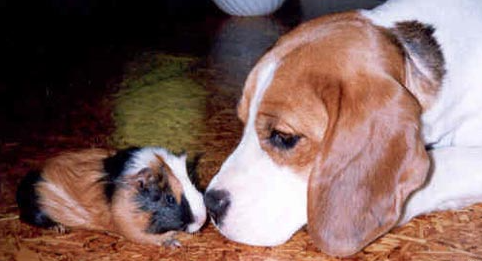
Featured picture: A tough nut to crack is an everlasting memory that binds the parties together (photo by unknown).

References

Allis, C. D., & Jenuwein, T. (2016). The molecular hallmarks of epigenetic control. Nature Reviews Genetics, 17(8), 487–500. https://doi.org/10.1038/nrg.2016.59

Bird, A. (2007). Perceptions of epigenetics. Nature, 447(7143), 396–398. https://doi.org/10.1038/nature05913

Burkett, J. P., Andari, E., Johnson, Z. V., Curry, D. C., de Waal, F. B. M., & Young, L. J. (2016). Oxytocin‑dependent consolation behavior in rodents. Science, 351(6271), 375–378. https://doi.org/10.1126/science.aac4785

Carter, C. S. (2014). Oxytocin pathways and the evolution of human behavior. Annual Review of Psychology, 65, 17–39. https://doi.org/10.1146/annurev-psych-010213-115110

Crockford, C., Deschner, T., & Wittig, R. M. (2017). The role of oxytocin in social buffering of stress: What do primate studies add? Current Topics in Behavioral Neurosciences, 30, 1–33. https://doi.org/10.1007/7854_2017_12

de Kloet, E. R., Joëls, M., & Holsboer, F. (2005). Stress and the brain: From adaptation to disease. Nature Reviews Neuroscience, 6(6), 463–475. https://doi.org/10.1038/nrn1683

Gray, J. D., Rubin, T. G., Hunter, R. G., & McEwen, B. S. (2014). Hippocampal gene expression changes underlying stress sensitization and recovery. Molecular Psychiatry, 19(11), 1171–1178. https://doi.org/10.1038/mp.2013.175

Hostinar, C. E., Sullivan, R. M., & Gunnar, M. R. (2014). Psychobiological mechanisms underlying the social buffering of the stress response: A review of animal models and human studies across development. Psychological Bulletin, 140(1), 256–282. https://doi.org/10.1037/a0032671

Hunter, R. G., & McEwen, B. S. (2013). Stress and anxiety across the lifespan: Structural and molecular correlates. Neuroscience, 255, 1–8. https://doi.org/10.1016/j.neuroscience.2013.09.039

Johansen, J. P., Cain, C. K., Ostroff, L. E., & LeDoux, J. E. (2011). Molecular mechanisms of fear learning and memory. Cell, 147(3), 509–524. https://doi.org/10.1016/j.cell.2011.10.009

Koolhaas, J. M., Bartolomucci, A., Buwalda, B., de Boer, S. F., Flügge, G., Korte, S. M., … Fuchs, E. (2011). Stress revisited: A critical evaluation of the stress concept. Neuroscience & Biobehavioral Reviews, 35(5), 1291–1301. https://doi.org/10.1016/j.neubiorev.2011.02.003

LeDoux, J. E., & Pine, D. S. (2016). Using neuroscience to help understand fear and anxiety: A two-system framework. American Journal of Psychiatry, 173(11), 1083–1093. https://doi.org/10.1176/appi.ajp.2016.16030353

McEwen, B. S., Eiland, L., Hunter, R. G., & Miller, M. M. (2012). Stress and anxiety: Structural plasticity and epigenetic regulation as a consequence of stress. Neuropharmacology, 62(1), 3–12. https://doi.org/10.1016/j.neuropharm.2011.07.014

McEwen, B. S., Nasca, C., & Gray, J. D. (2016). Stress effects on neuronal structure: Hippocampus, amygdala, and prefrontal cortex. Neuropsychopharmacology, 41(1), 3–23. https://doi.org/10.1038/npp.2015.171

McEwen, B. S., & Wingfield, J. C. (2010). What is in a name? Integrating homeostasis, allostasis, and stress. Hormones and Behavior, 57(2), 105–111. https://doi.org/10.1016/j.yhbeh.2009.09.011

McGaugh, J. L. (2015). Consolidating memories. Annual Review of Psychology, 66, 1–24. https://doi.org/10.1146/annurev-psych-010814-014954

Nagasawa, M., Mitsui, S., En, S., Ohtani, N., Ohta, M., Sakuma, Y., … Kikusui, T. (2015). Oxytocin-gaze positive loop and the coevolution of human–dog bonds. Science, 348(6232), 333–336. https://doi.org/10.1126/science.1261022

Nesse, R. M., & Ellsworth, P. C. (2009). Evolution, emotions, and emotional disorders. American Psychologist, 64(2), 129–139. https://doi.org/10.1037/a0013503

Roozendaal, B., McEwen, B. S., & Chattarji, S. (2009). Stress, memory and the amygdala. Nature Reviews Neuroscience, 10(6), 423–433. https://doi.org/10.1038/nrn2651

Sundman, A.-S., Van Poucke, E., Svensson Holm, A.-C., Faresjö, Å., Theodorsson, E., Jensen, P., & Roth, L. S. V. (2020). Long-term stress levels are synchronized in dogs and their owners. Scientific Reports, 10(1), 17112. https://doi.org/10.1038/s41598-020-74204-8

Sweatt, J. D. (2013). The emerging field of neuroepigenetics. Neuron, 80(3), 624–632. https://doi.org/10.1016/j.neuron.2013.10.023

Zovkic, I. B., Guzman-Karlsson, M. C., & Sweatt, J. D. (2013). Epigenetic regulation of memory formation and maintenance. Learning & Memory, 20(2), 61–74. https://doi.org/10.1101/lm.026575.112

Your Dog Understands Your Yawn

Yawn1

Abstract

Yawning is a simple, evolutionarily conserved behavior with physiological and social functions. In both humans and dogs, yawns can be contagious, reflecting motor and social resonance rather than necessarily empathic processes. Evidence indicates that dogs are more likely to yawn in response to familiar humans, particularly their owners, and that such yawning serves a pacifying and communicative function. Contagious yawning in dogs appears to facilitate social attunement, reduce tension, and signal peaceful intent. This paper reviews current research on canine yawning, its neural and behavioral underpinnings, and its role in interspecific communication, highlighting the ways dogs use yawning and related behaviors to maintain harmonious interactions with humans.

Your dog understands your yawn

A yawn is a simple behavior, a reflex with specific physiological functions. We are not the only ones yawning. Chimpanzees, bonobos, macaques, and dogs, among others, yawn (Guggisberg, Mathis, Schnider, & Hess, 2010; Joly-Mascheroni, Senju, & Shepherd, 2008; Ake & Kutsukake, 2023). Although a simple behavior, yawning also performs social functions. It is contagious not only within groups of individuals of the same species but also across species, including between humans and dogs (Joly-Mascheroni et al., 2008; Romero, Konno, & Hasegawa, 2013; Norscia & Palagi, 2011).

Because yawning is both widespread and multifunctional, several explanations have been proposed for its original biological role. One classic hypothesis suggests that yawning increases the influx of oxygen into the blood when carbon dioxide levels rise; however, this explanation is now widely considered unsupported (Guggisberg et al., 2010). Another hypothesis proposes that yawning stretches the muscles of the tongue and neck (Provine, 2012). A further interpretation emphasizes the need to maintain alertness, a crucial condition for predators (Provine, 2012). Given that social predators depend on one another, yawning may have evolved to be contagious through natural selection because of the cooperative advantages it confers. Additionally, yawning may help regulate brain temperature (Gallup & Gallup, 2007; Gallup & Eldakar, 2013; Gallup, 2022).

Pharmacological and neurochemical research shows that yawning is regulated by a network of neurotransmitters. Dopamine (via D₂/D₃ receptors) and serotonin both modulate yawning, and oxytocin may also play a role (Wani & Agarwal, 2025; Argiolas & Melis, 1998). These interactions suggest that yawning reflects changes in arousal, social state, and internal regulation—consistent with its role as a pacifying or self-soothing behaviour.

A widely proposed explanation for contagious yawning is that mirror-neuron systems in the frontal cortex of various vertebrates, including humans and dogs, activate corresponding motor representations in others. Neuroimaging studies in humans support this interpretation (Platek, Mohamed, & Gallup, 2005; Schürmann et al., 2005). Further neural evidence indicates that the ventromedial prefrontal cortex—a region associated with social processing—is also involved in contagious yawning, reinforcing the notion that the phenomenon is both motor-resonant and socially relevant (Nahab, Hattori, Saad, & Hallett, 2009).

Studies have found that dogs are more prone to yawn when their owners yawn than when strangers do (Romero et al., 2013; Silva, Bessa, & de Sousa, 2012). In the Tokyo study, researchers monitored the dogs’ heart rate and found no significant change across conditions, suggesting that the yawns were not merely a stress response (Romero et al., 2013). In one auditory-yawn study from Porto University, dogs yawned more to familiar than unfamiliar human yawns, and their stress-related behavior did not differ by condition—indicating that increased yawning was not simply a stress response (Silva et al., 2012). Meanwhile, an experiment at Birkbeck College (University of London) demonstrated that live human yawning triggers yawning in many dogs (Joly-Mascheroni et al., 2008).

Taken together, current behavioral evidence in dogs suggests that a form of interspecific resonance exists: dogs and humans can synchronize their actions during shared activities, and such coordination may emerge from motor-resonance mechanisms analogous to mirror-neuron systems (Lamontagne & Gaunet, 2024). Developmental evidence shows that contagious yawning in puppies emerges gradually, suggesting a maturational component to this resonance (Madsen & Persson, 2013). Mirror neurons may thus provide a neural basis not only for imitation but also for allelomimetic behavior.

However, whether contagious yawning reflects empathy remains debated. One recent Bayesian re-analysis of canine studies concluded that although contagious yawning is present in dogs, it does not display the familiarity, gender, or prosociality biases that an empathy model predicts (Neilands, Claessens, & Ren, 2020). Comparative research likewise cautions that contagious yawning cannot be taken as direct evidence of empathic capacity without more stringent criteria (Massen & Gallup, 2017).

wolfyawning-1

Wolf yawning, a behavior shared by wolves and dogs and also common in other species (photo by Monty Sloan, Wolf Park, Indiana, USA).

The dog’s yawn is much like ours. It often precedes the same characteristic sound. While we commonly associate yawning with tiredness or boredom, it can also express embarrassment, insecurity, excitement, and relief. Some people even yawn when they’re in love—which, if misinterpreted, might be embarrassing.

Dogs may yawn when tired, but yawning usually serves a pacifying function, both for themselves and for others. As with many behaviors, what may have started as one function can evolve into others. Over time, yawning appears to have become a signal of peaceful intentions. For example, a male dog may yawn when a female snarls during courtship, signaling deference rather than aggression; or a confident dog may yawn at an insecure opponent to reassure it.

Dogs yawn at us with the same functions and results. They may also yawn as a displacement activity. An owner scolding his dog is a typical situation in which we see a dog yawn. In critical training cases prone to error, such as the so-called ‘stay,’ the owner’s behavior often causes the dog to feel insecure. A yawn is likely to follow, together with licking and muzzle-nudging. As soon as the owner changes behavior, say, by using a friendlier tone or more relaxed body posture, the dog ceases to display those pacifying behaviors.

Conclusion

Yawning is a ubiquitous behavior with ancient biological roots. While its original function remains debated, evidence supports multiple physiological and social roles—including thermoregulation, alertness maintenance, and behavioral synchronization. In dogs, as in humans, contagious yawning reflects a form of motor and social resonance, though not necessarily empathy in the strict scientific sense. Research consistently shows that dogs are more likely to yawn in response to familiar humans, particularly their owners, and such responses are not simply manifestations of stress. Rather, they appear to facilitate social attunement, reduce tension, and communicate peaceful intent.

Thus, when your dog yawns at you, it is unlikely to be random. It most likely expresses comfort and trust, and it invites the maintenance of social harmony. Your dog yawns at you to show it is friendly and peaceful—and you may safely yawn back, confirming the same. Yawning, along with champing (chomping), lip-licking, eye-squeezing, a pouty mouth, and the canine muzzle-grasp—all common elements of intraspecific canine social interaction—functions equally effectively in interspecific communication.

Featured Picture: Human and dog yawning (composition by Roger Abrantes).

References

Ake, K., & Kutsukake, N. (2023). Contagious yawning in African painted dogs (Lycaon pictus). Animal Cognition, 26(4), 1191–1198. https://doi.org/10.1007/s10071-023-01766-1

Argiolas, A., & Melis, M. R. (1998). The neuropharmacology of yawning. European Journal of Pharmacology, 343, 1–16. https://doi.org/10.1016/S0014-2999(97)01538-0

Gallup, A. C. (2022). The causes and consequences of yawning in animal groups. Animal Behaviour, 187, 209–219. https://doi.org/10.1016/j.anbehav.2022.03.011

Gallup, A. C., & Eldakar, O. T. (2013). The thermoregulatory theory of yawning: What we know from over five years of research. Frontiers in Neuroscience, 6, Article 188. https://doi.org/10.3389/fnins.2012.00188

Gallup, G. G. Jr., & Gallup, A. C. (2007). Yawning as a brain-cooling mechanism: Nasal breathing and forehead cooling diminish the incidence of contagious yawning. Evolutionary Psychology, 5(1), 92–101. https://doi.org/10.1177/147470490700500109

Guggisberg, A. G., Mathis, J., Schnider, A., & Hess, C. W. (2010). Why do we yawn? Neuroscience & Biobehavioral Reviews, 34(8), 1267–1276. https://doi.org/10.1016/j.neubiorev.2010.03.008

Joly-Mascheroni, R. M., Senju, A., & Shepherd, A. J. (2008). Dogs catch human yawns. Biology Letters, 4(5), 446–448. https://doi.org/10.1098/rsbl.2008.0333

Lamontagne, A., & Gaunet, F. (2024). Behavioural synchronisation between dogs and humans: Unveiling interspecific motor resonance? Animals, 14(4), 548. https://doi.org/10.3390/ani14040548

Madsen, E. A., & Persson, T. (2013). Contagious yawning in domestic dog puppies (Canis lupus familiaris): The effect of ontogeny and emotional closeness on low-level imitation. Animal Cognition, 16(2), 233–240. https://doi.org/10.1007/s10071-012-0568-9

Massen, J. J. M., & Gallup, A. C. (2017). Why contagious yawning does not (yet) equate to empathy. Neuroscience & Biobehavioral Reviews, 80, 573–585. https://doi.org/10.1016/j.neubiorev.2017.07.006

Nahab, F. B., Hattori, N., Saad, Z. S., & Hallett, M. (2009). Contagious yawning and the frontal lobe: An fMRI study. Human Brain Mapping, 30(5), 1744–1751. https://doi.org/10.1002/hbm.20638

Neilands, P., Claessens, S., & Ren, I. (2020). Contagious yawning is not a signal of empathy: No evidence of familiarity, gender or prosociality biases in dogs. Proceedings of the Royal Society B: Biological Sciences, 287(1920), 20192236. https://doi.org/10.1098/rspb.2019.2236

Norscia, I., & Palagi, E. (2011). Yawn contagion and empathy in Homo sapiens. PLOS ONE, 6(12), e28472. https://doi.org/10.1371/journal.pone.0028472

Platek, S. M., Mohamed, F. B., & Gallup, G. G. Jr. (2005). Contagious yawning and the brain. Brain Research: Cognitive Brain Research, 23(2–3), 448–452. https://doi.org/10.1016/j.cogbrainres.2004.11.011

Provine, R. R. (2012). Curious behavior: Yawning, laughing, hiccupping, and beyond. Harvard University Press.

Romero, T., Konno, A., & Hasegawa, T. (2013). Familiarity bias and physiological responses in contagious yawning by dogs support link to empathy. PLOS ONE, 8(8), e71365. https://doi.org/10.1371/journal.pone.0071365

Schürmann, M., Hesse, M. D., Stephan, K. E., Saarela, M., Zilles, K., Hari, R., & Fink, G. R. (2005). Yearning to yawn: The neural basis of contagious yawning. NeuroImage, 24(4), 1260–1264. https://doi.org/10.1016/j.neuroimage.2004.10.022

Silva, K., Bessa, J., & de Sousa, L. (2012). Auditory contagious yawning in domestic dogs (Canis lupus familiaris): First evidence for social modulation. Animal Cognition, 15(4), 721–724. https://doi.org/10.1007/s10071-012-0473-2

Wani, P. D., & Agarwal, M. (2025). The science of yawning: Exploring its physiology, evolutionary role, and behavioral impact. Journal of Family Medicine and Primary Care, 14(8), 3115–3120. https://doi.org/10.4103/jfmpc.jfmpc_1677_24

Canine Scent Detection: Reviving the Oldest Mammalian Sense

—A Sniffer Dog is a Happy Dog

English Springer Spaniel On The Trail

Scent detection has fascinated me since my early days as a student of biology, and I was already training detection animals at the beginning of the 1980s. Over the years, I have trained dogs, rats, and guinea pigs to detect narcotics, explosives, blood, vinyl, fungus, landmines, tuberculosis, and tobacco—and they excelled in all these tasks.

What has always intrigued me most is how deeply scent detection seems to be woven into their very being, regardless of species. Indeed, much before dogs became our partners in scent detection, olfaction had already shaped the mammalian brain—including ours. Although humans are often described as “microsmatic,” this view stems mainly from a 19th-century anthropocentric bias. In fact, human olfactory performance—when properly measured—can rival that of many other mammals (McGann, 2017). Fossil endocasts reveal that early mammalia forms possessed disproportionately large olfactory bulbs, suggesting that life for our distant ancestors was guided above all by smell (Rowe, Macrini, & Luo, 2011). The olfactory pathways remain among the most conserved in the mammalian nervous system, closely intertwined with limbic and reproductive circuits (Shipley & Ennis, 1996; Boehm, Zou, & Buck, 2005). As Lledo, Gheusi, and Vincent (2005) observed, “It is clear today that olfaction is a synthetic sense par excellence. It enables pattern learning, storage, recognition, tracking, or localization and attaches emotional and hedonic valence to these patterns” (p. 309). To smell, then, is not merely to detect—it is to think, feel, and remember.

Most of my detection work was carried out for the police, armed forces, SAR teams, or other professional agencies. Yet, I had written about scent detection already in the early 1980s, in my first book, Psychology rather than Force, published in Danish. Back in 1984, I called it “nose work” (a direct translation from the Danish næsearbejde). I recommended that all dog owners stimulate their dogs by giving them detection tasks, beginning with their daily rations. We even conducted some research on this, and the results were highly positive: dogs trained in detection work improved in many aspects of their otherwise problematic behavior. My recommendation remains the same today. Physical exercise is, of course, essential—but do not forget to stimulate your dog’s nose as well, perhaps its primary channel of information about the world.

nosework 1984

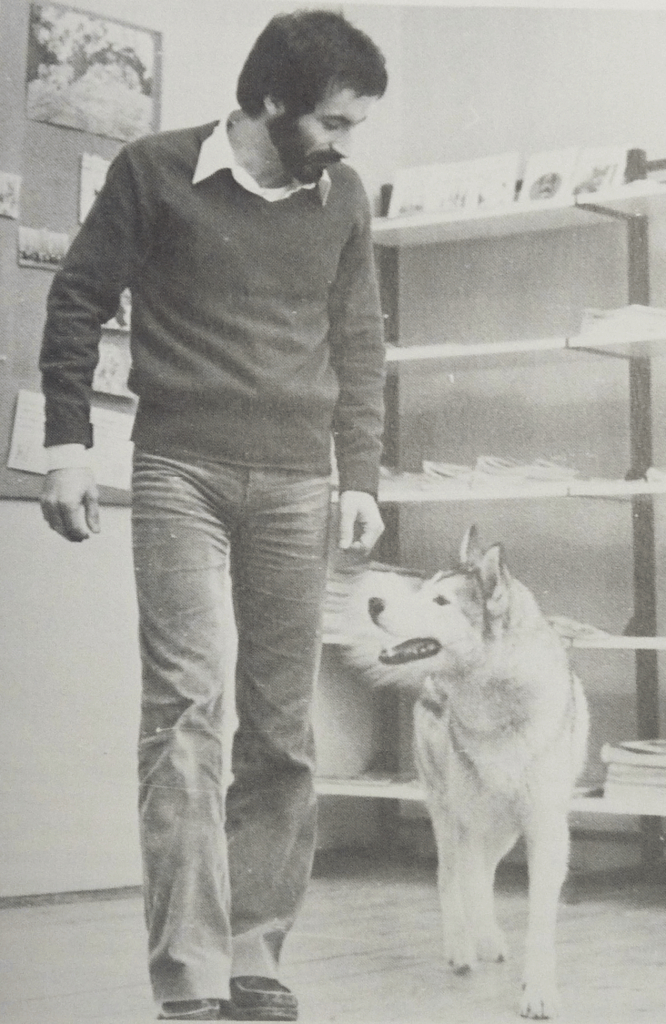
Above: In “Hundesprog” (Dog Language) from 1987, I mention “nose work” with an illustration from Alce Rasmussen. To the right: Yours truly in 1984 with a Siberian Husky, an “untrainable” dog, as everybody used to say. This was when my book “Psychology rather than Force” created a stir. We were then right at the beginning of the animal training revolution. In that book, I mention “nose work” (a direct translation from the Danish “næsearbejde”) and recommend it as an excellent way to stimulate our dogs.

raa and husky in 84

Recent field data illustrate how central olfaction is to the daily lives of canids. Wolves in the Białowieża Forest, for instance, were active on average 45.2 % of every 24 hours—about 10.8 h per day—primarily in movement, travelling, and search behaviours (Theuerkauf et al., 2003, Table 1, p. 247). Monthly patterns (Figure 6, p. 249) suggest that activity levels vary with season, although exact numerical ranges are not provided in the text. Comparable patterns appear in other canids: red foxes spend about 43 % of their observable foraging time sniffing the ground (Wooster et al., 2019), and free-ranging domestic dogs devote substantial portions of their active time to exploratory and searching behaviours—activities guided predominantly by olfaction (Banerjee & Bhadra, 2022). These figures reveal that for a wolf or fox, using the nose is not an occasional act but a continuous occupation, consuming many hours each day.

Measurement%Hours (h)
Time active45.2 %10.8
Time moving35.9 %8.6

Table 1. Average daily activity of wolves in the Białowieża Forest, Poland (1994–1999), showing the proportion of time spent active and moving, both as a percentage of the 24-hour day and in hours. Data from Theuerkauf et al. (2003, Table 1, p. 247).

Note. “Time active” includes periods when wolves were travelling, hunting, or otherwise moving. Observations indicate that these behaviours are predominantly guided by olfaction. Activity was generally higher at night, and seasonal variation appears linked to day length and prey availability. On average, wolves were active roughly half the day (~10.8 h), highlighting that extensive daily searching and tracking is a defining feature of their ecology (Theuerkauf et  al., 2003, Table 1, p. 247).

When I began promoting “nose work” in the early 1980s, I did so from personal experience rather than data. I spent many hours on scent detection with my English Cocker Spaniels. They loved it and were calmer, more focused, and more fulfilled than their peers who were not as nose-stimulated. I quickly discovered that scent detection was so self-reinforcing—in behaviorist terms—that no other reinforcers were needed beyond my approval, which they actively sought. In those moments, I realised that to be a dog is to be a cooperative nose-worker.

Science has since validated that intuition. Scent work is not a modern invention—it is a structured expression of what canids have done for thousands of years: exploring their world through odor cues. When we engage a dog’s nose, we are not merely training a skill; we are restoring a function at the very core of its evolution. Understanding that is perhaps the greatest lesson of scent detection: to educate and enrich a dog’s life, we must first respect the sensory world in which it truly lives.

References

Banerjee, A., & Bhadra, A. (2022). Time–activity budget of urban-adapted free-ranging dogs. Acta Ethologica, 25(1), 15–25. https://doi.org/10.1007/s10211-021-00379-6

Boehm, U., Zou, Z., & Buck, L. B. (2005). Feedback loops link odor and pheromone signaling with reproduction. Cell, 123(4), 683–695. https://doi.org/10.1016/j.cell.2005.09.027

McGann, J. P. (2017). Poor human olfaction is a 19th-century myth. Science, 356(6338), eaam7263. https://doi.org/10.1126/science.aam7263

Lledo, P.-M., Gheusi, G., & Vincent, J.-D. (2005). Information processing in the mammalian olfactory system. Physiological Reviews, 85(1), 281–317. https://doi.org/10.1152/physrev.00008.2004

Rowe, T. B., Macrini, T. E., & Luo, Z.-X. (2011). Fossil evidence on origin of the mammalian brain. Science, 332(6032), 955–957. https://doi.org/10.1126/science.1203117

Shipley, M. T., & Ennis, M. (1996). Functional organization of olfactory system. Journal of Neurobiology, 30(1), 123–176. https://onlinelibrary.wiley.com/doi/10.1002/(SICI)1097-4695(199605)30:1%3C123::AID-NEU11%3E3.0.CO;2-N

Theuerkauf, J., Kamler, J. F., & Jedrzejewski, W. (2003). Daily patterns and duration of wolf activity in the Białowieża Forest, Poland. Journal of Mammalogy, 84(1), 243–253. https://ibs.bialowieza.pl/publications/1396.pdf

Wooster, E., Wallach, A. D., & Ramp, D. (2019). The Wily and Courageous Red Fox: Behavioural analysis of a mesopredator at resource points shared by an apex predator. Animals, 9(11), 907. https://doi.org/10.3390/ani9110907

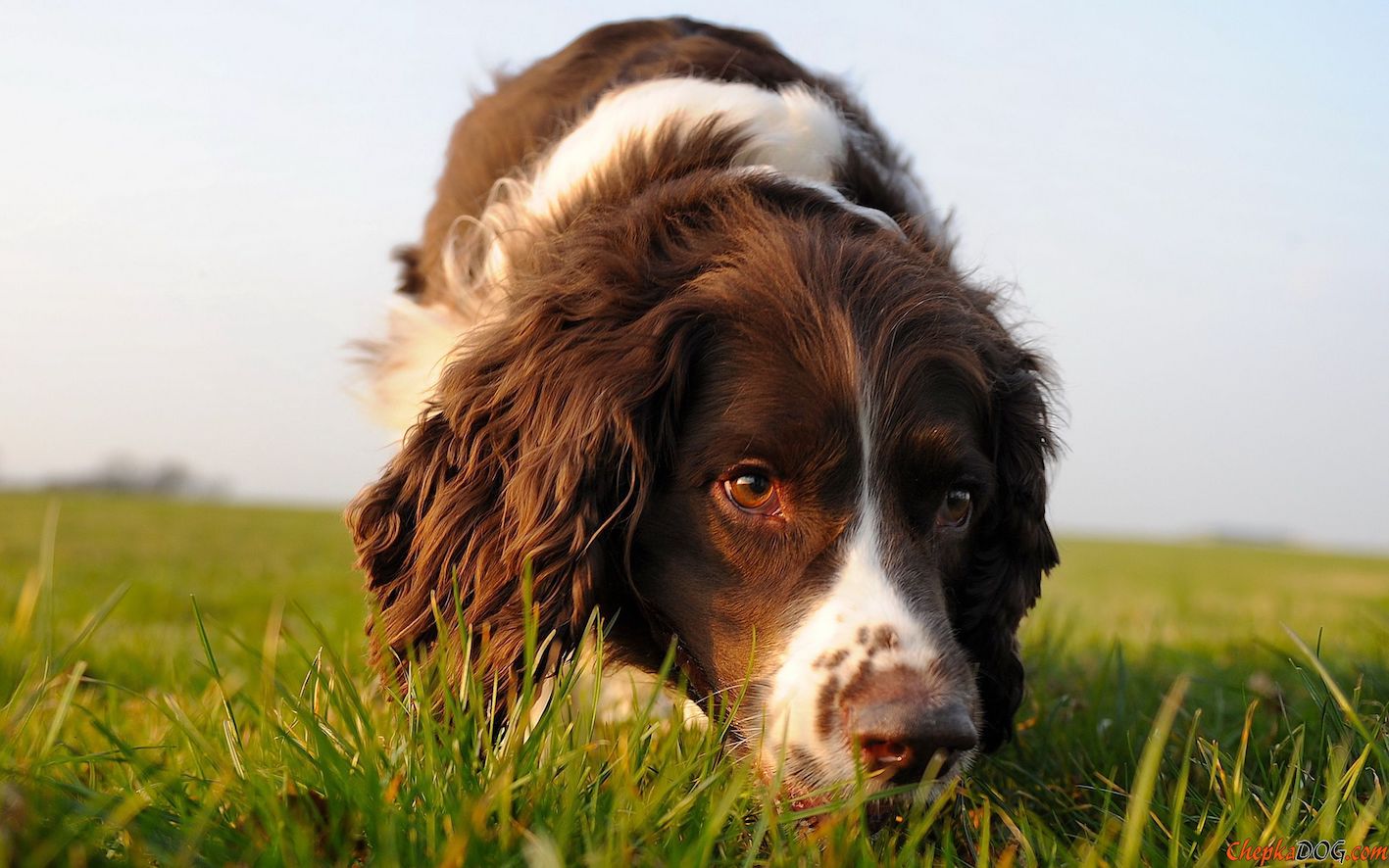
Featured image: Springer Spaniel, nose down, focused on a search.

Note: This article is a substantially revised and edited version of an earlier article from May 6, 2014, entitled Do You Like Canine Scent Detection? The revisions are extensive enough that the article deserves a new title and is therefore republished as new.

The Principle of Simplicity

Blue sea, blue sky

It dawned on me the other day, while at sea, one of those days with scattered clouds on the horizon and a fair wind barely sufficient to keep the boat sailing. Simplicity, that’s what makes it so soothing and scaringly beautiful. The sea invites you to dream, but make no promises; it is what it is, neither more or less. Be wise, and it will reward you; be foolish, and it will punish you.

You can’t hide at sea; you’ll encounter yourself whether you want it or not. The only viable strategy is honesty and integrity. It’s all so simple. The sea possesses this power, I discovered—the pertinent appears suddenly as frivolous, and the complex reveals itself in all its simple parts.

I felt absolutely ecstatic, like something major was happening, yet nothing particular stood out. As far as the eye could see, the world was an endless expense of blue, only slightly interrupted by a thin line, far, far away. Sea and sky, a few clouds on the horizon, the sun to the west, no birds, no fish, no sounds but the slight, rhythmic splashes of the boat gracefully cutting through the water, almost as silently as the flight of the owl.

Simplicity—I suppose, is what fascinates me most about Darwin’s brilliant concept of evolution by means of natural selection. The algorithm the survival of the fittest is the simplest idea one can conceive, and yet so powerful that it cuts through everything our understanding touches.

I have come to view the principle of simplicity as an old friend, always by my side as long as I can remember. From my young student days to the times of book writing or when on practical commissions, my friend Simplicity has been there, unobtrusively muttering, “Seek the simple…”

The principle of simplicity, as such, was first propounded by the English philosopher, William of Occam (1300-1349). We also know it as Occam’s Razor: “Entia non sunt multiplicanda praeter necessitatem,” which is Latin for “Entities should not be multiplied more than necessary,” or “If two assumptions seem to be equally valid, the simpler one should be preferred.”

Simple is beautiful and simpler is beautifuller—and the sea has this influence on you. Thus, I took the liberty to apply the principle of simplicity to its own definition, and three corollaries emerged.

If you have more than one option, choose the simplest.

  • First corollary: “If you have only one option, you don’t have a problem; don’t waste your time complaining, just accept it and keep smiling!”
  • Second corollary: “If you don’t like having only one option, work to create more; then you’ll have the problem of choosing one.”
  • Third corollary: “If you don’t like having problems, don’t create options.” Return, then, to the first corollary, don’t complain, and keep smiling!

And so it is that I continue sailing across this vast sea of blue, feeling my heart beating for every, ever-so-gentle splash of the hull against the water. It all seems so simple: I am just a little ripple in the immense ocean, yet I am alive, and hence I must embrace life fully for as long as I can.

________________

Featured image: A few clouds on the horizon and a fair wind, barely enough to keep the boat sailing.

Note: This blog is an updated version of the original post “I’m Alive and I Have Only One Option” published on April 21, 2014. I made minor adjustments to the language to better convey my thoughts, for I had struggled with a few sentences in the original. The text is now more to my liking; however, upon re-reading it, I noticed a slight but significant change in its undertone, which is why I felt it deserved a new title. And yes, I kept the term “beautifuller.”  It’s archaic from the 1800s, I know, but since I’m getting pretty archaic myself, I feel it’s fitting.

References

McFadden, J. (2023). Razor sharp: The role of Occam’s razor in science. Annals of the New York Academy of Scienceshttps://doi.org/10.1111/nyas.15086 (PMC article: https://www.ncbi.nlm.nih.gov/pmc/articles/PMC10952609/).

Walsh, D. (1979). Occam’s razor: A principle of intellectual elegance. American Philosophical Quarterly16(3), 241–244. https://www.jstor.org/stable/20009764.

The Illusive Free Will

—Do We Think Before We Act, or Do We Act Before We Think?

The Illusive Free Will

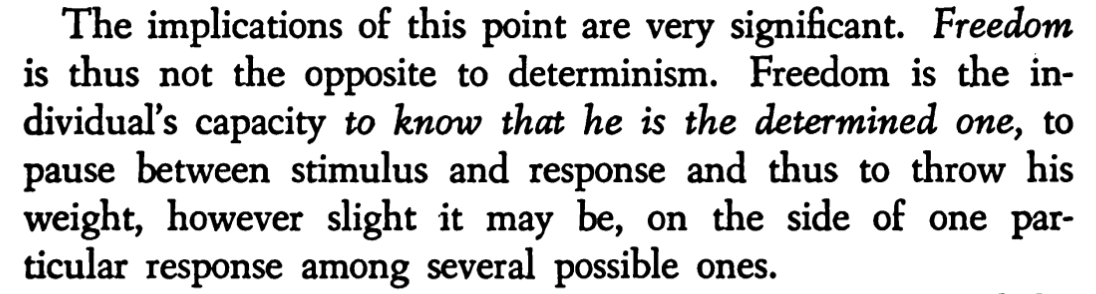
Freedom is the individual’s capacity to know that he is the determined one, to pause between stimulus and response and thus to throw his weight, however slight it may be, on the side of one particular response among several possible ones.” This quote is from page 103 (of which I give you a photo below) of Lloyd-Jones, E., Westervelt, E. M. (1963) Behavioral science and guidance: proposals and perspectives. New York: Bureau of Publications, Teachers College, Columbia University.


Freedom Quote


We find this text frequently misattributed, misquoted, modified, and adulterated to suit various purposes and agendas on today’s overwhelming social media, where everybody knows everything—and nobody knows nothing (as they say).

Let’s take a moment to ponder and analyze what’s behind the (original) quote, without the social media razzle-dazzle.

There is a space—a tangible time gap—between the moment of an event and our reaction that we might use productively if we intentionally allow it to be there and engage it critically. That is, in other words, what the author means. It is an enticing proposition, grounded in solid research from previous decades.

The question of free will is a millennia-long one, in which neurophysiology only recently entered the fray. Theories of free will focus on two fundamental questions: its possibility and nature. Some define free will as the capacity to make choices undetermined by past events. Determinism, on the other hand, sustains that only one sequence of events is possible and is inconsistent with free will. In contrast, compatibilism maintains that free will is consistent with determinism.

For over twenty years, experiments have suggested that, unbeknownst to us, a substantial part of mental processing occurs unconsciously, i.e., even before we know we plan to act. When we become aware of the brain’s actions, we ponder and mistakenly believe our intentions have caused them. “Your decisions are strongly prepared by brain activity. By the time consciousness kicks in, most of the work has already been done,” according to Haynes (2013).

Many brain processes occur automatically and without involving our consciousness. That is a defensive mechanism preventing our minds from being overloaded by basic routine chores.

We assume our conscious mind makes decisions. Our current findings question this. Researchers—using fMRI brain scans—could predict participants’ decisions up to seven seconds before the subjects had consciously made them.

If we decide before we are even aware of it, then the question is what mechanism decides for us. The prevailing view in neuroscience is that consciousness is an emergent neural phenomenon. The firing of the brain’s neurons gives rise to consciousness and the sensation of free will or intentional action. These findings (Libet 1985) may not surprise neuroscientists who believe consciousness arises from brain activity (rather than brain activity originating from consciousness) since they view the conscious experience of free will as an emergent phenomenon of brain activity.

Researchers conclude that cerebral initiation of a spontaneous voluntary act begins unconsciously. However, within about 150 ms after the precise, conscious purpose emerges, we can still deliberately control the ultimate decision to act. Subjects can “veto” motor function for roughly 100–200 ms before a set time to act. That is the gap, the pause, so quoted and misquoted. 

Whether that gap suffices to overcome the centuries-old free will quandary is highly arguable.

________________

References

  • Dennett, DC (2003). Freedom Evolves. Viking Press.
  • Fischer, JM & Ravizza, M (1998). Responsibility and Control: A Theory of Moral Responsibility. Cambridge University Press.
  • Haynes, J-D (2013). World.Minds: Do We Have Free Will? (Charité Berlin).
  • Libet, B (1985). Unconscious cerebral initiative and the role of conscious will involuntary action. Behavioral and Brain Sciences, 8(4), 529-539. doi:10.1017/S0140525X00044903.
  • Park, H-D et al. (2020). Breathing is coupled with voluntary action and the cortical readiness potential. Nature Communications, 2020; 11 (1) DOI: 10.1038/s41467-019-13967-9.
  • Pereboom, D (2001). Living Without Free Will. Cambridge University Press.
  • Soon, C, Brass, M, Heinze, HJ, et al. (2008). Unconscious determinants of free decisions in the human brain. Nat Neurosci 11, 543–545. https://doi.org/10.1038/nn.2112
  • Soon, CS, He, AX, Bode, S, Haynes, J-D (2013). Decoding abstract intentions, Proceedings of the National Academy of Sciences. March.
  • Strawson, GJ (1994). The impossibility of moral responsibility. Philosophical Studies 75 (1-2):5-24. 

___________________

Photo: Painting “The Illusion of Free Will (2016) by Daniel Stroup.

Your comments are welcome. Please feel free to leave a reply.

Psychology Rather Than Power—for the Umpteenth Time, Reinforcers Are Not Rewards

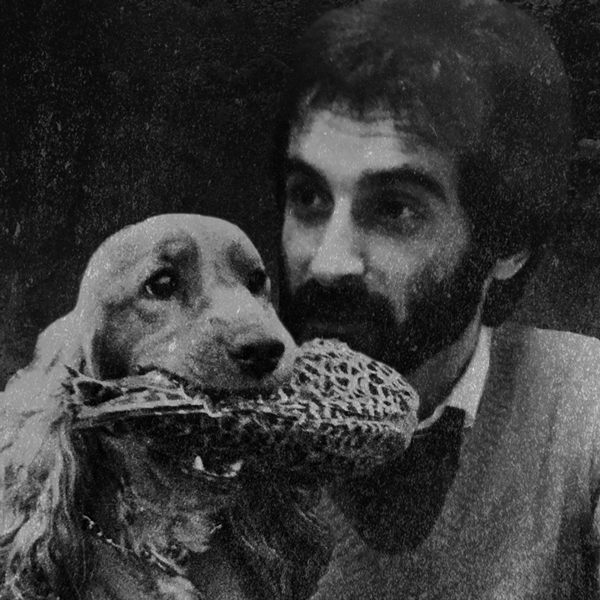
The author, Roger Abrantes, and Petrine, English Cocker Spaniel, in 1984.
“A reinforcer is not a reward.” Some things must be said again—and again.

For the umpteenth time, a reinforcer is not a reward. When I hear “Force-Free” trainers say, “dogs like to work to earn rewards,”1 I suspect and fear they miss by a mile and a half the essence and function of reinforcers in learning theory (and so also of inhibitors).

I’m not splitting hairs. There is a crucial difference between reinforcing a particular behavior and rewarding an individual. I suspect ignorance hereof is also the cause of the many incorrect statements on inhibitors2 from the “Radical Force-Free” camp (emphasis on radical).3


When terminology goes wrong

Look, I shouldn’t care less because reinforcers and the like are behaviorist things, and I’m an ethologist, not a behaviorist. But I do care, because my mind becomes strangely uneasy whenever I hear or see something fundamentally flawed and inconsistent.

If you claim the mantle of behaviorism, the least you can do is use its language correctly.

If you’re a behaviorist—and that’s what trainers in the “Radical Force-Free” camp are supposed to be—then at least be fair to the founding fathers of your learning philosophy and use the right terminology. All the rest seems to me an affront, disrespectful, and proof of unforgivable ignorance. Forgive the bluntness, but someone had to say it.


Back to the 1980s

“Dogs like to work to earn rewards” reminds me of the 1980s, when I opposed the old-school, military-style approach to dog training. The classes had all the charm of a drill parade: straight lines, sharp commands, leash jerks, and very little interest in what the dogs themselves thought of the matter—or whether they understood what we wanted of them. After ten minutes of marching back and forth, the instructor would say:

“And halt! Now, praise your dogs.”

Yes, I went to that kind of dog training with the first dog I had as an adult. That was the training we had back then.

I walked out in disgust with the sort of calm determination only youthful indignation can fuel. I decided there and then that Petrine, my dog, and I would train on our own and show them. We did.


Discovering training through ethology

I substituted praise with reinforcers—the real thing, not rewards—including my dygtig⁴ and a few treats given at strategic times and points. I stopped using a leash and started using a lead. Again, not splitting hairs—it makes a huge difference what you think of, and how you use, that piece of rope or leather that connects you to your dog.

A leash leashes; a lead leads. It’s as simple as that.

Leash jerks gave way to “No,” immediately followed by “dygtig,” when Petrine, not me, corrected the mistake. She seemed almost pleased to catch her own slips, as if this strange little team sport of ours finally made sense. She visibly enjoyed being my “teammate,” a role she took with disarming seriousness.


Learning from the giants

I was, then, a student of ethology, and I knew about social animals and social canines, including our domestic dog, and how contact, social acceptance, and feeling safe functioned as unconditioned, primary reinforcers (‘benefits of group living’ in ethology jargon). The social canines were among my favorites; I studied them diligently, inspired by my fellow senior students: Eberhard Trumler, Erich Klinghammer, Thomas Althaus, and Erik Zimen—alas, all gone now.

Old, venerable Professor Lorenz’s words rang in our ears by then (they still do):

“To understand an animal, first you have to become a partner.”

And so I did, applying to my training the best principles of ethology that I had learned from the great teachers—Lorenz, Tinbergen, von Frisch—and from my prominent elder colleagues. Later, I would even incorporate selected elements of behaviorism into what eventually became Animal Training My Way, but that is another story for another time.


Winning where no one expected us to

At the end of the term, I signed up for the final “obedience” competition at the club, a hunting dog club run by real green-clad hunters, and we won with max points. That a young long-haired fellow in faded Levi’s and clogs had won created some agitation—and to add insult to injury, my dog was a little, red, seven-month-old English Cocker Spaniel (a genuine one, not one of those oddballs we see in the US today), female on top of all.

Petrine was intelligent, beautiful, charming, a workaholic, and a sweetie-pie—though I suppose I was already helplessly devoted to her.

Our performance raised eyebrows and drew more humming than the establishment would have wished. At the prizes-and-punch social function, a few civilians asked me in a whisper whether I would help train their fidos (read: companion dogs).


And just like that, I was in deeper than I thought

The following Saturday, we were training on a grassy field across the road from where I lived, which is now the local firemen’s station. That was 1982, the summer before my son Daniel was born, and that’s how dog training came into my life. I never planned it.

Two years later, in 1984, I wrote my first book, Psychology Rather than Force, with far too little experience but loads of good ideas, including force-free, hands-free, reinforcement-based training—alas, all terms used as slogans these days—with as few inhibitors as possible; and it even included a whistle (the precursor of the clicker).

I was positive dog training would change. It did, and the rest is history.

And if this story has a punch line, it is this: reinforcers do the work—rewards are just the icing.


Notes

  1. This is an actual quote from a document published online by a confessed “Force-Free” trainer.
    Note that Skinner writes about reinforcers and rewards, “The strengthening effect is missed, by the way, when reinforcers are called rewards. People are rewarded, but behavior is reinforced. If, as you walk along the street, you look down and find some money, and if money is reinforcing, you will tend to look down again for some time, but we should not say that you were rewarded for looking down. As the history of the word shows, reward implies compensation, something that offsets a sacrifice or loss, if only the expenditure of effort. We give heroes medals, students degrees, and famous people prizes, but those rewards are not directly contingent on what they have done, and it is generally felt that the rewards would not be deserved if they had been worked for” (Skinner, 1986, p. 569). ↩︎
  2. In 2013, I suggested we change punisher and derivatives to inhibitor and derivatives to avoid the moral and religious connotations of the former, particularly in Latin languages, and to emphasize their function and use as a learning tool. ↩︎
  3. “Radical Force-Free dog trainers” is my denomination for those trainers adhering to the positive or force-free movement, but having extreme views like claiming positive reinforcers are the only learning tool one needs, they never use aversive stimuli, one should never say “no,” everyone else but them is wrong, and other absurdities. Please do not confuse with the non-radical positive, force-free dog trainers who are equally force-free but sensible, open-minded, prudent in their claims, and polite and considerate to other thinkers. ↩︎

Reference List (First Editions in Original Language)

A tribute to my great teachers and senior fellow students:

Althaus, T. (1982). Verhaltensontogenese beim Siberian Husky [Dissertation, Universität Bern]. Institut für Zoologie.

Klinghammer, E. (Hrsg.). (1979). The behavior and ecology of wolves. Garland STPM Press.
(Original language: English; this edited volume was first published in English.)

Lorenz, K. (1949). Er redete mit dem Vieh, den Vögeln und den Fischen. Borotha-Schoeler.
(First German edition; this is the original form of what later became known in English as King Solomon’s Ring.)

Tinbergen, N. (1948). De natuur van het dier. Het Spectrum.
(First Dutch edition; predates the 1951 English The Study of Instinct.)

Trumler, E. (1961). Der Hund. Georg Müller Verlag.
(His earliest and most influential dog-ethology book; later expanded works followed.)

von Frisch, K. (1927). Aus dem Leben der Bienen. Springer.
(First German edition; foundational to his later Tanzsprache works.)

Zimen, E. (1971). Wolfsfibel. Kosmos Gesellschaft der Naturfreunde.
(Zimen’s first book-length publication in German; precedes later major works such as Der Wolf.)


References mentioned in the blog

Abrantes, R. (1984). Psykologi Fremfor Magt (Psychology Rather Than Force). Lupus Forlag.

Abrantes, R. (2015). Animal Training My Way. Wakan Tanka Publishers.

Abrantes. R. (2013). The 20 Principles All Animal Trainers Must Know. Wakan Tanka Publishers.

Skinner, B. F. 1986. What is wrong with daily life in the Western world? American Psychologist, 41(5), 568-574. https://doi.org/10.1037/0003-066X.41.5.568. Retrieved Jun. 29, 2019.


Featured photo: Roger Abrantes and Petrine in 1984 by Annemarie Abrantes.


📦 Glossary

Reinforcer

A consequence that increases the likelihood of a behavior being repeated.
In learning theory, a reinforcer is defined functionally, not emotionally: it works because it strengthens behavior, not because it feels like a “reward.”


Reward

A colloquial, subjective term for something the giver believes is pleasant to the recipient.
Unlike reinforcers, rewards do not have to change behavior—and often don’t.
This is why “reward” ≠ “reinforcer.”


Inhibitor

A consequence that reduces the likelihood that a behavior will recur.
The functional opposite of a reinforcer. Inhibitors are not “punishment” in the everyday sense—they can be as subtle as social disengagement or loss of access.


Dygtig (Danish)

Pronounced roughly “Dö-gtee.”
Literally “skilled” or “good,” introduced as a conditioned (or semi-conditioned) reinforcer in training (Abrantes, 1984). The “dygtig,” delivered with timing and consistency, and a friendly facial expression/body language, signals to the dog: “That was correct—keep doing it.” It embodies applied ethology at its best.


Lead vs. Leash

Lead: A tool intended to guide the dog; used with communication in mind.
Leash: A tool that often defaults to restraint.
The distinction reflects mindset more than equipment—a leash leashes; a lead leads.


Force-Free (in practice)

A training approach aiming to avoid aversive physical force.
Initially grounded in learning theory, but currently used in ways that often blur terminology and introduce inconsistencies between science and practice.


Primary Reinforcer

A stimulus that is naturally reinforcing without learning (conditioning)—for example, food, social contact, safety, and touch (in most circumstances).


Conditioned Reinforcer

A neutral stimulus (e.g., dygtig, a whistle, a click) that becomes reinforcing through association with a primary reinforcer.


The Ethology of Trial and Error: Thirty-Four Illuminating Failures

“I didn’t fail. I discovered 34 ways that don’t work to trailer the horse!”
I told them. But allow me to start from the beginning.

Success and failure are not absolutes; they are states of mind—criteria we adopt, perspectives we choose. Success may boost confidence and smooth the path ahead. Failure, conversely, fortifies resolve and builds persistence. Moving from one triumph to the next feels comfortable—perhaps too comfortable. Moving from one setback to another is taxing. So which is better? Let me tell you a story.

Once—young, spirited, and incapable of declining a challenge—I accepted a job trailering a horse. At the time, horse trailering was the number-one complaint among horse owners, much as home-alone issues plague dog owners today, and inappropriate elimination troubles cat owners.

Failing to trailer a horse at home is inconvenient; failing when you are hundreds of miles away is a genuine predicament. These owners were 200 miles from home. Their mare had refused to load after an equestrian event. They tried everything they knew, and everything others had told them, and still failed. Exhausted, they left the horse in a stall and drove home—then called me, offering anything if I could bring the mare back.

In hindsight, after hearing how many seasoned horsemen had tried—and how they had tried—I probably should have declined. But youth thrives on challenges, and so I drove to meet the horse.

We released her into a medium-sized arena, backed the trailer in, and I sat on the fence observing. She was a beautiful four-year-old quarter horse mix—alert, sensitive, and expressive. The owners recounted her history: no issues except trailering. They succeeded perhaps one in twenty attempts, and only after considerable distress. It was getting worse.

I will spare you the long list of misguided attempts employed before my arrival—well-intentioned efforts born more of frustration and inherited habits than of horsemanship. Don’t get me wrong: neither the owners, who were friendly and educated, nor those who tried to help were ill-disposed; they were simply relying on long-standing traditions that were not always gentle and had rarely been questioned.

These days, dog people often spend considerable time passionately disagreeing over training details. I sometimes invite them to visit the horse world, where perspective comes swiftly. Faced with the challenges still common in horse training, many of these canine disputes appear trivial. With a few admirable exceptions—brave horsemen and women who work to demonstrate that there are other, equally (or more) effective ways of handling a horse than sheer force—the field of horse training has long struggled to move beyond methods that rely mainly on force.

I stepped into the arena bare-handed—not even a rope. I liked the mare immediately. As with people, some animals evoke instant affinity; others do not. She seemed comfortable with me, too, if not from the beginning, then soon after. We walked quietly around the arena, each minding our own business. The owners left to run errands, a relief to both of us, I suspect.

After some time, the mare approached. We paused, inhaling and exhaling deeply. Horses do this when meeting. When in Rome, do as the Romans do;1 with horses, I become as equine as I reasonably can. It may look peculiar to some, but it works, and it matters. The more I attune myself to the animal’s own signals, the more she can evaluate me on her terms rather than mine.

We spent about two hours simply walking together. At times, she followed me slowly, three to four meters behind. At other moments—particularly when we passed a section of the fence where buckets and gardening tools were stored outside—she hesitated. Each time, I waited and behaved as though nothing were amiss. After a while, she would approach, and after six or seven such encounters, she passed the “scary” spot without difficulty. The same pattern emerged near the trailer.

Occasionally, I stopped, leaned against the fence or the trailer, and looked at her. She looked back and then approached slowly until she stood about a meter in front of me, relaxing into that characteristic stance with one hind hoof resting. Gradually, she began to follow me without hesitation. She had discovered, on her own terms, that I posed no threat and was sufficiently trustworthy.

When the owners returned, they asked whether I had loaded her.

“No,” I said.

“Oh, we’re sorry you failed,” they replied, offering polite condolences.

“Oh no,” I said. “I didn’t fail. I discovered 34 ways that don’t work to load a horse.” Strictly speaking, that was not entirely true. I had made a few tentative attempts early on to see how she reacted to the trailer, but I had not tried to load her in earnest. Most of the time was spent observing—learning what unsettled her, what reassured her, and how she chose to follow when she felt safe. There were easily thirty-four or more such small trials, each one teaching me something about her thresholds and preferences. What looked like inaction was, in fact, the slow process of letting the horse teach me how to proceed.

A few hours later, both the mare and I were standing inside the trailer, eating carrots and breathing calmly together. I never used a rope. I never used the halter. I never touched her until we had already been inside the trailer for a while.

So what happened?
In short, applied ethology happened. I relied on the horse’s natural need for companionship and safety, and I tried to provide precisely that. I let her approach in her own time, assess my intentions, and decide whether to come closer. In behavioristic terms, the comfort of social proximity reinforced her tendency to follow me. Falling behind or moving away were aversive experiences that briefly left her feeling exposed, prompting her to return. But the crucial point is that she controlled the reinforcers and inhibitors2 herself, not I.

That insight has shaped all my work with animals, no matter the species, though I hesitate to call it “training,” for what I value is the interaction—the relationship, the shared routines that work for both human and animal. It is a givers/takers game. Both partners must contribute, both must give and take—give what you can, take what you need.

The magic ingredient, I discovered, is humility, though not submission; confidence, though not dominance; being present as a trustworthy guide who points out possibilities and offers choices, while remaining as unobtrusive as possible in the background. It is, in truth, a humbling experience to realize how much one can learn, and how much better one can become, simply by listening to a horse.

Once she, the mare, had reliably chosen my company, walking into the trailer was merely the next natural step. After passing the trailer several times together, I entered it casually—no theatrics, no pressure, no fireworks either, once done. She followed without hesitation.

That day, I learned how to trailer a horse—not because I succeeded after four hours, but because I had uncovered 34 or so approaches that did not work. I thought I knew the procedure already; I was mistaken. Early success had lulled me into complacency.

Success and failure are not properties of events but of perspective. In the end, success came not from doing more, but from doing less—listening more carefully, and allowing the horse to teach me what I needed to know.

Notes

  1. The expression “When in Rome, do as the Romans do” (Latin: Si fueris Romae, ieiunato sicut Romanum est) is attributed to Saint Ambrose (4th century). When Augustine asked why the Milanese practice differed from that of Rome, Ambrose replied, “When I am in Milan, I do not fast on Saturday; when I am in Rome, I fast on Saturday.” Hence the proverb, meaning that one should adapt to local customs. The practice of adapting and imitating also serves us well when studying and interacting with other species, as Konrad Lorenz and Jane Goodall, among others, have demonstrated. ↩︎
  2. A reinforcer reinforces—meaning it strengthens behavior (it increases; one gets more). This is intuitive and consistent with standard usage. Likewise, an inhibitor inhibits—meaning it weakens behavior (it decreases; one gets less)—and the term explicitly states this functional effect. By contrast, the technical and classic term punisher refers to a stimulus that also weakens behavior, yet the word itself does not convey that effect. One may “punish” in the everyday sense without actually decreasing the behavior if the intensity or timing is inappropriate. The term inhibitor avoids this ambiguity: by name and by definition, it inhibits, that is, it weakens the behavior—without implying any difference in the underlying behavioral process. It also focuses purely on the functional outcome—a decrease in behavior rate—stripping away the ethical and emotional connotations associated with punishment. I am merely clarifying a conceptual point, not expecting that the established terminology will change. Ultimately, the choice of term is a matter of preference, and whichever term you use will require a clear definition for your readers and for anyone with whom you discuss these concepts. ↩︎

References

Budiansky, S. (1997). The nature of horses: Exploring equine evolution, intelligence and behavior. Free Press. ISBN 9780684827681.

Hempfling, K. F. (1993). Dancing with horses: The art of body language. Trafalgar Square Publishing. ISBN 9781570761517.

Parelli, P., & Parelli, K. (1993). Horsemanship: Theory & horse behavior. Parelli Natural Horsemanship. ISBN 9780965853300.

Roberts, M. (1997). The man who listens to horses: The story of a real-life horse whisperer who revolutionized the way we communicate with horses. Random House. ISBN 9780679456582.

Sinclair, E. (Director). (2016). Taming wild: A girl and a mustang [Film]. Taming Wild Productions.


Featured image: After some time, the mare approached. We paused, inhaling and exhaling deeply. Horses do this when meeting (photo from the EI files).


This article is an expanded and substantially updated version of the original “Animal Training—I Didn’t Fail, I Discovered 34 Ways That Don’t Work!” from June 4, 2014, which is why it is now published under a new title.

Do Dogs See Colors? What Does It Mean for Our Training?

Do Dogs See Colors

Do dogs see colors? Does that affect our dog training in any way?

In the early 1980s, we conducted tests at the Ethology Institute to determine whether dogs were colorblind, as popular opinion held. The conclusion of our experiments was that they could distinguish some colors but could not discriminate others. They were not completely color blind (seeing only shades of gray). They were more like some people who see colors, though not the whole spectrum. However, at the time, we could not determine whether the dogs’ color discrimination was due to distinguishing between real colors or to distinguishing between various shades of gray. Meanwhile, more modern research has cast some light on these questions.

dogcolor4-1

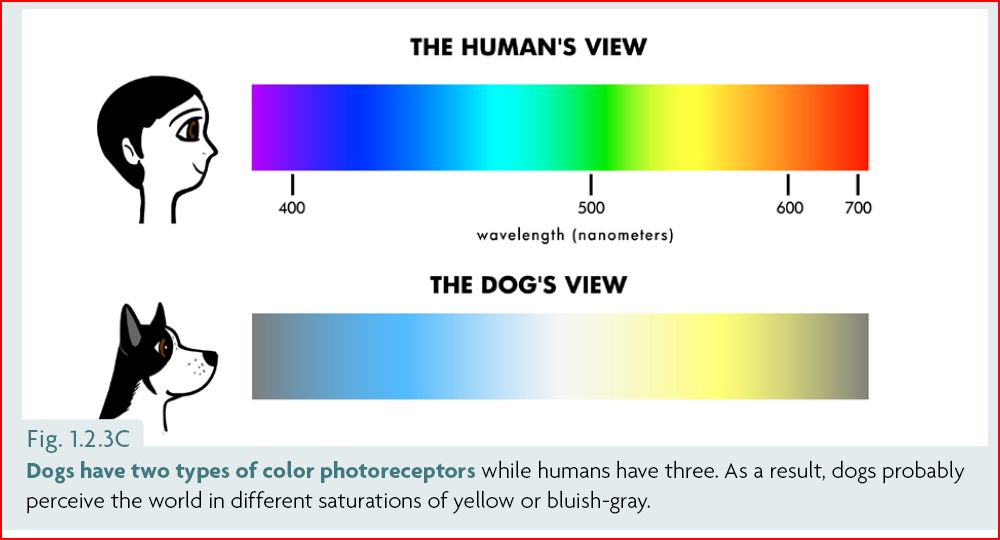
Eyes contain light-catching cells (cones) that respond to color. Canines have fewer cones than humans, which implies that, in principle, their color vision cannot be as good as ours. To see colors, we need different types of cones that detect different wavelengths of light. We have three types of cones, which allow us to register the full range of color vision. Dogs, in contrast, have only two types of cones.

Researchers at the University of California, Santa Barbara, tested dogs’ color vision in the late 1980s. Their studies confirm that dogs see color, though not as well differentiated as humans do. For us, the rainbow looks violet, blue, blue-green, green, yellow, orange, and red. For a dog, we presume it looks dark blue, light blue, gray, light yellow, darker yellow, and very dark gray. Violet and blue are both perceived largely within the blue range (Neitz, Geist, & Jacobs, 1989).

Studies performed by Russian scientists demonstrated that dogs tend to discriminate real color rather than brightness cues (Kasparson, Badridze & Maximov, 2013). They match any color they register with no more than two pure spectral lights.

dogcolors5-1

Dogs are dichromatic, as are most placental mammals. The ability to see long wavelengths necessary to distinguish red from green seems to have disappeared during evolution, probably during early mammalian evolution in the Mesozoic, likely under strong nocturnal selection pressures (Jacobs, 2009). Dichromatic vision, though, is good at distinguishing colors in dim light, favoring the most nocturnal animals.

Trichromats, like most humans, have three color-detecting cones (blue, green, and red) and can distinguish a vastly expanded range of color discriminations compared with dichromats. Trichromacy in humans is not ancestral to mammals. It is a derived re-evolution in Old World primates, an adaptation to a foraging ecology in which red–green discrimination provides a direct foraging advantage (Dulai et al., 1999). So human trichromacy is an exception produced by a very specific ecological niche, not the mammalian norm. Humans are visual outliers among mammals. When we treat human color perception as ‘normal,’ we are committing a deep phylogenetic bias.

Similar ecological pressures have shaped trichromatic vision independently in other, very distant lineages. The honeybee, Apis mellifera, is also trichromatic, seeing ultraviolet, blue, and green instead of blue, green, and red. Honeybee trichromacy is an adaptation shaped by the coevolution of pollinators and flowering plants, as many floral signals are specifically tuned to ultraviolet patterns invisible to human vision (Peitsch et al., 1992).

dogcolor6-1
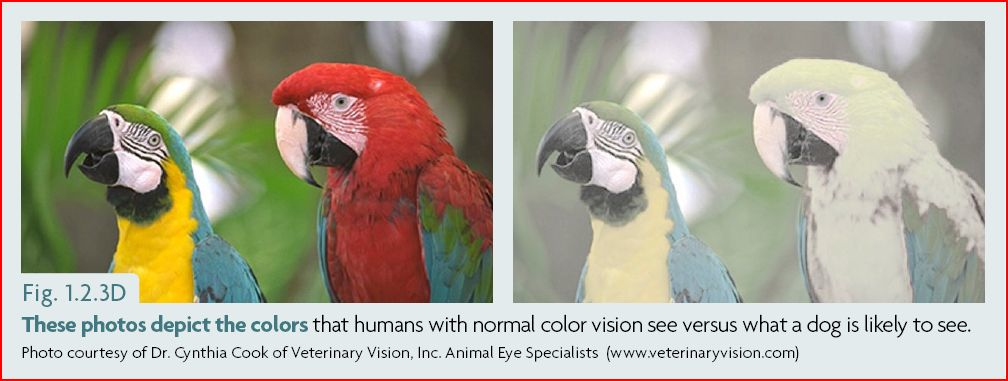
Human = A and C. Dog = B and D. It is difficult for the dog to discriminate between red and green.

The term “colorblind” is therefore misleading. Dogs are not deficient humans—they retain the ancestral mammalian visual condition. Some animals developed the ability to see certain colors, and others to see others, all depending on ecological pressures, mutations, and the subsequent costs and benefits each strategy implied for their struggle for survival (Jacobs, 1993).

What does this mean for our communication and training of our dogs? Since dogs find it difficult to distinguish between certain reds and greens (like some humans do), we should choose toys and training aids in other colors. For example, light blue or yellow are much easier colors for a dog to detect (Neitz, Geist, & Jacobs, 1989). On the other hand, when training them in any scent-detection discipline (Gazit & Terkel, 2003; Horowitz, 2009), we should use colors for targets that are difficult for them to see to compel them to use their noses rather than their eyes.

Training an animal entails altering its behavior, a process that can profoundly affect the individual and, if misapplied, lead to unintended and undesirable side effects. It is therefore sound practice to examine how the animal perceives and interacts with its world, as well as the evolutionary mechanisms that have shaped both the species and the individual under consideration. In other words, we should strive to see the world through the animal’s eyes—however imperfect that vision of ours may be. Only then can training be both effective and respectful for the animal and for us.

References

Dulai, K. S., von Dornum, M., Mollon, J. D., & Hunt, D. M. (1999). The evolution of trichromatic colour vision by opsin gene duplication in New World and Old World primates. Genome Research, 9(7), 629–638. https://doi.org/10.1101/gr.9.7.629

Gazit, I., & Terkel, J. (2003). Domination of olfaction over vision in explosives detection by dogs. Applied Animal Behaviour Science, 82(1), 65–73. https://doi.org/10.1016/S0168-1591(03)00051-0

Horowitz, A. (2009). Inside of a dog: What dogs see, smell, and know. Scribner.

Jacobs, G. H. (1993). The distribution and nature of colour vision among the mammals. Biological Reviews, 68(3), 413–471. https://doi.org/10.1111/j.1469-185X.1993.tb00738.x

Kasparson, A. A., Badridze, J., & Maximov, V. V. (2013). Colour cues proved to be more informative for dogs than brightness. Proceedings of the Royal Society B, 280(1766), 20131356. https://doi.org/10.1098/rspb.2013.1356

Neitz, J., Geist, T., & Jacobs, G. H. (1989). Color vision in the dog. Visual Neuroscience, 3(2), 119–125. https://doi.org/10.1017/S0952523800004430

Peitsch, D., Fietz, A., Hertel, H., de Souza, J., Ventura, D. F., & Menzel, R. (1992). The spectral input systems of hymenopteran insects and their receptor-based colour vision. Journal of Comparative Physiology A, 170, 23–40. https://doi.org/10.1007/BF00190398

_________________

Featured image: Since dogs find it difficult to distinguish between certain reds and greens (like some humans do), we should choose toys and training aids in other colors (photo by Oleghz). Other illustrations from Dr. Cynthia Cook of Veterinary Vision Inc.

Live as If You Were to Die Tomorrow—Learn as If You Were to Live Forever

Sea1byNickGrabowski-1

 I dedicate this short reflection to my students—and, by extension, to all students worldwide.

“Live as if you were to die tomorrow. Learn as if you were to live forever.”
~Mahatma Gandhi

“Live as if you were to die tomorrow. Learn as if you were to live forever” is widely attributed to Mahatma Gandhi. The exact wording is uncertain, yet the sentiment is faithful to his views. Rajmohan Gandhi, in The Good Boatman: A Portrait of Gandhi (1995), summarises his grandfather’s position as “[…] a man should live thinking he might die tomorrow but learn as if he would live forever.” Rajmohan Gandhi, incidentally, is a professor at the University of Illinois at Urbana–Champaign, with whom we established an excellent student exchange in the early 2000s.

The idea itself is far older. Isidore of Seville (c. 560–636 CE): expressed a similar exhortation in the Etymologiae: “Study as if you were to live forever; live as if you were to die tomorrow.”1 Comparable formulations appear in Islamic tradition—for example, in a Hadith often rendered as: “Live for your afterlife as if you will die tomorrow, and live for this life as if you will live forever.” Although popular, this version is not found verbatim in the canonical collections.2

Some scholars have noted parallels in the writings of Desiderius Erasmus (1466 – 1536), who likewise encouraged a readiness for death coupled with the lifelong pursuit of learning, though no primary source confirms the wording frequently attributed to him.3

Jiddu Krishnamurti noted that “the whole of life … is a process of learning,” underscoring that education does not end with formal schooling but accompanies us until death. Seneca argued that time must be used wisely so that life does not slip away unexamined—the core of living fully in the present. Socrates famously declared that “the unexamined life is not worth living,” connecting philosophical inquiry with purposeful existence.

The message is timeless. Continue your quest for knowledge. Do not postpone learning; embrace it today rather than tomorrow, for even your smallest discovery joins the shared store of human knowledge. At times, it may seem no more than a single drop—but then, the vast oceans themselves are born of such drops.


Notes

  1. The maxim “Disce tamquam semper victurus; vive tamquam cras moriturus” has long been attributed to Isidore of Seville and appears in standard editions of the Etymologiae. Chapter numbering may vary slightly by edition, but Book III contains the traditional formulation. ↩︎
  2. The popular saying “Live for your afterlife as if you will die tomorrow, and live for this life as if you will live forever” is not found verbatim in the canonical Hadith collections. It appears in later moralistic literature and is classified by scholars as non-authentic (apocryphal). ↩︎
  3. The widely circulated maxim “Live as if you were to die tomorrow; study as if you were to live forever” does not appear in Erasmus’s authenticated works. Modern quotation collections repeat the attribution without citing an original source, and Erasmus scholars consider it a later invention reflecting themes he discussed but never expressed in this form. ↩︎

References

Gandhi attribution
Gandhi, R. (1995). The good boatman: A portrait of Gandhi. Viking Penguin. ISBN 9780670856150.
— Paraphrase on p. 154.

Isidore of Seville
Isidorus Hispalensis. (2006). Etymologiae (W. M. Lindsay, Ed.; reprint ed.). Oxford University Press. ISBN 9780199266941.
— Book III, Ch. 24.

Hadith attribution (non-canonical)
al-Sakhāwī, M. A. (1996). Al-Maqāṣid al-ḥasana fī bayān kathīr min al-aḥādīth al-mushtahira ʿalā al-alsina. Dār al-Kutub al-ʿIlmiyya. ISBN 9782745122486.

Erasmus attribution (misattribution)
Rummel, E. (Ed.). (2004). The Erasmus reader. University of Toronto Press. ISBN 9780802085841.

Krishnamurti
Krishnamurti, J. (1981). Life Ahead: On Learning and the Search for Meaning. Harper & Row.

Seneca
Seneca. (2010). On the shortness of life (C. D. N. Costa, Trans.). Penguin Classics. (Original work published ca. 49 CE.)

Socrates (via Plato)
Plato. (2002). Apology (G. M. A. Grube & J. M. Cooper, Trans.). In J. M. Cooper (Ed.), Plato: Complete works (pp. 17–36). Hackett Publishing.


Featured image: Even the great oceans are made of many tiny drops (photo by Nick Grabowski).


Do Dogs Understand What We Say?

roger abrantes and rottweiler

“Do dogs understand what we say?” is one of the most frequent questions people ask me.

My answer is, “yes and no. They do, and they don’t. It all comes down to what you mean by understanding.”

Dogs do not understand English or any other human-created language. They do understand words (or rather, sounds) in any language. After hearing the sound “sit” many times, the dog associates it with a particular behavior and with some consequences, and will end up sitting more often than not when it hears that sound. It all depends on the consequences and on the competing stimuli at that precise moment. If the dog has something better to do, offering more attractive consequences, or the consequences for not sitting are not that unpleasant, then it won’t sit. In that respect, it is exactly like us: “I hear perfectly well what you are saying, I just don’t want to do it.” It is all a question of costs and benefits, as we say in ethology.

Dogs do not understand sentences. Most dogs get excited and run to the door when we say, “Let’s go for a walk.” That does not prove the dog understands the sentence; it only shows that it associates one sound in the sentence—probably the word walk—with one particular behavior. If we say, “Banana ping-pong walk,” we will very likely get the same response.

Tone matters. We don’t need any experiments to verify that. Observing casual dog owners provides us with all the necessary evidence. “Don’t do that, sweetie, we don’t like that at all,” with a gentle voice, is no way to prevent a dog from doing whatever it is doing. Better be quiet if so, because all we say in that tone will only reinforce the behavior we don’t want. Curious, isn’t it, how things can work just the opposite of what we intend?

cocker spaniel and owl

There is a universal language comprising terms that all animals understand, such as peace, danger, companionship, fear, safety, and mutuality. Partnerships exist between animals across species (photo by unknown).

If you want your dog to keep on doing what it is doing, you’d better say something in a mellow tone. It does not matter what you say, but it will be more efficient if you always use the same word (read sound). Personally, my favorite is dygtig (Danish for clever). It has a good doggy sound, gives me a friendly, doggy face, and I can modulate it for the occasion, e.g., make it long, short, etc.

If you don’t want your dog to do something, you’d better say it in a serious tone (I said serious, not yelling). I use “Stop” or “Phooey” in an assertive tone, and that does the trick (usually). I never use “No” for this purpose. “No” conveys important information, i.e., “What you’re doing is not adequate, try something else.” Of course, you don’t need to do as I do. You do what works for you, and I do what works for me.

Body language is essential, and even more decisive in our dogs’ behavior than sounds and tones. If you doubt it, watch my movie “Animal Training My Way.” I barely talk to the dog, and we understand one another perfectly well. Self-confident body language will induce your dog to follow your instructions more readily. Insecure body language will either make your dog nervous or alert it to take control of the situation since you seem to be in no position to do anything about it.

Does it help to try to speak dog language, even with an awful accent? Yes, definitely. Dogs respond well to our yawning, champing (chomping), licking our lips, squeezing our eyes shut, pouty mouth, the canine muzzle grasp, and many other signals. You need to be a keen observer and practice, and to be completely uninhibited and unconcerned about others laughing at you. I like doing it, and I get excellent results. Then again, I speak nine languages (doguese, catese, and horsish not counted), some with a poor accent—and I do get rewarded for my effort. It works for me, but again, you do what works best for you.

Do dogs create relationships with us like they do with other dogs? Not exactly, but does it matter? Dogs are uncomplicated. When they live with other animals, including humans, they adapt (as do many other animals). They don’t regard us as dogs, and I believe they don’t even speculate about that. They communicate with us in their language, and they seem to appreciate it when we answer them in something that resembles their language. There’s nothing special about that. It works for and with most animals (if not all). You respect their ways, and you get some results—you don’t, and you get different results.

It’s all a question of communication. When I’m diving with rookie students, their way of moving around and gesticulating far too much attracts the attention of the local fauna. When I’m there with one of my usual diving buddies (we always dive in buddy pairs), they don’t even seem to notice us. The body language of the rookie signals “alarm,” “intruder”—and ours, more experienced as we are, signals “all is good.”

It’s really that simple. I still can’t grasp how anyone can argue that meeting the other party halfway is pointless. The usual defense is that dogs are dogs and humans are humans—a remarkable justification that flies in the face of everything we know about interspecies communication—hence, my commitment to “knowledge to everyone everywhere.”

All I can say to you is that it works well for me. With all my human inadequacies—and within certain limits—when in Rome, I do as the Romans do; when underwater, I do as the fish do; and when I’m with a dog, I do as dogs do. You don’t have to, of course. Yet, I tell you, every time we manage to bridge that gap, even for an instant, we glimpse something larger than ourselves—the rudiments of a language that might well be universal.

 ____________

Featured image: Dogs communicate with us in the ways of their species, and they seem to appreciate it when we answer them in something that resembles their language (photo by Lisa Jernigan Bain).

The Little Boy and His Dog

This is a beautiful recording of a lovely moment. What strikes me most in this clip is the peace emanating from both the little boy and the dog. It is but an elusive instant in the infinite history of time, but, for all they care, the world could be in flames. That one moment they share, nothing can take from them, it is all they have there and then. It will never be undone, it will never be any different, frozen as it is for all eternity. They are what they are, and they are no different. Peace comes not from striving and desiring, but from being—no conditions, no expectations, no questioning the past or querying the future. Life is what it is, and any relationship is unique because it involves unique individuals and unique conditions.

The magic of life lies not in living against, but in living with.

__________

As much as I would like to credit the author of this clip, unfortunately, his or her name remains unknown to me. Thanks for allowing us to share this beautiful, private moment.

__________

PS— At 1730 hrs GMT, 10 hours after I published my blog, I received a message from my Facebook friend Joeson Hsu in Taiwan with the information I had missed. Thanks, Joeson. The author of this movie is Ana, the mother of Herman, the little boy, and the dog is Himalaya.  Thank you so much, Ana, for sharing with us. Indeed, communication is a will, not a question of language or species, and a relationship is a natural thing.

__________

PPS from October 27, 2025—Meanwhile, Juan Cardoza uploaded the clip with all the information I had missed when I first published my blog on May 12, 2014, and this is the link I have now embedded in this blog. 

__________

Little Boy And His Dog

Do You Want to Become a Better Dog Trainer?

When we ran our traditional on-campus programs at the Ethology Institute, the new students would invariably divide into two groups: those who wanted to become dog trainers and those who wanted to become horse trainers. Every year, I told them the same: “If you want to become good trainers of your favorite species, you must also train other species—you must gain perspective.”

In principle, it doesn’t matter which other animals you train. Cats, rats, parrots—each offers its own valuable lessons. However, there is one small and charming creature that stands out to me as the almost ideal teacher. It is social, curious, shy, and relatively easy to train. You have probably guessed it: the guinea pig (Cavia porcellus).

Today, I’m going to share how these little, cute animals can help you become a better dog trainer, a better horse trainer, a better animal trainer—and, most importantly, a more complete individual. Please, keep reading.

The basic skills you need to train a dog are the same as those you need to train any other animal. One difference—and this is good news for you—is that (mainly due to our common history) there is no other animal as easy to train as a dog. On the other hand, there is a limit to how much you learn if you only train dogs.

Dogs forgive our mistakes and are nearly always motivated to cooperate. Other species scrutinize us far more thoroughly. We must earn their trust—if they don’t trust us, they won’t cooperate with us. A horse will not follow you if it doesn’t trust you, and it takes a lot to earn the trust of a horse (and only a moment to lose it). You can offer as many carrots as you like, but if it decides you are not someone to be trusted, the best carrots in the world will be to no avail. A cat will blink, at least twice, at you and the treat you offer it before even considering moving in your direction. Then, if it deems your request reasonable, it may just indulge you—otherwise, no deal.

The guinea pig, a favorite prey of many predators, including humans, is social and fearful by nature. We don’t share a common evolutionary history with it, as we do with the dog. You won’t get anything for free. You’ll have to work to gain your guinea pig’s trust and show it that cooperating with you is profitable in both the short and the long term.

Training guinea pigs will teach you the theory of animal learning. You’ll have to be precise and follow the correct procedures to produce the desired behavior. You’ll explore the whole spectrum of operant conditioning, but you’ll be left gasping for more. You’ll find yourself desperately attempting to think like a guinea pig, thus entering the realm of ethology.

A guinea pig trained in scent detection, completing the double-blind test after four hours of efficient training spread over three consecutive days. We also trained it to perform well in a mini-agility course (see credits in the video).

You can teach dogs many things without a proper plan. They are so active and eager to please that, sooner or later, they will do something you like, which you can reinforce. With dogs, you can play by ear and sing along, but with other animals, you’ll need to plan. Timing is essential when you train your dog, but surprisingly enough, you’ll still achieve acceptable results even if your timing is off. With dogs, it’s like singing a melody out of tune and your friends still recognizing it. With guinea pigs, you’d better sing in tune, or they will tacitly suggest you get your act together before going back to them. It’s tough, but it’s also a good lesson about life.

Much like horses, guinea pigs tend to react fearfully when in doubt (a trait that has helped them survive throughout their evolutionary history). Displaying composed, self-confident behavior works well, but anything more assertive than that will backfire on you. Dogs, these ever amazing animals, give you a second chance (and understand our bad “accents” in dog language); a horse or a guinea pig hardly ever do so. If you even think of trying to bully a guinea pig into doing what you want, it will probably freeze for up to 30 minutes, which is a real stopper for any aspiring trainer.

You’ll learn soon enough that coercion is not the way to go at all. Thus, you’ll learn the secrets of motivation and the beauty of working within and with your environment, rather than attempting to control it, and that in itself will lead you to unexpected and welcomed results.

If they could, I’m sure your dog and your horse would thank the guinea pigs for what they teach you when you train them, for you become, undoubtedly, a much more subtle and balanced trainer. You’ll be in control of yourself rather than the animal, motivating rather than forcing, showing the way rather than fumbling about, achieving results with the least (sometimes even imperceptible) amount of intrusion into your favorite animal’s normal behavior.

If you have a chance, give it a try. We can never learn too much, can we?

Featured image: Dog and guinea pig together. Training a guinea pig can make you a better dog trainer (photo letsbefriends.blogspot.com).

Does Your Dog Show Allelomimetic Behavior?

Does your dog show allelomimetic behavior? I’m sure it does, but don’t worry, it’s not dangerous, except when it is, and yes, it is contagious. Confused? Keep reading.

Allelomimetic behavior is doing what others do. Some behaviors have a strong probability of influencing others to do the same. Animals in constant contact with one another will inevitably develop allelomimetic behavior.

Dogs exhibit various allelomimetic behaviors—walking, running, sitting, lying down, getting up, sleeping, barking, and howling—each of which has a strong tendency to stimulate others to do the same.

Social predators increase their hunting success when they hunt in unison. One individual setting after the prey is likely to trigger the same response in the whole group.

woman with dog by sunvilla-1

More often than we think, it is our own behavior that triggers our dog’s allelomimetic behavior (photo by SunVilla).

The wolf’s howl is allelomimetic, one more behavior our domestic dogs share with their wild cousins. Howling together functions as social bonding. When one wolf howls, the whole pack may join in, especially if a high-ranking wolf started it. I bet that if you go down on your knees, turn your head up, and howl (provided you are a half-decent howler), your dog will join you; then, it will attempt to show its team spirit by licking your face.

Sleeping and eating are examples of allelomimetic behavior. Dogs and cats tend to sleep and eat at the same time. Barking is also contagious. One barking dog can set the whole neighborhood’s dogs barking.

Synchronizing behavior may be a lifesaver. In prey animals like the deer, zebra, or wildebeest, one individual can trigger the whole herd to flee. This trait is so crucial for self-preservation that farm animals like sheep, cows, and horses still keep it. Grazing also occurs at the same time.

child playing puppy

 Running after a running child is more often an example of canine allelomimetic behavior than hunting or herding as many dog owners erroneously presume.

Allelomimetic behavior is not restricted to animals of the same species. Animals of different species that live together often exhibit allelomimetic behavior. Dogs can read body language and respond to certain behaviors of their owners without further instruction. An alerted owner triggers his dog’s alertness more often than not.

Puppies show allelomimetic behavior at about five weeks of age. It is an intrinsic part of your dog’s behavior to adjust to the behavior of its companions. Your behavior influences your dog’s behavior in many more instances than you realize.

At the neurological level, when we watch someone perform an action, our own motor system often “echoes” it—a process known as motor resonance. This effect is made possible by mirror neurons, brain cells that activate both when we do something and when we see another individual doing the same. Research suggests that dogs may share this ability: their tendency to move, look, or react in sync with humans may stem from similar neural mirroring processes (Lamontagne & Gaunet, 2024).

From an evolutionary and behavioral standpoint, because we have selected and bred our dogs to be highly sociable and socially promiscuous, they exhibit extended allelomimetic behavior, i.e., not only copying the behavior of their closest companions but also that of others. Next time you walk in the park and your dog runs after running children, you can casually comment, “Typical instance of allelomimetic behavior.” Not that it will solve any problem, if there is one, but you’ll be right, and I bet you will impress more than a few of your fellow park walkers.

__________________

References

Abrantes, R. (1997). Dog language: An encyclopedia of canine behavior. Wakan Tanka Publishers.

Lamontagne, A., & Gaunet, F. (2024). Behavioural synchronisation between dogs and humans: Unveiling interspecific motor resonance? Animals, 14(4), 548. https://doi.org/10.3390/ani14040548

Scott, J. P., & Marston, M. V. (1950). Social facilitation and allelomimetic behavior in dogs. II. The effects of unfamiliarity. Behaviour, 2(3), 135–143. Retrieved from https://mouseion.jax.org/stfb1950_1959/19/

Vogel, H. H., Scott, J. P., & Marston, M. V. (1950). Social facilitation and allelomimetic behavior in dogs. I. Social facilitation in a non-competitive situation. Behaviour, 2(3), 121–134. Retrieved from https://mouseion.jax.org/stfb1950_1959/24/

__________________

Note: Careful ethological observation sometimes anticipates neurobehavioral discoveries by decades. I described canine allelomimetic behavior in my 1987 book Hundesprog (later published in English as Dog Language, 1997)—a phenomenon that would only gain neurobiological support 34 years later with the findings of Lamontagne and Gaunet (2024), which strongly suggest the potential existence of interspecific motor resonance.

Children and Dogs—How to Avoid Problems

daniel and rassi sit

Too many misunderstandings between children and dogs end in tragedy, with the dog biting. The dog is then rehomed or destroyed, and the child may carry physical or emotional scars for life.

We must treat any problem between children and dogs with the utmost seriousness. Ideally, we should act preventively—setting measures in place before accidents occur. Allow me to be blunt: when a dog bites a child, the responsibility always lies with the adults. If such a grave misunderstanding arises, it is because we have failed—failed to teach the child how dogs perceive and interpret human behavior, and failed as dog owners to ensure our dogs always and unconditionally respect children. Subsequent apologies and explanations are of little use.

A child must never pay the price for his or her parents’ ignorance, nor for a dog owner’s negligence—and neither should a dog.

Even if you are not a parent and have no plans to become one, you must still teach your dog to accept children and behave calmly in their presence. Every child deserves our protection, and a bitten child is a mark of shame for all of us who share our lives with dogs.

daniel rassi scent detection

 Daniel and Rassi doing scent detection in 1997. Scent detection games are excellent for teaching children and dogs to work together. In the feature picture, they demonstrate a good communication exercise for both the child and the dog: having the dog sit, stand, and lie down without touching the dog.

A growing body of research suggests that children’s emotional bonds with their pets play a significant role in their psychosocial development. Stronger attachment to companion animals, particularly dogs, has been linked to greater self-compassion and empathy toward others (Bosacki et al., 2022). The quality of the child–pet relationship also appears crucial: positive interactions promote emotional regulation and healthy behavioural outcomes, whereas negative patterns may have the opposite effect (Wright et al., 2022). Cross-cultural studies reinforce these findings; for instance, among Chinese schoolchildren, higher attachment to pets correlated with increased self-efficacy and empathy (Song et al., 2019). Overall, pet ownership—especially when based on close, supportive bonds—can contribute positively to children’s emotional, social, cognitive, and behavioural development, although evidence remains somewhat mixed and further research is required (Purewal et al., 2017).

When it comes to health concerns, the evidence remains somewhat mixed. Some studies suggest that early exposure to animals—even sharing sleeping environments—may strenghten the immune system and reduce the risk of developing allergies (Hesselmar et al., 1999). Others indicate that, once sensitization has occurred, continued exposure can aggravate symptoms (Ji et al., 2022). From an allergological standpoint, Liccardi et al. (2025) note that “the negative aspects resulting from exposure to domestic and non-domestic animals outweigh the positive ones,” and emphasize the need to find better ways to balance these risks to ensure healthy coexistence between allergic individuals and companion animals.

My First Dog Book,” published in Danish in 1997—the book I wrote with the children, for the children.

“Dogs and Children,” the book included in the online course of the same name.

my first dog book cover
dogs and children book coverdogs and children book cover

All in all, the research so far reminds us—parents, pet owners, and researchers alike—to stay attentive and reflective. The relationships our children build with animals, whether pets or otherwise, bring both gifts and challenges. It is our task to weigh these with care, resisting impulsive choices and allowing reason and understanding to guide our affection.

Playing it safe is always the wisest course. In particular, pay attention to the following potentially risky situations:

  • Never allow the dog to pick up the child’s toys. If this happens, instruct the child not to take the toy back, but to tell you—or another adult—immediately.
  • Avoid rough play between child and dog, as it can easily lead to unintended consequences.
  • Teach the child not to run near the dog, since sudden movement may trigger chasing behaviour.
  • Discourage the dog from jumping up at the child; most children find this frightening.
  • Do not allow the child and the dog to sleep together. A sudden startle in either could result in an accident.
  • Do not feed the dog and child at the same time or in close proximity. The presence of food can increase vigilance or competitiveness in some dogs.
  • Finally, teach the child the basic principles of understanding the dog so that teasing, provocation, or cruelty are never even an option. Encourage them to cooperate in peaceful, controlled activities like those shown in the illustrations above.

References

Abrantes, R. (2014). Dogs and Children. Wakan Tanka Publishers (online flipbook).

Bosacki, S., Tardif-Williams, C. Y., & Roma, R. P. S. (2022). Children’s and adolescents’ pet attachment, empathy, and compassionate responding to self and others. Adolescents, 2(4), 493-507. https://doi.org/10.3390/adolescents2040039

Hawkins, R. D., Robinson, C., & Brodie, Z. P. (2022). Child–dog attachment, emotion regulation and psychopathology: The mediating role of positive and negative behaviours. Behavioral Sciences, 12(4), 109. https://doi.org/10.3390/bs12040109

Hesselmar, B., Åberg, N., Åberg, B., Eriksson, B., & Björkstén, B. (1999). Does early exposure to cat or dog protect against later allergy development? Clinical & Experimental Allergy, 29(5), 611-617. https://doi.org/10.1046/j.1365-2222.1999.00534.x

Ji, X., Yao, Y., Zheng, P., & Hao, C. (2022). The relationship of domestic pet ownership with the risk of childhood asthma: A systematic review and meta-analysis. Frontiers in Pediatrics, 10, 953330. https://doi.org/10.3389/fped.2022.953330

Liccardi, G., Martini, M., Bilò, M. B., Cecchi, L., Milanese, M., Musarra, A., Puxeddu, E., & Rogliani, P. (2025). A narrative review on allergy and exposure to domestic and non-domestic animals: Favorable and unfavorable effects. European Annals of Allergy and Clinical Immunology, 57(3), 99–106. https://doi.org/10.23822/EurAnnACI.1764-1489.372. PDF (open access): https://www.eurannallergyimm.com/wp-content/uploads/2025/05/6.AAIITO-57_3_2025.pdf

Purewal, R., Christley, R., Kordas, K., Joinson, C., Meints, K., Gee, N., & Westgarth, C. (2017). Companion animals and child/adolescent development: A systematic review of the evidence. International Journal of Environmental Research and Public Health, 14(3), 234. https://doi.org/10.3390/ijerph14030234

Song, Y., Hirose, T., & Koda, N. (2019). Psychosocial impact of pet keeping on schoolchildren in China. People and Animals: The International Journal of Research and Practice, 2(1), Article 4. https://docs.lib.purdue.edu/paij/vol2/iss1/4Purdue e-Pubs

The Evolution of Life in 60 Seconds

rinjani_1994

Today, I have a short film for you—sixty seconds that captures the evolution of life. It puts everything into perspective, doesn’t it?

I remain fascinated by that remarkable algorithm, “the survival of the fittest.” As Daniel Dennett writes (Dennett, 1995, p. 21), “I say if I could give a prize to the single best idea anybody ever had, I’d give it to Darwin—ahead of Newton, ahead of Einstein, ahead of everybody else. Why? Because Darwin’s idea put together the two biggest worlds, the world of mechanism and material, and physical causes on the one hand (the lifeless world of matter), and the world of meaning, purpose, and goals.”

Allow me to quote from my own modest book, Evolution:

“When we say that natural selection favors the fittest, we do not mean the one and only champion, but the fitter (or best-fitted) in the population. How fit they will have to be depends on the environmental circumstances. In times of food abundance, more individuals will be fit enough to survive and play another round. In times of famine and scarce resources, maybe only the champions will have a chance. In any case, the algorithm ‘the fittest’ is always at work.

Most objections to the theory of evolution by natural selection fail to realize the function of time. Given enough time, whenever there is variation, natural selection will come up with all imaginable forms of life—always the fittest for the given environment and period.”

There’s no perfection in evolution, only adaptation—a constant fine-tuning between what is and what works. Evolution is not a march toward perfection, but a dance with circumstance—graceful when time allows, ruthless when it doesn’t.

It’s all rather simple, really. You, reading these lines, are living proof of natural selection’s quiet verdict. How do I know? I’ll let you ponder it.

Keep smiling.

A minute well spent: four billion years of life condensed into a single breath of time. Watch it—and remember how brief, yet extraordinary, our moment in evolution truly is.

Featured image: Simulations of the ‘volcano hypothesis’ were able to create organic molecules. Life could have originated in a ‘warm little pond’ in similar ways. (From “Evolution” by Roger Abrantes. Picture: Mount Rinjani, Indonesia by Oliver Spalt).

References

Abrantes, R. (2010) Evolution. Wakan Tanka Publishers (online book).

Dennett, D. C. (1995). Darwin’s Dangerous Idea: Evolution and the meanings of life. New York, NY: Simon & Schuster. (Original work published 1995)