I Do Enjoy Being Kind to Other Animals

(First published April 13, 2014, edited February 26, 2018)


I Do Enjoy Being Kind to Other Animals

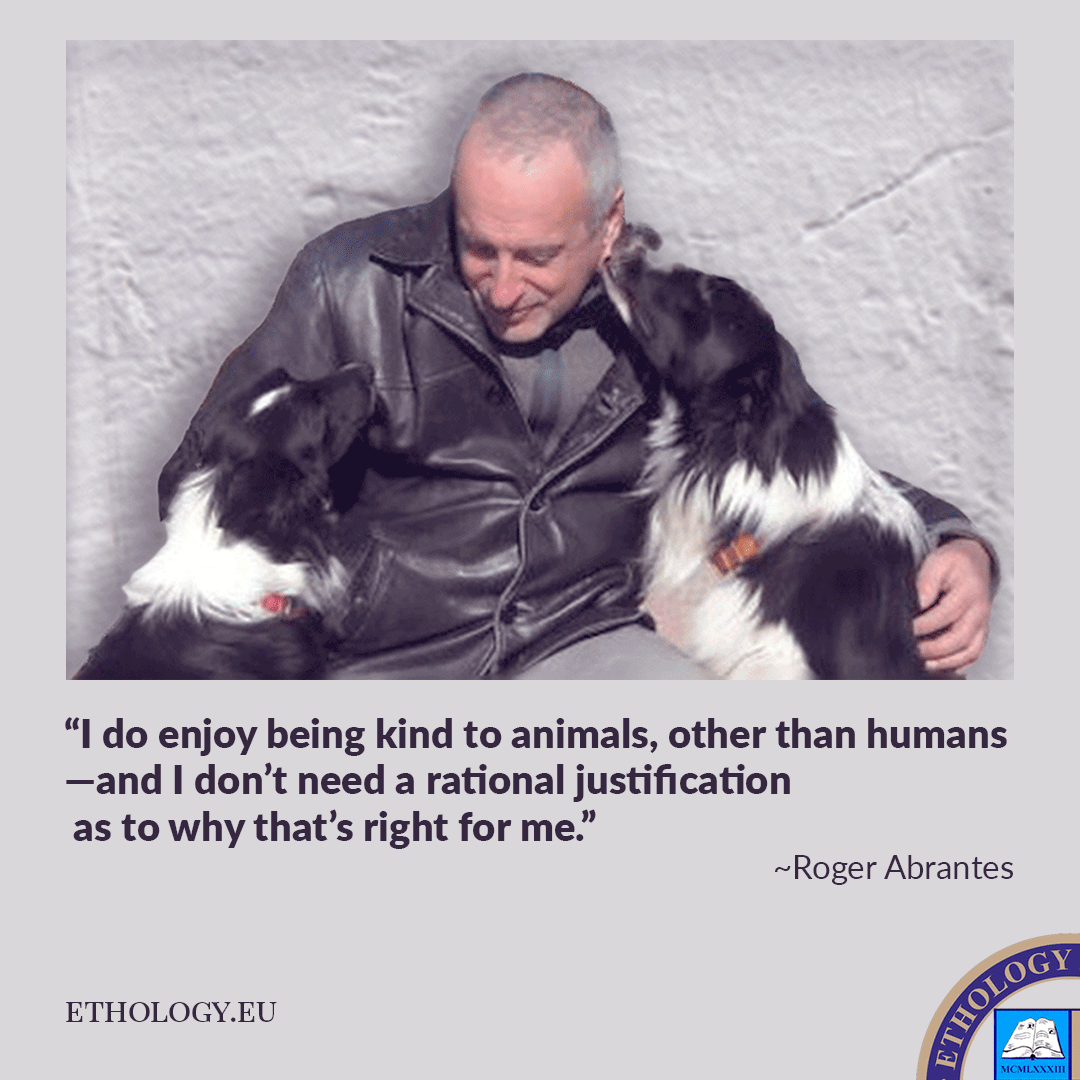
I do enjoy being kind to animals, other than humans—and I don’t need a rational justification as to why that feels right for me. I respect them for what they are and interact with them on equal terms. I don’t believe it is right to subjugate them to my will, to control them, to change them.

Yes, I do enjoy being kind to animals, as it brings a sense of harmony to my life. While I can’t force anyone to choose harmony or define it in a specific way, I can demonstrate how bullying does not lead to stability. Because of this, I find it difficult to argue with people who believe that bullying others—whether human or non-human—is acceptable. Nor can I argue with people who think it’s justifiable to hurt others in order to achieve their goals since I find such actions objectionable. I cannot discuss with people who deny or affirm a particular matter of fact to justify their moral decisions, because my mind rejects invalid, unsound arguments.

Morality and science are two separate disciplines. I may not like the conclusions and implications of some scientific studies, and I may even find their application to be immoral; yet, my responsibility as a scientist is to report findings objectively. Stating a fact does not oblige me to adopt any particular moral stance. While science does influence my perceptions, it does not dictate how I feel about that fact. Ultimately, my moral decisions are independent of scientific facts.

G. E. Moore coined the term naturalistic fallacy in 1903 in “Principia Ethica.” In 1739, David Hume described, in “A Treatise of Human Nature,” the ‘is-ought problem,’ also called ‘Hume’s Law’ or ‘Hume’s Guillotine.’ The ‘is-ought fallacy’ consists of deriving an ‘ought’ conclusion from an ‘is’ premise. We cannot deduct ‘ought’ from ‘is.’

As an ethologist, my focus is on understading what is, not what ought to be. Echoing Satoshi Kanazawa, if I conclude something that is not supported by evidence, I commit a logical fallacy, which I must correct, and that’s my problem. However, if my conclusion offends your beliefs, then that’s your problem.

With time, the rational principles that govern my mind and the ethical ones that regulate my conduct may or may not prove to be the fittest. Meanwhile, due to genetic pre-programming, social conditioning, and evolutionary biology, I do enjoy being kind to animals. I respect them for what they are and interact with them on equal terms—and I don’t need a rational justification as to why that feels right for me.

Featured image: I do enjoy being kind to other animals, respecting them for what they are and interacting with them on equal terms.

Your Most Powerful Animal Training Tool

Roger Abrantes and wolf cub Silas in 1985.

Your most powerful animal training tool is yourself. The featured picture shows yours truly in 1985 with Silas, the wolf cub. Notice the whistle hanging around my neck. I used it to produce a sound as a conditioned positive reinforcer (yes, the precursor of the click sound from Karen Pryor’s clicker). Silas preferred, though, my personal verbal reinforcer (dygtig)* because I always associated it with friendly body language and facial expressions. Thus, ‘dygtig’ meant acceptance. For wolves, more sensitive to social situations than dogs, being accepted is the ultimate social reinforcer; for the cubs, it is vital.

These were the first observations leading me to suspect that verbal and mechanical conditioned positive reinforcers had different applications. Parts of the verbal reinforcer (the body language and facial expression) do not require conditioning. Therefore, I later coined the term semi-conditioned reinforcer.

I’ll say without hesitation that our most powerful animal training tool is ourselves. If we control ourselves, our body language, our facial expressions, and the little that we say, we’ll achieve what we pretend and more.

Interacting with someone is, after all, not merely conditioning a series of behaviors—it is creating a relationship.

* “Dygtig” [ˈdøgdi] is a Danish word that means “capable,” “skilled,” or “competent,” and can also mean “clever” depending on context. It is, apparently, a good sound as a reinforcer, as I discovered many years ago.

Featured image: Roger Abrantes in 1985 interacting with Silas, the wolf cub—creating a relationship.

I’m a Citizen of the World

childdogcatwide-1

I’m a citizen of the World,” I say when asked where I come from—and I am, in mind and heart.

Diogenes, in about 412 BC, was probably the first to use the expression and express the very same sentiment. Socrates (469-399 BC) concurred: “I am not an Athenian or a Greek, but a citizen of the world.” Kaniyan Poongundran, the Tamil poet, wrote (at least 2000 years ago), “To us all towns are one, all men our kin.” Thomas Paine (English-American philosopher, 1737 – 1809), said, “The world is my country, all mankind are my brethren and to do good is my religion.” Albert Einstein (1879-1955) thought of himself as a world citizen, “Nationalism is an infantile disease. It is the measles of mankind.”

I’m a citizen of the world. I’ve traveled over most of our beautiful planet, seen mountains above the clouds with perennial snow tops, and oceans reaching far beyond the eye can see. I’ve lived in temperatures from 40ºC below zero to 40ºC above. I’ve eaten all kinds of food prepared by humans and spent many a day and night enjoying the company of people with the most exceptional cultures and habits.

What’s my favorite place? I don’t have one. Everywhere I’ve been, I’ve discovered new pieces in this amazing puzzle of life. Everywhere I’ve been, from the most glamorous cities to the poorest war-torn areas, I’ve met kind and gentle people. I’ve shared water with the Maasai in the African desert and rice with the Chhetris in the Nepalese mountains. With all of them, I felt a strong kinship: no country, no culture, no language, no divide—we were family, we were humans, we were sentient living beings. Yes, I’m a citizen of the world.

Life is great!


Featured image: Everywhere I’ve been, I’ve discovered new pieces in this amazing puzzle of life.

The Biggest Difference Between Humans and Dogs

The Biggest Difference Between Humans and Dogs

The biggest difference between humans and dogs is not that we reason, and they don’t. To observe rational behavior, look to the dog. To see an emotional response, watch the owner.

Some animals, other than humans, do reason. They have well-developed brains and are goal-seeking. They acquire, store, retrieve, and process information. Additionally, research shows that other animals, besides humans, understand rules. In other words, they know that a series of events must happen in a particular sequence to produce a specific effect.

Animals of many species are capable of solving a wide range of problems that involve abstract reasoning. The problem is that most of our research projects into animal cognition either adopt a behaviorist approach—its conditioning methods nearly turning other species, except our own, into automatons—or focus on particular human characteristics, such as speaking and counting.

The standard depiction of the ladder of nature, on which the various species occupy successively higher levels, places humans at the top. However, species exhibit distinct cognitive processes, depending on how they have adapted to their different ecological niches.

That brings us back to Darwin—the difference between humans and other animals is “[…] one of degree and not of kind.” (1871 in “The Descent of Man, and Selection in Relation to Sex.”)

Featured image: The biggest difference between them and us is not that we reason, and they don’t (by D. Myers).

References

de Waal, F. B. M. (2016). Are We Smart Enough to Know How Smart Animals Are? W.W. Norton & Company.

Frederick R. News feature: The search for what sets humans apart. Proc Natl Acad Sci U S A. 2015 Jan 13;112(2):299-301. doi: 10.1073/pnas.1423320112. PMID: 25587106; PMCID: PMC4299222.

Suddendorf, T. (2013). The gap: The science of what separates us from other animals. Basic Books/Hachette Book Group.

Zentall, T. R. (2023). Comparative Cognition Research Demonstrates the Similarity between Humans and Other Animals. Animals13(7), 1165. https://doi.org/10.3390/ani13071165.

We All Say We Love Dogs but Do We?

We All Say We Love Dogs but Do We?

Today, my friends, I have a very short blog post for you—to wonder and ponder!

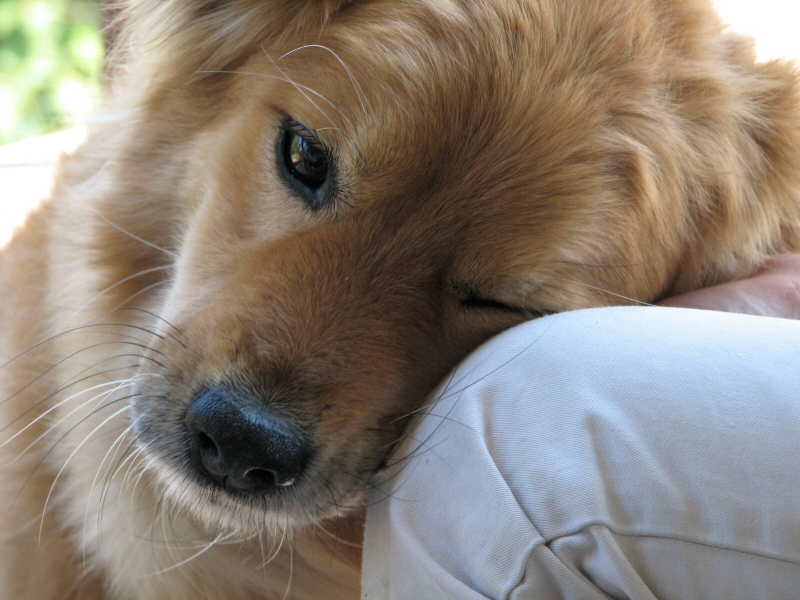
We all say we love dogs, and yet we spend most of the time changing them. We change their appearance and their natural behavior, domesticate, civilize, and humanize them. We neuter and sterilize, crop their ears, and dock their tails. We have a thriving industry and commerce of accessories and gadgets, and a zillion dog trainers to turn our dogs into something they are not.

How is that compatible with any definition of love?

Dogs Are Better Trainers Than We Are

Dogs Are Better Trainers Than We Are

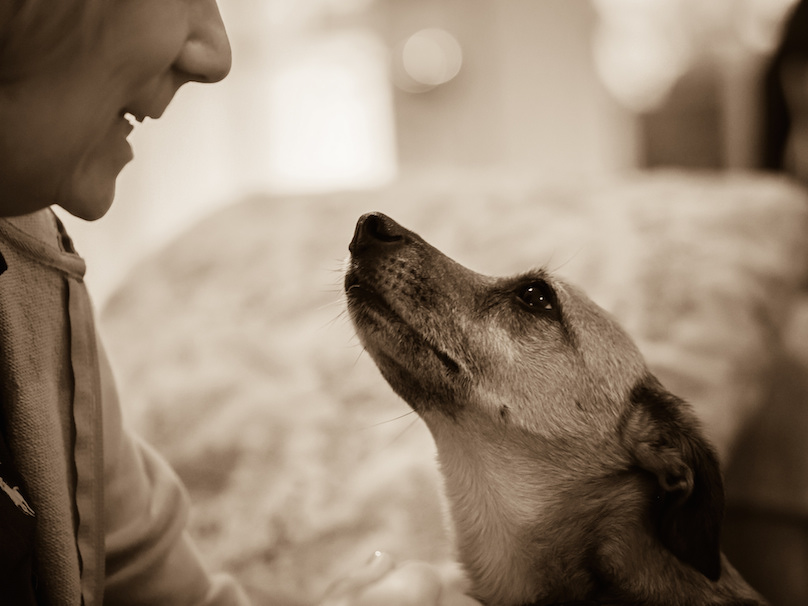
Dogs are better trainers than we are. They may know nothing about learning theory, but get along perfectly well with whom they want. Dogs don’t get too upset by a growl; they don’t become overconfident with a “yes,” nor do they get depressed by a “no.” They force us to get up early and go to bed late so they can go sniffing other dogs’ urine. We pay them for expensive food and medical care. And we do all that just because they sit and stand and look silly at us when we ask them to.

I remember, as a young student, listening to Professor Lorenz tell us that dogs were better ethologists than we were because they paid more attention to our body language than we did ourselves. That stuck with me then… and still does.

Featured image: Dogs are better trainers than we are (by A. Jones).