
Too many misunderstandings between children and dogs end in tragedy, with the dog biting. The dog is then rehomed or destroyed, and the child may carry physical or emotional scars for life.
We must treat any problem between children and dogs with the utmost seriousness. Ideally, we should act preventively—setting measures in place before accidents occur. Allow me to be blunt: when a dog bites a child, the responsibility always lies with the adults. If such a grave misunderstanding arises, it is because we have failed—failed to teach the child how dogs perceive and interpret human behavior, and failed as dog owners to ensure our dogs always and unconditionally respect children. Subsequent apologies and explanations are of little use.
A child must never pay the price for his or her parents’ ignorance, nor for a dog owner’s negligence—and neither should a dog.
Even if you are not a parent and have no plans to become one, you must still teach your dog to accept children and behave calmly in their presence. Every child deserves our protection, and a bitten child is a mark of shame for all of us who share our lives with dogs.
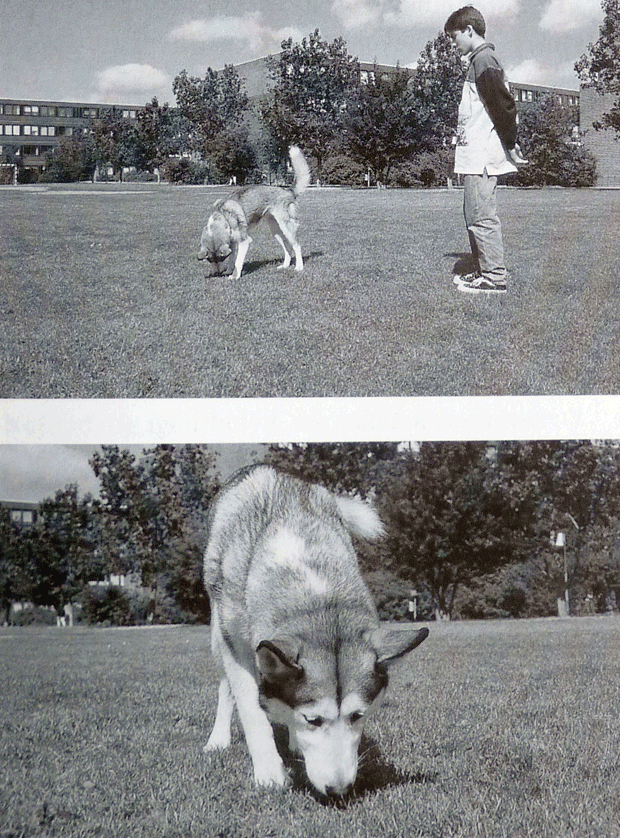
Daniel and Rassi doing scent detection in 1997. Scent detection games are excellent for teaching children and dogs to work together. In the feature picture, they demonstrate a good communication exercise for both the child and the dog: having the dog sit, stand, and lie down without touching the dog.
A growing body of research suggests that children’s emotional bonds with their pets play a significant role in their psychosocial development. Stronger attachment to companion animals, particularly dogs, has been linked to greater self-compassion and empathy toward others (Bosacki et al., 2022). The quality of the child–pet relationship also appears crucial: positive interactions promote emotional regulation and healthy behavioural outcomes, whereas negative patterns may have the opposite effect (Wright et al., 2022). Cross-cultural studies reinforce these findings; for instance, among Chinese schoolchildren, higher attachment to pets correlated with increased self-efficacy and empathy (Song et al., 2019). Overall, pet ownership—especially when based on close, supportive bonds—can contribute positively to children’s emotional, social, cognitive, and behavioural development, although evidence remains somewhat mixed and further research is required (Purewal et al., 2017).
When it comes to health concerns, the evidence remains somewhat mixed. Some studies suggest that early exposure to animals—even sharing sleeping environments—may strenghten the immune system and reduce the risk of developing allergies (Hesselmar et al., 1999). Others indicate that, once sensitization has occurred, continued exposure can aggravate symptoms (Ji et al., 2022). From an allergological standpoint, Liccardi et al. (2025) note that “the negative aspects resulting from exposure to domestic and non-domestic animals outweigh the positive ones,” and emphasize the need to find better ways to balance these risks to ensure healthy coexistence between allergic individuals and companion animals.
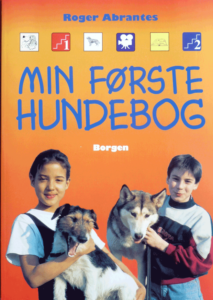
“My First Dog Book,” published in Danish in 1997—the book I wrote with the children, for the children.
“Dogs and Children,” the book included in the online course of the same name.

All in all, the research so far reminds us—parents, pet owners, and researchers alike—to stay attentive and reflective. The relationships our children build with animals, whether pets or otherwise, bring both gifts and challenges. It is our task to weigh these with care, resisting impulsive choices and allowing reason and understanding to guide our affection.
Playing it safe is always the wisest course. In particular, pay attention to the following potentially risky situations:
- Never allow the dog to pick up the child’s toys. If this happens, instruct the child not to take the toy back, but to tell you—or another adult—immediately.
- Avoid rough play between child and dog, as it can easily lead to unintended consequences.
- Teach the child not to run near the dog, since sudden movement may trigger chasing behaviour.
- Discourage the dog from jumping up at the child; most children find this frightening.
- Do not allow the child and the dog to sleep together. A sudden startle in either could result in an accident.
- Do not feed the dog and child at the same time or in close proximity. The presence of food can increase vigilance or competitiveness in some dogs.
- Finally, teach the child the basic principles of understanding the dog so that teasing, provocation, or cruelty are never even an option. Encourage them to cooperate in peaceful, controlled activities like those shown in the illustrations above.
References
Abrantes, R. (2014). Dogs and Children. Wakan Tanka Publishers (online flipbook).
Bosacki, S., Tardif-Williams, C. Y., & Roma, R. P. S. (2022). Children’s and adolescents’ pet attachment, empathy, and compassionate responding to self and others. Adolescents, 2(4), 493-507. https://doi.org/10.3390/adolescents2040039
Hawkins, R. D., Robinson, C., & Brodie, Z. P. (2022). Child–dog attachment, emotion regulation and psychopathology: The mediating role of positive and negative behaviours. Behavioral Sciences, 12(4), 109. https://doi.org/10.3390/bs12040109
Hesselmar, B., Åberg, N., Åberg, B., Eriksson, B., & Björkstén, B. (1999). Does early exposure to cat or dog protect against later allergy development? Clinical & Experimental Allergy, 29(5), 611-617. https://doi.org/10.1046/j.1365-2222.1999.00534.x
Ji, X., Yao, Y., Zheng, P., & Hao, C. (2022). The relationship of domestic pet ownership with the risk of childhood asthma: A systematic review and meta-analysis. Frontiers in Pediatrics, 10, 953330. https://doi.org/10.3389/fped.2022.953330
Liccardi, G., Martini, M., Bilò, M. B., Cecchi, L., Milanese, M., Musarra, A., Puxeddu, E., & Rogliani, P. (2025). A narrative review on allergy and exposure to domestic and non-domestic animals: Favorable and unfavorable effects. European Annals of Allergy and Clinical Immunology, 57(3), 99–106. https://doi.org/10.23822/EurAnnACI.1764-1489.372. PDF (open access): https://www.eurannallergyimm.com/wp-content/uploads/2025/05/6.AAIITO-57_3_2025.pdf
Purewal, R., Christley, R., Kordas, K., Joinson, C., Meints, K., Gee, N., & Westgarth, C. (2017). Companion animals and child/adolescent development: A systematic review of the evidence. International Journal of Environmental Research and Public Health, 14(3), 234. https://doi.org/10.3390/ijerph14030234
Song, Y., Hirose, T., & Koda, N. (2019). Psychosocial impact of pet keeping on schoolchildren in China. People and Animals: The International Journal of Research and Practice, 2(1), Article 4. https://docs.lib.purdue.edu/paij/vol2/iss1/4Purdue e-Pubs








 Roger Abrantes