Stress Helps Learning and Bonding

Abstract

Stress is often portrayed as harmful, yet moderate, acute stress can enhance learning, memory retention, and social bonding. Recent epigenetic research reveals that stress hormones modulate gene expression in key brain regions, strengthening memory consolidation and attentional processes. Unpleasant or intense experiences tend to form long-lasting memories, an adaptive mechanism for survival. Beyond cognition, stress can facilitate social bonding through oxytocin-mediated social buffering, as demonstrated in mammals, including domesticated dogs, although effects are highly context-dependent. Excessive or chronic stress, however, disrupts these processes, impairing memory, social interactions, and overall well-being. This paper emphasizes the nuanced, dual role of stress, highlighting its adaptive functions and underscoring the importance of understanding stress within an evolutionary and behavioral framework, not least because such understanding can inform more efficient animal behavior modification.

duckling-climbing-stress-helps-learning

Stress Helps Learning and Bonding

A tough nut to crack is an everlasting memory that binds the parties together, and there is a reason for that. Moderate stress heightens arousal and sharpens attention, facilitating learning and the formation of durable memories (Roozendaal, McEwen, & Chattarji, 2009; McGaugh, 2015). Studies show that stress-related hormones and neuromodulators can also strengthen certain social bonds, depending on context, species, and prior history (Carter, 2014; Hostinar, Sullivan, & Gunnar, 2014).

Fig. 1 — Illustration of the hypothalamic-pituitary-adrenal (HPA) axis during the stress response: the hypothalamus detects stress and releases corticotropin-releasing hormone (CRH), which stimulates the pituitary gland to release adrenocorticotropic hormone (ACTH). ACTH triggers the adrenal glands to produce cortisol, the body’s key stress hormone. Cortisol’s effects on the body feed back to regulate this system, maintaining balance through a negative feedback loop.

The Term Stress Is Dangerously Ambiguous

We need to be careful, though. The term stress is dangerously ambiguous. Richard Shweder once described stress in a 1997 New York Times, Week in Review essay, as “a word that is as useful as a Visa card and as satisfying as a Coke. It’s non-committal and also non-committable.” Here, we adopt a biological definition:

Stress is the organism’s coordinated physiological response to a real or perceived challenge to homeostasis, involving the activation of the sympathetic nervous system and the hypothalamic–pituitary–adrenal axis to restore equilibrium (see fig. 1).

This distinction—between colloquial and biological uses—is crucial because the physiological and behavioral mechanisms engaged differ depending on whether the stressor is acute or chronic, controllable or uncontrollable. In this context, Koolhaas et al. (2011, p. 1291) propose that “the term ‘stress’ should be restricted to conditions where an environmental demand exceeds the natural regulatory capacity of an organism, in particular situations that include unpredictability and uncontrollability,” emphasizing the adaptive and context-dependent nature of the stress response (McEwen & Wingfield, 2010; Koolhaas et al., 2011).

What Is the Function of Stress?

Being an evolutionary biologist, when contemplating a mechanism, I always ask: “What is the function of that? What is that good for?” A mechanism can originate by chance (most do), but unless it provides the individual with some extra benefits in survival and reproduction, it will not spread in the population. From an evolutionary perspective, the stress response and the modulation of memory under stress increase the probability of survival (Nesse & Ellsworth, 2009; McEwen, Nasca, & Gray, 2016).

Why Do Unpleasant Memories Persist?

Emotionally intense, threatening, or highly arousing situations produce stronger, more persistent memory traces. Biologically, remembering potentially harmful events helps self-preservation. Negative or threatening events recruit the amygdala–hippocampal network more strongly, with the amygdala modulating hippocampal consolidation via noradrenergic and glucocorticoid-dependent mechanisms (Johansen, Cain, Ostroff, & LeDoux, 2011; McGaugh, 2015; LeDoux & Pine, 2016).

Stress006
Fig. 2 — Sequence of events from exposure to a stressor through activation of the body’s physiological and behavioral stress response system (including the HPA axis), resulting in molecular and epigenetic changes such as DNA methylation and altered gene expression in stress-related genes. These epigenetic modifications influence future stress responsiveness and can affect health outcomes over the long term.

Epigenetic Effects

One of the most exciting scientific discoveries of late is the role of epigenetics (see fig. 2). Epigenetics—the study of modifications in gene activity that occur without altering the DNA sequence—has become central to contemporary models of learning and memory. Bird defines an epigenetic event as “the structural adaptation of chromosomal regions so as to register, signal or perpetuate altered activity states” (Bird, 2007, p. 398). Within this framework, attention focuses on activity-dependent chromatin modifications that occur during an individual’s lifetime rather than on transgenerational inheritance (Allis & Jenuwein, 2016). Mechanisms such as DNA methylation, histone acetylation, and related chromatin adjustments fine-tune gene expression in response to salient experiences, enabling the formation and stabilization of memory (Sweatt, 2013). Stress hormones act on mineralocorticoid and glucocorticoid receptors in hippocampal and amygdalar circuits, where they modulate plasticity and enhance the consolidation of significant events (Roozendaal, McEwen, & Chattarji, 2009; McEwen et al., 2012). Through interactions with noradrenergic projections from the locus coeruleus, glucocorticoids further shape these epigenetic regulators, influencing transcriptional programs essential for synaptic plasticity (Zovkic, Guzman-Karlsson, & Sweatt, 2013; Gray, Rubin, Hunter, & McEwen, 2014). These coordinated molecular processes, under moderate stress, enhance learning and contribute to the durability of highly arousing or threatening experiences.

Not All Stress Boosts Learning

Not all stress is productive for learning. Excessive stress produces the opposite effect. There is a difference between being stressed and stressed out. When stress becomes excessive or prolonged, the organism enters a state where immediate survival takes priority over other functions, and memory formation decreases. Chronic stress, in particular, undermines learning and cognitive function by disrupting hippocampal structure and impairing synaptic plasticity (de Kloet, Joëls, & Holsboer, 2005). These maladaptive effects highlight that stress is beneficial only within a moderate and context-dependent range; beyond that, it impairs both cognition and emotional regulation.

Stress and Bonding—A Delicate Balance

Stress does more than enhance memory; under certain conditions, it actively promotes social bonding. Oxytocin, a neuropeptide closely linked to affiliation, mediates this effect by dampening the HPA axis response during shared or moderate stress, thereby encouraging proximity and affiliative behaviors (Crockford, Deschner, & Wittig, 2017). In rodents, moderate stress enhances social-seeking behavior among cagemates via oxytocin signaling, though excessively threatening contexts abolish this effect (Burkett et al., 2015). Findings in rodents provide a foundation for understanding oxytocin-mediated bonding, which can also be observed in humans and domesticated dogs, albeit with species-specific nuances.

In domesticated dogs, exogenous oxytocin increases sociability toward humans and conspecifics, and social interactions raise endogenous oxytocin levels (Nagasawa et al., 2015). Just as humans bond emotionally through mutual gaze—a process mediated by oxytocin—Nagasawa et al. demonstrate that a similar gaze-mediated bonding exists between humans and dogs: “These findings support the existence of an interspecies oxytocin-mediated positive loop facilitated and modulated by gazing, which may have supported the coevolution of human-dog bonding by engaging common modes of communicating social attachment” (Nagasawa et al., 2015, p. 333). Longitudinal observations further show that chronic stress markers, such as hair cortisol, can synchronize between dogs and their owners, suggesting a deep physiological linkage (Sundman et al., 2020). Importantly, these bonding effects are highly context-dependent: moderate, predictable stress tends to facilitate affiliation, whereas excessive or prolonged stress may inhibit social bonding.

Caveats: Despite the fascinating discoveries mentioned above, we must be prudent in our conclusions. The effects of stress on bonding are highly context-dependent. Elevated cortisol in dogs can reflect excitement rather than distress (Nagasawa et al., 2015), and the benefits observed in rodents require non-threatening environments (Burkett et al., 2015). Oxytocin’s influence varies with social familiarity; stress may not enhance affiliation with strangers or weakly bonded partners (Crockford et al., 2017). Correlational studies, such as cortisol synchronization in dog–owner dyads, cannot prove causality, though they suggest physiological coupling that may support bonding under shared stress.

Conclusion

We need a balanced view of stress. Acute, manageable challenges—those that elicit adaptive stress responses—support attentional sharpening, facilitate memory consolidation, strengthen social bonds, and promote effective learning. These benefits are highly context-dependent: stress can enhance cognition and affiliation when moderate and predictable, but excessive or prolonged stress can overwhelm these systems, impairing memory, social interactions, and overall well-being. From an evolutionary perspective, stress serves a dual adaptive function—preparing individuals to respond to threats while reinforcing social bonds that increase survival odds. A nuanced understanding is therefore essential for interpreting behavior and guiding sound practice.

For animal trainers, these insights translate into a few practical guidelines. Animals benefit from gradual exposure to manageable, stress-eliciting challenges that promote resilience and adaptive coping. Training sessions should be calibrated so that the stress elicited remains within a range that facilitates attention and learning—enough to trigger mild HPA-axis activation, but not so intense as to be counter-productive. Moreover, designing training sessions that employ an appropriate level of stress can strengthen the trainer–animal bond by allowing the trainer to serve as a social buffer during mildly stressful tasks.

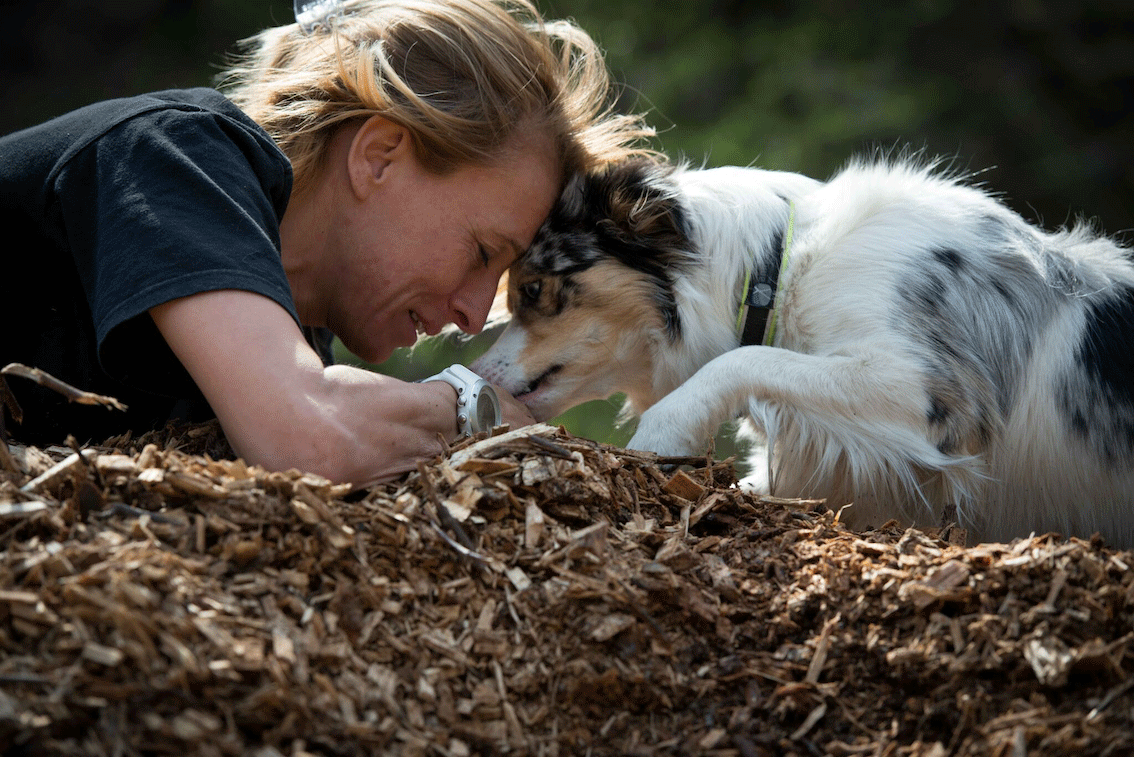
Featured picture: A tough nut to crack is an everlasting memory that binds the parties together (photo by unknown).

References

Allis, C. D., & Jenuwein, T. (2016). The molecular hallmarks of epigenetic control. Nature Reviews Genetics, 17(8), 487–500. https://doi.org/10.1038/nrg.2016.59

Bird, A. (2007). Perceptions of epigenetics. Nature, 447(7143), 396–398. https://doi.org/10.1038/nature05913

Burkett, J. P., Andari, E., Johnson, Z. V., Curry, D. C., de Waal, F. B. M., & Young, L. J. (2016). Oxytocin‑dependent consolation behavior in rodents. Science, 351(6271), 375–378. https://doi.org/10.1126/science.aac4785

Carter, C. S. (2014). Oxytocin pathways and the evolution of human behavior. Annual Review of Psychology, 65, 17–39. https://doi.org/10.1146/annurev-psych-010213-115110

Crockford, C., Deschner, T., & Wittig, R. M. (2017). The role of oxytocin in social buffering of stress: What do primate studies add? Current Topics in Behavioral Neurosciences, 30, 1–33. https://doi.org/10.1007/7854_2017_12

de Kloet, E. R., Joëls, M., & Holsboer, F. (2005). Stress and the brain: From adaptation to disease. Nature Reviews Neuroscience, 6(6), 463–475. https://doi.org/10.1038/nrn1683

Gray, J. D., Rubin, T. G., Hunter, R. G., & McEwen, B. S. (2014). Hippocampal gene expression changes underlying stress sensitization and recovery. Molecular Psychiatry, 19(11), 1171–1178. https://doi.org/10.1038/mp.2013.175

Hostinar, C. E., Sullivan, R. M., & Gunnar, M. R. (2014). Psychobiological mechanisms underlying the social buffering of the stress response: A review of animal models and human studies across development. Psychological Bulletin, 140(1), 256–282. https://doi.org/10.1037/a0032671

Hunter, R. G., & McEwen, B. S. (2013). Stress and anxiety across the lifespan: Structural and molecular correlates. Neuroscience, 255, 1–8. https://doi.org/10.1016/j.neuroscience.2013.09.039

Johansen, J. P., Cain, C. K., Ostroff, L. E., & LeDoux, J. E. (2011). Molecular mechanisms of fear learning and memory. Cell, 147(3), 509–524. https://doi.org/10.1016/j.cell.2011.10.009

Koolhaas, J. M., Bartolomucci, A., Buwalda, B., de Boer, S. F., Flügge, G., Korte, S. M., … Fuchs, E. (2011). Stress revisited: A critical evaluation of the stress concept. Neuroscience & Biobehavioral Reviews, 35(5), 1291–1301. https://doi.org/10.1016/j.neubiorev.2011.02.003

LeDoux, J. E., & Pine, D. S. (2016). Using neuroscience to help understand fear and anxiety: A two-system framework. American Journal of Psychiatry, 173(11), 1083–1093. https://doi.org/10.1176/appi.ajp.2016.16030353

McEwen, B. S., Eiland, L., Hunter, R. G., & Miller, M. M. (2012). Stress and anxiety: Structural plasticity and epigenetic regulation as a consequence of stress. Neuropharmacology, 62(1), 3–12. https://doi.org/10.1016/j.neuropharm.2011.07.014

McEwen, B. S., Nasca, C., & Gray, J. D. (2016). Stress effects on neuronal structure: Hippocampus, amygdala, and prefrontal cortex. Neuropsychopharmacology, 41(1), 3–23. https://doi.org/10.1038/npp.2015.171

McEwen, B. S., & Wingfield, J. C. (2010). What is in a name? Integrating homeostasis, allostasis, and stress. Hormones and Behavior, 57(2), 105–111. https://doi.org/10.1016/j.yhbeh.2009.09.011

McGaugh, J. L. (2015). Consolidating memories. Annual Review of Psychology, 66, 1–24. https://doi.org/10.1146/annurev-psych-010814-014954

Nagasawa, M., Mitsui, S., En, S., Ohtani, N., Ohta, M., Sakuma, Y., … Kikusui, T. (2015). Oxytocin-gaze positive loop and the coevolution of human–dog bonds. Science, 348(6232), 333–336. https://doi.org/10.1126/science.1261022

Nesse, R. M., & Ellsworth, P. C. (2009). Evolution, emotions, and emotional disorders. American Psychologist, 64(2), 129–139. https://doi.org/10.1037/a0013503

Roozendaal, B., McEwen, B. S., & Chattarji, S. (2009). Stress, memory and the amygdala. Nature Reviews Neuroscience, 10(6), 423–433. https://doi.org/10.1038/nrn2651

Sundman, A.-S., Van Poucke, E., Svensson Holm, A.-C., Faresjö, Å., Theodorsson, E., Jensen, P., & Roth, L. S. V. (2020). Long-term stress levels are synchronized in dogs and their owners. Scientific Reports, 10(1), 17112. https://doi.org/10.1038/s41598-020-74204-8

Sweatt, J. D. (2013). The emerging field of neuroepigenetics. Neuron, 80(3), 624–632. https://doi.org/10.1016/j.neuron.2013.10.023

Zovkic, I. B., Guzman-Karlsson, M. C., & Sweatt, J. D. (2013). Epigenetic regulation of memory formation and maintenance. Learning & Memory, 20(2), 61–74. https://doi.org/10.1101/lm.026575.112

Muzzle Grasp Behavior in Canids

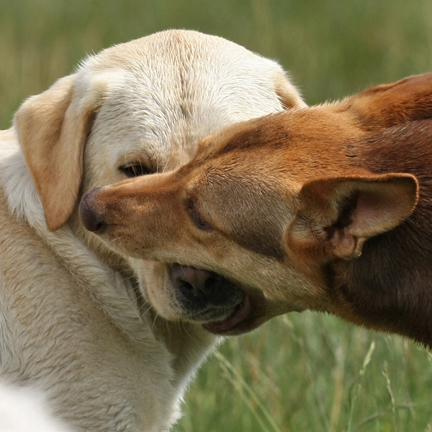
Dog muzzle grab.
Dogs also exhibit the muzzle grasp behavior (photo by Marco de Kloet).

A “Muzzle grasp” (or muzzle grab) is a common behavior shown by social canines, e.g., wolves (Canis lupus lupus), dingoes (Canis lupus dingo), and dogs (Canis lupus familiaris)The primary function of this behavior is to confirm a relationship rather than to settle a dispute. The more self-confident or higher-ranking individual will muzzle-grasp a more insecure or lower-ranking partner to assert its social position. The more insecure individual does not resist the grasp; on the contrary, it often displays submissive behavior, literally inviting its partner to muzzle-grasp it. Even though we sometimes see this behavior at the end of a dispute, wolves and dogs only use it toward individuals they know well—pack members—as a kind of saying, “You’re still a cub (pup).” The dispute itself tends not to be serious, merely a low-key challenge, often over access to a resource. Youngsters, cubs, and pups sometimes solicit adults to muzzle-grasp them. This behavior appears reassuring to them.

The muzzle-grasp behavior emerges early in development. Canine mothers muzzle-grasp their puppies (sometimes accompanied by a growl) to deter them from suckling during weaning. Field observations confirm this mechanism. As Packard, Mech, and Ream (1992, p. 1274) report, “In the context of playing, begging, and sharing, pups did not leave when another wolf muzzled, snapped, or lunged. In contrast, the muzzling by the nurser in the context of suckling terminated the pups’ attempts to gain access to nipples.” This observation illustrates the early communicative value of the muzzle contact as both a mild inhibitory and relational signal. Cubs and pups also muzzle-grasp one another during play, typically between six and nine weeks of age. They probably learn through play that the muzzle-grasp is an effective way of stopping an opponent from doing something, while also learning bite inhibition. If they bite too hard, they elicit a fight and risk injury. A muzzle-grasp, therefore, does not involve biting, only grasping. This behavior helps develop a relationship of trust between both parties—“we don’t hurt one another.”

Similar tactile interactions, including muzzle-to-muzzle contact, also occur in post-conflict and affiliative contexts among wolves. Cordoni and Palagi (2019) describe reciprocal muzzle-licking between adults and immature pack members following mild conflicts—acts that function as “consolation” and reinforce social bonds. Although a muzzle-grasp differs mechanically from muzzle-licking, both share an underlying functional value: the restoration or affirmation of trust within a dyad. These tactile gestures exemplify the nuanced physical vocabulary through which canids maintain cohesion and mitigate tension within the pack.

Classic naturalist observations (Zimen, 1981) describe frequent muzzle-to-muzzle contacts and note adults seizing pups’ muzzles during play and weaning; together with quantitative field data (Packard, Mech, & Ream, 1992), this supports the view that muzzle contact is an early-emerging, ritualised tactile signal rather than an aggressive act.

When used to settle a dispute, a muzzle-grasp may appear more violent and usually ends with the individual being muzzle-grasped exhibiting passive, submissive behavior. Yet participants very seldom, if ever, get hurt, an occurrence that would undermine the behavior’s function.

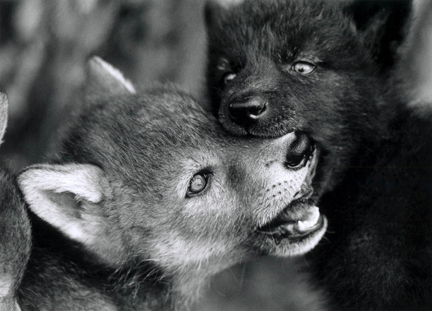
wolf cubs muzzle grasp
Wolf Adult Muzzle Grasp

Left: Cubs and pups muzzle grasp one another during play. Right: Muzzle grasp in adult wolves (photos by Monty Sloan).

A muzzle-grasp requires self-control. Higher-ranking wolves and dogs muzzle-grasp their pack members (teammates) and, by doing so, confirm their rank while displaying restraint. Lower-ranking wolves and dogs often engage in muzzle-grasping behavior to affirm their social position and reassure themselves that they remain included in the group.

The muzzle-grasp behavior probably originated as both a form of maternal (and later paternal) control and as a play behavior among cubs. As it appears to have been beneficial to all parties involved, it may have become a factor favored by natural selection, spreading from generation to generation and evolving as any other trait that enhances the fitness of individuals within cohesive social groups.

In domestic dogs, when puppies are about five to seven weeks old, their mother regularly muzzle-grasps them to deter suckling. At first, her behavior frightens them, and they may whimper excessively, even though she does not harm them. Later, when grasped by the muzzle, the puppy immediately shows passive submissive behavior—lying on its back and exposing its ventral side. Previously, it was assumed that the mother needed to pin the puppy to the ground; however, Packard et al. (1992) observed that, in wolves, in practice, “[…] on the occasions when the nurser winced or muzzled the pups, the pups did not persist” and that “[…] counter-tactics for overcoming nurser rejection did not occur (pp. 1271–1272).” Most puppies submit voluntarily. Over time, this behavior pattern assumes variations. Wolf cubs and puppies often invite the alpha male (the leader of the pack and, in wolves, usually their father) as well as other adults to grasp them by the muzzle, thereby soliciting a demonstration of their elders’ superiority and self-control while simultaneously showing their own acceptance and submissiveness. This is among the most reassuring behaviors an adult can show a youngster.

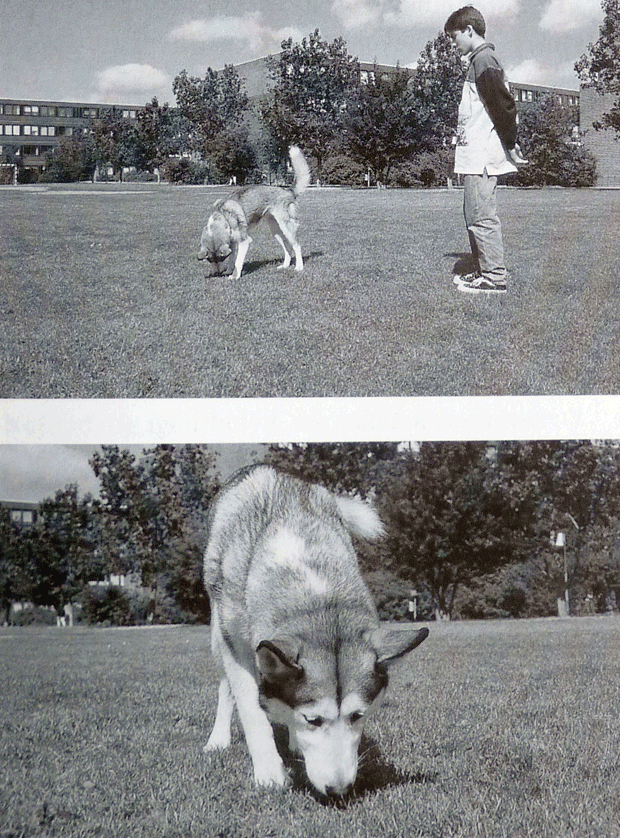
Domestic dogs sometimes approach their owners puffing gently with their noses. By gently placing a hand around their muzzle, we may reassure them of acceptance, demonstrate self-control, and convey that they can trust us. That is speaking dog-language to the best of our abilities. After being muzzle-grasped for a while, the dog will usually show a nose-lick, perhaps yawn, and then walk calmly away. It is as if the dog were saying, “I’m still your puppy,” and the owner replied, “I know—and I’ll take good care of you.”

The muzzle-grasp behavior can be challenging to classify. Some researchers see it as social or affiliative, others as agonistic, and still others as pacifying. Because its primary function is to confirm and maintain relationships, it may best be considered a social behavior—a ritualized, low-intensity interaction that reinforces trust and cohesion within the group.

Next time your dog gently nudges or invites a muzzle‑grasp, pause for a moment—what you see as a simple dog behavior is, in canine language, a subtle conversation of trust and understanding.

References

Abrantes, R. (1987). Hundesprog. Borgen Forlag, Copenhagen.

Abrantes, R. (1997). The Evolution of Canine Social Behavior. Naperville, IL: Wakan Tanka Publishers.

Abrantes, R. (2011, December 11). Dominance—Making sense of the nonsense. Roger Abrantes Blog. https://rogerabrantes.wordpress.com/2011/12/11/dominance-making-sense-of-the-nonsense/

Cordoni, G., & Palagi, E. (2019). Back to the future: A glance over wolf social behavior to understand dog–human relationship. Animals, 9(11), 991. https://doi.org/10.3390/ani9110991

Packard, J. M., Mech, L. D., & Ream, R. R. (1992). Weaning in an Arctic wolf pack: Behavioral mechanisms. Canadian Journal of Zoology, 70(7), 1269–1275. https://doi.org/10.1139/z92-177. USGS+1 PDF (scanned article, pages shown above): https://www.wolf.org/wp-content/uploads/2013/09/172weaningarcticwolf.pdf

Zimen, E. (1981). The wolf: His place in the natural world. Souvenir Press Ltd. ISBN 9780285624115

Note: I first wrote about the muzzle grasp behavior in canids in my Danish book Hundesprog (1987), where I called it “mund om snuden,” which translates directly as “mouth around the snout.” This term became “muzzle grasp” in the first English edition of the book, titled Dog Language. I later wrote Muzzle Grab Behavior in Canids on April 25, 2012. Two years afterward, on March 13, 2014, I revised it as Canine Muzzle Grasp Behavior—Advanced Dog Language. True to my philosophy of updating articles and papers as new evidence emerges, I have once again revised this work. The latest version, published in November 2025, appears here under the title Muzzle Grasp Behavior in Canids.

Canine Scent Detection: Reviving the Oldest Mammalian Sense

—A Sniffer Dog is a Happy Dog

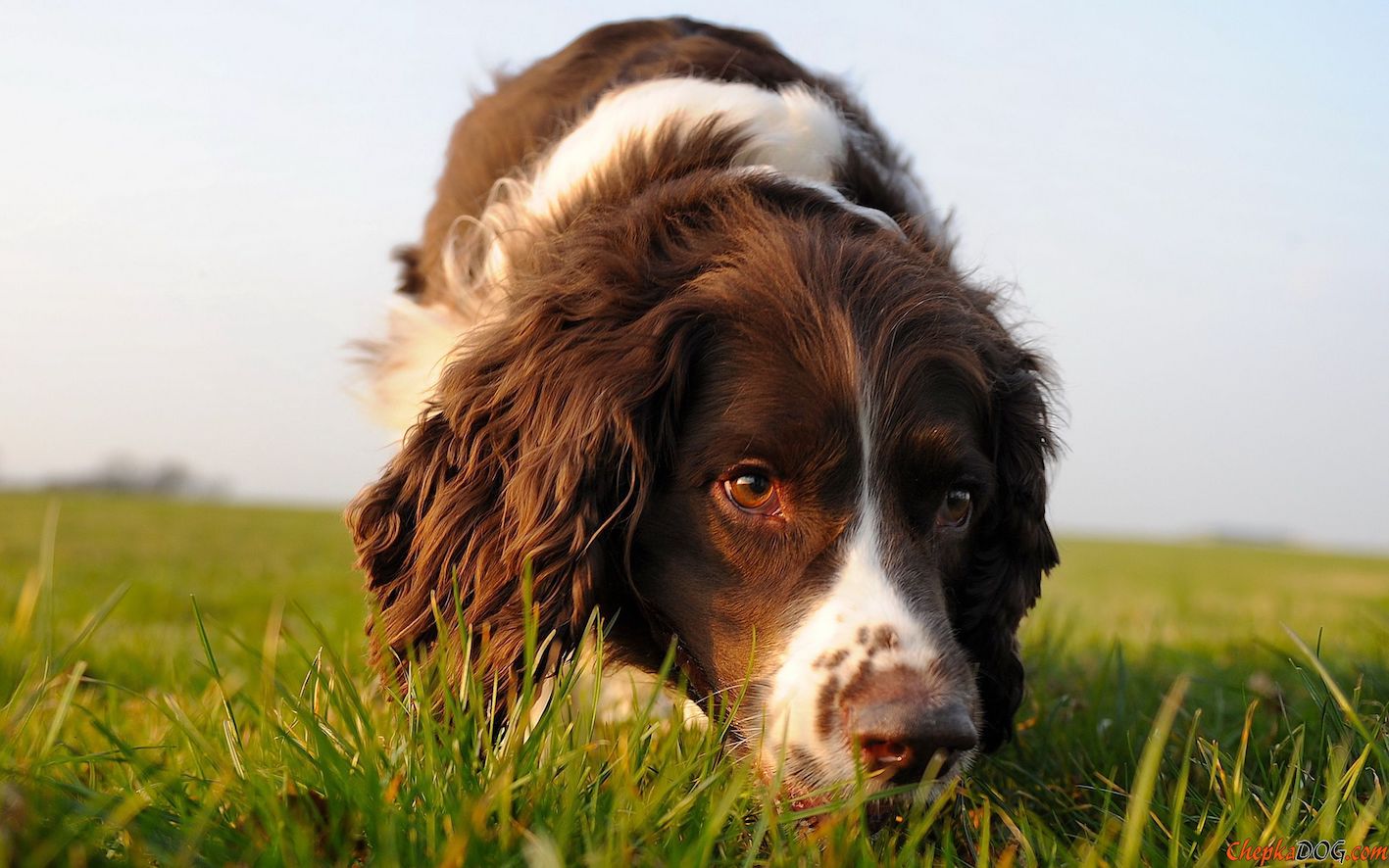
English Springer Spaniel On The Trail

Scent detection has fascinated me since my early days as a student of biology, and I was already training detection animals at the beginning of the 1980s. Over the years, I have trained dogs, rats, and guinea pigs to detect narcotics, explosives, blood, vinyl, fungus, landmines, tuberculosis, and tobacco—and they excelled in all these tasks.

What has always intrigued me most is how deeply scent detection seems to be woven into their very being, regardless of species. Indeed, much before dogs became our partners in scent detection, olfaction had already shaped the mammalian brain—including ours. Although humans are often described as “microsmatic,” this view stems mainly from a 19th-century anthropocentric bias. In fact, human olfactory performance—when properly measured—can rival that of many other mammals (McGann, 2017). Fossil endocasts reveal that early mammalia forms possessed disproportionately large olfactory bulbs, suggesting that life for our distant ancestors was guided above all by smell (Rowe, Macrini, & Luo, 2011). The olfactory pathways remain among the most conserved in the mammalian nervous system, closely intertwined with limbic and reproductive circuits (Shipley & Ennis, 1996; Boehm, Zou, & Buck, 2005). As Lledo, Gheusi, and Vincent (2005) observed, “It is clear today that olfaction is a synthetic sense par excellence. It enables pattern learning, storage, recognition, tracking, or localization and attaches emotional and hedonic valence to these patterns” (p. 309). To smell, then, is not merely to detect—it is to think, feel, and remember.

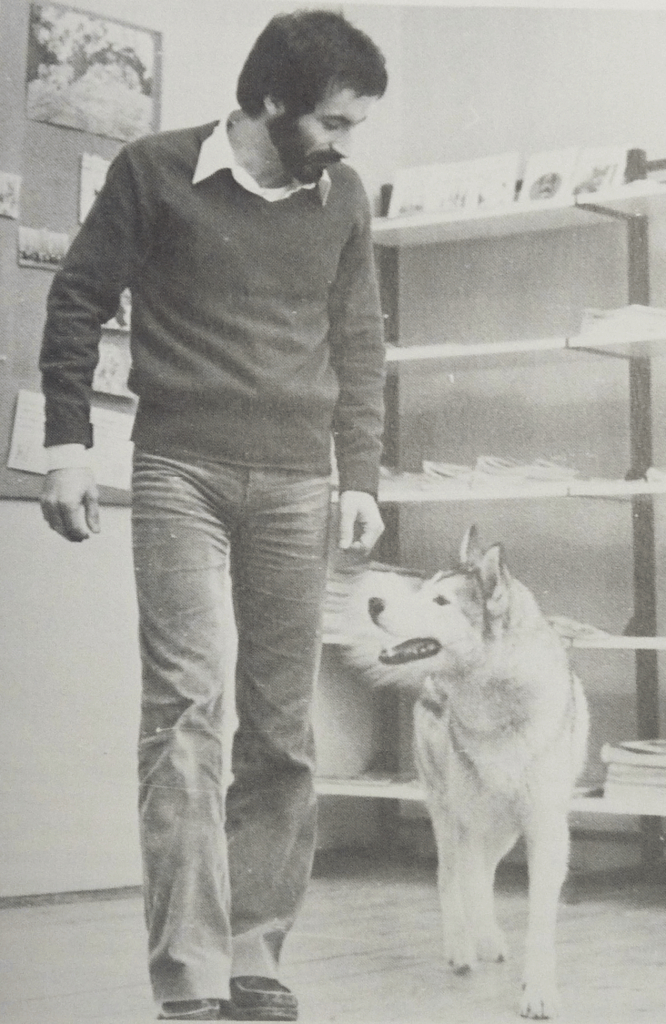
Most of my detection work was carried out for the police, armed forces, SAR teams, or other professional agencies. Yet, I had written about scent detection already in the early 1980s, in my first book, Psychology rather than Force, published in Danish. Back in 1984, I called it “nose work” (a direct translation from the Danish næsearbejde). I recommended that all dog owners stimulate their dogs by giving them detection tasks, beginning with their daily rations. We even conducted some research on this, and the results were highly positive: dogs trained in detection work improved in many aspects of their otherwise problematic behavior. My recommendation remains the same today. Physical exercise is, of course, essential—but do not forget to stimulate your dog’s nose as well, perhaps its primary channel of information about the world.

nosework 1984

Above: In “Hundesprog” (Dog Language) from 1987, I mention “nose work” with an illustration from Alce Rasmussen. To the right: Yours truly in 1984 with a Siberian Husky, an “untrainable” dog, as everybody used to say. This was when my book “Psychology rather than Force” created a stir. We were then right at the beginning of the animal training revolution. In that book, I mention “nose work” (a direct translation from the Danish “næsearbejde”) and recommend it as an excellent way to stimulate our dogs.

raa and husky in 84

Recent field data illustrate how central olfaction is to the daily lives of canids. Wolves in the Białowieża Forest, for instance, were active on average 45.2 % of every 24 hours—about 10.8 h per day—primarily in movement, travelling, and search behaviours (Theuerkauf et al., 2003, Table 1, p. 247). Monthly patterns (Figure 6, p. 249) suggest that activity levels vary with season, although exact numerical ranges are not provided in the text. Comparable patterns appear in other canids: red foxes spend about 43 % of their observable foraging time sniffing the ground (Wooster et al., 2019), and free-ranging domestic dogs devote substantial portions of their active time to exploratory and searching behaviours—activities guided predominantly by olfaction (Banerjee & Bhadra, 2022). These figures reveal that for a wolf or fox, using the nose is not an occasional act but a continuous occupation, consuming many hours each day.

Measurement%Hours (h)
Time active45.2 %10.8
Time moving35.9 %8.6

Table 1. Average daily activity of wolves in the Białowieża Forest, Poland (1994–1999), showing the proportion of time spent active and moving, both as a percentage of the 24-hour day and in hours. Data from Theuerkauf et al. (2003, Table 1, p. 247).

Note. “Time active” includes periods when wolves were travelling, hunting, or otherwise moving. Observations indicate that these behaviours are predominantly guided by olfaction. Activity was generally higher at night, and seasonal variation appears linked to day length and prey availability. On average, wolves were active roughly half the day (~10.8 h), highlighting that extensive daily searching and tracking is a defining feature of their ecology (Theuerkauf et  al., 2003, Table 1, p. 247).

When I began promoting “nose work” in the early 1980s, I did so from personal experience rather than data. I spent many hours on scent detection with my English Cocker Spaniels. They loved it and were calmer, more focused, and more fulfilled than their peers who were not as nose-stimulated. I quickly discovered that scent detection was so self-reinforcing—in behaviorist terms—that no other reinforcers were needed beyond my approval, which they actively sought. In those moments, I realised that to be a dog is to be a cooperative nose-worker.

Science has since validated that intuition. Scent work is not a modern invention—it is a structured expression of what canids have done for thousands of years: exploring their world through odor cues. When we engage a dog’s nose, we are not merely training a skill; we are restoring a function at the very core of its evolution. Understanding that is perhaps the greatest lesson of scent detection: to educate and enrich a dog’s life, we must first respect the sensory world in which it truly lives.

References

Banerjee, A., & Bhadra, A. (2022). Time–activity budget of urban-adapted free-ranging dogs. Acta Ethologica, 25(1), 15–25. https://doi.org/10.1007/s10211-021-00379-6

Boehm, U., Zou, Z., & Buck, L. B. (2005). Feedback loops link odor and pheromone signaling with reproduction. Cell, 123(4), 683–695. https://doi.org/10.1016/j.cell.2005.09.027

McGann, J. P. (2017). Poor human olfaction is a 19th-century myth. Science, 356(6338), eaam7263. https://doi.org/10.1126/science.aam7263

Lledo, P.-M., Gheusi, G., & Vincent, J.-D. (2005). Information processing in the mammalian olfactory system. Physiological Reviews, 85(1), 281–317. https://doi.org/10.1152/physrev.00008.2004

Rowe, T. B., Macrini, T. E., & Luo, Z.-X. (2011). Fossil evidence on origin of the mammalian brain. Science, 332(6032), 955–957. https://doi.org/10.1126/science.1203117

Shipley, M. T., & Ennis, M. (1996). Functional organization of olfactory system. Journal of Neurobiology, 30(1), 123–176. https://onlinelibrary.wiley.com/doi/10.1002/(SICI)1097-4695(199605)30:1%3C123::AID-NEU11%3E3.0.CO;2-N

Theuerkauf, J., Kamler, J. F., & Jedrzejewski, W. (2003). Daily patterns and duration of wolf activity in the Białowieża Forest, Poland. Journal of Mammalogy, 84(1), 243–253. https://ibs.bialowieza.pl/publications/1396.pdf

Wooster, E., Wallach, A. D., & Ramp, D. (2019). The Wily and Courageous Red Fox: Behavioural analysis of a mesopredator at resource points shared by an apex predator. Animals, 9(11), 907. https://doi.org/10.3390/ani9110907

Featured image: Springer Spaniel, nose down, focused on a search.

Note: This article is a substantially revised and edited version of an earlier article from May 6, 2014, entitled Do You Like Canine Scent Detection? The revisions are extensive enough that the article deserves a new title and is therefore republished as new.

Canine Maternal Behavior


Maternal Behavior

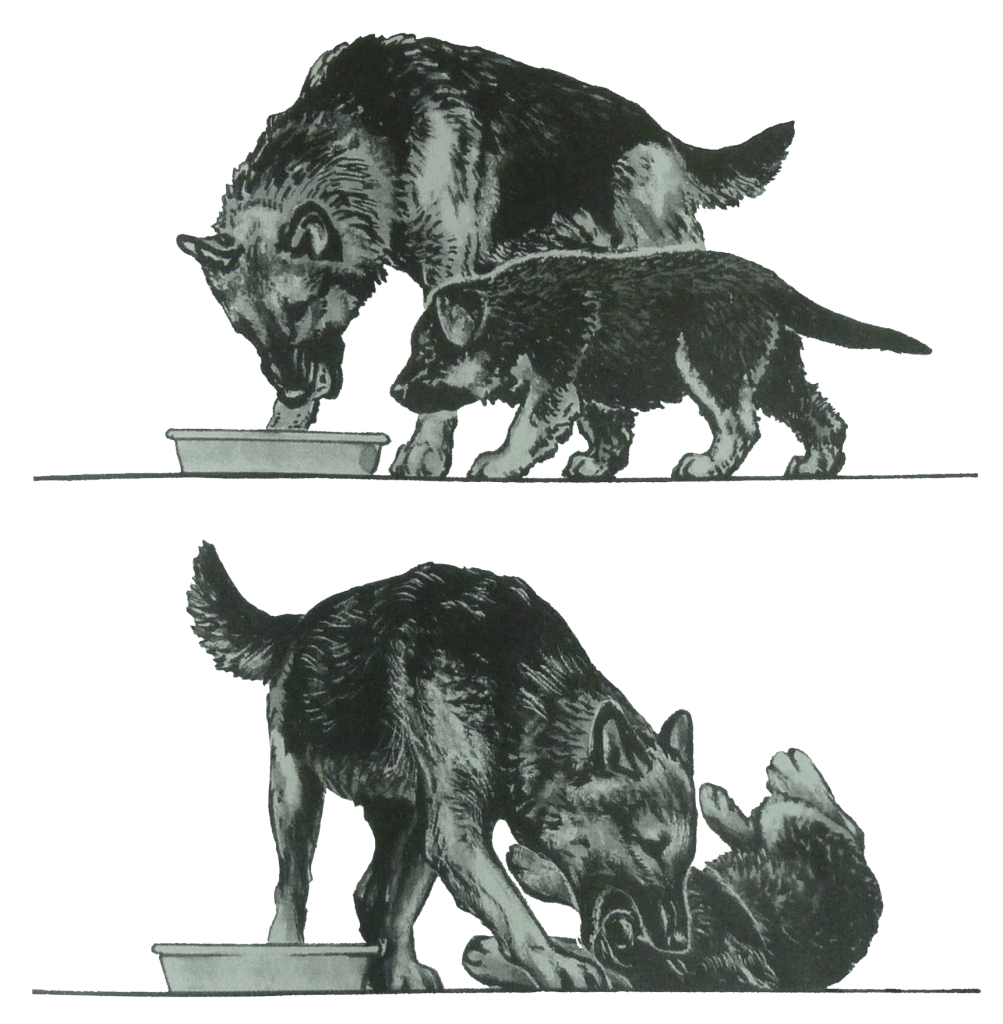
Canine maternal behavior is more than just feeding the pups. It is also to teach them dog language (Illustration by Alice Rasmussen from “Dog Language” by Roger Abrantes).

Watching dog mothers take care of their pups continues to fascinate me, and the large populations of village dogs in Africa and Thailand, where I spent and spend a great deal of my time, provides me with plenty of opportunities to do it. Village dogs are domestic dogs, not wild dogs. Often classified as stray dogs by the inept, ignorant eye of the western tourist, these dogs perform an important task in their communities of humans and their domestic animals.

Maternal behavior is behavior shown by a mother toward her offspring. In most species, it is the mother that primarily takes care of the youngsters, and the dog is no exception. Natural selection has favored the evolution of this particular behavior of the females.

In wild canids, although it is mostly the female that takes care of the puppies, the father (also called the alpha male) and other adults do become interested in the feeding and raising of the puppies when they begin emerging from the den. In the studies my team did in the 80s, our dogs showed the same pattern in a domestic set-up.

Maternal behavior is, thus, almost identical in wild a canids and domestic dogs. Immediately after birth, the mother dries the puppies, keeps them warm, feeds them and licks them clean. The maternal behavior right after birth is controlled by hormonal processes and problems may occur if the female gives birth too early. On the other hand, pseudo-pregnancy causes females to undergo hormonal changes which may elicit maternal behavior in various degrees. Maternal behavior seems to be self-reinforcing. Studies show that the levels of dopamine increase in the nucleus accumbens (a region of the brain) when a female displays maternal behavior.

When the puppies become older, the mother begins to educate them. She gives them the first lessons in dog language about the time weaning begins. Growling, snarling and the various pacifying behaviors are inborn, but the puppies need to learn their function.

The canine mother has three main tasks: (1) to feed the puppies, first with her own milk, then by regurgitation, (2) to keep them clean and warm, especially when they are very young, and (3) to educate the puppies.

A good canine mother is patient and diligent. When the puppies grow, dog owners often misunderstand the mother’s apparently more violent educational methods. She may growl at them and even attack them, but she never harms them. Muzzle grabbing (see illustrations) is fairly common. Without the mother’s intervention, the puppies would never become capable social animals and would not be able to function properly in a pack (a group of wild dogs living together is in English called a pack). When the puppies are about 8-10 weeks old, the mother seems to lose some of her earlier interest in them. In normal circumstances, the rest of the pack, then, takes over the continuing education of the puppies, their social integration in the group (which probably mostly consists of relatives) and their protection.

Dog owners sometimes report problems, e.g. that the mother has no interest in her puppies, or is too violent towards them. These problems are mainly due to our selective breeding (we select for beauty and utility while nature selects for overall fitness, hereby included adequate maternal behavior) and to our lack of understanding of the mother’s needs during and after birth, which often result in the female showing stress, insecurity or aggressive behavior.

Maternal effect is the mother’s influence on her puppies. It can have such an impact on certain behavior patterns that it can be difficult to distinguish between maternal effect and the effect of genetics. For example, observations have shown that a female reacting too nervously or fearfully toward certain sounds may affect her puppies into developing sound phobias beyond what we would expect given the puppies’ specific genotype. The strong influence of the maternal effect on the behavior of her puppies is the main reason why it is extremely difficult, if not impossible, to assess the hereditary coefficient for particular traits.

Bottom-line: Do not breed females that you suspect will not show reliable maternal behavior. Do not disturb a female with her pups more than absolutely necessary. A good canine mother knows better than you what’s best for her pups.

As always, enjoy a peaceful day,

R~

References

  • Abrantes, R. 1997. The Evolution of Canine Social Behavior. Wakan Tanka Publishers.
  • Abrantes, R. 1997. Dog Language. Wakan Tanka Publishers.
  • Coppinger, R. and Coppinger, L. 2001. Dogs: a Startling New Understanding of Canine Origin, Behavior and Evolution. Scribner.
  • Darwin, C. 1872. The Expressions of the Emotions in Man and Animals. John Murray (the original edition).
  • Fox, M. 1972. Behaviour of Wolves, Dogs, and Related Canids. Harper and Row.
  • Lopez, Barry H. (1978). Of Wolves and Men. J. M. Dent and Sons Limited.
  • Mech, L. D. 1970. The wolf: the ecology and behavior of an endangered species. Doubleday Publishing Co., New York.
  • Mech, L. David (1981). The Wolf: The Ecology and Behaviour of an Endangered Species. University of Minnesota Press.
  • Mech, L. D. 1988. The arctic wolf: living with the pack. Voyageur Press, Stillwater, Minn.
  • Mech. L. D. and Boitani, L. 2003. Wolves: Behavior, Ecology, and Conservation. University of Chicago Press.
  • Scott, J. P. and Fuller, J. L. 1998. Genetics and the Social Behavior of the Dog. University of Chicago Press.
  • Zimen, E. 1975. Social dynamics of the wolf pack. In The wild canids: their systematics, behavioral ecology and evolution. Edited by M. W. Fox. Van Nostrand Reinhold Co., New York. pp. 336-368.
  • Zimen, E. 1982. A wolf pack sociogram. In Wolves of the world. Edited by F. H. Harrington, and P. C. Paquet. Noyes Publishers, Park Ridge, NJ.

Do Dogs Understand What We Say?

roger abrantes and rottweiler

“Do dogs understand what we say?” is one of the most frequent questions people ask me.

My answer is, “yes and no. They do, and they don’t. It all comes down to what you mean by understanding.”

Dogs do not understand English or any other human-created language. They do understand words (or rather, sounds) in any language. After hearing the sound “sit” many times, the dog associates it with a particular behavior and with some consequences, and will end up sitting more often than not when it hears that sound. It all depends on the consequences and on the competing stimuli at that precise moment. If the dog has something better to do, offering more attractive consequences, or the consequences for not sitting are not that unpleasant, then it won’t sit. In that respect, it is exactly like us: “I hear perfectly well what you are saying, I just don’t want to do it.” It is all a question of costs and benefits, as we say in ethology.

Dogs do not understand sentences. Most dogs get excited and run to the door when we say, “Let’s go for a walk.” That does not prove the dog understands the sentence; it only shows that it associates one sound in the sentence—probably the word walk—with one particular behavior. If we say, “Banana ping-pong walk,” we will very likely get the same response.

Tone matters. We don’t need any experiments to verify that. Observing casual dog owners provides us with all the necessary evidence. “Don’t do that, sweetie, we don’t like that at all,” with a gentle voice, is no way to prevent a dog from doing whatever it is doing. Better be quiet if so, because all we say in that tone will only reinforce the behavior we don’t want. Curious, isn’t it, how things can work just the opposite of what we intend?

cocker spaniel and owl

There is a universal language comprising terms that all animals understand, such as peace, danger, companionship, fear, safety, and mutuality. Partnerships exist between animals across species (photo by unknown).

If you want your dog to keep on doing what it is doing, you’d better say something in a mellow tone. It does not matter what you say, but it will be more efficient if you always use the same word (read sound). Personally, my favorite is dygtig (Danish for clever). It has a good doggy sound, gives me a friendly, doggy face, and I can modulate it for the occasion, e.g., make it long, short, etc.

If you don’t want your dog to do something, you’d better say it in a serious tone (I said serious, not yelling). I use “Stop” or “Phooey” in an assertive tone, and that does the trick (usually). I never use “No” for this purpose. “No” conveys important information, i.e., “What you’re doing is not adequate, try something else.” Of course, you don’t need to do as I do. You do what works for you, and I do what works for me.

Body language is essential, and even more decisive in our dogs’ behavior than sounds and tones. If you doubt it, watch my movie “Animal Training My Way.” I barely talk to the dog, and we understand one another perfectly well. Self-confident body language will induce your dog to follow your instructions more readily. Insecure body language will either make your dog nervous or alert it to take control of the situation since you seem to be in no position to do anything about it.

Does it help to try to speak dog language, even with an awful accent? Yes, definitely. Dogs respond well to our yawning, champing (chomping), licking our lips, squeezing our eyes shut, pouty mouth, the canine muzzle grasp, and many other signals. You need to be a keen observer and practice, and to be completely uninhibited and unconcerned about others laughing at you. I like doing it, and I get excellent results. Then again, I speak nine languages (doguese, catese, and horsish not counted), some with a poor accent—and I do get rewarded for my effort. It works for me, but again, you do what works best for you.

Do dogs create relationships with us like they do with other dogs? Not exactly, but does it matter? Dogs are uncomplicated. When they live with other animals, including humans, they adapt (as do many other animals). They don’t regard us as dogs, and I believe they don’t even speculate about that. They communicate with us in their language, and they seem to appreciate it when we answer them in something that resembles their language. There’s nothing special about that. It works for and with most animals (if not all). You respect their ways, and you get some results—you don’t, and you get different results.

It’s all a question of communication. When I’m diving with rookie students, their way of moving around and gesticulating far too much attracts the attention of the local fauna. When I’m there with one of my usual diving buddies (we always dive in buddy pairs), they don’t even seem to notice us. The body language of the rookie signals “alarm,” “intruder”—and ours, more experienced as we are, signals “all is good.”

It’s really that simple. I still can’t grasp how anyone can argue that meeting the other party halfway is pointless. The usual defense is that dogs are dogs and humans are humans—a remarkable justification that flies in the face of everything we know about interspecies communication—hence, my commitment to “knowledge to everyone everywhere.”

All I can say to you is that it works well for me. With all my human inadequacies—and within certain limits—when in Rome, I do as the Romans do; when underwater, I do as the fish do; and when I’m with a dog, I do as dogs do. You don’t have to, of course. Yet, I tell you, every time we manage to bridge that gap, even for an instant, we glimpse something larger than ourselves—the rudiments of a language that might well be universal.

 ____________

Featured image: Dogs communicate with us in the ways of their species, and they seem to appreciate it when we answer them in something that resembles their language (photo by Lisa Jernigan Bain).

Do You Want to Become a Better Dog Trainer?

When we ran our traditional on-campus programs at the Ethology Institute, the new students would invariably divide into two groups: those who wanted to become dog trainers and those who wanted to become horse trainers. Every year, I told them the same: “If you want to become good trainers of your favorite species, you must also train other species—you must gain perspective.”

In principle, it doesn’t matter which other animals you train. Cats, rats, parrots—each offers its own valuable lessons. However, there is one small and charming creature that stands out to me as the almost ideal teacher. It is social, curious, shy, and relatively easy to train. You have probably guessed it: the guinea pig (Cavia porcellus).

Today, I’m going to share how these little, cute animals can help you become a better dog trainer, a better horse trainer, a better animal trainer—and, most importantly, a more complete individual. Please, keep reading.

The basic skills you need to train a dog are the same as those you need to train any other animal. One difference—and this is good news for you—is that (mainly due to our common history) there is no other animal as easy to train as a dog. On the other hand, there is a limit to how much you learn if you only train dogs.

Dogs forgive our mistakes and are nearly always motivated to cooperate. Other species scrutinize us far more thoroughly. We must earn their trust—if they don’t trust us, they won’t cooperate with us. A horse will not follow you if it doesn’t trust you, and it takes a lot to earn the trust of a horse (and only a moment to lose it). You can offer as many carrots as you like, but if it decides you are not someone to be trusted, the best carrots in the world will be to no avail. A cat will blink, at least twice, at you and the treat you offer it before even considering moving in your direction. Then, if it deems your request reasonable, it may just indulge you—otherwise, no deal.

The guinea pig, a favorite prey of many predators, including humans, is social and fearful by nature. We don’t share a common evolutionary history with it, as we do with the dog. You won’t get anything for free. You’ll have to work to gain your guinea pig’s trust and show it that cooperating with you is profitable in both the short and the long term.

Training guinea pigs will teach you the theory of animal learning. You’ll have to be precise and follow the correct procedures to produce the desired behavior. You’ll explore the whole spectrum of operant conditioning, but you’ll be left gasping for more. You’ll find yourself desperately attempting to think like a guinea pig, thus entering the realm of ethology.

A guinea pig trained in scent detection, completing the double-blind test after four hours of efficient training spread over three consecutive days. We also trained it to perform well in a mini-agility course (see credits in the video).

You can teach dogs many things without a proper plan. They are so active and eager to please that, sooner or later, they will do something you like, which you can reinforce. With dogs, you can play by ear and sing along, but with other animals, you’ll need to plan. Timing is essential when you train your dog, but surprisingly enough, you’ll still achieve acceptable results even if your timing is off. With dogs, it’s like singing a melody out of tune and your friends still recognizing it. With guinea pigs, you’d better sing in tune, or they will tacitly suggest you get your act together before going back to them. It’s tough, but it’s also a good lesson about life.

Much like horses, guinea pigs tend to react fearfully when in doubt (a trait that has helped them survive throughout their evolutionary history). Displaying composed, self-confident behavior works well, but anything more assertive than that will backfire on you. Dogs, these ever amazing animals, give you a second chance (and understand our bad “accents” in dog language); a horse or a guinea pig hardly ever do so. If you even think of trying to bully a guinea pig into doing what you want, it will probably freeze for up to 30 minutes, which is a real stopper for any aspiring trainer.

You’ll learn soon enough that coercion is not the way to go at all. Thus, you’ll learn the secrets of motivation and the beauty of working within and with your environment, rather than attempting to control it, and that in itself will lead you to unexpected and welcomed results.

If they could, I’m sure your dog and your horse would thank the guinea pigs for what they teach you when you train them, for you become, undoubtedly, a much more subtle and balanced trainer. You’ll be in control of yourself rather than the animal, motivating rather than forcing, showing the way rather than fumbling about, achieving results with the least (sometimes even imperceptible) amount of intrusion into your favorite animal’s normal behavior.

If you have a chance, give it a try. We can never learn too much, can we?

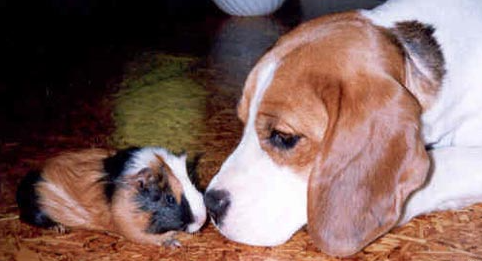
Featured image: Dog and guinea pig together. Training a guinea pig can make you a better dog trainer (photo letsbefriends.blogspot.com).

Does Your Dog Show Allelomimetic Behavior?

Does your dog show allelomimetic behavior? I’m sure it does, but don’t worry, it’s not dangerous, except when it is, and yes, it is contagious. Confused? Keep reading.

Allelomimetic behavior is doing what others do. Some behaviors have a strong probability of influencing others to do the same. Animals in constant contact with one another will inevitably develop allelomimetic behavior.

Dogs exhibit various allelomimetic behaviors—walking, running, sitting, lying down, getting up, sleeping, barking, and howling—each of which has a strong tendency to stimulate others to do the same.

Social predators increase their hunting success when they hunt in unison. One individual setting after the prey is likely to trigger the same response in the whole group.

woman with dog by sunvilla-1

More often than we think, it is our own behavior that triggers our dog’s allelomimetic behavior (photo by SunVilla).

The wolf’s howl is allelomimetic, one more behavior our domestic dogs share with their wild cousins. Howling together functions as social bonding. When one wolf howls, the whole pack may join in, especially if a high-ranking wolf started it. I bet that if you go down on your knees, turn your head up, and howl (provided you are a half-decent howler), your dog will join you; then, it will attempt to show its team spirit by licking your face.

Sleeping and eating are examples of allelomimetic behavior. Dogs and cats tend to sleep and eat at the same time. Barking is also contagious. One barking dog can set the whole neighborhood’s dogs barking.

Synchronizing behavior may be a lifesaver. In prey animals like the deer, zebra, or wildebeest, one individual can trigger the whole herd to flee. This trait is so crucial for self-preservation that farm animals like sheep, cows, and horses still keep it. Grazing also occurs at the same time.

child playing puppy

 Running after a running child is more often an example of canine allelomimetic behavior than hunting or herding as many dog owners erroneously presume.

Allelomimetic behavior is not restricted to animals of the same species. Animals of different species that live together often exhibit allelomimetic behavior. Dogs can read body language and respond to certain behaviors of their owners without further instruction. An alerted owner triggers his dog’s alertness more often than not.

Puppies show allelomimetic behavior at about five weeks of age. It is an intrinsic part of your dog’s behavior to adjust to the behavior of its companions. Your behavior influences your dog’s behavior in many more instances than you realize.

At the neurological level, when we watch someone perform an action, our own motor system often “echoes” it—a process known as motor resonance. This effect is made possible by mirror neurons, brain cells that activate both when we do something and when we see another individual doing the same. Research suggests that dogs may share this ability: their tendency to move, look, or react in sync with humans may stem from similar neural mirroring processes (Lamontagne & Gaunet, 2024).

From an evolutionary and behavioral standpoint, because we have selected and bred our dogs to be highly sociable and socially promiscuous, they exhibit extended allelomimetic behavior, i.e., not only copying the behavior of their closest companions but also that of others. Next time you walk in the park and your dog runs after running children, you can casually comment, “Typical instance of allelomimetic behavior.” Not that it will solve any problem, if there is one, but you’ll be right, and I bet you will impress more than a few of your fellow park walkers.

__________________

References

Abrantes, R. (1997). Dog language: An encyclopedia of canine behavior. Wakan Tanka Publishers.

Lamontagne, A., & Gaunet, F. (2024). Behavioural synchronisation between dogs and humans: Unveiling interspecific motor resonance? Animals, 14(4), 548. https://doi.org/10.3390/ani14040548

Scott, J. P., & Marston, M. V. (1950). Social facilitation and allelomimetic behavior in dogs. II. The effects of unfamiliarity. Behaviour, 2(3), 135–143. Retrieved from https://mouseion.jax.org/stfb1950_1959/19/

Vogel, H. H., Scott, J. P., & Marston, M. V. (1950). Social facilitation and allelomimetic behavior in dogs. I. Social facilitation in a non-competitive situation. Behaviour, 2(3), 121–134. Retrieved from https://mouseion.jax.org/stfb1950_1959/24/

__________________

Note: Careful ethological observation sometimes anticipates neurobehavioral discoveries by decades. I described canine allelomimetic behavior in my 1987 book Hundesprog (later published in English as Dog Language, 1997)—a phenomenon that would only gain neurobiological support 34 years later with the findings of Lamontagne and Gaunet (2024), which strongly suggest the potential existence of interspecific motor resonance.

Children and Dogs—How to Avoid Problems

daniel and rassi sit

Too many misunderstandings between children and dogs end in tragedy, with the dog biting. The dog is then rehomed or destroyed, and the child may carry physical or emotional scars for life.

We must treat any problem between children and dogs with the utmost seriousness. Ideally, we should act preventively—setting measures in place before accidents occur. Allow me to be blunt: when a dog bites a child, the responsibility always lies with the adults. If such a grave misunderstanding arises, it is because we have failed—failed to teach the child how dogs perceive and interpret human behavior, and failed as dog owners to ensure our dogs always and unconditionally respect children. Subsequent apologies and explanations are of little use.

A child must never pay the price for his or her parents’ ignorance, nor for a dog owner’s negligence—and neither should a dog.

Even if you are not a parent and have no plans to become one, you must still teach your dog to accept children and behave calmly in their presence. Every child deserves our protection, and a bitten child is a mark of shame for all of us who share our lives with dogs.

daniel rassi scent detection

 Daniel and Rassi doing scent detection in 1997. Scent detection games are excellent for teaching children and dogs to work together. In the feature picture, they demonstrate a good communication exercise for both the child and the dog: having the dog sit, stand, and lie down without touching the dog.

A growing body of research suggests that children’s emotional bonds with their pets play a significant role in their psychosocial development. Stronger attachment to companion animals, particularly dogs, has been linked to greater self-compassion and empathy toward others (Bosacki et al., 2022). The quality of the child–pet relationship also appears crucial: positive interactions promote emotional regulation and healthy behavioural outcomes, whereas negative patterns may have the opposite effect (Wright et al., 2022). Cross-cultural studies reinforce these findings; for instance, among Chinese schoolchildren, higher attachment to pets correlated with increased self-efficacy and empathy (Song et al., 2019). Overall, pet ownership—especially when based on close, supportive bonds—can contribute positively to children’s emotional, social, cognitive, and behavioural development, although evidence remains somewhat mixed and further research is required (Purewal et al., 2017).

When it comes to health concerns, the evidence remains somewhat mixed. Some studies suggest that early exposure to animals—even sharing sleeping environments—may strenghten the immune system and reduce the risk of developing allergies (Hesselmar et al., 1999). Others indicate that, once sensitization has occurred, continued exposure can aggravate symptoms (Ji et al., 2022). From an allergological standpoint, Liccardi et al. (2025) note that “the negative aspects resulting from exposure to domestic and non-domestic animals outweigh the positive ones,” and emphasize the need to find better ways to balance these risks to ensure healthy coexistence between allergic individuals and companion animals.

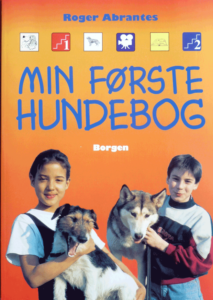
My First Dog Book,” published in Danish in 1997—the book I wrote with the children, for the children.

“Dogs and Children,” the book included in the online course of the same name.

my first dog book cover
dogs and children book coverdogs and children book cover

All in all, the research so far reminds us—parents, pet owners, and researchers alike—to stay attentive and reflective. The relationships our children build with animals, whether pets or otherwise, bring both gifts and challenges. It is our task to weigh these with care, resisting impulsive choices and allowing reason and understanding to guide our affection.

Playing it safe is always the wisest course. In particular, pay attention to the following potentially risky situations:

  • Never allow the dog to pick up the child’s toys. If this happens, instruct the child not to take the toy back, but to tell you—or another adult—immediately.
  • Avoid rough play between child and dog, as it can easily lead to unintended consequences.
  • Teach the child not to run near the dog, since sudden movement may trigger chasing behaviour.
  • Discourage the dog from jumping up at the child; most children find this frightening.
  • Do not allow the child and the dog to sleep together. A sudden startle in either could result in an accident.
  • Do not feed the dog and child at the same time or in close proximity. The presence of food can increase vigilance or competitiveness in some dogs.
  • Finally, teach the child the basic principles of understanding the dog so that teasing, provocation, or cruelty are never even an option. Encourage them to cooperate in peaceful, controlled activities like those shown in the illustrations above.

References

Abrantes, R. (2014). Dogs and Children. Wakan Tanka Publishers (online flipbook).

Bosacki, S., Tardif-Williams, C. Y., & Roma, R. P. S. (2022). Children’s and adolescents’ pet attachment, empathy, and compassionate responding to self and others. Adolescents, 2(4), 493-507. https://doi.org/10.3390/adolescents2040039

Hawkins, R. D., Robinson, C., & Brodie, Z. P. (2022). Child–dog attachment, emotion regulation and psychopathology: The mediating role of positive and negative behaviours. Behavioral Sciences, 12(4), 109. https://doi.org/10.3390/bs12040109

Hesselmar, B., Åberg, N., Åberg, B., Eriksson, B., & Björkstén, B. (1999). Does early exposure to cat or dog protect against later allergy development? Clinical & Experimental Allergy, 29(5), 611-617. https://doi.org/10.1046/j.1365-2222.1999.00534.x

Ji, X., Yao, Y., Zheng, P., & Hao, C. (2022). The relationship of domestic pet ownership with the risk of childhood asthma: A systematic review and meta-analysis. Frontiers in Pediatrics, 10, 953330. https://doi.org/10.3389/fped.2022.953330

Liccardi, G., Martini, M., Bilò, M. B., Cecchi, L., Milanese, M., Musarra, A., Puxeddu, E., & Rogliani, P. (2025). A narrative review on allergy and exposure to domestic and non-domestic animals: Favorable and unfavorable effects. European Annals of Allergy and Clinical Immunology, 57(3), 99–106. https://doi.org/10.23822/EurAnnACI.1764-1489.372. PDF (open access): https://www.eurannallergyimm.com/wp-content/uploads/2025/05/6.AAIITO-57_3_2025.pdf

Purewal, R., Christley, R., Kordas, K., Joinson, C., Meints, K., Gee, N., & Westgarth, C. (2017). Companion animals and child/adolescent development: A systematic review of the evidence. International Journal of Environmental Research and Public Health, 14(3), 234. https://doi.org/10.3390/ijerph14030234

Song, Y., Hirose, T., & Koda, N. (2019). Psychosocial impact of pet keeping on schoolchildren in China. People and Animals: The International Journal of Research and Practice, 2(1), Article 4. https://docs.lib.purdue.edu/paij/vol2/iss1/4Purdue e-Pubs

The Confidence Connection in Animal Training

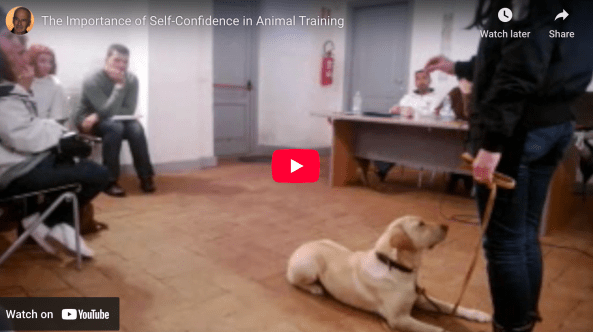
Confidence plays a far greater role in animal training than most people realize. It’s a circular affair: confidence breeds success, and success breeds confidence.

Training often fails—not because the animal doesn’t understand, but because you don’t believe it will work. Doubt is contagious. The moment you hesitate, your body betrays you—and your animal reads you like an open book.

Dogs, horses, cats, even guinea pigs are experts in body language. They sense uncertainty long before you utter a word or make your first move. If you don’t know or aren’t sure of what you want, why should they feel safe following your lead?

So, here’s your plan of action: think it through, then act—with calm determination. Don’t worry about controlling the animal; control yourself. If you do that, the rest usually follows.

And if it still doesn’t work? You may ask. Tough luck—sometimes it doesn’t. In that case, go back to square one, revise your plan, and try again. Each failure sharpens your skill and, if you let it, strengthens your confidence.

Enjoy your training—but above all, enjoy the privilege of sharing time with another living being.

____________________

Note: This article was initially called “The Importance of Confidence in Animal Training.” I changed it in October 2025 while editing it because I realized the title could be ambiguous. It could suggest trusting animal training methods or confidence in the field itself, rather than the trainer’s self-confidence and the animal’s confidence in the trainer (as a result of the former).

Featured video: Credits at the end of the video.

Ilaria Training Italy

Do You Know What the Canine Hip Nudge Behavior Means?

canine hip nudge

The hip nudge is a typical canine behavior. Dog owners often think their dogs are pushy or impolite when they turn their backs to them, sometimes even pushing them. Nothing could be farther from the truth.

A hip nudge is a behavior a dog shows when it nudges another with its hip or rear end. Dogs often use this behavior towards us during greeting ceremonies when we show them passive friendliness by crouching down to it. The dog will walk towards us and turn round. Then it will either nudge us gently with its hip or rear end, or stand passively with its back to us.

caninehipnudgeraa-1-600x600-1

This dog shows a half hip nudge, still a sign of friendliness. Both the human and the dog are relaxed and show their peaceful intentions and trust in one another (photo by Lisa Jernigan Bain).

The hip nudge functions as a pacifying behavior. It signals friendliness. By turning its back to us, the dog shows it doesn’t intend to attack—it directs its teeth away from us. It also indicates it trusts us.

Dogs use a variation of the hip nudge behavior during mating rituals, in which the male nudges the female.

I first described this behavior in 1987, in the original edition of “Dog Language,” after spending several years observing, photographing, and filming dogs (Canis lupus familiaris), wolves (Canis lupus lupus), and foxes (Vulpes vulpes).

There are only minor differences between wolf and dog, which we can describe as dialects. The fox differs because, although it displays many behaviors common to the other two, it is less social than its cousins.

 References

  • Abrantes, R.A. (1992/1997). Dog Language—An Encyclopedia of Canine Behavior. Wakan Tanka Publishers, Naperville, IL.
  • Abrantes, R.A. (1997/2005). The Evolution of Canine Social Behavior. Wakan Tanka Publishers, Naperville, IL.
  • Fox, M.W. (1971). Behaviour of Wolves, Dogs and Related Canids. Harper & Row.
  • McFarland, D. (1999). Animal Behavior. Pearson Prentice Hall, England. 3rd ed.
  • Scott, J.P. and Fuller, J.L. (1965). Genetics and the Social Behavior of the Dog. University of Chicago.
  • Zimen, E. (1981). The Wolf—His Place in the Natural World. Souvenir Press.

Featured image: The hip nudge functions as a pacifying behavior. It signals friendliness (illustration by Alice Rasmussen from “Dog Language” by Roger Abrantes).

Can Two Training Methods Be Equally Good?

treat training dog cartoon

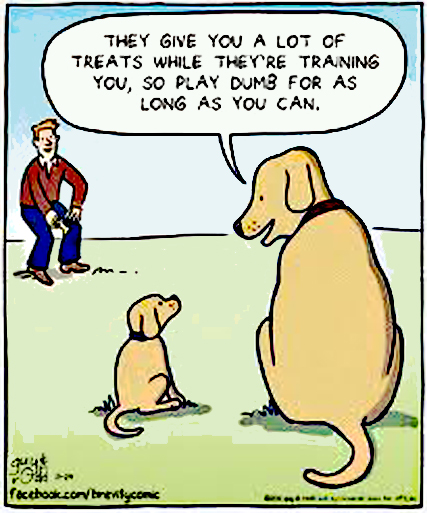
I receive many emails with questions about animal behavior. Most of them involve practical issues, but, now and then, someone poses a more complex question. Here is my answer to one of the latter, one I’d like to share with you because it addresses crucial issues in our understanding of animal behavior and training.

Dear ….,

Thanks for your comment, which allows me to clarify a few issues. By no means do I see animals as biological robots, nor do I regard the Skinnerian approach as the truth, the only truth, and nothing but the truth; quite the contrary. Please consider the following passages from “Mission SMAF—Bringing Scientific Precision Into Animal Training”.

“In fact, I suspect that [communication] even involves more than what science can describe with the intrinsic limitations of its key concepts and methods, no matter how stringent they are.

It seems to me, therefore, that our goal must not be to oppress or suppress emotions, but rather control them and use them advantageously. Emotional arousal proves to be necessary to learn and the right amount of emotional arousal even shows to increase the efficiency of learning processes.”

A very non-Skinnerian statement, I would say.

As to my own method to analyze learning processes in artificial set-ups (like in animal training), I write: “In a crude sense, SMAF is an oversimplification of complex processes […] certainly not an attempt to reduce complex mechanisms to a few formulas. In the end, [its] value depends solely on its successful application to solving practical problems; beyond that, it has no value.”

Operant conditioning (when we use it correctly) is an efficient model of behavior for animal training because we control the conditionals to some extent (as Pavlov explains in his original writings, not the subsequent translations). Whilst operant conditioning is adequate for analyzing behavior at a particular level, beyond that, it becomes too crude an instrument. To understand behavior in a broader sense, we must turn to evolutionary models and concepts—variation, selection, adaptation, fitness, function, evolutionary strategies, ESS (evolutionarily stable strategy), costs and benefits, and so forth. My approach to behavior is therefore a classical ethological one, in the tradition of von Frisch, Lorenz, and Tinbergen—firmly grounded in evolutionary biology and in philosophically coherent reasoning.

Greetings,

RAA


The core of the argument is reductionism, the view that we can reduce complex processes to the sum of their simpler parts. In a sense, all science is reductionistic. We attempt to explain complex processes with a few notions well organized in little boxes. That is a process that seems to suit our human brain particularly well.

However, we must bear in mind that our interpretations, independently of how good they are, are just our pictures of an elusive reality. They suit our particular umwelten,* but definitely not all of them. They explain parts of it from specific angles so we can make sense of it. Newton and Einstein—the classical example—are (probably) both right, each explaining reality at a different level.

There’s nothing wrong about being a reductionist if only we do not get greedy and attempt to explain far too much with far too little, as in, “That’s it, this is the way things are. Period.” Simplifying often gets us to the point that complicating and oversimplifying have both missed.

In animal training, one theory or method can be as good as another depending on its foundations, approaches, what it attempts to explain, and the practical goals it aims to serve. If both are based on reliable evidence, use well-defined terms, and are logically sound, there’s little to choose between one or the other.

If only animal trainers understood that, I believe we would forgo many senseless disputes. Then again, we can brag about being the most emotional creatures on this big blue marble of ours, can’t we?

___________

* Umwelt (plural umwelten) in ethology means the world as it is experienced by a particular organism.

___________

References

Abrantes, R. (2018). Mission SMAF—Bringing Scientific Precision In to Animal Training. Wanka Tanka Pub.

Lorenz, K. (1937). Über die Bildung des Instinktbegriffes. Naturwissenschaften, 25, 289–300. https://doi.org/10.1007/BF01492648

Павлов, И. П. (1926). Двадцатилетний опыт объективного изучения высшей нервной деятельности (поведения) животных. Ленинград: Научное химико-техническое издательство. (Pavlov, I. P. (1926). Twenty Years of Objective Study of the Higher Nervous Activity (Behavior) of Animals. Leningrad: Scientific Chemical-Technical Publishing House.)

Skinner, B. F. (1938). The Behavior of Organisms: An Experimental Analysis. New York: Appleton-Century-Crofts.

Uexküll, J. von. (1934). Streifzüge durch die Umwelten von Tieren und Menschen: Ein Bilderbuch unsichtbarer Welten. Berlin: Julius Springer. (English translation: A Foray into the Worlds of Animals and Humans: With A Theory of Meaning, translated by Joseph D. O’Neil, University of Minnesota Press, 2010.)

Do You Know What the Dog’s Twist Behavior Means?

Canine Twist Behavior by Roger Abrantes

Canine twist behavior—the puppy twists as a pacifying response to the adult’s growling (illustration by Alice Rasmussen from “Dog Language” by Roger Abrantes)


The canine twist behavior is a curious behavior that few dog owners recognize, let alone understand.

It is a characteristic behavior shown by any canine (wolf, dog, African wild dog, and dingo, at least) when it twists one hind leg out to the side. They frequently show it from a sitting position, but they can also do it while standing. In cases where the dog appears very insecure, a half roll culminating with the dog lying on its back and presenting its belly may succeed the twist. Laid-back ears, semi-closed eyes, champing (at times with the tongue protruding out of the mouth), and paw lifting (or vacuum pawing), in various degrees depending on the level of insecurity, usually follow the twist. It’s a reasonably common behavior primarily seen in puppies and youngsters, but insecure adults can also display it.

The function of the twist is to pacify an opponent. As always, behavior happens by chance (or reflex), and if it (the phenotype) proves to have a beneficial function, it will tend to spread in the population, transmitted from one generation to the next (via its genotype).

The twist’s origin is most certainly related to the canine female’s typical maternal behavior of overturning her puppy by pressing her nose against its groin, forcing one of the puppy’s hind legs to the side. The puppy will then fall on its back, and the mother will lick its belly and genital area, facilitating the puppy’s urination and defecation. To start with, the puppy seems to find the experience unpleasant, but it becomes pleasurable once it rests on its back and its mother’s licking starts to function.

Later on, the puppy will perform the same twist movement in the absence of any physical contact with the mother or any other adult. It will do so when it feels threatened or insecure, and with the function to pacify both itself and its opponent, rather than to invite belly-licking.

The transition from urination/defecation to pacifying is a classic of the development of behavior. It happens almost exclusively via a classic conditioning process. Initially, being overturned is unpleasant, but lying on its back, belly up, becomes pleasant (due to the puppy relieving itself). After some repetitions, the puppy will associate lying on its back with ending discomfort and will readily display this behavior whenever necessary.

The strength of the twist behavior (a general characteristic of pacifying behavior) lies in its dual effect (on both parties). The puppy relaxes by doing something that has produced desirable results earlier. The threatening adult relaxes when met with behavior that it recognizes as infantile.

I first described this behavior in the original edition of my book “Dog Language” in 1987. It had no name at the time. I coined the term “twist behavior,” thinking of the sixties’ famous dance, which was very popular in my teenage years. “Twist and Shout” by The Beatles* immortalized it. The Twist, the dance, featured a particular step, where the dancer’s legs made a twisting movement reminiscent of the puppy’s pacifying behavior.


____________________

* “Twist and Shout” was written by Phil Medley and Bert Russell and first released in 1961, featuring The Top Notes. However, it achieved its fame first when The Beatles performed it in 1963 with John Lennon on lead vocals.


Related articles


References

  • Abrantes, R. (1997) The Evolution of Canine Social Behavior. Wakan Tanka Publishers.
  • Abrantes, R. (1997) Dog Language. Wakan Tanka Publishers.
  • Darwin, C. (1872) The Expressions of the Emotions in Man and Animals. John Murray (the original edition).
  • Fox, M. (1972) Behaviour of Wolves, Dogs, and Related Canids. Harper and Row.
  • Lopez, B.H. (1978). Of Wolves and Men. J. M. Dent and Sons Limited.
  • Mech, L.D. (1970) The wolf: the ecology and behavior of an endangered species. Doubleday Publishing Co., New York.
  • Mech, L.D. (1981). The Wolf: The Ecology and Behaviour of an Endangered Species. University of Minnesota Press.
  • Mech, L.D. (1988) The arctic wolf: living with the pack. Voyageur Press, Stillwater, Minn.
  • Mech, L.D. and Boitani, L. (2003) Wolves: Behavior, Ecology, and Conservation. University of Chicago Press.
  • Scott, J.P. and Fuller, J.L. (1998) Genetics and the Social Behavior of the Dog. University of Chicago Press.
  • Trumler, E. (1995) Mit dem Hund auf du: Zum Verständnis seines Wesens und Verhaltens. Piper Taschenbuch; 17. edition. ISBN-10 : 3492211356
  • Zimen, E. (1975) Social dynamics of the wolf pack. In The wild canids: their systematics, behavioral ecology and evolution. Edited by M. W. Fox. Van Nostrand Reinhold Co., New York. pp. 336-368.
  • Zimen, E. (1982) A wolf pack sociogram. In Wolves of the world. Edited by F. H. Harrington, and P. C. Paquet. Noyes Publishers, Park Ridge, NJ.

An Invaluable Lesson—a Relationship is a Natural Thing

An Invaluable Lesson—a Relationship is a Natural Thing

Do you think they fight about what positive and negative reinforcers or punishers are? Do you think they waste precious time arguing about dominance and submission? Do you think they care about collars, leashes, harnesses, target sticks, clickers, kongs,—or looking fashionable?

As I have said often, a relationship is a natural thing. Plagued by the sins of the past, the madness of the present, obsessed with political correctness, intoxicated by the gadgets of the cybernetic revolution, and brainwashed by consumerism, we have forgotten how to cultivate genuine relationships. If we wish peace and harmony, it is imperative that we regain this lost ability of ours. These two in the movie can teach us all a priceless lesson—if we just care to pause for a moment, watch them, and listen to their silent message.

This clip has to be one of my all-time favorites.

Keep smiling!

The Biggest Difference Between Humans and Dogs

The Biggest Difference Between Humans and Dogs

The biggest difference between humans and dogs is not that we reason, and they don’t. To observe rational behavior, look to the dog. To see an emotional response, watch the owner.

Some animals, other than humans, do reason. They have well-developed brains and are goal-seeking. They acquire, store, retrieve, and process information. Additionally, research shows that other animals, besides humans, understand rules. In other words, they know that a series of events must happen in a particular sequence to produce a specific effect.

Animals of many species are capable of solving a wide range of problems that involve abstract reasoning. The problem is that most of our research projects into animal cognition either adopt a behaviorist approach—its conditioning methods nearly turning other species, except our own, into automatons—or focus on particular human characteristics, such as speaking and counting.

The standard depiction of the ladder of nature, on which the various species occupy successively higher levels, places humans at the top. However, species exhibit distinct cognitive processes, depending on how they have adapted to their different ecological niches.

That brings us back to Darwin—the difference between humans and other animals is “[…] one of degree and not of kind.” (1871 in “The Descent of Man, and Selection in Relation to Sex.”)

Featured image: The biggest difference between them and us is not that we reason, and they don’t (by D. Myers).

References

de Waal, F. B. M. (2016). Are We Smart Enough to Know How Smart Animals Are? W.W. Norton & Company.

Frederick R. News feature: The search for what sets humans apart. Proc Natl Acad Sci U S A. 2015 Jan 13;112(2):299-301. doi: 10.1073/pnas.1423320112. PMID: 25587106; PMCID: PMC4299222.

Suddendorf, T. (2013). The gap: The science of what separates us from other animals. Basic Books/Hachette Book Group.

Zentall, T. R. (2023). Comparative Cognition Research Demonstrates the Similarity between Humans and Other Animals. Animals13(7), 1165. https://doi.org/10.3390/ani13071165.

We All Say We Love Dogs but Do We?

We All Say We Love Dogs but Do We?

Today, my friends, I have a very short blog post for you—to wonder and ponder!

We all say we love dogs, and yet we spend most of the time changing them. We change their appearance and their natural behavior, domesticate, civilize, and humanize them. We neuter and sterilize, crop their ears, and dock their tails. We have a thriving industry and commerce of accessories and gadgets, and a zillion dog trainers to turn our dogs into something they are not.

How is that compatible with any definition of love?