Stress Helps Learning and Bonding

Abstract

Stress is often portrayed as harmful, yet moderate, acute stress can enhance learning, memory retention, and social bonding. Recent epigenetic research reveals that stress hormones modulate gene expression in key brain regions, strengthening memory consolidation and attentional processes. Unpleasant or intense experiences tend to form long-lasting memories, an adaptive mechanism for survival. Beyond cognition, stress can facilitate social bonding through oxytocin-mediated social buffering, as demonstrated in mammals, including domesticated dogs, although effects are highly context-dependent. Excessive or chronic stress, however, disrupts these processes, impairing memory, social interactions, and overall well-being. This paper emphasizes the nuanced, dual role of stress, highlighting its adaptive functions and underscoring the importance of understanding stress within an evolutionary and behavioral framework, not least because such understanding can inform more efficient animal behavior modification.

duckling-climbing-stress-helps-learning

Stress Helps Learning and Bonding

A tough nut to crack is an everlasting memory that binds the parties together, and there is a reason for that. Moderate stress heightens arousal and sharpens attention, facilitating learning and the formation of durable memories (Roozendaal, McEwen, & Chattarji, 2009; McGaugh, 2015). Studies show that stress-related hormones and neuromodulators can also strengthen certain social bonds, depending on context, species, and prior history (Carter, 2014; Hostinar, Sullivan, & Gunnar, 2014).

Fig. 1 — Illustration of the hypothalamic-pituitary-adrenal (HPA) axis during the stress response: the hypothalamus detects stress and releases corticotropin-releasing hormone (CRH), which stimulates the pituitary gland to release adrenocorticotropic hormone (ACTH). ACTH triggers the adrenal glands to produce cortisol, the body’s key stress hormone. Cortisol’s effects on the body feed back to regulate this system, maintaining balance through a negative feedback loop.

The Term Stress Is Dangerously Ambiguous

We need to be careful, though. The term stress is dangerously ambiguous. Richard Shweder once described stress in a 1997 New York Times, Week in Review essay, as “a word that is as useful as a Visa card and as satisfying as a Coke. It’s non-committal and also non-committable.” Here, we adopt a biological definition:

Stress is the organism’s coordinated physiological response to a real or perceived challenge to homeostasis, involving the activation of the sympathetic nervous system and the hypothalamic–pituitary–adrenal axis to restore equilibrium (see fig. 1).

This distinction—between colloquial and biological uses—is crucial because the physiological and behavioral mechanisms engaged differ depending on whether the stressor is acute or chronic, controllable or uncontrollable. In this context, Koolhaas et al. (2011, p. 1291) propose that “the term ‘stress’ should be restricted to conditions where an environmental demand exceeds the natural regulatory capacity of an organism, in particular situations that include unpredictability and uncontrollability,” emphasizing the adaptive and context-dependent nature of the stress response (McEwen & Wingfield, 2010; Koolhaas et al., 2011).

What Is the Function of Stress?

Being an evolutionary biologist, when contemplating a mechanism, I always ask: “What is the function of that? What is that good for?” A mechanism can originate by chance (most do), but unless it provides the individual with some extra benefits in survival and reproduction, it will not spread in the population. From an evolutionary perspective, the stress response and the modulation of memory under stress increase the probability of survival (Nesse & Ellsworth, 2009; McEwen, Nasca, & Gray, 2016).

Why Do Unpleasant Memories Persist?

Emotionally intense, threatening, or highly arousing situations produce stronger, more persistent memory traces. Biologically, remembering potentially harmful events helps self-preservation. Negative or threatening events recruit the amygdala–hippocampal network more strongly, with the amygdala modulating hippocampal consolidation via noradrenergic and glucocorticoid-dependent mechanisms (Johansen, Cain, Ostroff, & LeDoux, 2011; McGaugh, 2015; LeDoux & Pine, 2016).

Stress006
Fig. 2 — Sequence of events from exposure to a stressor through activation of the body’s physiological and behavioral stress response system (including the HPA axis), resulting in molecular and epigenetic changes such as DNA methylation and altered gene expression in stress-related genes. These epigenetic modifications influence future stress responsiveness and can affect health outcomes over the long term.

Epigenetic Effects

One of the most exciting scientific discoveries of late is the role of epigenetics (see fig. 2). Epigenetics—the study of modifications in gene activity that occur without altering the DNA sequence—has become central to contemporary models of learning and memory. Bird defines an epigenetic event as “the structural adaptation of chromosomal regions so as to register, signal or perpetuate altered activity states” (Bird, 2007, p. 398). Within this framework, attention focuses on activity-dependent chromatin modifications that occur during an individual’s lifetime rather than on transgenerational inheritance (Allis & Jenuwein, 2016). Mechanisms such as DNA methylation, histone acetylation, and related chromatin adjustments fine-tune gene expression in response to salient experiences, enabling the formation and stabilization of memory (Sweatt, 2013). Stress hormones act on mineralocorticoid and glucocorticoid receptors in hippocampal and amygdalar circuits, where they modulate plasticity and enhance the consolidation of significant events (Roozendaal, McEwen, & Chattarji, 2009; McEwen et al., 2012). Through interactions with noradrenergic projections from the locus coeruleus, glucocorticoids further shape these epigenetic regulators, influencing transcriptional programs essential for synaptic plasticity (Zovkic, Guzman-Karlsson, & Sweatt, 2013; Gray, Rubin, Hunter, & McEwen, 2014). These coordinated molecular processes, under moderate stress, enhance learning and contribute to the durability of highly arousing or threatening experiences.

Not All Stress Boosts Learning

Not all stress is productive for learning. Excessive stress produces the opposite effect. There is a difference between being stressed and stressed out. When stress becomes excessive or prolonged, the organism enters a state where immediate survival takes priority over other functions, and memory formation decreases. Chronic stress, in particular, undermines learning and cognitive function by disrupting hippocampal structure and impairing synaptic plasticity (de Kloet, Joëls, & Holsboer, 2005). These maladaptive effects highlight that stress is beneficial only within a moderate and context-dependent range; beyond that, it impairs both cognition and emotional regulation.

Stress and Bonding—A Delicate Balance

Stress does more than enhance memory; under certain conditions, it actively promotes social bonding. Oxytocin, a neuropeptide closely linked to affiliation, mediates this effect by dampening the HPA axis response during shared or moderate stress, thereby encouraging proximity and affiliative behaviors (Crockford, Deschner, & Wittig, 2017). In rodents, moderate stress enhances social-seeking behavior among cagemates via oxytocin signaling, though excessively threatening contexts abolish this effect (Burkett et al., 2015). Findings in rodents provide a foundation for understanding oxytocin-mediated bonding, which can also be observed in humans and domesticated dogs, albeit with species-specific nuances.

In domesticated dogs, exogenous oxytocin increases sociability toward humans and conspecifics, and social interactions raise endogenous oxytocin levels (Nagasawa et al., 2015). Just as humans bond emotionally through mutual gaze—a process mediated by oxytocin—Nagasawa et al. demonstrate that a similar gaze-mediated bonding exists between humans and dogs: “These findings support the existence of an interspecies oxytocin-mediated positive loop facilitated and modulated by gazing, which may have supported the coevolution of human-dog bonding by engaging common modes of communicating social attachment” (Nagasawa et al., 2015, p. 333). Longitudinal observations further show that chronic stress markers, such as hair cortisol, can synchronize between dogs and their owners, suggesting a deep physiological linkage (Sundman et al., 2020). Importantly, these bonding effects are highly context-dependent: moderate, predictable stress tends to facilitate affiliation, whereas excessive or prolonged stress may inhibit social bonding.

Caveats: Despite the fascinating discoveries mentioned above, we must be prudent in our conclusions. The effects of stress on bonding are highly context-dependent. Elevated cortisol in dogs can reflect excitement rather than distress (Nagasawa et al., 2015), and the benefits observed in rodents require non-threatening environments (Burkett et al., 2015). Oxytocin’s influence varies with social familiarity; stress may not enhance affiliation with strangers or weakly bonded partners (Crockford et al., 2017). Correlational studies, such as cortisol synchronization in dog–owner dyads, cannot prove causality, though they suggest physiological coupling that may support bonding under shared stress.

Conclusion

We need a balanced view of stress. Acute, manageable challenges—those that elicit adaptive stress responses—support attentional sharpening, facilitate memory consolidation, strengthen social bonds, and promote effective learning. These benefits are highly context-dependent: stress can enhance cognition and affiliation when moderate and predictable, but excessive or prolonged stress can overwhelm these systems, impairing memory, social interactions, and overall well-being. From an evolutionary perspective, stress serves a dual adaptive function—preparing individuals to respond to threats while reinforcing social bonds that increase survival odds. A nuanced understanding is therefore essential for interpreting behavior and guiding sound practice.

For animal trainers, these insights translate into a few practical guidelines. Animals benefit from gradual exposure to manageable, stress-eliciting challenges that promote resilience and adaptive coping. Training sessions should be calibrated so that the stress elicited remains within a range that facilitates attention and learning—enough to trigger mild HPA-axis activation, but not so intense as to be counter-productive. Moreover, designing training sessions that employ an appropriate level of stress can strengthen the trainer–animal bond by allowing the trainer to serve as a social buffer during mildly stressful tasks.

Featured picture: A tough nut to crack is an everlasting memory that binds the parties together (photo by unknown).

References

Allis, C. D., & Jenuwein, T. (2016). The molecular hallmarks of epigenetic control. Nature Reviews Genetics, 17(8), 487–500. https://doi.org/10.1038/nrg.2016.59

Bird, A. (2007). Perceptions of epigenetics. Nature, 447(7143), 396–398. https://doi.org/10.1038/nature05913

Burkett, J. P., Andari, E., Johnson, Z. V., Curry, D. C., de Waal, F. B. M., & Young, L. J. (2016). Oxytocin‑dependent consolation behavior in rodents. Science, 351(6271), 375–378. https://doi.org/10.1126/science.aac4785

Carter, C. S. (2014). Oxytocin pathways and the evolution of human behavior. Annual Review of Psychology, 65, 17–39. https://doi.org/10.1146/annurev-psych-010213-115110

Crockford, C., Deschner, T., & Wittig, R. M. (2017). The role of oxytocin in social buffering of stress: What do primate studies add? Current Topics in Behavioral Neurosciences, 30, 1–33. https://doi.org/10.1007/7854_2017_12

de Kloet, E. R., Joëls, M., & Holsboer, F. (2005). Stress and the brain: From adaptation to disease. Nature Reviews Neuroscience, 6(6), 463–475. https://doi.org/10.1038/nrn1683

Gray, J. D., Rubin, T. G., Hunter, R. G., & McEwen, B. S. (2014). Hippocampal gene expression changes underlying stress sensitization and recovery. Molecular Psychiatry, 19(11), 1171–1178. https://doi.org/10.1038/mp.2013.175

Hostinar, C. E., Sullivan, R. M., & Gunnar, M. R. (2014). Psychobiological mechanisms underlying the social buffering of the stress response: A review of animal models and human studies across development. Psychological Bulletin, 140(1), 256–282. https://doi.org/10.1037/a0032671

Hunter, R. G., & McEwen, B. S. (2013). Stress and anxiety across the lifespan: Structural and molecular correlates. Neuroscience, 255, 1–8. https://doi.org/10.1016/j.neuroscience.2013.09.039

Johansen, J. P., Cain, C. K., Ostroff, L. E., & LeDoux, J. E. (2011). Molecular mechanisms of fear learning and memory. Cell, 147(3), 509–524. https://doi.org/10.1016/j.cell.2011.10.009

Koolhaas, J. M., Bartolomucci, A., Buwalda, B., de Boer, S. F., Flügge, G., Korte, S. M., … Fuchs, E. (2011). Stress revisited: A critical evaluation of the stress concept. Neuroscience & Biobehavioral Reviews, 35(5), 1291–1301. https://doi.org/10.1016/j.neubiorev.2011.02.003

LeDoux, J. E., & Pine, D. S. (2016). Using neuroscience to help understand fear and anxiety: A two-system framework. American Journal of Psychiatry, 173(11), 1083–1093. https://doi.org/10.1176/appi.ajp.2016.16030353

McEwen, B. S., Eiland, L., Hunter, R. G., & Miller, M. M. (2012). Stress and anxiety: Structural plasticity and epigenetic regulation as a consequence of stress. Neuropharmacology, 62(1), 3–12. https://doi.org/10.1016/j.neuropharm.2011.07.014

McEwen, B. S., Nasca, C., & Gray, J. D. (2016). Stress effects on neuronal structure: Hippocampus, amygdala, and prefrontal cortex. Neuropsychopharmacology, 41(1), 3–23. https://doi.org/10.1038/npp.2015.171

McEwen, B. S., & Wingfield, J. C. (2010). What is in a name? Integrating homeostasis, allostasis, and stress. Hormones and Behavior, 57(2), 105–111. https://doi.org/10.1016/j.yhbeh.2009.09.011

McGaugh, J. L. (2015). Consolidating memories. Annual Review of Psychology, 66, 1–24. https://doi.org/10.1146/annurev-psych-010814-014954

Nagasawa, M., Mitsui, S., En, S., Ohtani, N., Ohta, M., Sakuma, Y., … Kikusui, T. (2015). Oxytocin-gaze positive loop and the coevolution of human–dog bonds. Science, 348(6232), 333–336. https://doi.org/10.1126/science.1261022

Nesse, R. M., & Ellsworth, P. C. (2009). Evolution, emotions, and emotional disorders. American Psychologist, 64(2), 129–139. https://doi.org/10.1037/a0013503

Roozendaal, B., McEwen, B. S., & Chattarji, S. (2009). Stress, memory and the amygdala. Nature Reviews Neuroscience, 10(6), 423–433. https://doi.org/10.1038/nrn2651

Sundman, A.-S., Van Poucke, E., Svensson Holm, A.-C., Faresjö, Å., Theodorsson, E., Jensen, P., & Roth, L. S. V. (2020). Long-term stress levels are synchronized in dogs and their owners. Scientific Reports, 10(1), 17112. https://doi.org/10.1038/s41598-020-74204-8

Sweatt, J. D. (2013). The emerging field of neuroepigenetics. Neuron, 80(3), 624–632. https://doi.org/10.1016/j.neuron.2013.10.023

Zovkic, I. B., Guzman-Karlsson, M. C., & Sweatt, J. D. (2013). Epigenetic regulation of memory formation and maintenance. Learning & Memory, 20(2), 61–74. https://doi.org/10.1101/lm.026575.112
Muzzle Grasp Behavior in Canids

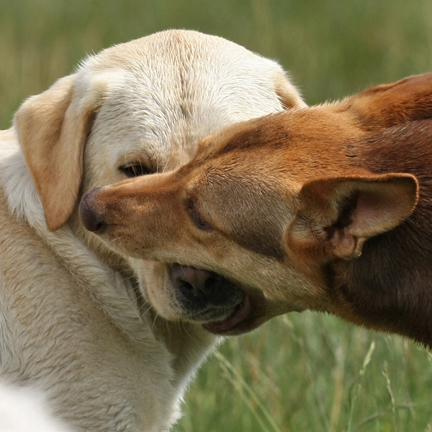
Dog muzzle grab.
Dogs also exhibit the muzzle grasp behavior (photo by Marco de Kloet).

A “Muzzle grasp” (or muzzle grab) is a common behavior shown by social canines, e.g., wolves (Canis lupus lupus), dingoes (Canis lupus dingo), and dogs (Canis lupus familiaris)The primary function of this behavior is to confirm a relationship rather than to settle a dispute. The more self-confident or higher-ranking individual will muzzle-grasp a more insecure or lower-ranking partner to assert its social position. The more insecure individual does not resist the grasp; on the contrary, it often displays submissive behavior, literally inviting its partner to muzzle-grasp it. Even though we sometimes see this behavior at the end of a dispute, wolves and dogs only use it toward individuals they know well—pack members—as a kind of saying, “You’re still a cub (pup).” The dispute itself tends not to be serious, merely a low-key challenge, often over access to a resource. Youngsters, cubs, and pups sometimes solicit adults to muzzle-grasp them. This behavior appears reassuring to them.

The muzzle-grasp behavior emerges early in development. Canine mothers muzzle-grasp their puppies (sometimes accompanied by a growl) to deter them from suckling during weaning. Field observations confirm this mechanism. As Packard, Mech, and Ream (1992, p. 1274) report, “In the context of playing, begging, and sharing, pups did not leave when another wolf muzzled, snapped, or lunged. In contrast, the muzzling by the nurser in the context of suckling terminated the pups’ attempts to gain access to nipples.” This observation illustrates the early communicative value of the muzzle contact as both a mild inhibitory and relational signal. Cubs and pups also muzzle-grasp one another during play, typically between six and nine weeks of age. They probably learn through play that the muzzle-grasp is an effective way of stopping an opponent from doing something, while also learning bite inhibition. If they bite too hard, they elicit a fight and risk injury. A muzzle-grasp, therefore, does not involve biting, only grasping. This behavior helps develop a relationship of trust between both parties—“we don’t hurt one another.”

Similar tactile interactions, including muzzle-to-muzzle contact, also occur in post-conflict and affiliative contexts among wolves. Cordoni and Palagi (2019) describe reciprocal muzzle-licking between adults and immature pack members following mild conflicts—acts that function as “consolation” and reinforce social bonds. Although a muzzle-grasp differs mechanically from muzzle-licking, both share an underlying functional value: the restoration or affirmation of trust within a dyad. These tactile gestures exemplify the nuanced physical vocabulary through which canids maintain cohesion and mitigate tension within the pack.

Classic naturalist observations (Zimen, 1981) describe frequent muzzle-to-muzzle contacts and note adults seizing pups’ muzzles during play and weaning; together with quantitative field data (Packard, Mech, & Ream, 1992), this supports the view that muzzle contact is an early-emerging, ritualised tactile signal rather than an aggressive act.

When used to settle a dispute, a muzzle-grasp may appear more violent and usually ends with the individual being muzzle-grasped exhibiting passive, submissive behavior. Yet participants very seldom, if ever, get hurt, an occurrence that would undermine the behavior’s function.

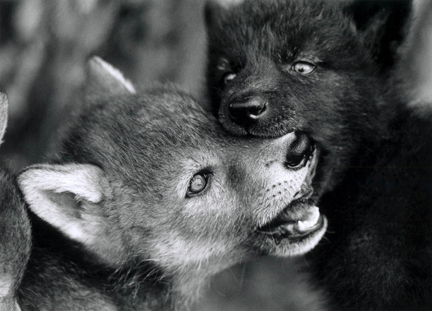
wolf cubs muzzle grasp
Wolf Adult Muzzle Grasp

Left: Cubs and pups muzzle grasp one another during play. Right: Muzzle grasp in adult wolves (photos by Monty Sloan).

A muzzle-grasp requires self-control. Higher-ranking wolves and dogs muzzle-grasp their pack members (teammates) and, by doing so, confirm their rank while displaying restraint. Lower-ranking wolves and dogs often engage in muzzle-grasping behavior to affirm their social position and reassure themselves that they remain included in the group.

The muzzle-grasp behavior probably originated as both a form of maternal (and later paternal) control and as a play behavior among cubs. As it appears to have been beneficial to all parties involved, it may have become a factor favored by natural selection, spreading from generation to generation and evolving as any other trait that enhances the fitness of individuals within cohesive social groups.

In domestic dogs, when puppies are about five to seven weeks old, their mother regularly muzzle-grasps them to deter suckling. At first, her behavior frightens them, and they may whimper excessively, even though she does not harm them. Later, when grasped by the muzzle, the puppy immediately shows passive submissive behavior—lying on its back and exposing its ventral side. Previously, it was assumed that the mother needed to pin the puppy to the ground; however, Packard et al. (1992) observed that, in wolves, in practice, “[…] on the occasions when the nurser winced or muzzled the pups, the pups did not persist” and that “[…] counter-tactics for overcoming nurser rejection did not occur (pp. 1271–1272).” Most puppies submit voluntarily. Over time, this behavior pattern assumes variations. Wolf cubs and puppies often invite the alpha male (the leader of the pack and, in wolves, usually their father) as well as other adults to grasp them by the muzzle, thereby soliciting a demonstration of their elders’ superiority and self-control while simultaneously showing their own acceptance and submissiveness. This is among the most reassuring behaviors an adult can show a youngster.

Domestic dogs sometimes approach their owners puffing gently with their noses. By gently placing a hand around their muzzle, we may reassure them of acceptance, demonstrate self-control, and convey that they can trust us. That is speaking dog-language to the best of our abilities. After being muzzle-grasped for a while, the dog will usually show a nose-lick, perhaps yawn, and then walk calmly away. It is as if the dog were saying, “I’m still your puppy,” and the owner replied, “I know—and I’ll take good care of you.”

The muzzle-grasp behavior can be challenging to classify. Some researchers see it as social or affiliative, others as agonistic, and still others as pacifying. Because its primary function is to confirm and maintain relationships, it may best be considered a social behavior—a ritualized, low-intensity interaction that reinforces trust and cohesion within the group.

Next time your dog gently nudges or invites a muzzle‑grasp, pause for a moment—what you see as a simple dog behavior is, in canine language, a subtle conversation of trust and understanding.

References

Abrantes, R. (1987). Hundesprog. Borgen Forlag, Copenhagen.

Abrantes, R. (1997). The Evolution of Canine Social Behavior. Naperville, IL: Wakan Tanka Publishers.

Abrantes, R. (2011, December 11). Dominance—Making sense of the nonsense. Roger Abrantes Blog. https://rogerabrantes.wordpress.com/2011/12/11/dominance-making-sense-of-the-nonsense/

Cordoni, G., & Palagi, E. (2019). Back to the future: A glance over wolf social behavior to understand dog–human relationship. Animals, 9(11), 991. https://doi.org/10.3390/ani9110991

Packard, J. M., Mech, L. D., & Ream, R. R. (1992). Weaning in an Arctic wolf pack: Behavioral mechanisms. Canadian Journal of Zoology, 70(7), 1269–1275. https://doi.org/10.1139/z92-177. USGS+1 PDF (scanned article, pages shown above): https://www.wolf.org/wp-content/uploads/2013/09/172weaningarcticwolf.pdf

Zimen, E. (1981). The wolf: His place in the natural world. Souvenir Press Ltd. ISBN 9780285624115

Note: I first wrote about the muzzle grasp behavior in canids in my Danish book Hundesprog (1987), where I called it “mund om snuden,” which translates directly as “mouth around the snout.” This term became “muzzle grasp” in the first English edition of the book, titled Dog Language. I later wrote Muzzle Grab Behavior in Canids on April 25, 2012. Two years afterward, on March 13, 2014, I revised it as Canine Muzzle Grasp Behavior—Advanced Dog Language. True to my philosophy of updating articles and papers as new evidence emerges, I have once again revised this work. The latest version, published in November 2025, appears here under the title Muzzle Grasp Behavior in Canids.

Canine Scent Detection: Reviving the Oldest Mammalian Sense

—A Sniffer Dog is a Happy Dog

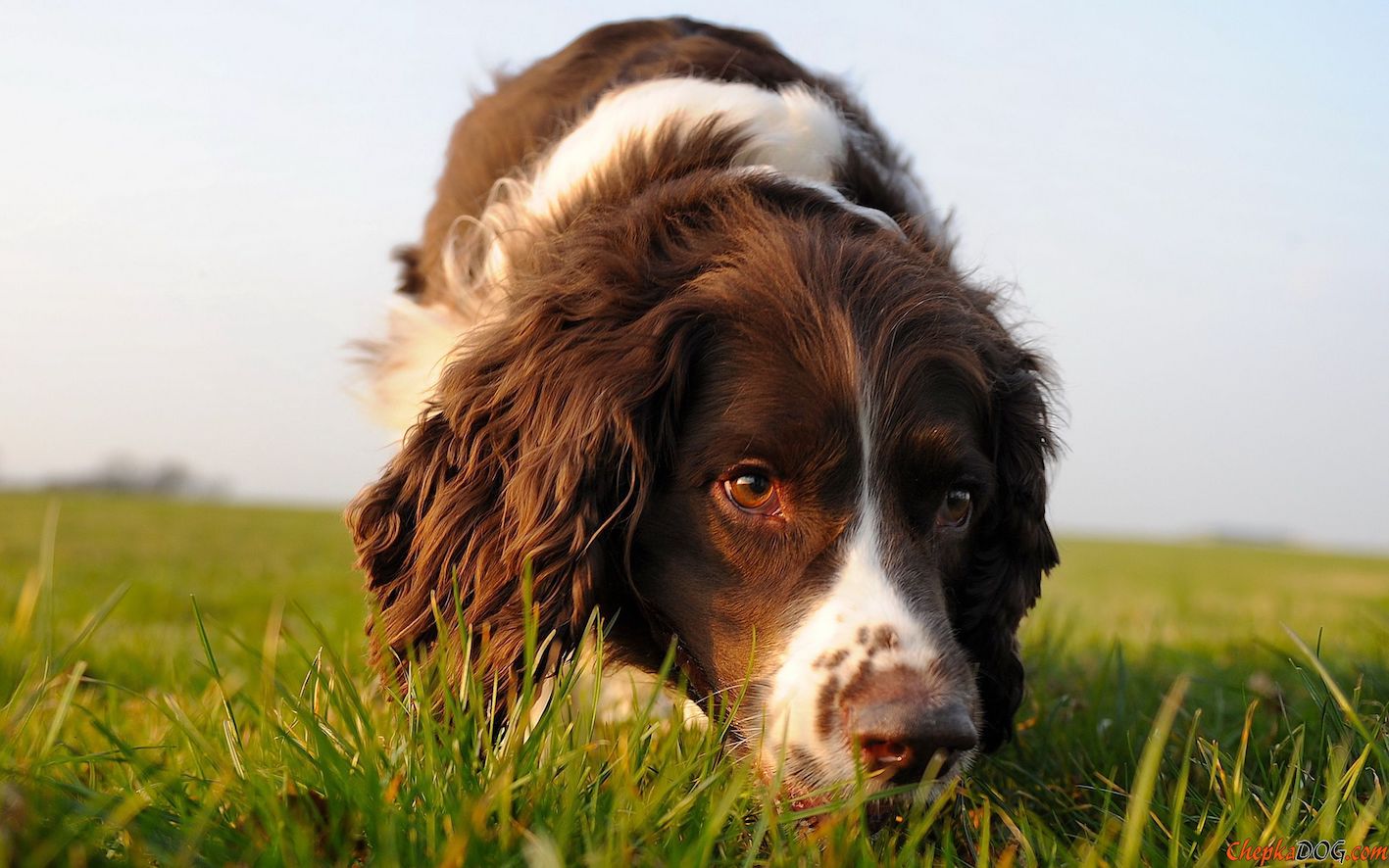
English Springer Spaniel On The Trail

Scent detection has fascinated me since my early days as a student of biology, and I was already training detection animals at the beginning of the 1980s. Over the years, I have trained dogs, rats, and guinea pigs to detect narcotics, explosives, blood, vinyl, fungus, landmines, tuberculosis, and tobacco—and they excelled in all these tasks.

What has always intrigued me most is how deeply scent detection seems to be woven into their very being, regardless of species. Indeed, much before dogs became our partners in scent detection, olfaction had already shaped the mammalian brain—including ours. Although humans are often described as “microsmatic,” this view stems mainly from a 19th-century anthropocentric bias. In fact, human olfactory performance—when properly measured—can rival that of many other mammals (McGann, 2017). Fossil endocasts reveal that early mammalia forms possessed disproportionately large olfactory bulbs, suggesting that life for our distant ancestors was guided above all by smell (Rowe, Macrini, & Luo, 2011). The olfactory pathways remain among the most conserved in the mammalian nervous system, closely intertwined with limbic and reproductive circuits (Shipley & Ennis, 1996; Boehm, Zou, & Buck, 2005). As Lledo, Gheusi, and Vincent (2005) observed, “It is clear today that olfaction is a synthetic sense par excellence. It enables pattern learning, storage, recognition, tracking, or localization and attaches emotional and hedonic valence to these patterns” (p. 309). To smell, then, is not merely to detect—it is to think, feel, and remember.

Most of my detection work was carried out for the police, armed forces, SAR teams, or other professional agencies. Yet, I had written about scent detection already in the early 1980s, in my first book, Psychology rather than Force, published in Danish. Back in 1984, I called it “nose work” (a direct translation from the Danish næsearbejde). I recommended that all dog owners stimulate their dogs by giving them detection tasks, beginning with their daily rations. We even conducted some research on this, and the results were highly positive: dogs trained in detection work improved in many aspects of their otherwise problematic behavior. My recommendation remains the same today. Physical exercise is, of course, essential—but do not forget to stimulate your dog’s nose as well, perhaps its primary channel of information about the world.

nosework 1984

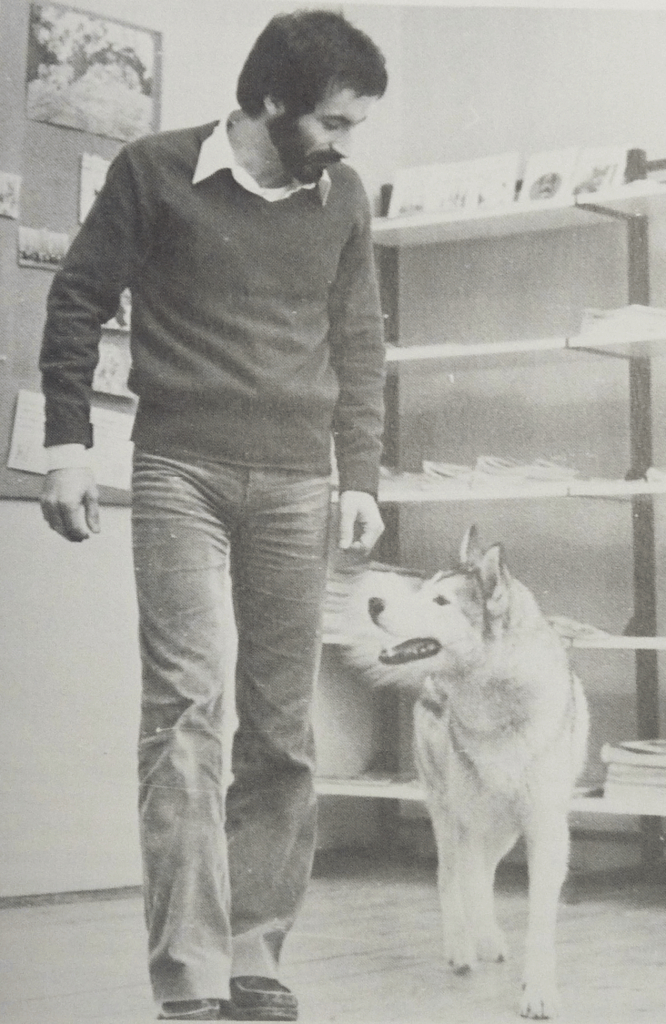
Above: In “Hundesprog” (Dog Language) from 1987, I mention “nose work” with an illustration from Alce Rasmussen. To the right: Yours truly in 1984 with a Siberian Husky, an “untrainable” dog, as everybody used to say. This was when my book “Psychology rather than Force” created a stir. We were then right at the beginning of the animal training revolution. In that book, I mention “nose work” (a direct translation from the Danish “næsearbejde”) and recommend it as an excellent way to stimulate our dogs.

raa and husky in 84

Recent field data illustrate how central olfaction is to the daily lives of canids. Wolves in the Białowieża Forest, for instance, were active on average 45.2 % of every 24 hours—about 10.8 h per day—primarily in movement, travelling, and search behaviours (Theuerkauf et al., 2003, Table 1, p. 247). Monthly patterns (Figure 6, p. 249) suggest that activity levels vary with season, although exact numerical ranges are not provided in the text. Comparable patterns appear in other canids: red foxes spend about 43 % of their observable foraging time sniffing the ground (Wooster et al., 2019), and free-ranging domestic dogs devote substantial portions of their active time to exploratory and searching behaviours—activities guided predominantly by olfaction (Banerjee & Bhadra, 2022). These figures reveal that for a wolf or fox, using the nose is not an occasional act but a continuous occupation, consuming many hours each day.

Measurement%Hours (h)
Time active45.2 %10.8
Time moving35.9 %8.6

Table 1. Average daily activity of wolves in the Białowieża Forest, Poland (1994–1999), showing the proportion of time spent active and moving, both as a percentage of the 24-hour day and in hours. Data from Theuerkauf et al. (2003, Table 1, p. 247).

Note. “Time active” includes periods when wolves were travelling, hunting, or otherwise moving. Observations indicate that these behaviours are predominantly guided by olfaction. Activity was generally higher at night, and seasonal variation appears linked to day length and prey availability. On average, wolves were active roughly half the day (~10.8 h), highlighting that extensive daily searching and tracking is a defining feature of their ecology (Theuerkauf et  al., 2003, Table 1, p. 247).

When I began promoting “nose work” in the early 1980s, I did so from personal experience rather than data. I spent many hours on scent detection with my English Cocker Spaniels. They loved it and were calmer, more focused, and more fulfilled than their peers who were not as nose-stimulated. I quickly discovered that scent detection was so self-reinforcing—in behaviorist terms—that no other reinforcers were needed beyond my approval, which they actively sought. In those moments, I realised that to be a dog is to be a cooperative nose-worker.

Science has since validated that intuition. Scent work is not a modern invention—it is a structured expression of what canids have done for thousands of years: exploring their world through odor cues. When we engage a dog’s nose, we are not merely training a skill; we are restoring a function at the very core of its evolution. Understanding that is perhaps the greatest lesson of scent detection: to educate and enrich a dog’s life, we must first respect the sensory world in which it truly lives.

References

Banerjee, A., & Bhadra, A. (2022). Time–activity budget of urban-adapted free-ranging dogs. Acta Ethologica, 25(1), 15–25. https://doi.org/10.1007/s10211-021-00379-6

Boehm, U., Zou, Z., & Buck, L. B. (2005). Feedback loops link odor and pheromone signaling with reproduction. Cell, 123(4), 683–695. https://doi.org/10.1016/j.cell.2005.09.027

McGann, J. P. (2017). Poor human olfaction is a 19th-century myth. Science, 356(6338), eaam7263. https://doi.org/10.1126/science.aam7263

Lledo, P.-M., Gheusi, G., & Vincent, J.-D. (2005). Information processing in the mammalian olfactory system. Physiological Reviews, 85(1), 281–317. https://doi.org/10.1152/physrev.00008.2004

Rowe, T. B., Macrini, T. E., & Luo, Z.-X. (2011). Fossil evidence on origin of the mammalian brain. Science, 332(6032), 955–957. https://doi.org/10.1126/science.1203117

Shipley, M. T., & Ennis, M. (1996). Functional organization of olfactory system. Journal of Neurobiology, 30(1), 123–176. https://onlinelibrary.wiley.com/doi/10.1002/(SICI)1097-4695(199605)30:1%3C123::AID-NEU11%3E3.0.CO;2-N

Theuerkauf, J., Kamler, J. F., & Jedrzejewski, W. (2003). Daily patterns and duration of wolf activity in the Białowieża Forest, Poland. Journal of Mammalogy, 84(1), 243–253. https://ibs.bialowieza.pl/publications/1396.pdf

Wooster, E., Wallach, A. D., & Ramp, D. (2019). The Wily and Courageous Red Fox: Behavioural analysis of a mesopredator at resource points shared by an apex predator. Animals, 9(11), 907. https://doi.org/10.3390/ani9110907

Featured image: Springer Spaniel, nose down, focused on a search.

Note: This article is a substantially revised and edited version of an earlier article from May 6, 2014, entitled Do You Like Canine Scent Detection? The revisions are extensive enough that the article deserves a new title and is therefore republished as new.

The Function of Champing Behaviour: An Ethological Account in Canines

Abstract

Champing refers to a conspicuous chewing or jaw-working motion performed in the absence of food and observed in social contexts in dogs and other canids. This short paper provides a descriptive ethological account of champing, interprets its function as a pacifying signal, and places it within established frameworks of social interaction and ontogenetic development. The behaviour is defined as a distinct ethological category based on the author’s long-term observations and comparative analysis.

Champing (also termed chomping) refers to a conspicuous, often audible chewing or jaw-working motion performed in the absence of food. In dogs and other canids, this behaviour is typically observed in social contexts. It is associated with affiliative intent, pacifying, insecurity, or submissiveness, depending on its intensity, timing, and accompanying signals.1

To the best of the author’s knowledge, this behaviour has not previously been described or formally defined as a distinct ethological category, despite being intermittently observed and subsumed under broader classes of pacifying or displacement behaviours.2

Across contexts, champing possesses a clear pacifying function. Pacifying behaviour (from Latin pacificare, pax = peace, facere = to make) comprises actions whose function is to reduce social tension, inhibit aggressive or dominant behaviour in another individual, or restore a state of social calm, as defined within an interactional framework of social behaviour (Hinde, 1976). In dogs, commonly described pacifying behaviours include licking, muzzle nudging, nose touching, pawing, yawning, body twisting, and head turning, all of which may be directed toward conspecifics or humans.

Champing is widely employed by canids in situations ranging from mild uncertainty to more pronounced social stress. Its acoustic and rhythmic properties appear to contribute to its communicative value, functioning as a low-risk, non-confrontational signal that advertises non-threatening intent (Lorenz, 1966).

janegoodallandchimp1
Jane Goodall used to break a branch and pretend to chomp on it to pacify chimpanzees, showing some unease (photo by Derek Bryceson/National Geographic Creative).

Ontogenetically, champing has a plausible developmental basis. One of the earliest repetitive oral sounds in mammalian neonates is produced during suckling and is closely linked to satisfaction, warmth, and social contact. In puppies, early oral motor patterns tied to nursing occur in a context of comfort and need fulfilment. As development continues, elements of this behaviour are redirected into social functions, where champing helps turn uncomfortable or ambiguous interactions into more benign ones. Initially, the behaviour is closely tied to hunger reduction; later, it becomes separate from feeding and acquires a distinct communicative function (Hinde, 1982).

In adult dogs, champing is a clear and effective signal of affiliative or conciliatory intent. Similar patterns appear across mammals, where oral behaviours linked to nursing and sucking are associated with reduced arousal and resting states. This suggests early sensory–motor associations may keep a tension-reducing function throughout life.3

Comparable observations exist in primates. Jane Goodall reported deliberately mimicking chewing movements—such as breaking a twig and pretending to chew it—to pacify chimpanzees displaying signs of unease (Goodall, 1971).

In applied animal contexts, the author has often used champing with apparent success when interacting with dogs or horses, consistent with its proposed pacifying function.


Footnotes

  1. In ethology, the formal identification and naming of behavioural patterns commonly precede their experimental isolation or quantification. Descriptive classification based on repeated observation, functional context, and comparative consistency has historically been a primary means by which distinct behavioural units are recognised, refined, and later subjected to experimental analysis. ↩︎
  2. The present account is based on the author’s long-term ethological observations and comparative analyses of canine social behaviour, first described in Dog Language (Abrantes, 1986 and 1997). It is descriptive and functional in scope and does not claim experimental isolation, quantitative prevalence estimates, or phylogenetic exclusivity for champing behaviour. In the absence of prior formal treatment of this behaviour as a distinct category, these observations constitute the primary empirical basis for the description and interpretation presented here. ↩︎
  3. Evidence for the calming or arousal-reducing effects of suckling and related oral behaviours in mammals is well established in the developmental and comparative literature. Studies of non-nutritive sucking and nursing behaviour report associations with reduced behavioural arousal and increased resting or quiet states in a range of species (e.g. Blass, 1980; Veissier et al., 2002). While these works do not address champing or later social signalling directly, they provide developmental support for the inference that early oral sensory–motor patterns may retain residual tension-reducing properties when redeployed in other behavioural contexts. ↩︎

References

Abrantes, R. (1997). Dog language: An encyclopedia of canine behaviour. Wakan Tanka, Publishers. (Original work published as Hundesprog in 1986).

Blass, E. M. (1980). Suckling. Science, 210(4472), 729–735. https://doi.org/10.1126/science.6997992

Goodall, J. (1971). In the shadow of man. London: Collins.

Hinde, R. A. (1976). Interactions, relationships and social structure. Man, 11(1), 1–17. https://doi.org/10.2307/2800384

Hinde, R. A. (1982). Ethology: Its nature and relations with other sciences. Oxford: Oxford University Press.

Lorenz, K. (1966). On aggression. London: Methuen.

Veissier, I., de Passillé, A. M., Després, G., Rushen, J., Charpentier, I., Ramirez de la Fe, A. R., & Pradel, P. (2002). Does nutritive and non-nutritive sucking reduce other oral behaviors and stimulate rest in calves? Journal of Animal Science, 80(10), 2574–2587. https://doi.org/10.1093/ansci/80.10.2574


Featured image: Champing behaviour has a pacifying function—attempting to turn an unpleasant situation into a pleasant one.


This article is originally written on April 12, 2017 and slightly edited on January 2, 2026.

Does Your Dog Show Allelomimetic Behavior?

Does your dog show allelomimetic behavior? I’m sure it does, but don’t worry, it’s not dangerous, except when it is, and yes, it is contagious. Confused? Keep reading.

Allelomimetic behavior is doing what others do. Some behaviors have a strong probability of influencing others to do the same. Animals in constant contact with one another will inevitably develop allelomimetic behavior.

Dogs exhibit various allelomimetic behaviors—walking, running, sitting, lying down, getting up, sleeping, barking, and howling—each of which has a strong tendency to stimulate others to do the same.

Social predators increase their hunting success when they hunt in unison. One individual setting after the prey is likely to trigger the same response in the whole group.

woman with dog by sunvilla-1

More often than we think, it is our own behavior that triggers our dog’s allelomimetic behavior (photo by SunVilla).

The wolf’s howl is allelomimetic, one more behavior our domestic dogs share with their wild cousins. Howling together functions as social bonding. When one wolf howls, the whole pack may join in, especially if a high-ranking wolf started it. I bet that if you go down on your knees, turn your head up, and howl (provided you are a half-decent howler), your dog will join you; then, it will attempt to show its team spirit by licking your face.

Sleeping and eating are examples of allelomimetic behavior. Dogs and cats tend to sleep and eat at the same time. Barking is also contagious. One barking dog can set the whole neighborhood’s dogs barking.

Synchronizing behavior may be a lifesaver. In prey animals like the deer, zebra, or wildebeest, one individual can trigger the whole herd to flee. This trait is so crucial for self-preservation that farm animals like sheep, cows, and horses still keep it. Grazing also occurs at the same time.

child playing puppy

 Running after a running child is more often an example of canine allelomimetic behavior than hunting or herding as many dog owners erroneously presume.

Allelomimetic behavior is not restricted to animals of the same species. Animals of different species that live together often exhibit allelomimetic behavior. Dogs can read body language and respond to certain behaviors of their owners without further instruction. An alerted owner triggers his dog’s alertness more often than not.

Puppies show allelomimetic behavior at about five weeks of age. It is an intrinsic part of your dog’s behavior to adjust to the behavior of its companions. Your behavior influences your dog’s behavior in many more instances than you realize.

At the neurological level, when we watch someone perform an action, our own motor system often “echoes” it—a process known as motor resonance. This effect is made possible by mirror neurons, brain cells that activate both when we do something and when we see another individual doing the same. Research suggests that dogs may share this ability: their tendency to move, look, or react in sync with humans may stem from similar neural mirroring processes (Lamontagne & Gaunet, 2024).

From an evolutionary and behavioral standpoint, because we have selected and bred our dogs to be highly sociable and socially promiscuous, they exhibit extended allelomimetic behavior, i.e., not only copying the behavior of their closest companions but also that of others. Next time you walk in the park and your dog runs after running children, you can casually comment, “Typical instance of allelomimetic behavior.” Not that it will solve any problem, if there is one, but you’ll be right, and I bet you will impress more than a few of your fellow park walkers.

__________________

References

Abrantes, R. (1997). Dog language: An encyclopedia of canine behavior. Wakan Tanka Publishers.

Lamontagne, A., & Gaunet, F. (2024). Behavioural synchronisation between dogs and humans: Unveiling interspecific motor resonance? Animals, 14(4), 548. https://doi.org/10.3390/ani14040548

Scott, J. P., & Marston, M. V. (1950). Social facilitation and allelomimetic behavior in dogs. II. The effects of unfamiliarity. Behaviour, 2(3), 135–143. Retrieved from https://mouseion.jax.org/stfb1950_1959/19/

Vogel, H. H., Scott, J. P., & Marston, M. V. (1950). Social facilitation and allelomimetic behavior in dogs. I. Social facilitation in a non-competitive situation. Behaviour, 2(3), 121–134. Retrieved from https://mouseion.jax.org/stfb1950_1959/24/

__________________

Note: Careful ethological observation sometimes anticipates neurobehavioral discoveries by decades. I described canine allelomimetic behavior in my 1987 book Hundesprog (later published in English as Dog Language, 1997)—a phenomenon that would only gain neurobiological support 34 years later with the findings of Lamontagne and Gaunet (2024), which strongly suggest the potential existence of interspecific motor resonance.