Dogs also exhibit the muzzle grasp behavior (photo by Marco de Kloet).
A “Muzzle grasp” (or muzzle grab) is a common behavior shown by social canines, e.g., wolves (Canis lupus lupus), dingoes (Canis lupus dingo), and dogs (Canis lupus familiaris). The primary function of this behavior is to confirm a relationship rather than to settle a dispute. The more self-confident or higher-ranking individual will muzzle-grasp a more insecure or lower-ranking partner to assert its social position. The more insecure individual does not resist the grasp; on the contrary, it often displays submissive behavior, literally inviting its partner to muzzle-grasp it. Even though we sometimes see this behavior at the end of a dispute, wolves and dogs only use it toward individuals they know well—pack members—as a kind of saying, “You’re still a cub (pup).” The dispute itself tends not to be serious, merely a low-key challenge, often over access to a resource. Youngsters, cubs, and pups sometimes solicit adults to muzzle-grasp them. This behavior appears reassuring to them.
The muzzle-grasp behavior emerges early in development. Canine mothers muzzle-grasp their puppies (sometimes accompanied by a growl) to deter them from suckling during weaning. Field observations confirm this mechanism. As Packard, Mech, and Ream (1992, p. 1274) report, “In the context of playing, begging, and sharing, pups did not leave when another wolf muzzled, snapped, or lunged. In contrast, the muzzling by the nurser in the context of suckling terminated the pups’ attempts to gain access to nipples.” This observation illustrates the early communicative value of the muzzle contact as both a mild inhibitory and relational signal. Cubs and pups also muzzle-grasp one another during play, typically between six and nine weeks of age. They probably learn through play that the muzzle-grasp is an effective way of stopping an opponent from doing something, while also learning bite inhibition. If they bite too hard, they elicit a fight and risk injury. A muzzle-grasp, therefore, does not involve biting, only grasping. This behavior helps develop a relationship of trust between both parties—“we don’t hurt one another.”
Similar tactile interactions, including muzzle-to-muzzle contact, also occur in post-conflict and affiliative contexts among wolves. Cordoni and Palagi (2019) describe reciprocal muzzle-licking between adults and immature pack members following mild conflicts—acts that function as “consolation” and reinforce social bonds. Although a muzzle-grasp differs mechanically from muzzle-licking, both share an underlying functional value: the restoration or affirmation of trust within a dyad. These tactile gestures exemplify the nuanced physical vocabulary through which canids maintain cohesion and mitigate tension within the pack.
Classic naturalist observations (Zimen, 1981) describe frequent muzzle-to-muzzle contacts and note adults seizing pups’ muzzles during play and weaning; together with quantitative field data (Packard, Mech, & Ream, 1992), this supports the view that muzzle contact is an early-emerging, ritualised tactile signal rather than an aggressive act.
When used to settle a dispute, a muzzle-grasp may appear more violent and usually ends with the individual being muzzle-grasped exhibiting passive, submissive behavior. Yet participants very seldom, if ever, get hurt, an occurrence that would undermine the behavior’s function.
Left: Cubs and pups muzzle grasp one another during play. Right: Muzzle grasp in adult wolves (photos by Monty Sloan).
A muzzle-grasp requires self-control. Higher-ranking wolves and dogs muzzle-grasp their pack members (teammates) and, by doing so, confirm their rank while displaying restraint. Lower-ranking wolves and dogs often engage in muzzle-grasping behavior to affirm their social position and reassure themselves that they remain included in the group.
The muzzle-grasp behavior probably originated as both a form of maternal (and later paternal) control and as a play behavior among cubs. As it appears to have been beneficial to all parties involved, it may have become a factor favored by natural selection, spreading from generation to generation and evolving as any other trait that enhances the fitness of individuals within cohesive social groups.
In domestic dogs, when puppies are about five to seven weeks old, their mother regularly muzzle-grasps them to deter suckling. At first, her behavior frightens them, and they may whimper excessively, even though she does not harm them. Later, when grasped by the muzzle, the puppy immediately shows passive submissive behavior—lying on its back and exposing its ventral side. Previously, it was assumed that the mother needed to pin the puppy to the ground; however, Packard et al. (1992) observed that, in wolves, in practice, “[…] on the occasions when the nurser winced or muzzled the pups, the pups did not persist” and that “[…] counter-tactics for overcoming nurser rejection did not occur (pp. 1271–1272).” Most puppies submit voluntarily. Over time, this behavior pattern assumes variations. Wolf cubs and puppies often invite the alpha male (the leader of the pack and, in wolves, usually their father) as well as other adults to grasp them by the muzzle, thereby soliciting a demonstration of their elders’ superiority and self-control while simultaneously showing their own acceptance and submissiveness. This is among the most reassuring behaviors an adult can show a youngster.
Domestic dogs sometimes approach their owners puffing gently with their noses. By gently placing a hand around their muzzle, we may reassure them of acceptance, demonstrate self-control, and convey that they can trust us. That is speaking dog-language to the best of our abilities. After being muzzle-grasped for a while, the dog will usually show a nose-lick, perhaps yawn, and then walk calmly away. It is as if the dog were saying, “I’m still your puppy,” and the owner replied, “I know—and I’ll take good care of you.”
The muzzle-grasp behavior can be challenging to classify. Some researchers see it as social or affiliative, others as agonistic, and still others as pacifying. Because its primary function is to confirm and maintain relationships, it may best be considered a social behavior—a ritualized, low-intensity interaction that reinforces trust and cohesion within the group.
Next time your dog gently nudges or invites a muzzle‑grasp, pause for a moment—what you see as a simple dog behavior is, in canine language, a subtle conversation of trust and understanding.
References
Abrantes, R. (1987). Hundesprog. Borgen Forlag, Copenhagen.
Abrantes, R. (1997). The Evolution of Canine Social Behavior. Naperville, IL: Wakan Tanka Publishers.
Cordoni, G., & Palagi, E. (2019). Back to the future: A glance over wolf social behavior to understand dog–human relationship. Animals, 9(11), 991. https://doi.org/10.3390/ani9110991
Zimen, E. (1981). The wolf: His place in the natural world. Souvenir Press Ltd. ISBN 9780285624115
Note: I first wrote about the muzzle grasp behavior in canids in my Danish book Hundesprog (1987), where I called it “mund om snuden,” which translates directly as “mouth around the snout.” This term became “muzzle grasp” in the first English edition of the book, titled Dog Language. I later wrote Muzzle Grab Behavior in Canids on April 25, 2012. Two years afterward, on March 13, 2014, I revised it as Canine Muzzle Grasp Behavior—Advanced Dog Language. True to my philosophy of updating articles and papers as new evidence emerges, I have once again revised this work. The latest version, published in November 2025, appears here under the title Muzzle Grasp Behavior in Canids.
Scent detection has fascinated me since my early days as a student of biology, and I was already training detection animals at the beginning of the 1980s. Over the years, I have trained dogs, rats, and guinea pigs to detect narcotics, explosives, blood, vinyl, fungus, landmines, tuberculosis, and tobacco—and they excelled in all these tasks.
What has always intrigued me most is how deeply scent detection seems to be woven into their very being, regardless of species. Indeed, much before dogs became our partners in scent detection, olfaction had already shaped the mammalian brain—including ours. Although humans are often described as “microsmatic,” this view stems mainly from a 19th-century anthropocentric bias. In fact, human olfactory performance—when properly measured—can rival that of many other mammals (McGann, 2017). Fossil endocasts reveal that early mammalia forms possessed disproportionately large olfactory bulbs, suggesting that life for our distant ancestors was guided above all by smell (Rowe, Macrini, & Luo, 2011). The olfactory pathways remain among the most conserved in the mammalian nervous system, closely intertwined with limbic and reproductive circuits (Shipley & Ennis, 1996; Boehm, Zou, & Buck, 2005). As Lledo, Gheusi, and Vincent (2005) observed, “It is clear today that olfaction is a synthetic sense par excellence. It enables pattern learning, storage, recognition, tracking, or localization and attaches emotional and hedonic valence to these patterns” (p. 309). To smell, then, is not merely to detect—it is to think, feel, and remember.
Most of my detection work was carried out for the police, armed forces, SAR teams, or other professional agencies. Yet, I had written about scent detection already in the early 1980s, in my first book, Psychology rather than Force, published in Danish. Back in 1984, I called it “nose work” (a direct translation from the Danish næsearbejde). I recommended that all dog owners stimulate their dogs by giving them detection tasks, beginning with their daily rations. We even conducted some research on this, and the results were highly positive: dogs trained in detection work improved in many aspects of their otherwise problematic behavior. My recommendation remains the same today. Physical exercise is, of course, essential—but do not forget to stimulate your dog’s nose as well, perhaps its primary channel of information about the world.
Above: In “Hundesprog” (Dog Language) from 1987, I mention “nose work” with an illustration from Alce Rasmussen. To the right: Yours truly in 1984 with a Siberian Husky, an “untrainable” dog, as everybody used to say. This was when my book “Psychology rather than Force” created a stir. We were then right at the beginning of the animal training revolution. In that book, I mention “nose work” (a direct translation from the Danish “næsearbejde”) and recommend it as an excellent way to stimulate our dogs.
Recent field data illustrate how central olfaction is to the daily lives of canids. Wolves in the Białowieża Forest, for instance, were active on average 45.2 % of every 24 hours—about 10.8 h per day—primarily in movement, travelling, and search behaviours (Theuerkauf et al., 2003, Table 1, p. 247). Monthly patterns (Figure 6, p. 249) suggest that activity levels vary with season, although exact numerical ranges are not provided in the text. Comparable patterns appear in other canids: red foxes spend about 43 % of their observable foraging time sniffing the ground (Wooster et al., 2019), and free-ranging domestic dogs devote substantial portions of their active time to exploratory and searching behaviours—activities guided predominantly by olfaction (Banerjee & Bhadra, 2022). These figures reveal that for a wolf or fox, using the nose is not an occasional act but a continuous occupation, consuming many hours each day.
Measurement
%
Hours (h)
Time active
45.2 %
10.8
Time moving
35.9 %
8.6
Table 1. Average daily activity of wolves in the Białowieża Forest, Poland (1994–1999), showing the proportion of time spent active and moving, both as a percentage of the 24-hour day and in hours. Data from Theuerkauf et al. (2003, Table 1, p. 247).
Note. “Time active” includes periods when wolves were travelling, hunting, or otherwise moving. Observations indicate that these behaviours are predominantly guided by olfaction. Activity was generally higher at night, and seasonal variation appears linked to day length and prey availability. On average, wolves were active roughly half the day (~10.8 h), highlighting that extensive daily searching and tracking is a defining feature of their ecology (Theuerkauf et al., 2003, Table 1, p. 247).
When I began promoting “nose work” in the early 1980s, I did so from personal experience rather than data. I spent many hours on scent detection with my English Cocker Spaniels. They loved it and were calmer, more focused, and more fulfilled than their peers who were not as nose-stimulated. I quickly discovered that scent detection was so self-reinforcing—in behaviorist terms—that no other reinforcers were needed beyond my approval, which they actively sought. In those moments, I realised that to be a dog is to be a cooperative nose-worker.
Science has since validated that intuition.Scent work is not a modern invention—it is a structured expression of what canids have done for thousands of years: exploring their world through odor cues. When we engage a dog’s nose, we are not merely training a skill; we are restoring a function at the very core of its evolution. Understanding that is perhaps the greatest lesson of scent detection: to educate and enrich a dog’s life, we must first respect the sensory world in which it truly lives.
Boehm, U., Zou, Z., & Buck, L. B. (2005). Feedback loops link odor and pheromone signaling with reproduction. Cell, 123(4), 683–695. https://doi.org/10.1016/j.cell.2005.09.027
Lledo, P.-M., Gheusi, G., & Vincent, J.-D. (2005). Information processing in the mammalian olfactory system. Physiological Reviews, 85(1), 281–317. https://doi.org/10.1152/physrev.00008.2004
Rowe, T. B., Macrini, T. E., & Luo, Z.-X. (2011). Fossil evidence on origin of the mammalian brain. Science, 332(6032), 955–957. https://doi.org/10.1126/science.1203117
Theuerkauf, J., Kamler, J. F., & Jedrzejewski, W. (2003). Daily patterns and duration of wolf activity in the Białowieża Forest, Poland. Journal of Mammalogy, 84(1), 243–253. https://ibs.bialowieza.pl/publications/1396.pdf
Wooster, E., Wallach, A. D., & Ramp, D. (2019). The Wily and Courageous Red Fox: Behavioural analysis of a mesopredator at resource points shared by an apex predator.Animals, 9(11), 907. https://doi.org/10.3390/ani9110907
Featured image: Springer Spaniel, nose down, focused on a search.
Note: This article is a substantially revised and edited version of an earlier article from May 6, 2014, entitled Do You Like Canine Scent Detection? The revisions are extensive enough that the article deserves a new title and is therefore republished as new.
El tema de la dominancia se nos ha ido de las manos. Solo hay una cosa más absurda e inútil que molestarse en demostrar que la dominancia existe, y es el intento de demostrar que la dominancia no existe. Yo voy a cometer el primero de estos actos inútiles.
Las posibles combinaciones de comportamentos agresivos, temerosos, dominates y sumisos en los caninos sociales (de “Dog Langauge” de Roger Abrantes, ilustración protegida por copyright de Alice Rasmussen).
Dominancia, en el lenguaje corriente, significa «poder e influencia sobre otros». Quiere decir supremacía, superioridad, predominancia, dominio, poder, autoridad, mando, control. Tiene tantos significados y connotaciones que es difícil saber cómo utilizar la palabra en tanto término científico preciso aplicado a las ciencias del comportamiento. Además, los científicos que la utilizan (así como los que la repudian) no se han esforzado demasiado por definirla de una manera exacta, lo que ha contribuido a la actual confusión, discusiones sin sentido, desacuerdos y afirmaciones absurdas.
Es mi intención poner remedio a esto, primero demostrando que la dominancia sí existe, y después estableciendo que hace referencia a un mismo tipo de comportamiento, independientemente de la especie en cuestión. A continuación, daré una definición precisa, pragmática y verificable del término, que será compatible con la teoría de la evolución y nuestros conocimientos sobre la biología. Finalmente, expondré que, si bien es cierto que una buena relación (beneficiosa y estable) no se fundamenta en continuas demostraciones de dominancia/sumisión por parte de los mismos individuos ante los mismos individuos, eso tampoco implica que la dominancia no exista en perros (y en cualquier otra especie). Negar la existencia de la dominancia en perros se ha convertido en una argumentación muy difundida para afirmar que no debemos construir una relación con nuestros perros basada en la dominancia.
Es absurdo sostener que la dominancia no existe cuando tenemos tantas palabras que describen todo lo relacionado con ella. Si no existiera, no tendríamos siquiera una palabra que hiciera referencia a ella. El hecho de que el término exista quiere decir que la hemos visto a nuestro alrededor. Podemos afirmar que la hemos observado y que el término (1) hace referencia únicamente a determinadas relaciones humanas, o que (2) se refiere a determinadas relaciones tanto entre humanos como entre otras especies animales. La segunda opción parece más atractiva, considerando el hecho de que es muy improbable que una condición en particular solo se dé en una única especie. Eso entraría en conflicto con todo lo que sabemos acerca del parentesco entre las especies y su evolución.
Sin embargo, no es descabellado sostener que el término no es aplicable para describir el comportamiento de determinadas especies. Al contrario, dos especies que han evolucionado desde un antepasado común hace billones de años han desarrollado características propias y difieren del antepasado común y entre ellas. De igual modo, especies muy cercanas, que se separaron hace sólo unos miles de años de un antepasado común, pueden presentar características similares o iguales entre ellas y respecto al antepasado común. Algunas especies comparten muchos atributos en común relativos al fenotipo, el genotipo y/o la conducta; otras comparten menos, y otras ninguno. Todo depende de su antepasado común y de su adaptación al entorno.
Los seres humanos y los chimpancés (Homo sapiens y Pan troglodytes) se han separado de su antepasado común hace seis millones de años, de manera que podemos esperar que existan más diferencias entre ellos que entre los perros y los lobos (Canis lupus y Canis lupus familiaris), que se separaron de su antepasado común hace sólo unos 15-20 mil años (y de ninguna manera hace más de 100.000 años). Hay más diferencias en el ADN del hombre y el chimpancé que en el del perro y el lobo (que son prácticamente idénticos salvo por unas pocas mutaciones). Los hombres no pueden reproducirse con chimpancés, mientras que los lobos y los perros pueden tener descendencia fértil. Los hombres y los chimpancés son dos especies completamente diferentes. Los lobos y los perros son dos subespecies de la misma especie.
Teniendo en cuenta estos hechos, podemos esperar que los lobos y los perros compartan un gran número de similitudes, cosa que así es, no solo físicas sino también conductuales. Cualquier lego en la materia lo afirmaría. Sus similitudes a uno u otro nivel son lo que les permite cruzarse entre sí, producir descendencia fértil y comunicarse. Nadie ha cuestionado que los lobos y los perros presentan un amplio repertorio de comportamientos de comunicación en común, y con toda la razón, ya que múltiples estudios confirman que son capaces de comunicarse perfectamente. Sus expresiones faciales y posturas corporales son muy parecidas (exceptuando ciertas razas de perros), con pequeñas diferencias que son menores entre sí que las diferencias culturales que podemos encontrar entre poblaciones de seres humanos geográficamente alejadas.
En una manada estable, los lobos suelen presentar una conducta dominante y sumisa y rara vez una conducta temerosa y agresiva.
Si los lobos y los perros pueden comunicarse, podemos concluir que los elementos básicos y determinantes de su lenguaje deben ser los mismos. Esto quiere decir que aunque han evolucionado en ambientes aparentemente diferentes, mantienen los elementos más anclados de sus características genotípicas. Esto puede ser por tres motivos: (1) los genotipos compartidos son vitales para el organismo, (2) los entornos en que viven al fin y al cabo no son tan diferentes, (3) la evolución necesita más tiempo y condiciones más selectivas (debido a que actúa sobre los fenotipos) antes de que los genotipos cambien de manera radical. La primera razón significa que hay más maneras de no sobrevivir que de sobrevivir, o en otras palabras, que la evolución necesita tiempo para desarrollar formas de vida diferentes y viables; la segunda razón significa que aunque los lobos y los perros (mascotas) viven actualmente en entornos muy diferentes, el fenómeno es todavía reciente. Solo hace unos cien años que los perros están plenamente humanizados. Hasta entonces, eran nuestros compañeros, nuestros animales domésticos, pero todavía tenían un elevado grado de libertad y los factores selectivos exitosos eran básicamente los mismos de siempre. No eran todavía mascotas y la cría no estaba totalmente (o casi totalmente) controlada por la selección humana. La tercera razón significa que quizás un día (de aquí a un millón de años o más), tendremos dos especies totalmente diferentes, perros y lobos. Para entonces, no podrán cruzarse, no producirán descendencia fértil y presentarán características completamente diferentes. Habrán cambiado el nombre, a quizá llamarse Canis civicus o Canis homunculus. ¡Sin embargo, todavía no hemos llegado a eso!
Según las últimas tendencias, el «comportamiento dominante» no existe en el perro, lo que plantea algunos problemas serios. Hay dos maneras de defender esta idea. Una es desechar el concepto «comportamiento dominante» por completo, lo que es absurdo, por las razones que hemos visto antes: el término existe, sabemos más o menos lo que significa y podemos utilizarlo en una conversación con cierto sentido. Por lo tanto, debe referirse a un tipo de comportamiento que hemos observado. Otra argumentación es afirmar que los lobos y los perros son completamente diferentes y, por lo tanto, incluso aunque podamos aplicar el término para explicar el comportamiento del lobo, no podemos utilizarlo para describir el comportamiento del perro. Si fueran completamente diferentes, la argumentación sería válida, pero no lo son, como ya hemos visto. Por el contrario, son muy parecidos.
Una tercera alternativa es construir una teoría totalmente nueva para explicar cómo dos especies tan cercanas como el lobo y el perro (de hecho, subespecies) pueden haber desarrollado en un periodo de tiempo tan breve (miles de años) tantas características radicalmente distintas en un aspecto, pero no en otros. Esto nos llevaría a llevar a cabo una extensa revisión de todos nuestros conocimientos biológicos, lo que tendría implicaciones que van más allá de los lobos y los perros, y ésa es una alternativa que considero poco realista.
Híbrido de perro-lobo (Imagen via Wikipedia).
Una aproximación mucho más atractiva, en mi opinión, es analizar los conceptos que utilizamos y definirlos bien. Así podremos emplearlos con más sentido cuando abordemos las diferentes especies, sin incurrir en incompatibilidades con el mundo científico.
Tener una definición apropiada de «comportamiento dominante» es importante, porque el comportamiento que implica es vital para la supervivencia del individuo, como veremos.
Me parece que es un enfoque pobre desechar la existencia de hechos que están detrás de un término sólo porque el término está mal definido, por no decir que es políticamente incorrecto (lo que significa que no se ajusta a nuestros objetivos inmediatos). El comportamiento dominante existe, simplemente está mal definido (cuando se define). Muchas discusiones relacionadas con este tema no tienen sentido porque ninguna de las partes sabe exactamente de qué habla la otra. Sin embargo, no es necesario tirarlo todo por la borda. Por lo tanto, propongo definiciones precisas tanto del comportamiento dominante como del resto de términos que necesitamos para entenderlo: qué es, qué no es, cómo ha evolucionado y cómo funciona.
El comportamiento dominante es un comportamiento cuantitativo y cuantificable manifestado por un individuo con el objetivo de conseguir o conservar el acceso temporal a un recurso en particular, en una situación en concreto, ante un oponente concreto, sin que ninguna de las partes resulte herida. Si cualquiera de las partes resulta herida, se trata de un comportamiento agresivo, no dominante. Sus características cuantitativas varían desde un ligero aplomo hasta una clara afirmación de la autoridad.
El comportamiento dominante es contextual, individual y está relacionado con los recursos. Un individuo que manifiesta un comportamiento dominante en una situación específica no necesariamente lo va a mostrar en otra ocasión ante otro individuo, o ante el mismo individuo en una situación distinta.
Los recursos son lo que los organismos perciben como necesidades vitales; por ejemplo, la comida, una pareja reproductiva, o parte del territorio. La percepción de lo que un animal puede considerar un recurso depende de la especie y el individuo.
La agresividad (el comportamiento agresivo) es el comportamiento encaminado a eliminar la competencia, mientras que la dominancia, o la agresividad social, es un comportamiento dirigido a eliminar la competencia de un compañero.
Los compañeros son dos o más animales que conviven estrechamente y dependen el uno del otro para su supervivencia. Los extraños son dos o más animales que no conviven estrechamente y no dependen el uno del otro para sobrevivir.
El comportamiento dominante es especialmente importante para animales sociales que necesitan cohabitar y cooperar para sobrevivir. Por lo tanto, se desarrolló una estrategia social con la función de tratar la competencia entre compañeros con unas desventajas mínimas.
Los animales manifiestan comportamientos dominantes con varias señales: visuales, auditivas, olfativas y/o táctiles.
Mientras que el miedo (una conducta temerosa) es un comportamiento dirigido a eliminar una amenaza inminente, el comportamiento de sumisión, o el miedo social, es un comportamiento orientado a eliminar una amenaza social de un compañero; es decir, la pérdida temporal de un recurso sin que nadie se haga daño.
Una amenaza es todo aquello que puede herir, provocar dolor o lesiones, o disminuir las posibilidades de un individuo de sobrevivir. Una amenaza social es cualquier cosa que pueda producir la pérdida temporal de un recurso y que provoque un comportamiento de sumisión o una huida sin que el individuo sumiso termine lesionado.
Los animales manifiestan el comportamiento de sumisión mediante diferentes señales: visuales, auditivas, olfativas y/o táctiles.
Un comportamiento dominante o sumiso persistente de los mismos individuos puede dar lugar o no a una jerarquía temporal con determinadas configuraciones según la especie, la organización social y las circunstancias del entorno. En los grupos estables que ocupan un territorio definido, las jerarquías temporales se desarrollan más fácilmente. En los grupos inestables, en condiciones del entorno cambiantes, o en territorios no definidos o no establecidos, las jerarquías no se desarrollan. Las jerarquías, o más bien las estrategias implicadas, son Estrategias Estables Evolutivas (EEE), que son siempre ligeramente inestables, que oscilan constantemente alrededor de un valor óptimo según el número de individuos de cada grupo y las estrategias individuales que cada uno adopta en un momento determinado, Las jerarquías no son necesariamente lineales, aunque en grupos pequeños y con el tiempo, las jerarquías no lineales parecen tender a ser más lineales.
Algunos individuos tienden a mostrar comportamientos dominantes y otros a mostrar comportamientos sumisos. Eso puede depender de su configuracióngenética, su aprendizaje a una edad temprana, su historial, etc. Eso no significa que lo determine un solo factor, sino que se trata de una compleja mezcla. Llamémoslo tendencia natural, lo que no quiere decir que no sea modificable. Es un hecho que algunos individuos son más autoritarios que otros, mientras que otros son más condescendientes, por muchas razones. No estamos diciendo que esto sea bueno o malo, simplemente exponemos un hecho; que sea bueno o malo —no en un sentido moral— más bien significa que es más o menos ventajoso según el contexto. En los encuentros cara a cara, en condiciones de igualdad, hay más probabilidades de que los individuos adopten la estrategia con la que se encuentran más cómodos, manteniendo por lo tanto su historial de básicamente dominantes o básicamente sumisos.
Cuando están en un grupo de mayor tamaño, tendrán la misma tendencia de desempeñar los roles con los que se sienten más cómodos. Esto puede cambiar, sin embargo, debido a la estructura formada accidentalmente del grupo. Imagina un grupo con varios individuos con una mayor tendencia a tener comportamientos sumisos que dominantes, y con sólo unos pocos individuos con la tendencia opuesta. En una situación así, un individuo por naturaleza sumiso tendrá más posibilidades de acceder a un recurso y tener éxito mostrando un comportamiento más dominante. El éxito genera éxito, y poco a poco, este individuo, que en otras condiciones sería predominantemente sumiso, se encuentra con que es principalmente dominante. Si la situación permite al individuo cambiar su estrategia preferente, los demás también tendrán las mismas oportunidades. El número de individuos dominantes aumentará, pero el número de individuos dominantes que puede sostener un grupo no es ilimitado, porque en un momento dado será más ventajoso asumir el papel de sumiso, según los costes y los beneficios.
Por lo tanto, el número de individuos dominantes y sumisos no sólo depende de la tendencia natural del individuo, sino también de la configuración de los grupos y sus características. Si compensa tener un papel dominante o sumiso en el fondo es algo que depende de los costes y beneficios y del número de individuos que adoptan una estrategia en particular.
Entender las relaciones entre comportamientos dominantes y sumisos como una EEE (Estrategia Estable Evolutiva) abre perspectivas de lo más emocionantes, que pueden ayudar a explicar los comportamientos adoptados por un individuo determinado en un momento dado. Un individuo sumiso aprenderá a desempeñar el papel de sumiso ante otros individuos más dominantes y el de dominante ante otros más sumisos. Eso significa que ningún individuo es en principio siempre dominante o siempre sumiso; todo depende del contrario y, por supuesto, del valor de los beneficios potenciales y los costes estimados.
Por consiguiente, las jerarquías (cuando existen) siempre serán ligeramente inestables según las estrategias adoptadas por los individuos que forman el grupo. Las jerarquías no son necesariamente lineales y sólo se dan en pequeños grupos o subgrupos.
En opinión de este autor, el error que hemos cometido hasta ahora es considerar la dominancia y la sumisión como algo más o menos estático. No hemos tenido en cuenta que estas características, como los fenotipos y todos los demás rasgos, están constantemente bajo el escrutinio y la presión de la selección natural. Son adaptativas, muy variables y altamente cuantitativas y cuantificables.
Como tal, la dominancia y la sumisión son rasgos dinámicos que dependen de diversas variables, visión que es compatible con el desarrollo del comportamiento a un nivel individual, las funciones genéticas, la influencia del aprendizaje y, cómo no, la teoría de la evolución.
La dominancia y la sumisión son mecanismos maravillosos desde un punto de vista evolutivo. Es lo que permite a los animales (sociales) vivir juntos, sobrevivir hasta que se hayan reproducido y transmitir sus genes (dominantes y sumisos) a la siguiente generación. Sin estos mecanismos, no tendríamos animales sociales como los seres humanos, los chimpancés, los lobos y los perros, entre muchos otros.
Si un animal resolviera todos los conflictos intergrupales con comportamientos agresivos y temerosos, estaría agotado cuando se viera obligado a buscar la comida, una pareja reproductiva, un lugar seguro para descansar o cuidar de su progenie (y todo ello disminuiría las oportunidades de sobrevivir tanto de él como de sus genes). Por consiguiente, se originó y desarrolló la estrategia del compañero y el extraño. Es imposible luchar contra todos todo el tiempo, de manera que con los compañeros se utilizan mecanismos que consumen poca energía en las confrontaciones.
Los comportamientos dominantes y sumisos controlan asimismo la densidad de población, ya que dependen del reconocimiento individual. El número de reconocimientos individuales que es capaz de realizar un animal debe tener un límite. Si este limite es muy alto, el reconocimiento se vuelve ineficiente, inactivando la estrategia compañero/extraño; en ese caso, las expresiones de miedo/agresividad sustituirán a los comportamientos de sumisión/dominancia.
La estrategia de sumisión es sabia. En lugar de enzarzarse en vano en una lucha desesperada, puede resultar mucho más provechoso esperar. Recurriendo a un comportamiento pacifico y sumiso, los subordinados a menudo pueden seguir los pasos de los dominantes y aprovechar oportunidades que les dan acceso a recursos vitales. Mostrando sumisión, gozan además de las ventajas de pertenecer a un grupo, en especial la defensa ante los rivales.
Las jerarquías funcionan porque el subordinado normalmente se aparta, mostrando un típico comportamiento apaciguador, sin signos aparentes de miedo. Por lo tanto, el dominante puede sencillamente desplazar al sumiso cuando está comiendo o cuando desea un espacio. Las jerarquías en la naturaleza a menudo son muy sutiles, difíciles de descubrir por el observador. El motivo de esta sutileza es la razón de ser de la propia dominancia-sumisión: el animal subordinado suele evitar los encontronazos y al dominante tampoco le entusiasman las escaramuzas.
Pelear implica cierto riesgo y puede dar lugar a graves lesiones, o incluso a la muerte. La evolución, por consiguiente, tiende a favorecer y desarrollar mecanismos que limitan la intensidad de los comportamientos agresivos. Muchas especies tienen claras señales que expresan la aceptación de la derrota, lo que pone fin a las peleas antes de que se produzcan lesiones.
Aprender a reconocer las señales-estímulos es la tarea más importante para las crías nada más nacer. Les salva la vida. La lección más importante que aprende un joven social después de aprender las señales–estímulos fundamentales para mantenerse con vida es la capacidad de transigir. Mantiene la salud de la vida social del grupo. La selección natural lo ha demostrado, favoreciendo a los individuos que han desarrollado comportamientos que les permiten permanecer juntos. Otros animales, los depredadores solitarios, no necesitan estos rasgos sociales. Estos organismos encuentran otras maneras de mantener su metabolismo y reproducción.
Aprender a ser social significa aprender a transigir. Los animales sociales pasan mucho tiempo juntos y los conflictos son inevitables. Tiene su lógica que desarrollen mecanismos con los que responder a las hostilidades. Limitar el comportamiento de agresividad y miedo mediante la inhibición y la ritualización sólo es parcialmente seguro. Cuanto más social es el animal, más obligatorios son los mecanismos eficaces. La agresión inhibida sigue siendo una agresión; es como jugar con fuego un día de viento. Resulta eficaz para animales menos sociales o menos agresivos, pero los animales muy sociales y más agresivos necesitan otros mecanismos.
A largo plazo, seria muy peligroso y agotador estar constantemente recurriendo a laagresión y el miedo para resolver problemas triviales. Los animales presentan síntomas de estrés patológico después de un tiempo en que se sienten constantemente amenazados o necesitan atacar constantemente a otros. Esto significa que los depredadores sociales necesitan otros mecanismos aparte de la agresividad y el miedo para resolver animosidades sociales. Tengo la teoría de que los animales sociales, a través de la ontogenia de la agresión y el miedo, desarrollan otros dos comportamientos sociales igual de importantes. Mientras que una agresión significa: «lárgate, muérete, no vuelvas a molestarme», una agresión social significa: «lárgate, pero no demasiado lejos, ni demasiado tiempo». Igualmente, el miedo social dice: «No te molestaré si no me haces daño», mientras que el miedo existencial no permite transigir en nada: «o tú o yo».
La diferencia significativa entre los dos tipos de comportamientos agresivos parece ser la función. La agresión se emplea para tratar con los extraños, y la agresión social se emplea para tratar con los compañeros. En cambio, el miedo y el miedo social son tanto para el trato con los extraños como para el trato con los compañeros. Éstas son diferencias cualitativas que justifican la creación de nuevos términos; de allí que se hable de dominancia y sumisión.
¿Qué significado tiene esto en nuestra manera de entender a nuestros perros y nuestra relación con ellos?
Significa que todos nosotros mostramos comportamientos dominantes (seguridad en uno mismo, afirmación de la autoridad, firmeza, contundencia) y sumisos (inseguridad, aceptación, concesión, capitulación), según diversos factores, por ejemplo: estado de ánimo, posición social, recursos, salud, el oponente en cuestión, y eso se da tanto entre los seres humanos como entre los perros (y los lobos, por supuesto). Esto no tiene nada de malo, excepto cuando presentamos un comportamiento dominante en situaciones en que sería más ventajoso presentar un comportamiento sumiso, y viceversa. A veces podemos ser más dominantes o sumisos, y otras veces menos. Se trata de comportamientos muy cuantitativos y cuantificables, con muchas variantes. No hay una única estrategia correcta. Todo dependerá de la flexibilidad y la estrategia adoptada por los demás.
Por supuesto, nosotros no construimos las relaciones estables y beneficiosas a largo plazo basándolas en los comportamientos dominantes o sumisos. Éstos son comportamientos necesarios para resolver los inevitables conflictos sociales. Construimos las relaciones basándolas en la necesidad de compañía –tanto nosotros como los perros (y los lobos, por supuesto)– para resolver problemas comunes relacionados con la supervivencia y preferentemente con un nivel aceptable de confort. No construimos las relaciones basándolas en las jerarquías, pero éstas existen y desempeñan un papel importante en determinadas circunstancias –tanto para los seres humanos como para los perros (y para los lobos, por supuesto)-, a veces más, a veces menos, a veces nada.
Construimos nuestra (buena) relación particular con nuestros perros basándola en el compañerismo. Los necesitamos porque nos dan una sensación de logro que no parece que consigamos en otra parte. Ellos nos necesitan porque el mundo esta superpoblado, los recursos son limitados y como dueños les proporcionamos comida, protección, cuidados, un lugar seguro y compañía (son animales sociales). ¡Es muy duro ser un perrito y estar solo en este mundo tan grande! A veces, en esta relación, una de las partes recurre a un comportamiento dominante o sumiso y eso no tiene nada de malo siempre y cuando las dos partes no exhiban el mismo comportamiento a la vez. Si ambos muestran comportamiento dominante o sumiso, tienen un problema: habrá un conflicto que se resolverá la mayor parte de las veces sin lesiones (eso es lo maravilloso de la dominancia y la sumisión), o uno de los dos tendrá que dejarse de tonterías e imponer su buen juicio.
Una buena relación con nuestros perros no requiere ningún mecanismo en particular ni misterioso. Ocurre básicamente lo mismo con todas las buenas relaciones, teniendo en cuenta las características especificas de la especie y los individuos implicados. No necesitamos nuevos términos. No necesitamos nuevas teorías para explicarlo. No somos, al fin y al cabo, tan especiales, y tampoco lo son nuestros perros. Estamos todos construidos a partir del mismo concepto y con los mismos ingredientes básicos. Sólo necesitamos buenas definiciones y un enfoque menos emocional y más racional. Utiliza tu corazón para disfrutar de tu perro (y de tu vida) y tu razón para explicarlo (si lo necesitas), y no al revés. Si no te gustan mis definiciones, crea otras que sean mejores (con más ventajas y menos desventajas), pero no malgastes tu tiempo (ni el de nadie) con discusiones sin sentido y reacciones viscerales. La vida es preciosa y cada momento malgastado es un bocado menos del pastel que has devorado sin siquiera darte cuenta.
Así es como yo lo veo y me parece hermoso: ¡que disfrutes de tu pastel!
Abrantes, R. 1997. The Evolution of Canine Social Behavior. Wakan Tanka Publishers.
Coppinger, R. and Coppinger, L. 2001. Dogs: a Startling New Understanding of Canine Origin, Behavior and Evolution. Scribner.
Creel, S., and Creel, N. M. 1996. Rank and reproduction in cooperatively breeding African wild dogs: behavioral and endocrine correlates. Behav. Ecol. 8:298-306.
Darwin, C. 1872. The Expressions of the Emotions in Man and Animals. John Murray (the original edition).
Estes, R. D., and Goddard, J. 1967. Prey selection and hunting behavior of the African wild dog. J. Wildl. Manage. 31:52-70.
Eaton, B. 2011. Dominance in Dogs—Fact or Fiction? Dogwise Publishing.
Fentress, J. C., Ryon, J., McLeod, P. J., and Havkin, G. Z. 1987. A multi- dimensional approach to agonistic behavior in wolves. In Man and wolf: advances, issues, and problems in captive wolf research. Edited by H. Frank. Dr. W. Junk Publishers, Boston.
Fox, M. W. 1971. Socio-ecological implications of individual differences in wolf litters: a developmental and evolutionary perspective. Behaviour, 41:298-313.
Fox, M. 1972. Behaviour of Wolves, Dogs, and Related Canids. Harper and Row.
Lockwood, R. 1979. Dominance in wolves–useful construct or bad habit. In Symposium on the Behavior and Ecology of Wolves. Edited by E. Klinghammer.
Lopez, Barry H. (1978). Of Wolves and Men. J. M. Dent and Sons Limited.
Mech, L. D. 1970. The wolf: the ecology and behavior of an endangered species. Doubleday Publishing Co., New York.
Mech, L. David (1981). The Wolf: The Ecology and Behaviour of an Endangered Species. University of Minnesota Press.
Mech, L. D. 1988. The arctic wolf: living with the pack. Voyageur Press, Stillwater, Minn.
Mech, L. D., Adams, L. G., Meier, T. J., Burch, J. W., and Dale, B. W. 1998. The wolves of Denali. University of Minnesota Press, Minneapolis.
Mech, L. David. 2000. Alpha status, dominance, and division of labor in wolf packs. Northern Prairie Wildlife Research Center,
Mech. L. D. and Boitani, L. 2003. Wolves: Behavior, Ecology, and Conservation. University of Chicago Press.
Packard, J. M., Mech, L. D., and Ream, R. R. 1992. Weaning in an arctic wolf pack: behavioral mechanisms. Can. J. Zool. 70:1269-1275.
O’Heare, J. 2003. Dominance Theory and Dogs. DogPsych Publishing.
Rothman, R. J., and Mech, L. D. 1979. Scent-marking in lone wolves and newly formed pairs. Anim. Behav. 27:750-760.
Schenkel, R. 1947. Expression studies of wolves. Behaviour, 1:81-129.
Scott, J. P. and Fuller, J. L. 1998. Genetics and the Social Behavior of the Dog. University of Chicago Press.
Van Hooff, J.A.R.A.M., and Wensing, J.A.B. 1987. Dominance and its behavioral measures in a captive wolf pack. In Man and wolf: advances, issues, and problems in captive wolf research. Edited by H. Frank. Dr. W. Junk Publishers, Boston.
Wilson, E. O. 1975. Sociobiology. Belknap Press of Harvard University Press, Cambridge, Mass.
Zimen, E. 1975. Social dynamics of the wolf pack. In The wild canids: their systematics, behavioral ecology and evolution. Edited by M. W. Fox. Van Nostrand Reinhold Co., New York. pp. 336-368.
Zimen, E. 1976. On the regulation of pack size in wolves. Z. Tierpsychol. 40:300-341.
Zimen, Erik (1981). The Wolf: His Place in the Natural World. Souvenir Press.
Zimen, E. 1982. A wolf pack sociogram. In Wolves of the world. Edited by F. H. Harrington, and P. C. Paquet. Noyes Publishers, Park Ridge, NJ.
Gracias a Simon Gadbois (merci), Tilde Detz (tak), Victor Ros (gracias), Sue McCabe (go raibh math agate) y Parichart Abrantes (ขอบคุณครับ) por sus sugerencias para mejorar este artículo. Los fallos que puedan quedar son cosa mía, no suya.
This paper challenges the prevailing confusion and debate around the concept of dominance in dogs and other social animals, elucidating dominance from an ethological and evolutionary perspective. It argues that dominance is an observable, behavioral characteristic shared across species, not merely a human-imposed social construct. It defines dominance and submission as dynamic, situational behaviors aimed at gaining or temporarily maintaining access to resources without injury, distinct from aggression. Hierarchies, where they exist, are Evolutionarily Stable Strategies (ESS) that arise from individuals’ dominant or submissive behavior, adapted to the context. The paper emphasizes the importance of accurate, pragmatic definitions to avoid misunderstandings and advocates for viewing relationships—e.g., human-dog ones—as partnerships built on cooperation rather than rigid hierarchies. Dominance behavior, properly understood, is instrumental in resolving social conflicts and maintaining group stability, rather than being a fixed rank or power status. The paper calls for clear, science-based reasoning rather than emotional or ideological dismissals of dominance.
A relationship is a natural thing! (Photo by Monty Sloan)
Introduction
Stable and profitable relationships are not built in the long run through a series of dominant and submissive displays. Instead, these behaviors are necessary for resolving inevitable social conflict. Both humans and dogs (and wolves, of course) form relationships based on the need for partnership in overcoming common problems related to survival and, preferably, achieving an acceptable level of comfort. Relationships are not founded on hierarchies; however, hierarchies do exist and play a significant role in certain circumstances—for humans as well as dogs (and wolves, of course)—sometimes more, sometimes less, and sometimes not at all (Schenckel, 1947; Zimen, 1976; Mech, 1999; Chase et al., 2002).
Illustration showing the possible combinations of aggressive, fearful, dominant, and submissive behavior in social canines (From “Dog Language” by Roger Abrantes, illustration by Alice Rasmussen). Copyrighted illustration.
In everyday language, dominance refers to having “power and influence over others.” It means supremacy, superiority, ascendancy, preeminence, predominance, mastery, power, authority, rule, command, and control (Cambridge Dictionary; Merriam-Webster). The term has so many meanings and connotations that we cannot simply pick a dictionary definition and employ it as a scientific term in the behavioral sciences. We need to define terms accurately to avoid misunderstandings, meaningless discussions, and nonsensical claims. Unfortunately, the scientists who use the term dominance and its derivatives (as well as those who reject it) have not satisfactorily defined it, thereby contributing to the current confusion about the nature and function of dominant behavior (Drews, 1993).
I intend to remedy this by:
(1) demonstrating that dominance is an observable characteristic of behavior, not a trait of an individual;
(2) establishing that it refers to one and the same class of behaviors independent of species;
(3) presenting a precise, pragmatic, and verifiable definition of the term, which is compatible with evolutionary theory and our body of biological knowledge;
(4) arguing that, even though it is true that a good (in terms of being profitable and stable) relationship does not rely on continuous displays of dominance/submission from the same individuals toward the same other individuals, that does not imply that dogs cannot show dominant behavior.
Denying that dominant behavior exists in dogs has become a popular argument to defend the claim that we must not ‘dominate’ our dogs.
Indeed, the discussion on dominance has run away with us. There is only one thing more absurd and futile than attempting to prove that dominant behavior exists, and that is trying to prove that it does not. In the following, I shall commit the first of these futile acts.
In a stable pack, wolves mostly display dominant and submissive behavior and seldom aggressive and fearful behavior (photo by Monty Sloan).
On the similarities and differences of species
It is absurd to argue that dominance (as an attribute or property) does not exist when we have so many words for it, varying by context and nuance. If it didn’t exist, neither would all these terms (Wittgenstein, 1953; Millikan, 1984; Saussure, 2011). The numerous synonyms and connotations suggest that while the term is difficult to define, we have recognized a behavioral property whose characteristics are distinct enough from others to warrant classification in a specific category and a name. Whether the chosen names are suitable or well-defined is a separate issue and does not affect the behavior itself. We can argue that this attribute (dominance) has been observed and that (1) it only applies to certain human relationships, or that (2) it applies to certain relationships among humans as well as some other animal species. The second option seems more appealing, given that it is unlikely that a specific condition exists in only one species. That would contradict everything we know about the relatedness and evolution of species (Darwin, 1871; Mayr, 1982).
However, there is nothing implausible about stating that the term does not apply to the behavior of a particular species. On the contrary, two species that diverged from a common ancestor billions of years ago evolve and develop their own characteristics, ultimately differing from one another and from their common ancestor. By the same token, closely related species, which diverged from a single common ancestor a few thousand years ago, will exhibit various characteristics similar to or equal to those of the common ancestor and to one another. Some species share many common attributes in terms of phenotype, genotype, and behavior (which is a phenotype); others share fewer, and some none at all. It all depends on their shared ancestry and their adaptation to the environment (Dobzhansky, 1973; Futuyma, 1998).
Wolf-dog hybrid (Image via Wikipedia).
Humans and chimpanzees (Homo sapiens and Pan troglodytes) diverged from a common ancestor about six to seven million years ago (maybe up to 13), so we can expect them to have fewer common attributes than wolves and dogs (Canis lupus lupusand Canis lupus familiaris), which only diverged from a common ancestor about 15 to 20 thousand years ago and definitely no more than 100 thousand years ago according to recent studies (Vilà et al., 1997; Savoilanen et al., 2002; Kumar et al., 2005)
The DNA of humans and chimpanzees differs more than that of wolves and dogs (which is almost identical except for a few mutations). Humans cannot interbreed with chimpanzees (Disotell, 2006; Presgraves & Yi, 2009); wolves and dogs can interbreed and produce fertile offspring. Thus, humans and chimpanzees are two entirely distinct species, whereas wolves and dogs are two subspecies of the same species (Wayne & Ostrander, 1999; Nowak, 2003).
Considering these facts, we can expect wolves and dogs to share a significant number of similarities, which indeed they do, not only physically but also behaviorally—and any layman would attest to that. Their similarities at certain levels enable them to mate, produce fertile offspring, and communicate effectively (Zimen 1981). Nobody questions that wolves and dogs share an extensive repertoire of communication behaviors, and rightly so, as multiple observations have confirmed that they communicate well (Feddersen-Petersen, 2004). Their facial expressions and bodily postures are remarkably similar. Dogs (most breeds) and wolves share similar facial musculature, although domestication has produced some structural differences in dogs that facilitate communication with humans (Coppinger & Coppinger, 2001), and dogs appear to have some limitations in producing the same range of affective facial expressions as wolves (Miklósi et al., 1998). However, these are relatively minor differences between the two subspecies, significantly smaller than the cultural differences observed among humans from geographically separated settlements.
If wolves and dogs can communicate, it suggests that the fundamental elements of their languages must be the same or very similar. That indicates that, despite evolving in seemingly different environments, they have preserved the essential aspects of their genotypic characteristics. There could be several reasons for this: (1) the common genotypes are vital to the organism, (2) the environments were not so crucially distinct after all, (3) evolution needs more time and more selective conditions (since it acts on phenotypes) for the genotypes to begin to differ radically.
Point (1) above means that there are more ways not to be alive than there are ways to be alive. In other words, evolution needs time to come up with different, viable life forms (Darwin, 1859; Mayr, 1963; Futuyma, 1998). Point (2) indicates that although wolves and (pet) dogs currently live in entirely different environments, the phenomenon is still too recent. It is only in the last century that dogs have become so over-domesticated. Before that, they were our companions, domestic animals that retained a considerable degree of freedom and relied (mainly) on the same successful selective factors as always. They were still not pets, and breeding was not predominantly controlled by human selection. Point (3) suggests that, given enough time—a million years or so—we may eventually have two entirely distinct species: wolves and dogs. By then, they will not mate, will not produce fertile offspring, and may exhibit completely different characteristics. Then, we may even change the domestic dog’s scientific name from Canis lupus familiaris to Canis civicus, or Canis homunculus. However, we are not there yet!
On similarities and differences
Recent trends suggest that “dominant behavior” does not exist in dogs (please check the internet), which poses some serious problems. There are two ways to argue in favor of this line of thinking. The first is to dismiss “dominant behavior” outright, which is absurd, as, for the aforementioned reasons, the term does exist, we have a rough understanding of what it means, and we use it in conversation. It must, therefore, refer to a class of behaviors that we have observed (Wittgenstein, 1953; Millikan, 1984; Saussure, 2011). The second way of arguing is to claim that wolves and dogs are entirely different and, therefore, even though we can apply the term to describe wolf behavior, we cannot use it to describe dog behavior. If they were completely different, the argument could be valid, but they are not, as we have seen. On the contrary, they are very similar, and, therefore, this argument is invalid (Copi, 1999).
A third alternative is to propose a brand new theory to explain how two such closely related species, as the wolf and the dog (actually a subspecies), can have developed in such a short period (thousands of years) with so many radically different characteristics in one single aspect, but not in others. This would amount to a massive revision of our entire body of biological knowledge, with implications far beyond wolves and dogs—an alternative I find unrealistic (Bromham, 2009).
That said, when comparing different species’ behavioral strategies, including social structures, we must be careful not to blindly extrapolate across species without regard for the particular ecology and evolution of each species. Comparing involves finding similarities and differences. For example, wolf societies, although similar to stray and feral dog societies in many respects, also (as expected) differ radically in others. Even within the same subspecies—wolves and dogs, respectively—societies vary slightly depending on ecological factors, such as the age of their members, pack size, and prey availability (Zimen, 1976 and 1982; Abrantes, 1997; Mech, 1999; Cafazzo et al., 2010).
Appeal to consequences
A far more appealing approach, it seems to me, is to analyze the concepts we use and define them properly. This would allow us to use them meaningfully when dealing with different species without running into incompatibilities with the entire body of science.
An accurate definition of “dominant behavior” is important because the behavior it describes is crucial to the survival of a particular type of individual, as we shall see.
Dismissing the existence of facts that underlie a term simply because that term is ill-defined or politically incorrect—meaning it doesn’t serve our immediate goals—seems to me to be a flawed approach. That is known as the appeal to consequences fallacy (argumentum ad consequentiam) and represents an error in reasoning (Copi 1999). Dominant behavior exists, but it is poorly defined (if defined at all). Most discussions involving dominant behavior are meaningless because neither party knows precisely what the other is referring to. However, we don’t need to throw the baby out with the bath water!
Definitions
Therefore, I propose that we establish precise definitions of dominant behavior and identify and define the factors necessary to understand what it is, what it is not, how it evolved, and how it functions. Thus:
Dominant behavior (or dominantness) is quantitative and quantifiable behavior displayed by an individual with the function of gaining or maintaining temporary access to a particular resource on a particular occasion, versus a particular opponent, without either party incurring injury. If any party is injured, the behavior is aggressive, not dominant. Its quantitative characteristics range from slightly self-confident to overtly assertive.
Dominant behavior is situational, individual, and resource-related. One individual displaying dominant behavior in a specific situation does not necessarily exhibit it on another occasion, either toward another individual or toward the same individual in a different situation.
Resources are what an organism considers to be life necessities, e.g., food, a mating partner, or a patch of territory. The perception of what an animal finds a resource is both species- and individual-related.
Aggressiveness (aggressive behavior) is behavior directed toward eliminating competition, while dominance (social aggressiveness) is behavior directed toward eliminating competition from a mate.
Mates are two or more animals that live closely together and depend on one another for survival. Aliens are two or more animals that do not live closely together and do not depend on one another for survival. Please note that I’m using the term ‘mate’ as it is commonly used in the UK, Australia, and New Zealand, without any sexual connotations.
Dominant behavior is particularly important for social animals that need to cohabit and cooperate to survive. Therefore, a particular social strategy evolved with the function of dealing with competition among mates, whilst conferring the greatest benefit at the least cost (Abrantes, 1997).
Animals display dominant behavior through various signals: visual, auditory, olfactory, and/or tactile.
While fearfulness (fearful behavior) is behavior directed toward the elimination of an incoming threat, submissiveness (submissive behavior), or social-fearfulness, is behavior directed toward the elimination of a social threat from a mate, i.e., losing temporary access to a resource without incurring injury.
A threat is a stimulus that most often precedes a behavior that may harm, inflict pain or injury, or decrease an individual’s chance of survival. A social threat is a threat (a threatening behavior) from another individual or group of individuals that may cause submissive behavior or flight, resulting in the temporary loss of a resource, but not injury.
Animals show submissive behavior through various signals: visual, auditory, olfactory, and/or tactile.
Dynamics of Behavior and Evolutionarily Stable Strategies
Persistent dominant or submissive behavior from the same individuals toward the same other individuals may or may not result in a temporary hierarchy of a particular configuration, depending on species, social organization, and environmental circumstances. In stable groups confined to a defined territory, temporary hierarchies will develop more readily. In unstable groups under changing environmental conditions or in undefined or non-established territories, hierarchies will not develop. Hierarchies, or rather the strategies involved, are Evolutionarily Stable Strategies (ESS), which are always slightly unstable, swinging forth and back around an optimal value, depending on the number of individuals in the group and the strategy each individual adopts at any given time (Maynard Smith & Price, 1973; Hines, 1987). Hierarchies are not necessarily linear, although in small groups and over time, non-linear hierarchies tend to become more linear (Noë et al., 1980; Chase et al., 2002).
Some individuals have a stronger tendency to exhibit dominant behavior, while others tend to show submissive behavior. That may depend on their genetic makeup, early learning, maturity, experiences, etc. There is no single factor that determines this; rather, it is a complex interplay of factors. Let us call this a natural tendency; this is not to say it is not modifiable. It is a fact that some individuals are more assertive than others, while others are less so. Neither is ‘good’ nor bad’ in a moral sense, simply more or less advantageous, depending on context. It is all a question of costs and benefits (Real, 1991; Krebs & Davies, 1993). In one-to-one encounters, all things being equal, individuals are more likely to adopt the strategy they feel most comfortable with, thereby maintaining their history of predominantly displaying either dominant or submissive behavior.
In larger groups, individuals tend to play roles that they feel most comfortable with. However, this can change due to the accidental makeup of the group. Imagine a group with a large proportion of individuals that are prone to showing submissive rather than dominant behavior, and with only a few members showing the opposite tendency. In this scenario, an individual with a tendency to primarily exhibit submissive behavior would be more likely to gain access to resources by adopting more dominant behavior. Success breeds success, and progressively, this individual, who tends to display submissive behavior, increasingly opts for a dominant strategy. If the scenario prompts one individual to change its preferred strategy, then others will also have the same opportunities. The number of individuals exhibiting dominant behavior will increase, but only to a point, as the group cannot sustain too many individuals adopting a dominant strategy. To avoid the risk of injury, it will eventually be more advantageous to adopt or revert to a submissive strategy, depending on the incurred benefits and costs (Maynard Smith & Price, 1973; Houston & McNamara, 1991; McNamara et al., 1991).
Therefore, the number of dominant and submissive individuals in a group (i.e., individuals adopting one of the two strategies as their preferred strategy) depends not only on individuals’ natural tendencies but also on the proportions of behavioral strategies within the group. Whether it pays off to play a dominant or a submissive role is ultimately a function of benefits and costs, as well as the number of individuals who adopt one particular strategy.
Understanding the relationship between dominant and submissive behavior as an ESS (Evolutionarily Stable Strategy) opens up exciting perspectives and could help explain the behavior adopted by any given individual at any given time. An individual will learn to display submissive behavior toward those who act more dominantly and display dominant behavior toward those who act more submissively. That means that no individual always behaves dominantly or submissively as a principle; instead, it all depends on the opponent’s choice of strategy and, of course, the value of the potential benefits and estimated costs (Maynard Smith, 1982; Gross, 1996; Dugatkin & Reeve, 1998).
As a corollary, hierarchies (when they exist) will always be slightly unstable, depending on the strategies adopted by individuals in the group; and will not be linear, except in small groups or subgroups (Chase, 2002).
In the opinion of this author, the mistake we have committed hitherto has been to regard dominance and submission (or, more correctly, dominantness and submissiveness) as more or less static. We haven’t taken into account that these behavioral characteristics, like all phenotypes, are constantly under the scrutiny and pressure of natural selection. They are adaptive, highly variable, and highly quantitative and quantifiable (Fisher, 1930; Lande, 1976; Roff, 1997)
As such, dominance and submission are dynamic features that depend on various variables, a view that is compatible with the ontogeny of behavior at the individual level, including the interaction of genetic predispositions and environmental factors, learning processes, adaptations, and, not least, the broader framework of evolutionary theory.
Dominance and submission are beautiful mechanisms from an evolutionary perspective. They enable (social) animals to live together and survive until they reproduce and pass their (dominant and submissive behavior) genes to the next generation. Without these mechanisms, we wouldn’t have social animals such as humans, chimpanzees, wolves, and dogs, among others.
Suppose an animal resolved all inter-group conflicts with aggressive and fearful behavior. It would be exhausted when subsequently compelled to find food, a mating partner, or a safe place to rest or take care of its progeny (all of which decrease the chances of its own survival and that of its genes). Thus, the alien and mate strategy originated and evolved (see my definitions above). It is impossible to fight everybody all of the time, so a mate is confronted using energy-saving procedures.
Submissive and dominant behavior also control population density, since they rely on individual recognition. The number of individuals an animal can recognize is limited by constraints on brain size and information-processing capacity (Dunbar, 1998; Cheney & Seyfarth, 1990). If this number exceeds a certain level, recognition becomes inefficient and hinders the alien/mate strategy; fearful/aggressive displays then replace submissive/dominant behavior.
The strategy of submission is sound. Instead of vainly engaging in a desperate fight, waiting may prove more rewarding. By employing pacifying and submissive behavior strategies, subordinates often shadow dominantly behaving animals and gain access to vital resources. By exhibiting submissive behavior, they retain their membership in the group, which also confers them several advantages—particularly defense against rivals.
Hierarchies
Hierarchies work because a subordinate will often move away, showing typical pacifying behavior, without too obvious signs of fear. Thus, the higher-ranking animal may displace a lower-ranking animal when feeding or at a desirable site. Hierarchies in nature are often subtle, making them difficult for an observer to decipher. The reason for this subtlety is the raison d’être of the dominance-submission strategy itself: the lower-ranking animal (adopting the submissive strategy) generally avoids conflicts, and the higher-ranking (adopting the dominance strategy) is not too keen on running into skirmishes either.
Fighting involves a certain amount of risk and can lead to serious injury or even death. Evolution, therefore, tends to favor the development of mechanisms that restrain the intensity of aggressive behavior. Most species exhibit clear signals indicating acceptance of defeat and an end to combat before injury occurs (Matsumura & Hayden, 2006; Natarajan & Caramaschi, 2010).
Sign stimuli, a venerable ethology term, designate specific stimuli that trigger instinctive behavior sequences (Tinbergen, 1951 and 1952). For infants, recognizing these sign stimuli is crucial for their survival immediately after birth. After mastering these essential life-saving responses, the most relevant lesson a social youngster learns is compromise. This skill is vital to maintaining a group’s cohesion and fitness. Natural selection has proven this, favoring those individuals who develop the particular behaviors that enable them to stay together when necessary for their survival and reproduction. In contrast, solitary predators, for example, need no such social traits as they have evolved alternative strategies to ensure their survival and reproduction.
Learning to be social
Learning to be social involves mastering the art of compromise. Social animals spend significant amounts of time together, making conflicts inevitable. It is therefore crucial for them to develop efficient mechanisms to manage hostilities. Limiting aggressive and fearful behavior through inhibition and ritualization is only partially efficient (and safe). For highly social, potentially aggressive animals, it is crucial to have more advanced mechanisms in place to prevent injury. Inhibited aggression is still a form of aggression—it’s like playing with fire on a windy day. It works reasonably well for less social or less potentially aggressive animals. However, animals that are both highly social and potentially highly aggressive need better strategies to ensure that the benefits of group living outweigh its costs (Alexander, 1974; Wilson, 1975; Creel & Creel, 1995).
In the long run, relying on aggression and fear to constantly address trivial problems would become too dangerous and exhausting. Animals exhibit signs of pathological stress when they face persistent threats or are repeatedly forced to attack others. That suggests that social predators require mechanisms beyond mere aggressiveness and fearfulness to resolve social animosities. I suggest that, through the ontogeny of aggressiveness and fearfulness, social animals have also developed two other equally important social behaviors. If the function of aggression is to convey “go away, drop dead, never bother me again,” then the function of social-aggression is to communicate “go away, but not too far, or for too long.” Similarly, social fear expresses “I won’t bother you if you don’t hurt me,” whereas existential fear leaves no room for compromise—“It’s either you or me.”
The key difference between the two types of aggressive behavior lies in their functions. Aggressiveness is directed toward an alien, whereas social aggressiveness is directed toward a mate. Conversely, fearfulness and social fearfulness pertain to the alien and the mate. These are qualitative distinctions that justify the coining of new terms, hence dominance (dominantness) and submission (submissiveness).
What implications does all this have on how we understand and connect with our dogs?
We, as all highly social animals, display dominant behavior (i.e., self-confident, assertive, firm, forceful) as well as submissive behavior (i.e., insecure, accepting, consenting, yielding) depending on many factors including our state of mind, social position, available resources, health status, and the presence of a particular opponent—humans as well as dogs (and wolves, of course). There’s nothing inherently wrong with exhibiting either behavior, except when we display dominant behavior where it would be more beneficial to show submissive behavior, or the other way around. Sometimes we may act more dominantly or submissively, and other times, less so. Our tendencies to act dominantly or submissively vary widely, influenced by numerous factors, since these behaviors are highly quantitative and quantifiable. There is no single, universally correct strategy. Like all Evolutionarily Stable Strategies (ESS), the appropriate behavioral strategy depends on the costs and benefits incurred and on the strategies adopted by others. One strategy cannot exist without the alternative(s). Each strategy keeps the others honest (Maynard Smith, 1982).
Stable and profitable relationships do not develop in the long run through a series of dominant and submissive displays. Instead, these behaviors are necessary for resolving inevitable social conflict. Both humans and dogs (and wolves, of course) form relationships out of a need for partnership in overcoming shared problems related to survival and, preferably, achieving an acceptable level of comfort. Relationships are not necessarily built on hierarchies, but hierarchies do exist and they play a crucial role in certain circumstances—for humans as well as dogs (and wolves, of course)—sometimes more, sometimes less, and sometimes not at all (Chase et al., 2002).
Epilogue (a kind of)
We establish a positive relationship with our dogs based on partnership. Our dogs provide us with a sense of accomplishment we often can’t find elsewhere. In return, they rely on us for essential needs such as food, protection, healthcare, a safe environment, and companionship, as they are social animals. It’s too hard to be a little dog all alone out there in the big world! Sometimes, in this relationship, one of the parties resorts to dominant or submissive behavior, and there’s nothing wrong with that, as long as they do not both show the same behavior at the same time. If both resort to the same behavior, they have a problem: they either run into a conflict that they will usually resolve without injury (the beauty of the dynamics of dominance and submission), or one of them will have to get their act together and find their bearings for both.
A good relationship with our dogs does not involve any mysterious mechanisms. It’s basically the same as in all good relationships, whilst taking into account the particular characteristics of the species and individuals involved. We need no new terms. We need no new theories to explain it. We aren’t, after all, that special, nor are our dogs. We are all made from the same fundamental components: phosphate, deoxyribose, and four nitrogen bases (A, T, G, C) (Alberts et al., 2002).
All we need are clear definitions and a more rational, less emotional approach. Use your heart to enjoy life with other living beings (including your dog), and your reason to explain it (if you need to)—not the other way around. If you don’t like my definitions, feel free to propose better ones (with more advantages and fewer disadvantages), but don’t waste your time, or anyone else’s, on meaningless discussions and knee-jerk reactions. Life is precious, and like with a tasty cake, every moment you waste is like one bite of that yummy cake that you’ve devoured without even realizing it.
Cafazzo, S., Valsecchi, P., Bonanni, R., & Natoli, E. (2010). Dominance in relation to age, sex, and competitive contexts in a group of free-ranging domestic dogs. Behavioral Ecology, 21(3), 443–455. https://doi.org/10.1093/beheco/arq001
Chase, I. D., Tovey, C., Spangler‑Martin, D., & Manfredonia, M. (2002). Individual differences versus social dynamics in the formation of animal dominance hierarchies. Proceedings of the National Academy of Sciences, 99(8), 5744–5749. https://doi.org/10.1073/pnas.082104199
Chela‑Flores, J. (2007). Testing the universality of biology: A review. International Journal of Astrobiology, 6(3), 241–248. https://doi.org/10.1017/S147355040700376X
Cheney, D. L., & Seyfarth, R. M. (1990). How monkeys see the world: Inside the mind of another species. University of Chicago Press.
Copi, I. M. (1999). Symbolic logic (5th ed.). Pearson.
Coppinger, R., & Coppinger, L. (2001). Dogs: A new understanding of canine origin, behavior, and evolution. University of Chicago Press.
Creel, S., & Creel, N. M. (1995). Communal hunting and pack size in African wild dogs, Lycaon pictus.Animal Behaviour, 50(5), 1325–1339. https://doi.org/10.1016/0003-3472(95)80048-4
Creel, S., Creel, N. M., Mills, M. G. L., & Monfort, S. L. (1997). Rank and reproduction in cooperatively breeding African wild dogs: Behavioural and endocrine correlates. Behavioural Ecology, 8(3), 298–306. https://doi.org/10.1093/beheco/8.3.298
Darwin, C. (1872). The expressions of the emotions in man and animals (original edition). John Murray.
Disotell, T. R. (2006). ‘Chumanzee’ evolution: The urge to diverge and merge. Evolutionary Anthropology, 15(6), 229–237. https://doi.org/10.1002/evan.20148
Dobzhansky, T. (1973). Nothing in biology makes sense except in the light of evolution. The American Biology Teacher, 35(3), 125–129. https://doi.org/10.2307/4444260
Drews, C. (1993). The concept and definition of dominance in animal behaviour. Behaviour, 125(3–4), 283–313. https://www.jstor.org/stable/4535117
Dugatkin, L. A., & Reeve, H. K. (1998). Game theory and animal behavior. Oxford University Press.
Eaton, B. (2011). Dominance in dogs—fact or fiction? Dogwise Publishing.
Estes, R. D., & Goddard, J. (1967). Prey selection and hunting behavior of the African wild dog. Journal of Wildlife Management, 31, 52–70.
Feddersen‑Petersen, D. (2004). Hundepsychologie: Sozialverhalten und Wesen [Dog psychology: Social behavior and character]. Verlag Eugen Ulmer.
Fentress, J. C., Ryon, J., McLeod, P. J., & Havkin, G. Z. (1987). A multidimensional approach to agonistic behavior in wolves. In H. Frank (Ed.), Man and wolf: Advances, issues, and problems in captive wolf research. Dr. W. Junk Publishers.
Fisher, R. A. (1930). The genetical theory of natural selection. Clarendon Press.
Fox, M. (1971). Socio-ecological implications of individual differences in wolf litters: A developmental and evolutionary perspective. Behaviour, 41, 298–313.
Fox, M. (1972). Behaviour of wolves, dogs, and related canids. Harper and Row.
Futuyma, D. J. (1998). Evolutionary biology (3rd ed.). Sinauer Associates.
Gollery, M., Harper, J., Cushman, J., Woolsey, J., Hegeman, A., Liu, J., & Yao, J. (2006). What makes species unique? The contribution of proteins with obscure features. Genome Biology, 7(7), R57. https://doi.org/10.1186/gb-2006-7-7-r57
Gross, M. R. (1996). Alternative reproductive strategies and tactics: Diversity within sexes. Trends in Ecology & Evolution, 11(2), 92–98. https://doi.org/10.1016/0169-5347(96)81050-0
Hines, W. G. S. (1987). Evolutionarily stable strategies: A review of basic theory. Theoretical Population Biology, 31(2), 195–272. https://doi.org/10.1016/0040-5809(87)90029-3
Houston, A. I., & McNamara, J. M. (1991). Evolutionarily stable strategies in the repeated hawk–dove game. Behavioral Ecology, 2(3), 219–228. https://doi.org/10.1093/beheco/2.3.219
Krebs, J. R., & Davies, N. B. (1993). An introduction to behavioral ecology (3rd ed.). Blackwell Science.
Kumar, S., Filipski, A., Swarna, V., Walker, A., & Hedges, S. B. (2005). Placing confidence limits on the molecular age of the human–chimpanzee divergence. Proceedings of the National Academy of Sciences, 102(52), 18842–18847. https://doi.org/10.1073/pnas.0509585102
Lopez, B. H. (1978). Of wolves and men. J. M. Dent and Sons.
Maynard Smith, J. (1982). Evolution and the theory of games. Cambridge University Press.
Maynard Smith, J., & Price, G. R. (1973). The logic of animal conflict. Nature, 246(5427), 15–18. https://doi.org/10.1038/246015a0
Mayr, E. (1982). The growth of biological thought: Diversity, evolution, and inheritance. Harvard University Press.
Matsumura, S., & Hayden, T. J. (2006). When should signals of submission be given? A game theory model. Journal of Theoretical Biology, 240(3), 425–433. https://doi.org/10.1016/j.jtbi.2005.10.002
McNamara, J. M., Merad, S., & Collins, E. J. (1991). The hawk–dove game as an average-cost problem. Advances in Applied Probability, 23(4), 667–682. https://doi.org/10.2307/1427669
Mech, L. D. (1970). The wolf: The ecology and behavior of an endangered species. Doubleday Publishing Co.
Mech, L. D. (1988). The arctic wolf: Living with the pack. Voyageur Press.
Mech, L. D., Adams, L. G., Meier, T. J., Burch, J. W., & Dale, B. W. (1998). The wolves of Denali. University of Minnesota Press.
Mech, L. D. (1999). Alpha status, dominance, leadership, and division of labor in wolf packs. Canadian Journal of Zoology, 77(8), 1196–1203. https://doi.org/10.1139/z99-099
Mech, L. D., & Boitani, L. (2003). Wolves: Behavior, ecology, and conservation. University of Chicago Press.
Mech, L. D. (2000). Alpha status, dominance, and division of labor in wolf packs. Northern Prairie Wildlife Research Center.
Millikan, R. G. (1984). Language, thought, and other biological categories: New foundational essays on the philosophy of language. MIT Press.
Miklósi, Á., Polgárdi, R., Topál, J., & Csányi, V. (1998). Use of experimenter-given cues in dogs. Animal Cognition, 1(2), 113–121. https://doi.org/10.1007/s100710050016
Noë, R., de Waal, F. B. M., & van Hooff, J. A. R. A. M. (1980). Types of dominance in a chimpanzee colony. Folia Primatologica, 34(1–2), 90–110. https://doi.org/10.1159/000155949
Nowak, R. M. (2003). Wolf evolution and taxonomy. In L. D. Mech & L. Boitani (Eds.), Wolves: Behavior, ecology, and conservation (pp. 239–258). University of Chicago Press.
O’Heare, J. (2003). Dominance theory and dogs. DogPsych Publishing.
Packard, J. M., Mech, L. D., & Ream, R. R. (1992). Weaning in an arctic wolf pack: Behavioral mechanisms. Canadian Journal of Zoology, 70, 1269–1275.
Presgraves, D. C., & Yi, S. V. (2009). Doubts about complex speciation between humans and chimpanzees. Trends in Ecology & Evolution, 24(10), 533–540. https://doi.org/10.1016/j.tree.2009.04.007
Real, L. A. (1991). Animal choice behavior and the evolution of cognitive architecture. Science, 253(5023), 980–986. https://doi.org/10.1126/science.1887231
Roff, D. A. (1997). Evolutionary quantitative genetics. Chapman & Hall.
Rothman, R. J., & Mech, L. D. (1979). Scent-marking in lone wolves and newly formed pairs. Animal Behaviour, 27, 750–760.
Scott, J. P., & Fuller, J. L. (1998). Genetics and the social behavior of the dog. University of Chicago Press.
Saussure, F. de. (2011). Course in general linguistics (W. Baskin, Trans.). Columbia University Press. (Original work published 1916)
Savolainen, P., Zhang, Y. P., Luo, J., Lundeberg, J., & Leitner, T. (2002). Genetic evidence for an East Asian origin of domestic dogs. Science, 298(5598), 1610–1613. https://doi.org/10.1126/science.1073906
Tinbergen, N. (1951). The study of instinct. Oxford University Press.
Tinbergen, N. (1952). The Herring Gull’s World: A study of the social behavior of birds. Oxford University Press.
Van Hooff, J. A. R. A. M., & Wensing, J. A. B. (1987). Dominance and its behavioral measures in a captive wolf pack. In H. Frank (Ed.), Man and wolf: Advances, issues, and problems in captive wolf research. Dr. W. Junk Publishers.
Vilà, C., Savolainen, P., Maldonado, J. E., Amorim, I. R., Rice, J. E., Honeycutt, R. L., Crandall, K. A., Lundeberg, J., & Wayne, R. K. (1997). Multiple and ancient origins of the domestic dog. Science, 276(5319), 1687–1689. https://doi.org/10.1126/science.276.5319.1687
Wayne, R. K., & Ostrander, E. A. (1999). Origin, genetic diversity, and genome structure of the domestic dog. BioEssays, 21(3), 247–257. https://doi.org/10.1002/(SICI)1521-1878(199903)21:3<247::AID-BIES9>3.0.CO;2-Z
Wilson, E. O. (1975). Sociobiology. Belknap Press of Harvard University Press.
Wittgenstein, L. (1953). Philosophical investigations (G. E. M. Anscombe, Trans.). Blackwell. (Original work published 1953)
Zimen, E. (1975). Social dynamics of the wolf pack. In M. W. Fox (Ed.), The wild canids: Their systematics, behavioral ecology and evolution (pp. 336–368). Van Nostrand Reinhold.
Zimen, E. (1981). The wolf: His place in the natural world. Souvenir Press.
Zimen, E. (1982). A wolf pack sociogram. In F. H. Harrington & P. C. Paquet (Eds.), Wolves of the world. Noyes Publishers.
Thanks to Simon Gadbois (merci), Tilde Detz (tak), Victor Ros (gracias), Sue McCabe (go raibh math agate), Parichart Abrantes (ขอบคุณครับ), and Anna Holloway (thank you) for conversations, exchange of messages, and suggestions to improve this paper. Any remaining flaws are mine, not theirs.
Note from the author: In September 2025, I have edited a few paragraphs to correct typos and improve clarity and conciseness.
We never fought the wolf, never the enemy, we fought ourselves—and the enemy within us (Image via Wikipedia).
Our love-hate relationship with the wolf, the animal that shares 15 thousand years of common ancestry with man’s best friend, the dog, suggests a deep conflict, one that is well hidden and maybe closer to each of us than we dare to admit. Are we hiding a skeleton in the closet? Why do we take great pains to understand and be good to our dogs whilst we hunt the wolf mercilessly?
Back in time, there were no wolves or dogs, only Canis lupus perantiquus (my name), the common ancestor of Canis lupus lupus,Canis lupus familiars, and 37 other subspecies. Humans, by then Homo sapiens sapiens, developed, not surprisingly, a particularly healthy relationship with this Canis lupus perantiquus. Both shared common interests and humans were still just one of many species. The relationship was mutually beneficial and resulted in some humans favoring certain perantiquus and certain perantiquus finding human company particularly rewarding.
Natural selection favored the fittest and, as usual, species changed over the years. These changes can be so extensive that some species turn into new ones; others only into new subspecies. The Canis lupus perantiquus changed under selective pressure from humans and their environment and became Canis lupus familiaris. In a sense, we created this subspecies and all its variations to serve and protect us.
Some species react strongly to stimuli they have not experienced for thousands of years, the scent of a predator, for example. These alarming and life saving key stimuli remain in the species’ gene pool, a kind of genetic memory. It is very unlikely that our fear of wolves stems from this kind of genetic memory; if we were that afraid of the wolf, we would never have gotten as close to it as we did. Perhaps we were afraid of the wolf in primitive times, but thousands of years of living in close proximity and cooperating would have changed that, as the least fearful members of both species would have benefited from the other. In those days, we can presume that the wolves that were least afraid of humans and capable of cooperating had better chances of survival and propagation (and ultimately turned into dogs); and conversely, the humans that were least afraid of wolves and were better at cooperating were more successful hunters, therefore survived and propagated (and ultimately turned into dog owners). Our fear of the wolf makes no sense from an evolutionary perspective, but perhaps it does from a psychological one. After all, we seem to fear what most resembles us—the enemy within!
Our fear and hatred of the wolf began long after the domestication, when humans took the first steps to distance themselves from nature, to enslave and exploit it—it happened when we invented agriculture. In the beginning, there was no war, only small-scale feuds provoked by the occasional domestic animal being taken by a wolf. The large-scale extermination of the wolf is not due to a single factor, but to an intermingled combination of factors that include mythology, religious zeal, environmental changes economic incentives, and a deep psychological scar, as we shall see.
Mythology, such as Grimm’s fairytales and Aesop’s fables, evoke the wolf as evil, untrustworthy, conniving and cowardly, a greedy thief that will go to great lengths to devour a poor, little lamb, child or old person. Tales of werewolves also exacerbated our fear and hatred of the wolf.
Religious convictions support our hatred of the wolf. “Then God said, ‘Let us make man in our image, after our likeness; and let them have dominion over the fish of the sea, and over the birds of the air, and over the cattle, and over all the earth, and over every creeping thing that creeps upon the earth.'” (Genesis 1:26-29). European farmers and American settlers were devout Christians and they didn’t need a clearer incentive to declare war on all that crept upon the Earth. “Be fruitful and multiply, and fill the earth and subdue it; and have dominion over the fish of the sea and over the birds of the air and over every living thing that moves upon the earth.” (Genesis 1:26-29)—and the wolf became the ultimate target and symbol of their mission.
There is a clear association between the wolf and the wild, the wilderness and the untamed. As Burbank puts it, “The New World wilderness, where the Pilgrims found themselves, was a sinister adversary, home of tribal savages who practiced evil. The Puritans regarded the wilderness itself as a howling beast, a wolf inspired by the Devil. In their desolation, they sojourned and their journey reminded them that believers wandered in a world of sin, a spiritual wilderness replete with Godless enemies and insane beasts that wanted only to consume the righteous.” (Burbank 1990:80)
Farming and the keeping of domestic animals in enclosures combined with the decimation of the wolf’s natural prey, forced the wolf to get closer to human settlements and to feed upon the occasional livestock. Today, most wolves avoid livestock when they have enough wild prey, but the wolves of the 1800s faced extreme food shortages and preyed upon cattle and sheep. This wasn’t a problem for rich farmers and even the smaller family farms could have survived the subsequent economic loss, nevertheless, governments attempted to solve the supposed problem by creating bounties in return for the head of a wolf. Besides shooting them, wolf hunters used traps, poison, denning (excavating a den and killing the cubs) and biological warfare (infecting captive wolves with sarcoptic mange and releasing them into the wild)—and so wolfing became a lucrative business.
Mythology, religious zeal and economy go a long way towards explaining the hatred but don’t explain everything. One thing is to control competition (it happens all the time in nature), another is to embark on radical extermination and what’s more, find pleasure in the practice of torture (such as setting wolves on fire, skinning them alive, hanging them, etc.). Such barbarism suggests the real reason for our hatred is well hidden and maybe closer to our hearts than we care to believe, or dare to face.
As with all organisms, human evolution happens quietly and slowly unless some sudden, drastic environmental change prompts the selection of unusual traits. The human brain was the sudden, single, dramatic cause that prompted a huge leap in the evolution of the species—and it was not an external cause, it came indeed from deep within us. The human brain enabled man to devise farming, then science and technology, and ultimately an anthropocentric religion. Farming enabled us to multiply far beyond the average rate up until that time and to colonize the entire world. Advancements in science and technology gave us the tools to subdue all life on the planet. Religious convictions provided us with motive and momentum beyond all rationality.
There is a high price to pay when evolution equals revolution. The (relatively) quick adoption of dualism and a mechanistic view of the world forced us to part with holism and animism, and left us with deep scars. In order to obey God, conquer the world and subdue all that crept upon our planet, we had to sever our connection with the natural, unruly, uncivilized world. To live up to the moral laws of Christianity, we had to go against our nature, denying who we were and where we came from. We had to cover our tracks. All that reminded us of our holistic past had to be oppressed, suppressed, forgotten. The wilderness in general and the wolf in particular reminded us of our true nature, the very same nature we despised. It became them and us, they were symbols of the unruly, the untamed and we, the purveyors of God’s wishes and civilized order. They symbolized what we were, not what we wanted to be. We had to subdue our own wild side, a legacy from our ancestors from many millions of years ago, which had proved highly efficient for survival, yet was despised and denied by the Holy Church. We were imprinted with religious zeal, which elicited the need to stifle the symbolic wild wolf inside each one of us; and we denied our origins, a strategy that was always only going to work on a short-term basis. A conflict of identity was inevitable; the werewolf perhaps represents our struggle to switch from an organic to a mechanistic worldview.
While the dog represents what we aspire to be, the wolf stands for what we refuse to acknowledge as part of us. The dog represents control, reminds us of our power, and is testimony to our ability to tame the wild. The wolf is our guilty conscience, it reminds us of our humble origins, represents the freedom we gave up, the togetherness we abandoned.
Through his fables, Aesop contributed to the creation of many myths that were detrimental to the wolf by depicting it with all the characteristics we despise most. Unknowingly, hence most ironically, in one uncharacteristic fable, he epitomizes our age-old conflict. In “The Dog and the Wolf,” the dog invites the starving wolf to live with him and his master, but when the wolf discovers it involves being chained, the wolf replies “Then good-bye to you Master Dog. Better starve free than be a fat slave.”
We became fat slaves by our own choice; and the wolf poignantly reminds us that there was a time when we had other options—herein the dog (wolf) lies buried*.
“Looking back, we did not fight the enemy, we fought ourselves—and the enemy was in us,” says Private Chris Taylor in Oliver Stone’s movie Platoon from 1986. Echoing Taylor, I’d say: we never fought the wolf, never the enemy, we fought ourselves—and the enemy within us. As long as we will remain in denial of our inheritance, the scar won’t heal and the enemy will remain well entrenched within us—and so will we keep fighting the wolf.
Keep howling!
R—
* “That’s where the dog lies buried,” means “that’s what lies behind.” This idiomatic expression exists in many languages, e.g. “da liegt der Hund begraben” (German), “siinä on koira haudattuna,” (Finish), “där är en hund begraven” (Swedish), but not in English. Most interestingly, the Swedish expression “att ana ugglor i mossen” (to suspect owls in the bog) meaning almost the same, comes from the Danish expression “der er ugler i mosen.” Originally it wasn’t “ugler,” but “ulver” (wolves), which makes more sense since an owl in the bog is nothing special. Since the two words in some spoken Danish dialects are difficult to distinguish from one another, it was translated incorrectly into Swedish, and the expression re-introduced in Denmark with owls substituting wolves. The expression and its history was too good for me not to use it in the context of this article. I hope the native English speakers will regard it as an enrichment of the language, rather than a nuisance.
The wolf risks extermination in France (Image via Wikipedia).
It seems we are on the verge of declaring a new war against the wolf in France. If so, we could exterminate them in the region once and for all. Antoine Agasse writes on July 28, 2011, on physorg.com, the article “Ravenous wolves colonise France, terrorise shepherds.”
He writes, “Regional authorities estimate the French wolf population at between 170 and 200 this year, up from 140 to 170 last year. The government says wolves killed 1,329 animals, mostly sheep, in France this year up to July 22.” (203 days)
This means the wolves killed almost exactly one sheep per wolf a month (if all 1329 were sheep). Estimating the average weight of a sheep at 150 pounds (68 Kg), each wolf should be eating about 4.9 pounds (2.23 Kg) per day.
Gray wolves, Canis lupus lupus, can survive on about 2.5 pounds (1.1 Kg) of food per wolf per day, but they need about 7 pounds (3,2 Kg) per wolf per day to reproduce successfully. Adult wolves can survive for days and even weeks without food if they have to.
This implies that, either the French wolves are not (cannot) be ravenous as the article claims (“Ravenous wolves colonise France, terrorise shepherds”), each wolf consuming 4.9 pounds (2.23 Kg) sheep meat per day (plus high probably also supplementing their sheep diet with other food sources,) or the estimated number of wolves and killed sheep is wrong.
“One such pack of fearless wolves swooped on a flock in broad daylight under the noses of two shepherds and five sheep dogs (…)”
Wolves don’t do that unless they are sick, e.g. rabid, which has not been reported. My guess is that either (1) they didn’t, or (2) they were not wolves, but maybe hybrids or even feral or stray dogs (as earlier confirmed on other locations. e.g. on the Abruzzi mountains in Italy).
“Police in the Alps told AFP they had authorised one such hit last weekend after a wolf devoured 10 sheep and sent a further 62 in panic plunging to their deaths in a ravine. Thirty went missing in the overnight attack.”
10 sheep equals about 1500 pounds (680 Kg) of meat. The most a large gray wolf can eat at one time is about 22.5 pounds (10.2 Kg). An animal that devours 10 sheep and is still hungry to send 62 away in panic (plus 30 missing) is not a wolf, but maybe a fiction-wolf!
“The state has already paid out 364,000 euros (530,000 dollars) to farmers and shepherds such as Vignon this year to compensate them for their mauled sheep.”
364,000 EUR for 1329 sheep gives a price of 273.90 EUR per sheep (if all the 1326 animals killed by wolves were sheep). Not a bad price at all and better than to sell sheep on the market where a good purebred will fetch no more than 200 EUR.
“The head of the regional council, Jean-Louis Bianco, insisted however: “The wolf is no longer an endangered species.”
The wolves were extinct in France until recently. 200 wolves in France with an annual growth rate of 30 (15%) is no guaranty that they won’t be extinct soon again. This population growth has had a narrow genetic base, similar to the Scandinavian wolves, which are more closely related to one another than full siblings. In Sweden the wolf population has grown in the last five years at a rate of about 19% and the Swedish government wants to keep them under 210 individuals.
He continues, “The shepherds and their flocks are the endangered species.”
Maybe by the EU subsidies, certainly not by the wolf!
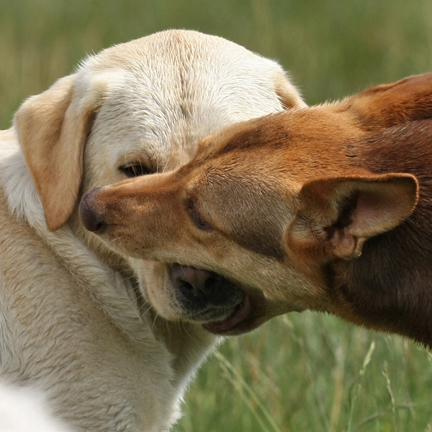
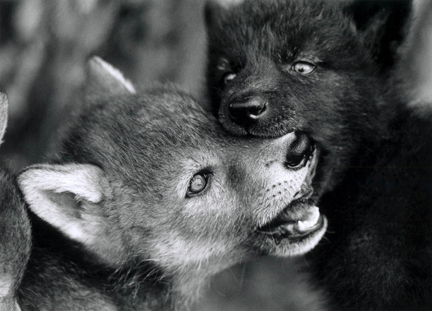

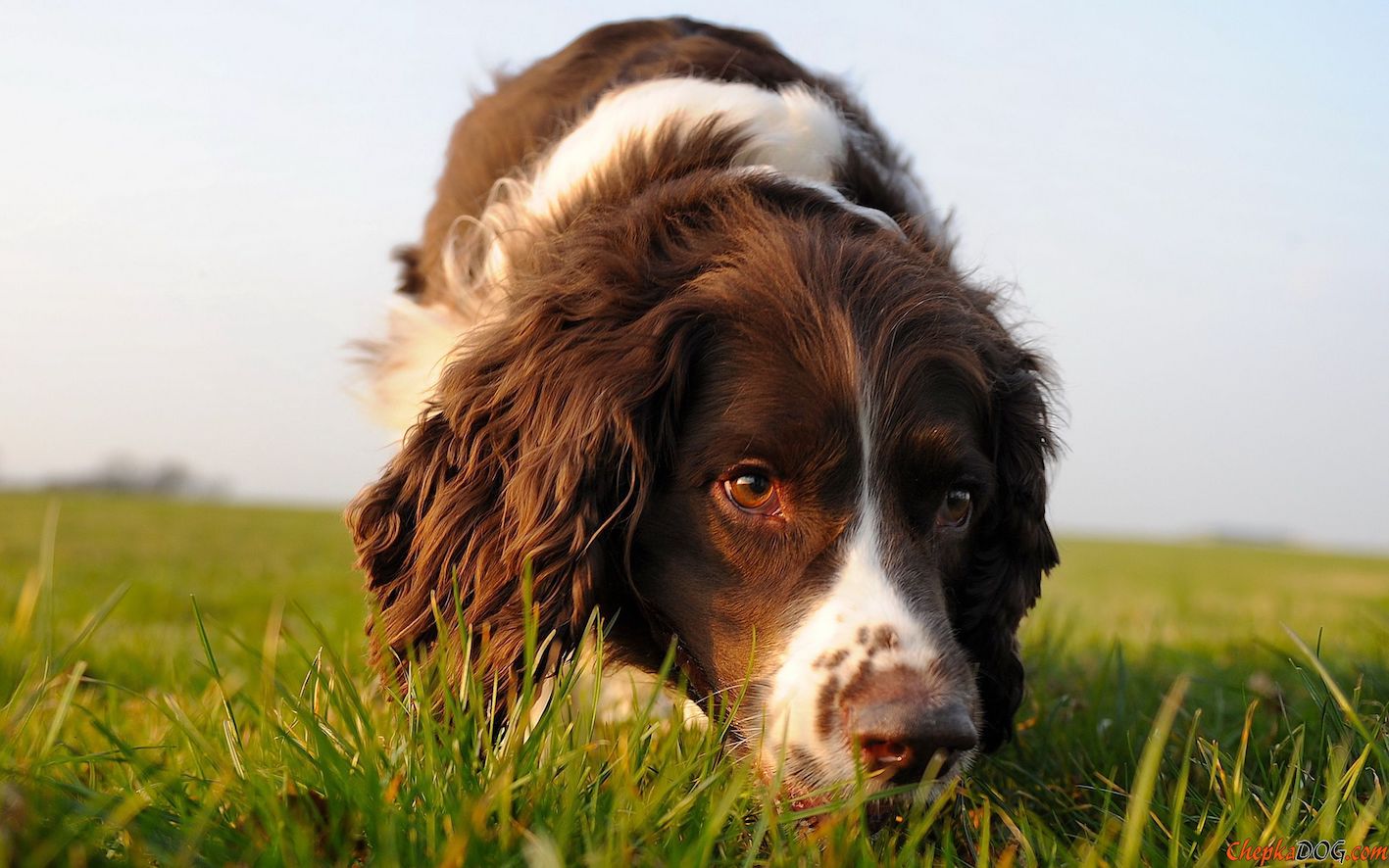

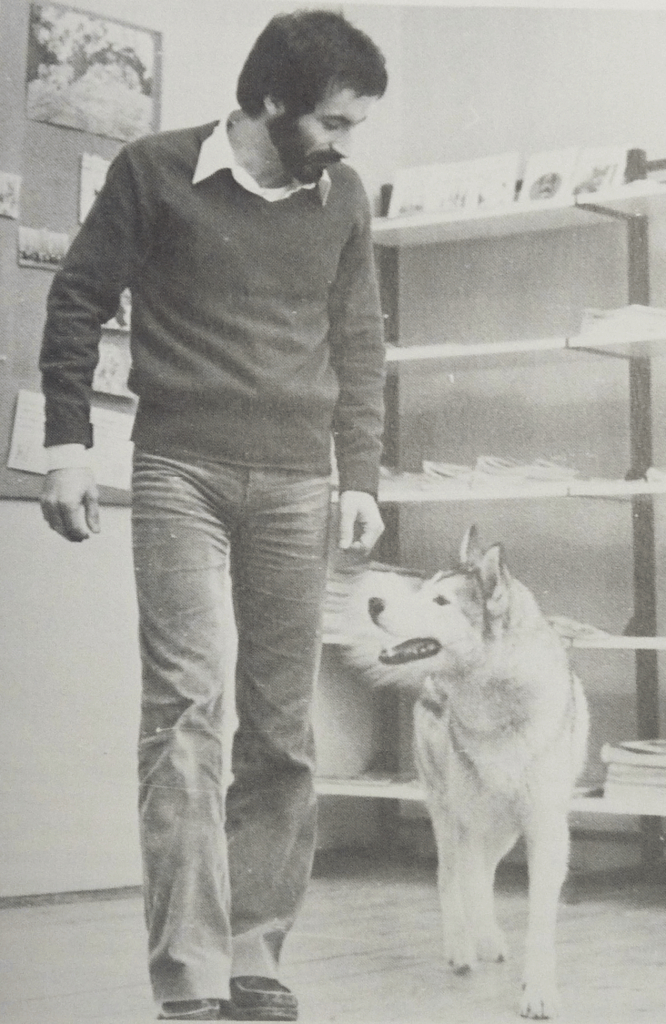

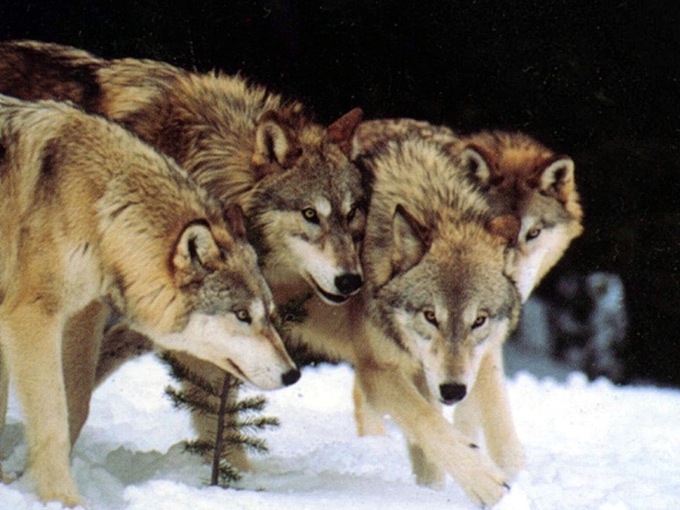


 Roger Abrantes