An Invaluable Lesson—a Relationship is a Natural Thing

An Invaluable Lesson—a Relationship is a Natural Thing

Do you think they fight about what positive and negative reinforcers or punishers are? Do you think they waste precious time arguing about dominance and submission? Do you think they care about collars, leashes, harnesses, target sticks, clickers, kongs,—or looking fashionable?

As I have said often, a relationship is a natural thing. Plagued by the sins of the past, the madness of the present, obsessed with political correctness, intoxicated by the gadgets of the cybernetic revolution, and brainwashed by consumerism, we have forgotten how to cultivate genuine relationships. If we wish peace and harmony, it is imperative that we regain this lost ability of ours. These two in the movie can teach us all a priceless lesson—if we just care to pause for a moment, watch them, and listen to their silent message.

This clip has to be one of my all-time favorites.

Keep smiling!

Evolutionary Strategies

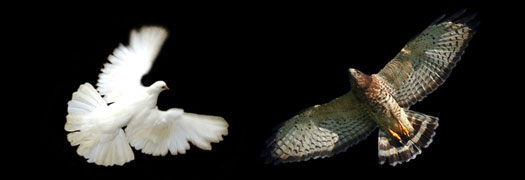
ESS doves hawks

An evolutionarily stable strategy (ESS) is a strategy that no other feasible alternative strategy can better, provided sufficient members of the population adopt it. The best strategy for an individual depends upon the strategies adopted by other members of the population. Since the same applies to all individuals in the population, a mutant gene cannot invade a true ESS successfully.

Evolutionary biologists imagine a time before a particular trait existed. Then, they postulate that a rare gene arises in an individual and ask what circumstances would favor its spread throughout the population. If natural selection favors the gene, then the individuals with the genotypes incorporating that gene will have increased fitness. A gene must compete with the existing members of the gene pool and resist invasion from other mutant genes to become established in a population’s gene pool.

When considering evolutionary strategies that influence behavior, we envision a scenario in which changes in the genotype result in corresponding changes in behavior. By ‘the gene for sibling care’, we mean that genetic differences exist in the population such that some individuals are more likely to aid their siblings than others. Similarly, by ‘dove strategy,’ we mean that animals exist in the population that do not engage in fights and that pass this trait from one generation to the next.

At first sight, it might seem that the most successful evolutionary strategy will always spread through the population and eventually supplant all others. While this may sometimes be the case, it is far from always being so. Sometimes, it may not even be possible to determine the best strategy. Competing strategies may be interdependent. The success of one depends upon the existence of the other and the frequency with which the population adopts the other. For example, the strategy of mimicry has no value if the warning strategy of the model is not efficient.

Game theory belongs to mathematics and economics, and it studies situations where players choose different actions in an attempt to maximize their returns. It is a good model for evolutionary biologists to approach situations in which various decision makers interact. The payoffs in biological simulations correspond to fitness, comparable to money in economics. Simulations focus on achieving a balance that would be maintained by evolutionary strategies. The Evolutionarily Stable Strategy (ESS), introduced by John Maynard Smith in 1973 (and published in 1982), is the most well-known of these strategies. Maynard Smith used the hawk-dove simulation to analyze fighting and territorial behavior. Together with Harper in 2003, he employed an ESS to explain the emergence of animal communication.

An evolutionarily stable strategy (ESS) is a strategy that no other feasible alternative strategy can better, provided sufficient members of the population adopt it.

The traditional way to illustrate this problem is the simulation of the encounter between two strategies, the hawks and the doves. When a hawk meets a hawk, it wins on half of the occasions, and it loses and suffers an injury on the other half. Hawks always beat doves. Doves always retreat against hawks. Whenever a dove meets another dove, there is always a display, and it wins on half of the occasions. Under these rules, populations of only hawks or doves are not an ESS. A hawk can invade a population made up entirely of doves, and a dove can invade a population of hawks only. Both would have an advantage and would spread in the population. A hawk in a population of doves would win all contests. A dove in a population of hawks would never get injured because it wouldn’t fight.

However, it is possible for a mixture of hawks and doves to provide a stable situation when their numbers reach a certain proportion of the total population. For example, with payoffs as winner +50, injury -100, loser 0, display -10, a population consisting of hawks and doves (or individuals adopting hawk and dove strategies) is an ESS whenever 58,3% of the population are hawks and 41,7% doves; or, alternatively, when all individuals behave at random as hawks in 58,3 % of the encounters and doves in 41,7%.

Evolutionarily stable strategies are not artificial constructs. They exist in nature. The Oryx, Oryx gazella, has sharp, pointed horns, which it uses only in defense against predators and never in contests with rivals. They play the dove strategy. Up to 10% per year of MuskoxOvibos moschatus, adult males die as a result of injuries sustained while fighting over females. They play the hawk strategy.

Peer-to-peer file sharing is a good example of an ESS in our modern society. BitTorrent peers use Tit for Tat strategy to optimize their download speed. Cooperation is achieved when upload bandwidth is exchanged for download bandwidth.

Life is a box of wonder and amazement, isn’t it?

 ____________

Featured image: The traditional way to illustrate Evolutionarily Stable Strategies is the simulation of the encounter between two strategies, the hawk and the dove.

References

Dawkins, R. (1980). Good Strategy or Evolutionarily Stable Strategy. In G. W. Barlow & J. Silverberg (Eds.), Sociobiology: Beyond Nature/Nurture (pp. 331-367). Westview Press.
https://doi.org/10.4324/9780429306587-14.

Maynard Smith, J. (1972). Game Theory and the Evolution of Behavior. In R. Lewontin (Ed.), On Evolution (pp. 202–223). Edinburgh: Edinburgh University Press. ISBN: 978-0-85224-248-1.

Maynard Smith, J., & Parker, G. A. (1976). The logic of asymmetric contests. Animal Behaviour, 24(1), 159–175. https://doi.org/10.1016/S0003-3472(76)80110-8

Maynard Smith, J. (1982). Evolution and the theory of games. Cambridge: Cambridge University Press. https://doi.org/10.1017/CBO9780511806292

We Talk Too Much and Say Too Little

We Talk Too Much and Say Too Little

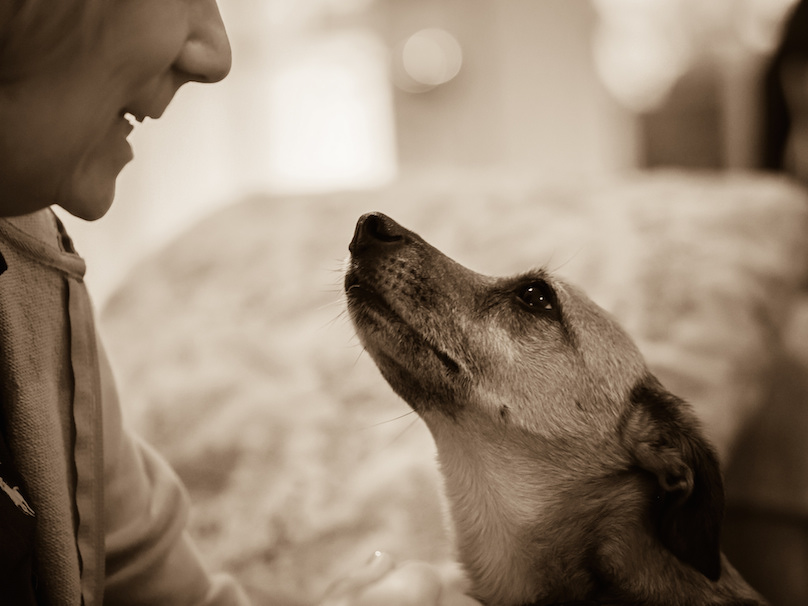
Our dogs, I’m sure, think that we talk too much and say too little. My advice to dog owners is that when you cannot improve on silence, be quiet.

The function of communication is to achieve or maintain any desired outcome. Communication—information, instruction, persuasion, control, motivation, emotional release, and information—is all about change. If we don’t want anything in particular, the best we can do is to keep silent.

Communication happens through signals with different forms, e.g., sound (verbal and non-verbal), body language, facial expression, eye contact, smell, and touch. All organisms communicate: animals, plants, fungi, and even bacteria.

Talking is our primary means of communication because we have developed complex language systems, which is a unique characteristic of our species’ brain. Other animals also communicate, though their methods are supposedly less sophisticated than ours. In addition to speaking to influence or maintain the behavior of others, we also engage in casual conversations, social chatter, and gossip. However, cozy talk is not always as pleasant as it sounds, and social conversations often veer into anti-social territory more than we might like to admit.

Language is a valuable tool for fostering understanding; and it is also the ideal tool to create misunderstanding. Very often, we would be better off remaining silent.

Dogs don’t care for idle chatter or social niceties. They aren’t particularly interested in gossip or emotional outbursts either. Dogs are pragmatic—it’s a “if you don’t bother me and I don’t bother you, all is good.” Dogs are connoisseurs of silence. Instead of excessive talking, I believe your dog would value a loving glance or a simple soothing gesture much more. So, remember: if you don’t have anything important to say to your dog, keep silent.

Have a quiet, peaceful, and beautiful day!

The Single Most Damaging Belief of Ours

wolfmuzzlegrab-1

The single most damaging belief of ours is that everything is one-sidedly good or bad, right or wrong.

Good or bad, right or wrong depend on the conditions. A strategy is only good at a specific time and under particular circumstances. Behavior is dynamic and changeable. An individual displays one behavior at one given moment and another a while later. It is the ability to adopt the most beneficial strategy in the prevailing conditions that ultimately sorts the fittest from the less fit—moral strategies included—and decides whose genes will prevail in the next generation, and which memes will play in the following round.

Opposing strategies—such as honesty versus deception, dominance versus submission, or aggression versus fearfulness—hold one another at bay. Whether it pays off to play one role or the other is ultimately a function of costs and benefits, as well as the number of individuals adopting each particular strategy.

In the game of life, no strategy wins alone.

Featured image: The single most damaging belief of ours is that everything is one-sidedly good or bad, right or wrong. (Photo by Monty Sloan).

I Do Enjoy Being Kind to Other Animals

(First published April 13, 2014, edited February 26, 2018)


I Do Enjoy Being Kind to Other Animals

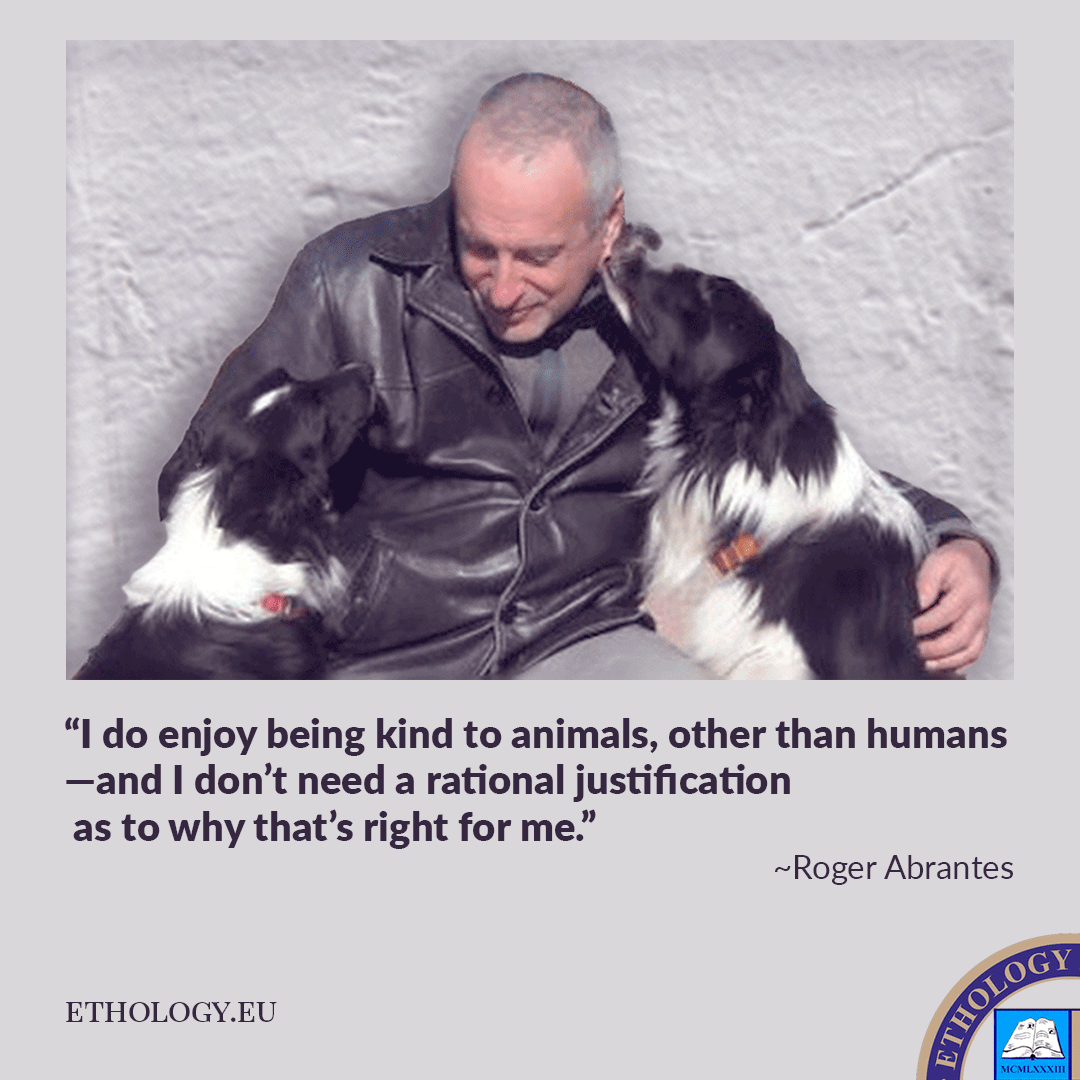
I do enjoy being kind to animals, other than humans—and I don’t need a rational justification as to why that feels right for me. I respect them for what they are and interact with them on equal terms. I don’t believe it is right to subjugate them to my will, to control them, to change them.

Yes, I do enjoy being kind to animals, as it brings a sense of harmony to my life. While I can’t force anyone to choose harmony or define it in a specific way, I can demonstrate how bullying does not lead to stability. Because of this, I find it difficult to argue with people who believe that bullying others—whether human or non-human—is acceptable. Nor can I argue with people who think it’s justifiable to hurt others in order to achieve their goals since I find such actions objectionable. I cannot discuss with people who deny or affirm a particular matter of fact to justify their moral decisions, because my mind rejects invalid, unsound arguments.

Morality and science are two separate disciplines. I may not like the conclusions and implications of some scientific studies, and I may even find their application to be immoral; yet, my responsibility as a scientist is to report findings objectively. Stating a fact does not oblige me to adopt any particular moral stance. While science does influence my perceptions, it does not dictate how I feel about that fact. Ultimately, my moral decisions are independent of scientific facts.

G. E. Moore coined the term naturalistic fallacy in 1903 in “Principia Ethica.” In 1739, David Hume described, in “A Treatise of Human Nature,” the ‘is-ought problem,’ also called ‘Hume’s Law’ or ‘Hume’s Guillotine.’ The ‘is-ought fallacy’ consists of deriving an ‘ought’ conclusion from an ‘is’ premise. We cannot deduct ‘ought’ from ‘is.’

As an ethologist, my focus is on understading what is, not what ought to be. Echoing Satoshi Kanazawa, if I conclude something that is not supported by evidence, I commit a logical fallacy, which I must correct, and that’s my problem. However, if my conclusion offends your beliefs, then that’s your problem.

With time, the rational principles that govern my mind and the ethical ones that regulate my conduct may or may not prove to be the fittest. Meanwhile, due to genetic pre-programming, social conditioning, and evolutionary biology, I do enjoy being kind to animals. I respect them for what they are and interact with them on equal terms—and I don’t need a rational justification as to why that feels right for me.

Featured image: I do enjoy being kind to other animals, respecting them for what they are and interacting with them on equal terms.

Your Most Powerful Animal Training Tool

Roger Abrantes and wolf cub Silas in 1985.

Your most powerful animal training tool is yourself. The featured picture shows yours truly in 1985 with Silas, the wolf cub. Notice the whistle hanging around my neck. I used it to produce a sound as a conditioned positive reinforcer (yes, the precursor of the click sound from Karen Pryor’s clicker). Silas preferred, though, my personal verbal reinforcer (dygtig)* because I always associated it with friendly body language and facial expressions. Thus, ‘dygtig’ meant acceptance. For wolves, more sensitive to social situations than dogs, being accepted is the ultimate social reinforcer; for the cubs, it is vital.

These were the first observations leading me to suspect that verbal and mechanical conditioned positive reinforcers had different applications. Parts of the verbal reinforcer (the body language and facial expression) do not require conditioning. Therefore, I later coined the term semi-conditioned reinforcer.

I’ll say without hesitation that our most powerful animal training tool is ourselves. If we control ourselves, our body language, our facial expressions, and the little that we say, we’ll achieve what we pretend and more.

Interacting with someone is, after all, not merely conditioning a series of behaviors—it is creating a relationship.

* “Dygtig” [ˈdøgdi] is a Danish word that means “capable,” “skilled,” or “competent,” and can also mean “clever” depending on context. It is, apparently, a good sound as a reinforcer, as I discovered many years ago.

Featured image: Roger Abrantes in 1985 interacting with Silas, the wolf cub—creating a relationship.

I’m a Citizen of the World

childdogcatwide-1

I’m a citizen of the World,” I say when asked where I come from—and I am, in mind and heart.

Diogenes, in about 412 BC, was probably the first to use the expression and express the very same sentiment. Socrates (469-399 BC) concurred: “I am not an Athenian or a Greek, but a citizen of the world.” Kaniyan Poongundran, the Tamil poet, wrote (at least 2000 years ago), “To us all towns are one, all men our kin.” Thomas Paine (English-American philosopher, 1737 – 1809), said, “The world is my country, all mankind are my brethren and to do good is my religion.” Albert Einstein (1879-1955) thought of himself as a world citizen, “Nationalism is an infantile disease. It is the measles of mankind.”

I’m a citizen of the world. I’ve traveled over most of our beautiful planet, seen mountains above the clouds with perennial snow tops, and oceans reaching far beyond the eye can see. I’ve lived in temperatures from 40ºC below zero to 40ºC above. I’ve eaten all kinds of food prepared by humans and spent many a day and night enjoying the company of people with the most exceptional cultures and habits.

What’s my favorite place? I don’t have one. Everywhere I’ve been, I’ve discovered new pieces in this amazing puzzle of life. Everywhere I’ve been, from the most glamorous cities to the poorest war-torn areas, I’ve met kind and gentle people. I’ve shared water with the Maasai in the African desert and rice with the Chhetris in the Nepalese mountains. With all of them, I felt a strong kinship: no country, no culture, no language, no divide—we were family, we were humans, we were sentient living beings. Yes, I’m a citizen of the world.

Life is great!


Featured image: Everywhere I’ve been, I’ve discovered new pieces in this amazing puzzle of life.

The Biggest Difference Between Humans and Dogs

The Biggest Difference Between Humans and Dogs

The biggest difference between humans and dogs is not that we reason, and they don’t. To observe rational behavior, look to the dog. To see an emotional response, watch the owner.

Some animals, other than humans, do reason. They have well-developed brains and are goal-seeking. They acquire, store, retrieve, and process information. Additionally, research shows that other animals, besides humans, understand rules. In other words, they know that a series of events must happen in a particular sequence to produce a specific effect.

Animals of many species are capable of solving a wide range of problems that involve abstract reasoning. The problem is that most of our research projects into animal cognition either adopt a behaviorist approach—its conditioning methods nearly turning other species, except our own, into automatons—or focus on particular human characteristics, such as speaking and counting.

The standard depiction of the ladder of nature, on which the various species occupy successively higher levels, places humans at the top. However, species exhibit distinct cognitive processes, depending on how they have adapted to their different ecological niches.

That brings us back to Darwin—the difference between humans and other animals is “[…] one of degree and not of kind.” (1871 in “The Descent of Man, and Selection in Relation to Sex.”)

Featured image: The biggest difference between them and us is not that we reason, and they don’t (by D. Myers).

References

de Waal, F. B. M. (2016). Are We Smart Enough to Know How Smart Animals Are? W.W. Norton & Company.

Frederick R. News feature: The search for what sets humans apart. Proc Natl Acad Sci U S A. 2015 Jan 13;112(2):299-301. doi: 10.1073/pnas.1423320112. PMID: 25587106; PMCID: PMC4299222.

Suddendorf, T. (2013). The gap: The science of what separates us from other animals. Basic Books/Hachette Book Group.

Zentall, T. R. (2023). Comparative Cognition Research Demonstrates the Similarity between Humans and Other Animals. Animals13(7), 1165. https://doi.org/10.3390/ani13071165.

We All Say We Love Dogs but Do We?

We All Say We Love Dogs but Do We?

Today, my friends, I have a very short blog post for you—to wonder and ponder!

We all say we love dogs, and yet we spend most of the time changing them. We change their appearance and their natural behavior, domesticate, civilize, and humanize them. We neuter and sterilize, crop their ears, and dock their tails. We have a thriving industry and commerce of accessories and gadgets, and a zillion dog trainers to turn our dogs into something they are not.

How is that compatible with any definition of love?

Dogs Are Better Trainers Than We Are

Dogs Are Better Trainers Than We Are

Dogs are better trainers than we are. They may know nothing about learning theory, but get along perfectly well with whom they want. Dogs don’t get too upset by a growl; they don’t become overconfident with a “yes,” nor do they get depressed by a “no.” They force us to get up early and go to bed late so they can go sniffing other dogs’ urine. We pay them for expensive food and medical care. And we do all that just because they sit and stand and look silly at us when we ask them to.

I remember, as a young student, listening to Professor Lorenz tell us that dogs were better ethologists than we were because they paid more attention to our body language than we did ourselves. That stuck with me then… and still does.

Featured image: Dogs are better trainers than we are (by A. Jones).

El último paseo

Traducido por Lua Gatchan (from the original in English The Final Walk).


El camino a casa desde el muelle es uno de los pequeños placeres de la vida. Normalmente es un paseo de 20 minutos, pero a menudo puedo tardar hasta una hora o incluso dos, ya que me paro a charlar con todo el mundo en el camino, con los comerciantes, con las personas que conozco de vista o incluso con desconocidos. Esta es la costumbre en mi pueblo en el sur de Tailandia, donde encuentras sonrisas y todo el mundo te habla.

Old dog

Bombom was old and tired, ready for his final walk to the temple.

El clima es casi siempre caluroso y soleado, entre 29° y 38°, hoy hace exactamente 32° según mi equipo de buceo. Por supuesto hay lluvias durante la temporada de lluvias, pero sólo duran una hora o dos y todo se seca pronto, dejando una sensación de frescura y olor a tierra mojada en el aire. A veces llueve tanto que las calles se convierten en ríos pequeños, pero todo el mundo se lo toma con calma, con los pantalones arremangados; la vida continúa (literalmente) con una sonrisa.

Después de haber completado tres inmersiones, una de ellas con fuerte oleaje, como de costumbre me muero de hambre. En estos días, mi trabajo en Tailandia consiste en la gestión biológica del medio marino que, básicamente significa bucear, a veces con estudiantes, otras sin, hago fotos a los peces y a los corales que veo, y luego escribo un informe. Sí, ¡esto es lo que yo llamo un trabajo! Me paro en uno de esos extraordinarios vendedores ambulantes en la calle principal para comer algo. La comida en la calle es tan barata y tan buena que no vale la pena ir a casa y cocinar.
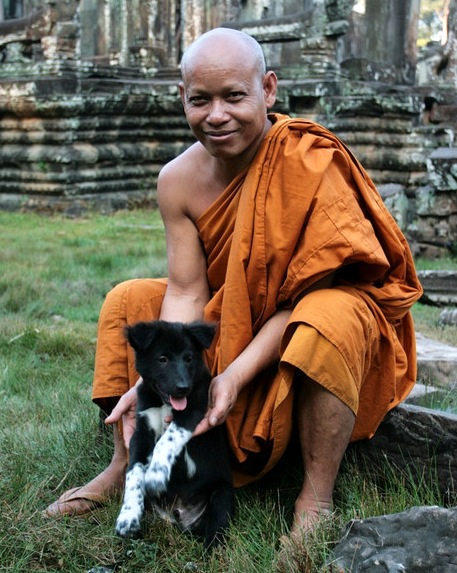
Buddhist Monk and Dog.

Buddhist Monk and Dog (image by John Lander).

Mi restaurante favorito (que se parece más a un garaje abierto) es una empresa familiar, al igual que la mayoría de los negocios en Tailandia. Los dueños viven allí. Tienen un televisor y una cama para los niños en la parte trasera, es decir, detrás de las cuatro mesas para los clientes. Todo está a la vista de todos. Claro, no quieren dejar a los niños solos en una habitación. Los niños (y los perros) son una parte inherente en la vida Tailandesa, los ves en todas partes. Se les permite hacer lo que quieran, pocas veces se les regaña o se les grita, y sorprendentemente son muy educados. Me desconcierta cómo manejan esto, sobre todo cuando pienso en algunos de nuestros mocosos en Occidente, tanto humanos como caninos. Todavía tengo que descubrir su secreto, pero supongo que tiene algo que ver con el hecho de que son parte de la vida cotidiana desde el día en que nacen; están perfectamente integrados sin ningunas construcciones ni zonas artificiales “para niños”. Lo mismo ocurre con los perros; son miembros como todos los demás, sin preocupaciones y sin ninguna atención especial, sin tratar a unos o a otros de una forma especial.

Sawasdee kha khoon, Logel”, Phee Malí me saluda con una gran sonrisa cuando me ve.

Phee significa hermana mayor y Malí significa Jasmine, que es su nombre. Soy Logel porque los tailandeses siempre te llaman por tu nombre de pila. Los apellidos son un invento relativamente nuevo que se les impone por el Gobierno en respuesta al crecimiento de la población y una sociedad más moderna. La guía telefónica está ordenada por el nombre de pila. El Rey Rama VI introdujo los apellidos en 1920 y él, personalmente, inventó apellidos para unas 500 familias. Todos los tailandeses tienen apodos. ¡Te diriges a tus amigos por sus apodos y ni siquiera conoces su nombre real! Soy Logel porque la mayoría de los tailandeses no pueden pronunciar el sonido de la letra “r”, ni siquiera en su propio idioma y sorprendentemente tienen la “r” en el idioma Tailandés.

Dog in Temple

Thais often take the dogs to the local temple so they can die in peace, in the company of the monks, near Buddha.

“¿Estás bien? ¿Has visto algún pez hermoso hoy?” me pregunta Phee Malí en ‘Tenglish’ (inglés-tailandés, que es un lenguaje en sí mismo, encantador y adictivo). En poco tiempo y sin ni siquiera darte cuenta, empiezas a hablar Tenglish. Yo hablo una mezcla de Tailandés y Tenglish con los lugareños. A medida que mejora mi tailandés hablo menos Tenglish, pero el tailandés es difícil porque es una lengua tonal. El tono con el que se pronuncia una palabra cambia su significado, y a veces de una forma dramática. Hay palabras que siempre pronuncio mal y a los tailandeses les da un ataque de risa, ya sea porque estoy diciendo un disparate o digo algo mal. Les encanta cuando se trata de la segunda opción. Incluso me animan a decir una palabra que sé y que ellos saben que no puedo pronunciar bien sólo para divertirse. Pero esa diversión es sana y sin ningún ánimo de faltar el respeto. Por el contrario, me dan un trato preferencial porque hablo tailandés.

Transcribiré a continuación algunas de nuestras conversaciones en inglés, traducido directamente de palabras tailandesas, con el fin de dar a mis lectores una idea.

Sí”, contesto. He visto peces hermosos y corales. El Thale (mar) Andamar estaba muy bien.

“Oh!, estás tan negro!” Exclama con el ceño fruncido y una sonrisa. “Negro” en realidad significa bronceado o quemado por el sol. A las mujeres tailandesas no les gusta estar morenas. A ellos les gusta el blanco, como suelen decir, y se preocupan cuando ven a alguien con lo que en Occidente llamamos un bronceado saludable y atractivo.

“You hung’y ‘ight, gwai teeaw moo pet mak ‘ight? Phee Malí me pregunta riendo. Ella sabe exactamente lo que tengo en mente; me encanta un plato de Gwai teeaw moo, caliente y picante, especialmente después de un día duro de trabajo. Es una sopa de fideos y carne de cerdo o pollo o camarones,  con todo lo que puedas imaginar. Incluso lo sirven con un plato de vegetales frescos que cortas con los dedos y los metes en la sopa como prefieras. Lo mezclas todo tú mismo con chili seco, chili fresco, salsa de chili, salsa de pescado, soja, pimienta, sal y un poco de azúcar (sí, azúcar, pruébalo y verás por qué me encanta). Es delicioso y puedo asegurar que también es muy saludable.

Me como mi Gwai teeaw moo y disfruto de un té verde helado sin azúcar. El sol se pondrá dentro de una media hora; aquí siempre se pone a la misma hora, siete grados al norte del ecuador. No hay lluvia hoy. ¡Disfruto de la vida en el Paraíso!

“Thao THALE SA Baay dee Mai”. Los niños van corriendo a preguntarme sobre los peces y en especial sobre la tortuga marina, su favorita, y es una buena oportunidad para practicar mi tailandés. Me llaman Lung Logel (tío Roger), en deferencia por mi edad. Entonces llega el turno de decir hola a los perros, un idioma que sé, que no tiene ningún acento y se habla igual en todos los continentes.

Thai Child wai.

The wai is the Thai greeting when you raise both hands together to your chin. It still strikes me as the most beautiful greeting I’ve ever seen.

Veo a Ae al otro lado de la calle (AE es un nombre divertido de un juego del escondite de Tailandia). La conozco a ella y a sus padres. Su padre trabaja en uno de los barcos que utilizo con regularidad en mis excursiones de buceo. A menudo le ayudo a atracar el barco cuando llegamos al muelle cuando no hace un clima perfecto y a veces tomamos una cerveza juntos después de haber asegurado el barco, descargarlo, etc. Ae está en cuclillas al lado de su perro, uno de esos perros de Tailandia que se parecen a todos los demás. Los perros de aldea en Tailandia son todos iguales, como si fueran de una raza particular, producto de una reproducción aleatoria a lo largo de los años. Yo los llamo “el perro por defecto”.

“¿Ae está triste, verdad?” Le pregunto a los niños.

“Oh, el perro de Ae está muy viejo. Mañana el padre de Ae llevará al perro al templo”, responde Chang Lek (su nombre es Pequeño Elefante).

Termino mi comida y voy a hablar con Ae, que todavía está en cuclillas junto a su perro, acariciándolo. Puedo ver que Bombom está viejo y cansado. Es un perro bueno y agradable. A menudo se le puede ver paseando por el pueblo tranquilamente por el vecindario. Él increíblemente siempre está muy polvoriento a pesar de que Ae y su madre lo bañan cuidadosamente y con frecuencia. Cuando me acerco a ellos, él a penas levanta la cabeza. Se muestra afable y resignado de sí mismo.

“Sawasdee khrap, Ae”.

“Sawasdee kha,” me responde la niña, y se apresura a mostrarme un wai para mi. El wai es el saludo tailandés, levantando ambas manos a la barbilla. Todavía me parece el saludo más hermoso que he visto nunca.

“Bombom es viejo, verdad?” le pregunto.

“Sí señor”.

“Bombom ha tenido una vida feliz. Tú eres una buena amiga de Bombom”.

“Sí señor”, dice suavemente.

“A Bombom le gustas mucho”, le digo quedándome sin palabras.

“Mamá y papá mañana llevarán a Bombom al templo”, responde ella, y veo que le cae una gran lágrima por su mejilla izquierda.

“Sí, lo sé”, le digo. Otra vez sin palabras, añado “Ae, voy a comprar un helado para que nos sentemos aquí comiendo helado y hablando con Bombom, ¿te gusta la idea?”

“Sí señor, muchísimas gracias señor”, dice ella, y se las arregla para regalarme una sonrisa encantadora.  “A Bombom le gustan mucho los helados”, me dice la niña, y ahora sus ojos están llenos de lágrimas jóvenes, tristes.

En la cultura y creencia tailandesa, todos los seres que viven bajo el mismo sol merecen el mismo respeto. Las especies no importan. Ellos aman a sus mascotas y cuando llegan a la edad de morir, algunos tailandeses los llevan al templo local para que puedan morir en paz, en compañía de los monjes y cerca de Buda. Por eso siempre hay muchos perros alrededor de los templos, y a veces es un problema real. Los templos son pobres. Un monje posee sólo siete artículos. Los vecinos cocinan para ellos y para los perros por la mañana antes de ir a trabajar.

Sawasdee khrap,

ชีวิต ที่ด

La vida es maravillosa.

R—

Related articles

為了讓你跟狗狗可以快樂地在一起 “16件別再這麼做的事情”

譯者 translator: 林明勤 ( Ming Chin Lin) — from the original in English “16 Things You Should Stop Doing In Order To Be Happy With Your Dog

Roger Abrantes in 1986 howling with husky.

Cover photo from the author’s book from 1986 “Hunden, vor ven” (The Dog, Our Friend) (photo by Ole Suszkievicz).


如果您希望與狗兒生活地更開心並且擁有穩固的關係,以下有16件您必須停止再這麼做的事情。會很困難嗎?一點也不。你只需要產生想做的念頭,然後很單純地就去行動。也就是說,閱讀完這篇文章後,您就開始著手進行了!

1.  別再過度挑剔—別擔心,享受過程吧。 Stop being fussy—don’t worry, be happy

如同對於我們生命中的大部分事物來說, 當一個完美主意者是有其優點及其缺點的。當你養了一隻狗,你的生活會傾向莫非定律的模式 。任何會出差錯的事情將會出差錯。因為事情總有變數,也因此事情的發展很少百分之百如你期望的方式進行。您能夠做的也應該做的則是計畫並訓練,但需要做好準備的是,在沒有任何人(狗)會受傷的情況下,接受所有各種變動性、臨時性以及微小的事故。畢竟,在大部分的情況來說,比”完美”差一點點的往往都比”做的好”來的更好,所以為何要擔心做到完美呢?”完美”,這個僅存在於您腦袋裡的概念並不會讓任何人都開心,不論是對您或者您的狗兒來說都是。

2. 別老是太嚴肅—笑一下吧!Stop being too serious—have a laugh

如果你沒有很好的幽默感,那麼就別和狗兒生活在一起。哈哈大笑在很多事故發生時,通常是最好的解決方式,也同時可以讓狗狗與主人的關係升溫。會因事故而感到難堪、尷尬的只有我們的心裡。您的狗甚至不懂尷尬是什麼,而您應該跟隨狗狗這樣的方式。只要沒有任何人、狗受傷,那麼對於您或者您的狗狗犯下的過錯,就一笑置之吧!

3. 停止你想要控制任何事情的慾望—當狀況發生時,接受它。Stop your desire to control everything—take it as it comes

當您用莫非定律來決定您與狗兒的生活方式時,如果您企圖控制您的狗兒的每一個行動, 您最後得到的會是潰瘍或者陷入失望、沮喪之中。放棄您需要控制一切的想法。當然地,您應該要在安全的考量下,有理智地控制管理好狗狗,不過您應該將一些對生活或者死亡無關緊要的事物給拋在腦後。

4. 別再”散撥”你的責罵—繼續前進。 Stop apportioning blame—move on

當事情出了差錯(我可以跟您保證,事情就是會出錯)別浪費你的時間在分送你的責罵。是否是您造成的錯、狗兒造成的錯、還是鄰居的貓害的?誰在乎呀?

向前看,並且如果你發現當下的情況全都令人失望,那麼就試著預先想好未來可能會發生與這次類似的情節,並且避免它的發生。假如不是件很大的事情,那就忘了它吧。

5. 別再去相信關於狗狗的祖先是狼的傳言。 Stop believing in old wives’ tales—be critical

這世界上充滿的許多不合理的、毫無根據的狗狗的狼祖先傳言。這些日子來,網路提供了一個快速及簡易的管道讓我們可以獲得許多珍貴的資訊,同時也有很多是垃圾: 不好的觀點、不好的定義、未經證實的申明、謬論、情緒化的呈述、偽科學、促銷活動、被隱藏的政治議程、宗教道義等。當然,以表達個人言論的自由來說,我相信任何人都可發佈任何自己想要表達的看法,甚至單純地就一派胡言。但您和我都有權不去相信它、有權去漠視它。運用您的批判性思考。不要停止問自己“這怎麼有辦法發生“及“他/她是怎麼得到結論的?“ 直到您有時間好好深深地思考之後,才停止你的批判及行動。如果有必要,則尋求第二或者第三者的看法。如果這個論點非常可靠並且你喜歡,那麼就可以這麼做;如果這個論點很可愛但你不喜歡它,那麼就不要做,並且想的仔細一點;假如那個觀點不可靠,那就拒絕它並且不要再想了;為你自己做下決定並做你認為對的事情。

6. 別在意標籤—別憂慮!Stop caring about labels—be free

因為標籤的販售,我們因而被過度地淹沒在標籤之中,但它們之所以存在而被販賣,只因為你買單。你是否應該是個正向、極度正向、正增強、正正增強、正增強負處罰、達到兩者平衡、自然派、道德派、保守派、實際派、激進派、響片訓練者或者獨裁主意者的飼主呢?停止在意您該被貼上什麼標籤。當您與您的狗狗享受一個完美的時刻,您所被貼的標籤是不相干的。標籤是一個負擔;它會限制您並讓您奪走自由。標籤是給那些需要躲在圖片後並毫無安全感的人用的。請相信你自己,成為你想要成為的飼主,而且你並不需要標籤。

7. 別再去管別人怎麼想—過你自己的!Stop caring about what others think—live your life

在與您碰面的大多數人中,您在這些人身上只會花了非常少的時間;大多數的時間您則是花在家人及親近的朋友身上。所以,當您可能甚至不會再次見到這些人或者只會偶爾見到的人人,為何要在意其他們對您身為一個飼主或者您的狗狗的行為的看法呢?

8. 停止抱怨—不要浪費你的時間。 Stop complaining—don’t waste your time

您只有在一種情況下會有問題,也就是當您期望的事情與事情原貌之間有差異的時候。如果您的期望是很切實的,那就嘗試看看並且做些可以達成期望的事情。如果不是,那就停止抱怨,這浪費的是時間及精力。假如您可以為那件事情做些事,那就做吧!如果不行,那為當下畫個句點後,就向前邁進。

9.  別再為自己找藉口。 Stop excusing yourself—be yourself

您不需要為您的作風或者您的狗兒找合理化的藉口。只要在您不打擾任何人(狗)的狀況下,您有權做您喜歡的方式並且作你自己。您不需要對任何事都非常擅長,不論是服從訓練、敏捷犬、與狗共舞、在音樂中讓狗狗腳側行進、飛球活動、護衛犬、牧羊犬、嗅覺活動、動物輔助治療、雪橇犬比賽、跳水狗活動、Field、Earthdog、Rally-O、Weight Pulling、Carting、Trials、 Dock Dogs、Dog Diving、Disc Dogs、Ultimate Air Dogs、Super Retriever、Hang Time、Lure Course Racing or Treibball; 關於您做不到的事情,您不需為自己解釋不擅長的原因。當然,您也無需說明您的狗沒有標準坐姿的原因。另一方面,針對您想要改變並且能被改變的事物來努力;別把時間跟精力花在去想您不想要的、不需要的或無法改變的事物。無論您與您的狗享受的是什麼,就去做吧!只要您們喜歡,您跟狗狗才可以同時是快樂的。就是這麼簡單!

10. 別再為某些事難受立刻行動。 Stop feeling bad—act now

如果您對於在您與狗狗的生活中的某一項特定的層面而感到不開心,那麼就做一些事情來改變它。辨別問題且立下目標、擬定一個規劃進而實踐它。僅專注於難受的感覺或愧疚對於事情本身、對任何人、您的狗或者那個與您分享生活的可貴的人來說,都無濟於事。

11. 停止您對於擁有的慾望───作伴!Stop your urge to own—be a mate

對於一個生命具備享有權的奴隸制度,很慶幸地早已經被廢除了,因此,別過時地把自己看成是您的狗的所有者。要把您的狗狗當作一個您需要為之負責的伴侶。如同您並不擁有您的孩子、您的父母親或者您的朋友。

12. 停止依賴— 釋放自己。 Stop dependency—untie your self

愛基本上與依賴、著迷或渴望無關,甚至與這三者的必要性關聯是恰恰相反的。您可以愛您的狗但不要建立對彼此的依賴。您要有一個自己的生活並且給您的狗一些空間。您跟您的狗兒是兩個獨立的個體。就像是自由球員一樣,您們享受與彼此一起生活,但不是對彼此著了迷。停止把自己的影子投射在狗狗身上。

13. 別把狗狗當作一個替代品—展現尊重。 Stop turning your dog into a substitute—show respect

每一隻狗都是一隻狗,而他都是一個獨一無二的生命。你要愛他、享受有他的陪伴但不要把他當作任何一個人、朋友、小孩或者另一個配偶的替代品。

期待任何人/狗成為一個替代品對一個人、一個非人類的動物或者對您自己來說都是非常不敬的。別再讓您的狗狗為您扮演一個某一個角色,您必須開始用愛一隻狗的方式來愛你的狗。

14. 別試著合理化—請保持真實。 Stop rationalizing—be truthful

所有的關係如同經貿交易般是有付出與獲得的往來。

只要兩者能取得平衡,那麼就沒有任何問題。要對自己誠實 :

您的狗給了你什麼,而你又為你的狗做了什麼?如果你發現你們其中一個幾乎都是供給者或是接受者,思考這個問題並且調整這個平衡。你的狗需要你,就像你需要你的狗一樣,而且只要你跟狗狗都是有付出及獲得,那麼這之間並沒有任何問題。你不是因為為了拯救這個可憐的小動物而養牠。您養你的狗是因為你們兩個可以一起享受一個美好的豐富的夥伴關係。

15. 別再去奢望那些你不能擁有的事物—對於當下所擁有的要感到開心。 Stop wanting what you can’t have—be happy with what you’ve got

這是十分常見的人類特性。你總是奢望那些你無法得到的;對於您已經擁有的那些美好視而不見。

你的狗已經提供了你一個非常好的交易呢!儘管你的狗狗無法對於每件事情都很擅長,但你們兩個是可以非常完美地開心在一起!當狗主人說著他們多愛自己的狗但卻花著大部分的時間試圖去改變狗兒的行為,這是多令人吃驚的呀!把焦點放在你擁有的事物上,而不是你沒擁有的事物,感受並感恩你所擁有的。

16. 別再打擊你自己—跟著心意走。 Stop fighting yourself—follow your heart

有非常多種不同的方式可以成為一個好的狗主人。你有你自己的方式、別於他人的方式。這是你的人生。只要你不傷害任何人(狗),那就用你覺得自在的方式活著吧!仔細去聆聽專家的建議,好好地思考他們的建議,但最後,做你感覺是對的事情,跟隨你的心。做你自己。

生命是美好的!Life is great!

R—

Related articles

I’m a citizen of the World

I’m a citizen of the World,” I say, when asked where I come from—and I am, in mind and heart.

Woman saving dog from the flood

Woman saving dog from the flood (photo by Dave).


Diogenes, in about 412 BC, was probably the first to use the expression and express the very same sentiment. When asked where he came from, he replied: “I am a citizen of the world (kosmopolitês)”. Socrates (469-399 BC) concurred: “I am not an Athenian or a Greek, but a citizen of the world.” This was indeed a revolutionary thought, because at that time, social identity in Greece was either bound to the city-states, Athens and Sparta, or to the Greeks (the Hellenes). Perhaps it is just as revolutionary today.

Kaniyan Poongundran, the Tamil poet, wrote (at least 2000 years ago), “To us all towns are one, all men our kin.” Thomas Paine (English-American philosopher, 1737 – 1809), said, “The world is my country, all mankind are my brethren and to do good is my religion.” Albert Einstein (1879-1955) thought of himself as a world citizen, “Nationalism is an infantile disease. It is the measles of mankind.”

I’ve travelled over most of our beautiful planet, seen mountains above the clouds with perennial snow tops, and oceans reaching far beyond the eye can see. I’ve lived in temperatures from 40º C below zero to 40º C above. I’ve eaten all kinds of weird and wonderful dishes prepared by humans and spent many a day and night enjoying the company of people with the most peculiar cultures and habits.

Asian child with cat and dog.

Child with cat and dog.


What’s my favorite place? I don’t have one. Everywhere I’ve been, I’ve discovered new pieces in the amazing puzzle of life. Everywhere I’ve been, from the most glamorous cities to the poorest, war-torn areas, I’ve met kind and gentle people. I’ve shared water with the Masai in the African desert and rice with the Chhetris in the Nepalese mountains. I felt a strong kinship with all of them: no country, no culture, no language, no divide—we were family, we were humans, we were sentient living beings.

My blogs are read all over the World. I have readers in places that you may never have heard of: Northern Mariana Islands, Guam, Kyrgyzstan, Brunei, Réunion, Oman, to name just a few. I speak nine languages and understand at least sixteen, but write in English, as it’s the language I feel most comfortable with. I write about matters concerning my profession (biology and ethology) and also about life. My goal is to share the knowledge and experience I’ve been so fortunate to acquire during my life with all those who wish to receive it. My blog site, on which I share blogs, articles and books, is free to everyone.

I write in English, which is fast becoming a lingua franca, understood and spoken by most, allowing my blogs to reach far and wide. However, there are many people who do not speak or understand English and, therefore, from time to time, I publish a translation of one of my blogs in a language other than English. This is the least I can do for my loyal, non-native, English speaking readers from around the world.

Boy and dog sleeping on the street.

Boy and dog sleeping on the street (photo by Gemunu Amarasinghe).


As my blog site is free of charge, I have to keep costs as low as possible. I therefore use the WordPress platform, which is efficient, but has its limitations, one of which is that subscribers cannot be categorized by their native language; which means that all subscribers receive notifications of all my blogs whatever the language. This shouldn’t really be a problem, as, if you receive a blog in a language you don’t understand, you can either click the blue link that takes you directly to the English original, or you can simply discard the notification email. However, this seems to upset some native English speakers to the point where they send me messages asking me to remove them from the subscribers list unless they only receive blogs in English.

Unfortunately, that’s impossible if my blog is to remain free of charge because WordPress doesn’t provide that option. Such readers need to decide whether the inconvenience of receiving a message about a blog entry in a language you can’t read outweighs the benefits of having free access to all the other stuff you can. As of today, I’ve published 49 blogs (including several articles and six small books) of which only eight are in languages other than English. You can do your calculations and decide whether you get enough for your money (the money you don’t pay, that is).

As long as I receive messages like the one below, which overwhelms me, makes my heart beat a little faster and my eyes well up, I’ll continue to offer the sporadic translation.

“Teacher sir Roger I’m not good English I no computer Read from computer shop read your article from dictionary info I like so much I have many dog other animal too I very much appreciate your help very much You long life healthy”

The only regret I have is not being able to write in more languages than I do. Until then, I’ll continue writing in as many languages as I can—and yes, I’m a citizen of the World!

Life is great!

R—

Note: According to the CIA World Fact Book, only 5.6 % of the world’s total population speaks English as a primary language. That number doubles when people who speak English as a second or third language are counted. By conservative estimates, that means that well over four-fifths of the world’s population does not speak English.

Related articles

Les 20 principes que tous les entraîneurs d’animaux doivent connaître

Traduit par Marie-France Langlois (from the original in English “The 20 Principles All Animal Trainers Must Know“).

En supplément : « Seize principes à l’intention des entraîneurs expérimentés » et « Les pratiques exemplaires »

"The 20 Principles" cover.

“The 20 Principles All Animals Trainers Must Know”

C’est la première fois qu’un de mes livres est publié en français et c’est avec grand plaisir que j’offre à mes lecteurs francophones un livre dans leur propre langue.

Ce petit livre de seulement 51 pages comprend des définitions, des explications et des exemples des processus impliqués dans l’entraînement des animaux.  Aux « 20 principes fondamentaux » j’ai ajouté un supplément de 16 principes à l’intention des entraîneurs expérimentés. Bien sûr l’apprentissage chez les animaux ne se réduit pas à ces 36 principes, mais en pratique l’entraîneur qui les comprend et peut les appliquer correctement, réussira sans doute.

Comme toujours, je vais corriger et améliorer ce livre dès que je découvre des erreurs ou de meilleures façons d’expression. Donc, je vous recommande de consulter cette page régulièrement.

Première édition.

J’espère que vous passerez un bon moment avec votre lecture.

R—

PS—Ce livre est gratuit pour votre lecture online sur votre ordinateur. S’il vous plaît, ne me demandez pas d’ajouter la possibilité d’impression; j’aime des livres, mais j’aime aussi bien les arbres de notre planète. Nous prévoyons des versions pour iPad et Kindle bientôt.

Cliquez sur le  « icône mode plein écran » pour une meilleure lisibilité . Zoom avant et arrière comme vous le souhaitez.


Sorry, this book is no longer available here. Please, visit Ethology Institute’s Online Bookstore.


Related articles