Rikki-Tikki-Tavi, the mongoose hero from Kipling’s “The Jungle Book.”
We all know Rikki-Tikki-Tavi, the brave mongoose from Kipling’s ‘The Jungle book.’ This is the story of Mah Noy, the brave dog from Koh Lanta Yai in Southern Thai.
Koh Lanta Yai (เกาะลันตา) remains one of Thailand‘s well-kept secrets (I shouldn’t even reveal the name). It is relatively close to the better-known islands of Koh Phuket and Koh Phi Phi, but is practically inaccessible, requiring two flights, a long drive, and two ferry trips. Tourists are few and far between on this particular South Andaman island and it is virtually devoid of Western influence, except for a few resorts for those who want a taste of unspoiled paradise. Koh Lanta Yai is the biggest of 52 islands of which only 12 are inhabited.
Of course, it’s much easier for me to get to Koh Lanta, as I am resident on a neighboring island only 43.5 nautical miles away. The beaches of Koh Lanta are idyllic: the sand unsullied the water clear and warm (about 86-88º F) and the underwater world along the coral reef just breathtaking (although not literally, I’m happy to say). I always look forward to my diving assignments nearby, drifting above the Staghorn and the Anemone corals monitoring the various species’ fortunes. What a great job!
Thai fisherman like to have their dogs with them for company and practical purposes.
When I’m working in Koh Lanta, I always go ashore in the evening and stay in modest accommodation right on the beach. On one of these occasions, just before sunset, I was sitting in front of my bungalow, cleaning my equipment, when two children came along to talk to me, as always, curious about foreigners.
I had seen them both before; they belong to the food booth where I often eat, just behind the bungalow. We talked about the sea and the fish and about my diving gear, which of course fascinates them.
After having washed my gear, I decided to walk the 30 yards up the cliff to grab something to eat, and the kids followed me. My Thai is not as good as I would like, but my inadequacies have their advantages. As it is so difficult to pronounce words correctly, I nearly always commit embarrassing mistakes that produce a great deal of giggling—and giggling is the best way I know to decrease distance between strangers.
Thai street food cooking and selling is a small family business and since dogs are part of the daily life in Thailand it is not unusual to see them with their owners at work.
“Khun cheu aria?” (What’s your name?), I asked the little boy who was giggling the most and who happened to have one of his front teeth missing.
He told me his name, which sounded funny to me. Thais have all sorts of interesting nicknames, and they are especially fond of animal names. Elephant, shrimp, crab, fish, bird, duck, rabbit, turtle, and even chicken are common names—but I’ve never heard a nickname like this little boy’s. It was then that his mother, Poo (Crab), the owner of the food booth, told me the story.
Five years earlier, two days after giving birth to the now gap-toothed boy, Poo was cooking dinner whilst the family dog catnapped behind the cradle where her newborn baby was happily babbling away to himself.
Thais usually cook outdoors. It’s always warm and they don’t like the smell of food indoors. The dog was typically Thai, of unknown origin, the size of a small spaniel, with an unruly black and white coat, and friendly, deep brown eyes. They had found him on the street a couple of years beforehand and had fed him. For want of a better name, they called him just (หมาน้อย), Mah Noy. He stayed around and finally moved in a couple of weeks later after conquering their hearts. The pressure of natural selection for dogs in Thailand is on kindness. The kindest dogs have a greater chance of survival and pass on their ‘kinder’ genes to their progeny.
On that particular day, Mah Noy gave Poo such a fright she almost lost hold of her hot pan, which could have resulted in serious burns. The dog had suddenly emitted a deep growl and then in two agile, determined jumps, just missing the baby’s cradle, he launched himself on top of a cobra, biting it firmly behind the head.
Mah Noy (หมาน้อย), the boy, got his unusual name for a good reason.
The Andaman Cobra (Naja sagittifera) is an impressive snake, measuring about three to four feet in length. The effects of its venom are devastating; it is capable of killing a human in 30 minutes.
Poo was terrified, rushed to pick up the baby, and ran out of the front gate into the street where she began shouting for her husband. Na (short for Chai Cha Na = victory) came running to the scene and charged into the backyard to grab a spade. The cobra was lying a few feet from the dog, apparently lifeless, but, just in case, Na cut it in two with a well-aimed strike with the spade. Mah Noy looked up at him, gasping for air, and barely able to wag the tip of his bushy tail. Na understood right away that the dog was dying, picked him up and, holding his dog firmly on his lap with one hand, he rode his motorbike as quickly as he could to the local vet.
On the way to the vet, Mah Noy peed and pooped on his lap. Na stopped to get a better grasp on the dog. Mah Noy looked at him, gasped for air for a last time and gave a final wag of his tail. Na understood it was too late for the vet and the strong fisherman from the South Andaman Sea began to weep like a child, right there on the side of the road to Klong Dao, in the fading light of the day on which he had come so close to losing his first-born baby boy.
When Na got home to Poo and their newborn, they buried Mah Noy in their backyard and placed a yellow marigold on top of the grave (yellow is the color of friendship for Thais). That evening, they decided to call their baby boy หมาน้อย, Mah Noy, which in Thai means ‘puppy.’
Natural selection favors behaviors that prolong the life of an animal and increase its chance of reproducing; over time, a particularly advantageous behavior spreads throughout the population. The disposition (genotype) to display a behavior is innate (otherwise the phenotype would not be subject to natural selection and evolution), although it requires maturation and/or reinforcement for the organism to be able to apply it successfully. Behavior is, thus, the product of a combination of innate dispositions and environmental factors. Some behaviors require little conditioning from the environment for the animal to display it while other behaviors requires more.
Behavior is the response of the system or organism to various stimuli, whether internal or external, conscious or subconscious, overt or covert, and voluntary or involuntary.
Behavior does not originate as a deliberate and well-thought strategy to control a stimulus. Initially, all behavior is probably just a reflex, a response following a particular anatomical or physiological reaction. Like all phenotypes, it happens by chance and evolves thereafter.
Pictures illustrating canine social and agonistic behavior. For the classification of the behavior, please see ethogram below. Behavior is dynamic (not static). All interpretations are therefore only approximate and as pictures allow.
An organism can forget a behavior if it does not have the opportunity to display it for a period of a certain length, or the behavior can be extinguished if it is not reinforced for a period.
Evolution favors a systematic bias, which moves behavior away from maximization of utility and towards maximization of fitness.
Social behavior is behavior involving more than one individual with the primary function of establishing, maintaining, or changing a relationship between individuals, or in a group (society).
Most researchers define social behavior as the behavior shown by members of the same species in a given interaction. This excludes behavior such as predation, which involves members of different species. On the other hand, it seems to allow for the inclusion of everything else such as communication behavior, parental behavior, sexual behavior, and even agonistic behavior.
Sociologists insist that behavior is an activity devoid of social meaning or social context, in contrast to social behavior, which has both. However, this definition does not help us much because all above mentioned behaviors do have a social meaning and a context unless ‘social’ means ‘involving the whole group’ (society) or ‘a number of its members.’ In that case, we should ask how many individuals are needed in an interaction to classify it as social. Are three enough? If so, then sexual behavior is not social behavior when practiced by two individuals, but becomes social when three or more are involved, which is not unusual in some species. We can use the same line of arguing for communication behavior, parental behavior, and agonistic behavior. It involves more than one individual and it affects the group (society), the smallest possible consisting of two individuals.
Agonistic behavior includes all forms of intraspecific behavior related to aggression, fear, threat, fight or flight, or interspecific when competing for resources. It explicitly includes behaviors such as dominant behavior, submissive behavior, flight, pacifying, and conciliation, which are functionally and physiologically interrelated with aggressive behavior, yet fall outside the narrow definition of aggressive behavior. It excludes predatory behavior.
Dominant behavior is a quantitative and quantifiable behavior displayed by an individual with the function of gaining or maintaining temporary access to a particular resource on a particular occasion, versus a particular opponent, without either party incurring injury. If any of the parties incur injury, then the behavior is aggressive and not dominant. Its quantitative characteristics range from slightly self-confident to overtly assertive.
Dominant behavior is situational, individual and resource related. One individual displaying dominant behavior in one specific situation does not necessarily show it on another occasion toward another individual, or toward the same individual in another situation.
Dominant behavior is particularly important for social animals that need to cohabit and cooperate to survive. Therefore, a social strategy evolved with the function of dealing with competition among mates, which caused the least disadvantages.
Aggressive behavior is behavior directed toward the elimination of competition while dominance, or social-aggressiveness, is behavior directed toward the elimination of competition from a mate.
Fearful behavior is behavior directed toward the elimination of an incoming threat.
Submissive behavior, or social-fear, is behavior directed toward the elimination of a social-threat from a mate, i.e. losing temporary access to a resource without incurring injury.
Resources are what an organism perceives as life necessities, e.g. food, mating partner, or a patch of territory. What an animal perceives to be its resources depends on both the species and the individual; it is the result of evolutionary processes and the history of the individual.
Mates are two or more animals that live closely together and depend on one another for survival.
Aliens are two or more animals that do not live close together and do not depend on one another for survival.
A threat is everything that may harm, inflict pain or injury, or decrease an individual’s chance of survival. A social-threat is everything that may cause the temporary loss of a resource and may cause submissive behavior or flight, without the submissive individual incurring injury. Animals show submissive behavior by means of various signals, visual, auditory, olfactory and/or tactile.
Canine ethogram covering social and agonistic behavior.
The diagram does not include a complete list of behaviors.
As always, have a great day!
R—
PS—I apologize if by chance I’ve used one of your pictures without giving you due credit. If this is the case, please e-mail me your name and picture info and I’ll rectify that right away.
Lockwood, R. (1979) Dominance in wolves–useful construct or bad habit.In The Behavior and Ecology of Wolves. Edited by E. Klinghammer. Garland Press: 1st ed.
My walk home from the pier is one of life’s small pleasures. It’s normally a 20 minute stroll, but it can often take up to an hour or sometimes even two, as I have to stop and chat with everybody on the way, from merchants to people I know by sight, or even complete strangers. This is the Thai way and the way of my village in Southern Thailand where everybody smiles and talks to you.
Bombom was old and tired, ready for his final walk to the temple.
The weather is nearly always hot and sunny, between 29º and 38ºC (85º and 100º F), Today it’s exactly 32º C according to my diving computer. Of course it rains during the rainy season, but only for an hour or two and everything soon dries off, leaving a sense of freshness and the smell of wet soil in the air. Sometimes it rains cats and dogs, turning the streets in the village into small rivers, but everyone takes it in their stride and, with shoes off and pants rolled up, life continues (literally) with a smile. After having completed three dives, one of them in a strong surge, I’m starving as usual. These days, in my ageing youth, my job in Thailand is marine biology environmental management, which, basically, means I dive, sometimes with students, sometimes without, take pictures of the fish and corals I see, and then write a report—yes, I call that a job! I stop at one of those remarkable street vendors on the main street to grab something to eat. ‘Street food’ is so cheap and so good that it doesn’t make any sense to go home and cook.
Buddhist Monk and Dog (image by John Lander).
My favorite ‘restaurant’ (it looks more like an open garage) is a family business, like most small businesses in Thailand. The owners live there too. They have a TV and a bed for the kids in the back—that is, behind the four tables for the guests. It’s all on view for all to see. Of course, you don’t want to isolate the kids in a room by themselves. Children (and dogs) are an inherent part of Thai life; you see them everywhere. They are allowed to do whatever they want, are seldom scolded or yelled at and, amazingly enough, they are pretty well behaved. It puzzles me how they manage it, especially when I think of some of our little brats in the West, both human and canine. I am yet to discover their secret, but I guess it has something to do with the fact they are part of every aspect of daily life from the day they are born; they are perfectly integrated with no artificially constructed, designated kids-zones. The same goes for the dogs, they belong there like anyone else: no fuss, no extra attention, no special treatment one way or another.
“Sawasdee kha khoon Logel,” Phee Mali greets me with a big smile when she sees me.
Phee means big sister and Mali means Jasmine, which is her name. I’m Logel because Thais are always on first name terms. Last names are a relatively new invention imposed on them by the government in response to the growth of the nation and a more modern society. The telephone directory is ordered by first names. King Rama VI introduced the practice of surnames in 1920 and he personally invented names for about 500 families. All Thais have nicknames. You call your friends by their nicknames and sometimes you don’t even know their real name! I’m Logel because most Thais can’t pronounce the ‘r’ sound, not even in their own language and, surprisingly enough, they do have ‘r’ in Thai.
Thais often take the dogs to the local temple so they can die in peace, in the company of the monks, near Buddha.
“You OK, you see beautiful fish today?” Phee Mali asks me in ‘Tenglish’—or Thai English, which is a language in its own right, most charming and highly addictive. Before long and without even noticing it, you begin speaking Tenglish. I speak a mixture of Thai and Tenglish with the locals. As my Thai improves, I speak more Thai and less Tenglish, but Thai is difficult as it is a tone language. The tone with which you pronounce a word changes its meaning and sometimes dramatically so. There are words I consistently mispronounce which has the Thais in fits of laughter, either because I talk utter nonsense, or I say something naughty. They love it when it’s the latter. They even encourage me to say something they know I can’t pronounce just to amuse themselves. It’s all good-hearted and good fun, with no disrespect intended. On the contrary, I get preferential treatment because I speak Thai. I’ll transcribe below some of our conversations in English, directly translated from the Thai words, in order to give my readers a feel for it.
“Yes,” I answer, “I saw beautiful fish and corals. Thale (sea) Andaman very good.”
“Oh you so black!” she exclaims with furrowed brows and a smile. ‘Black’ actually means either tanned or sun burnt, as the case may be. Thai women don’t like to be sun tanned. They like white, as they say, and they become very worried when they see someone with what in the West we call a healthy, attractive tan.
“You hung’y ‘ight, gwai teeaw moo pet mak ‘ight?” Phee Mali asks me laughing. She knows just what’s on my mind—I love a hot, spicy gwai teeaw moo, especially after a hard day’s work. It’s a soup, containing noodles and pork, chicken or shrimp, with everything else imaginable thrown in. It even comes with a side plate of fresh vegetables that you tear into pieces with your fingers and add to the soup as you please. You season it all yourself with dry chili, fresh chili, chili sauce, fish sauce, soy, pepper, salt, and a bit of sugar (yes sugar, try it and you’ll see why I love it). It’s delicious I can assure you, and healthy too.
I eat my gwai teeaw moo and sip down my iced green tea, no sugar. The sun will set in about half an hour; it always goes down at the same time here, seven degrees north of the equator. No rain today. I relish life in Paradise!
“Tao thale sa baay dee mai.” The kids come running to ask me about the fish and especially the sea turtle, their favorite—which is a good opportunity for me to practice my Thai language. They call me Lung Logel (Uncle Roger), in deference to my age. Then, it’s the dogs’ turn to say hi—in Doggish, one language I do know, no accent and spoken the same on every continent.
The wai is the Thai greeting when you raise both hands together to your chin. It still strikes me as the most beautiful greeting I’ve ever seen.
I see Ae on the other side of the street (Ae is a funny name deriving from the Thai peekaboo game). I know her and her family. Her father works on one of the boats I regularly sail with on my diving tours. I often help him dock the boat when we arrive at the pier in less than perfect weather and we sometimes have a beer together after having secured the boat, unloaded, etc. Ae is squatting beside her dog, one of those Thai dogs that looks the same as every other. Village dogs in Thailand all look alike, as if they were a particular breed, the product of random breeding throughout the years. I call them ‘default dogs.’
“Ae sad, right?’ I ask the kids.
“Oh, dog Ae old already, tomorrow father of Ae bring dog to go temple,” Chang Lek (Little Elephant is his name) replies.
I finish my meal and go over to talk to Ae, still squatting beside her dog and petting him. I can see Bombom is old and tired. He’s a good, friendly dog. He can often be seen strolling around the village, quietly surveying the neighborhood. He’s always incredibly dusty despite Ae and her mother painstakingly and frequently bathing him. When I approach them, he barely raises his head. He gives me that affable, resigned look of his.
“Sawasdee khrap, Ae.”
“Sawasdee kha,” she says to me and hastens to wai to me. The wai is the Thai greeting when you raise both hands together to your chin. It still strikes me as the most beautiful greeting I’ve ever seen.
“Bombom is old, right?” I ask her.
“Yessir.”
“Bombom already had happy life. You are good friend of Bombom.”
“Yessir,” she says gently.
“Bombom likes you very much,” I say, lost for words.
“Tomorrow Mum and Dad bring Bombom to go to temple,” she replies and I see a big tear roll down her left cheek.
“Yes. I know,” I tell her. Again lost for words, I add “Ae, I go across the street to buy ice cream for us to sit here eating ice cream and talking to Bombom. You like that?”
“Yessir, thank you so much sir,” she says and manages to give me a lovely smile. “Bombom likes ice cream so much,” she adds and her eyes are now full of thick, sorrowful, young tears.
In Thai culture and beliefs, all living beings under the sun deserve the same respect. Species is of no relevance. They love their pets and when they are old and dying, some Thais take them to the local temple so they can die in peace, in the company of the monks, near Buddha. That’s why there are always many dogs around the temples, which sometimes is a real problem. The temples are poor. A monk owns only seven articles. The villagers cook for them (and the dogs) in the morning before going to work.
This Rottweiler female shows me friendly behavior licking my face and ear. I show that I accept her friendly behavior by turning my face away from her, closing my eyes and mouth and making champing noises. Mostly, dogs show friendly and pacifying behavior to humans as they do to other dogs (photo by Lisa J. Bain).
Pacifying behavior (Latin pacificare, from pax = peace and facere, facio = to make) is all behavior with the function of decreasing or suppressing an opponent’s aggressive or dominant behavior. There are two ways of classifying pacifying behavior: (1) to include all behaviors with the function of diffusing social conflict, and (2) to restrict it to a particular range within the broader spectrum of conflict decreasing behavior (see diagram below). This author prefers the latter because the broad use of the term in the first option makes it synonymous with conflict decreasing behavior in general, without reference to any particular sub-class of this behavior.
Pacifying behavior is closely related to friendly behavior (including greeting behavior), insecure, submissive and fearful behavior. In general, the differences between these behavior displays are quantitatively small, but we can classify them separately and qualitatively according to their respective sub-functions. An animal pacifies another by means of a complex sequence of different behaviors as we can see in the diagram below. An animal very seldom shows a single behavior. Also, the same behavior may achieve different functions depending on its intensity and the sum of all behaviors displayed at a given moment.
Pacifying behavior did not originate as a deliberate and well-thought strategy to manipulate an opponent. Initially, it was probably just a reflex. Like all phenotypes, it happened by chance and evolved thereafter.
Pacifying behavior in dogs: licking own lips, licking and pawing (images by Alanic05 and Colorado Great Pyrenee Rescue Community).
Natural selection favors behaviors that prolong the life of an animal and increase its chance of reproducing; over time pacifying behavior spread throughout the population. Evolution favors a systematic bias, which moves behavior away from maximization of utility and towards maximization of fitness.
Many species show pacifying displays in their behavior repertoire (photos by J. Frisch, AFP and Aleixa).
The origin of pacifying behavior—Animal A facing aggressive opponent B registers (sensory system) B’s behavior, processes it (neurological system) and responds with a behavior. This behavior (probably an infantile behavior) is then registered by aggressive animal B; some behaviors tend to pacify it (probably eliciting parental behavior) while others do not. The pacified state of B benefits A and reinforces its behavior, i.e. it is likely it will repeat the same behavior in similar circumstances. Most importantly, animals that show appropriate pacifying behavior (such as A) survive conflicts and avoid injury more often than not and subsequently pass their genes onto the next generation.
Pacifying behavior also pacifies the pacifier, which is an important feature of this behavior. By displaying pacifying behavior, an insecure animal attempts to regain some security (homeostasis) by displaying a behavior it knows well and has previously served to reassure it.
Cat and dog use the pacifying behavior of their own species to communicate with one another successfully because of the common characteristics of the behavior (photo by Malau).
Some pacifying behavior has its origins in neonatal and infantile behavior and only becomes pacifying behavior through redirection and eventually ritualization. Other forms of pacifying behavior rely on concealing all signs of aggressive behavior. Sexual behavior can also function as pacifying. Young animals of social species learn pacifying behavior at a very early age; it is important that young animals are able to pacify adults when they begin interacting with them. The disposition (genotype) to display the behavior is innate (otherwise the phenotype would not be subject to natural selection and evolution), although it requires reinforcement for the young animal to be able to apply it successfully. In canines, adults (initially the mother at the time of weaning) teach the cubs/pups the intricacies of pacifying behavior, a skill they will need to master in order to prevent or resolve hostilities that could cause serious injuries.
Even though pacifying behavior is more relevant and developed in social species, we also find pacifying displays in the behavior repertoire of less social species. Animals use successfully the pacifying behavior characteristic of their own species with individuals belonging to other species (if possible) because of the common elements of pacifying behavior across species. It is not unusual to see our domestic animals, dogs, cats and horses interacting peacefully and exchanging pacifying signals. Dogs also show friendly, insecure, pacifying or submissive behavior to their owners and other humans with species characteristic displays; licking, nose poking, muzzle nudging, pawing and twisting are common behaviors that dogs offer us.
This diagram shows the placement of pacifying behavior in the spectrum of behavior in canids. The diagram does not include a complete list of behaviors. A conflict is any serious disagreement, dispute over a resource, which may lead to one or both parts showing aggressive behavior. Resources are what an organism perceives as life necessities, e.g. food, mating partner, or a patch of territory. What an animal perceives to be its resources depends on both the species and the individual; it is the result of evolutionary processes and the history of the individual.
The spectrum of pacifying behavior in canids (by R. Abrantes). The colored background illustrates and emphasizes that behavior is a continuum with fading thresholds between the various behaviors. The vertical lines are our artificial borders, a product of definition and convention.
Fox, M. 1972. Behaviour of Wolves, Dogs, and Related Canids. Harper and Row.
Lopez, Barry H. (1978). Of Wolves and Men. J. M. Dent and Sons Limited.
Mech, L. D. 1970. The wolf: the ecology and behavior of an endangered species. Doubleday Publishing Co., New York.
Mech, L. David (1981). The Wolf: The Ecology and Behaviour of an Endangered Species. University of Minnesota Press.
Mech, L. D. 1988. The arctic wolf: living with the pack. Voyageur Press, Stillwater, Minn.
Mech. L. D. and Boitani, L. 2003. Wolves: Behavior, Ecology, and Conservation. University of Chicago Press.
Scott, J. P. and Fuller, J. L. 1998. Genetics and the Social Behavior of the Dog. University of Chicago Press.
Zimen, E. 1975. Social dynamics of the wolf pack. In The wild canids: their systematics, behavioral ecology and evolution. Edited by M. W. Fox. Van Nostrand Reinhold Co., New York. pp. 336-368.
Zimen, E. 1982. A wolf pack sociogram. In Wolves of the world. Edited by F. H. Harrington, and P. C. Paquet. Noyes Publishers, Park Ridge, NJ.
GNR officer and police dog (image by Roger Abrantes)
This is a scientific study, which is relevant to law enforcement, police dog handlers and anyone concerned with scent detection and particularly canine scent detection.
This study was conducted in 2011 at the GNR in Portugal by Roger Abrantes (PhD in Evolutionary Biology and Ethology, Ethology Institute Cambridge and special advisor to the GNR), Marco Costa Pinto (Major, Company Commander, GNR) Miguel Rodrigues (Captain, GNR) and Tiago Costa Pinto (Captain, GNR). The GNR (Guarda Nacional Republicana) is the Portuguese Military Academy trained Police.
Summary (abstract)
Our goal in this study was to evaluate how handler beliefs and other environmental stimuli influenced the indications given by police detection dogs.
We tested 16 teams: eight specialists in narcotics and eight specialists in explosives. The handlers were told that two conditions indicated with a paper marker could contain the target scent. Two of the search conditions contained decoy scents (food/toy) in order to test whether they would produce indications from the dogs. The search conditions were as follows: (1) no scent, (2) paper marker (red tape), (3) decoy scent, (4) paper marker at decoy scent, (5) target scent. The last condition was our way of controlling that the dogs were adequately trained and able to detect and indicate the desired target scents.
The dogs gave 59 incorrect indications. There were more clean runs in unmarked areas. In contrast, the distribution of clean runs did not differ between runs with or without decoy scents. No difference proved statistically significant.
Our conclusion is, therefore, that the dogs indicated the target scents independently of handler beliefs and decoy scents. Handler beliefs do seem to increase the number of false positives, but not in a statistically significant way. Decoy scents do not influence the number of indications given by the dogs.
In the condition containing a target scent, only one dog failed to detect or indicate it (the youngest, a one year old Labrador). This condition produced 10 false positives. These results are statistically significant, showing that the dogs do detect and indicate target scents and the handlers make the right calls.
You can read more about the parameters and conclusions of this study here.
Click the full-screen view icon for better reading. Zoom in and out as you please.
Odie, an ugly duckling of a Pekinese, was awaiting his turn on death row. A twist of fate meant Odie survived his death sentence and, one year later, he had turned into a beautiful wolf.
Odie came to me on an odd day, one of those rainy, grey days, when the only thing you want to do is stay at home, listen to good music, watch the fire roaring in the fireplace, hold a hot cup of punch in your hands and feel sorry for yourself. Odie, an ugly duckling of a Pekinese, was awaiting his turn on death row. A twist of fate meant Odie survived his death sentence and, one year later, he had turned into a beautiful wolf.
I was sitting in my office at my desk, gazing absent-mindedly at a blank piece of paper lodged in my typewriter, which, unfortunately had been stuck there for far too long. I was suddenly wrenched from my thoughts when our vet knocked at the door. “Have you got a minute? ” she asked. I debated saying “No,” but overcame the temptation. She came in, accompanied by Odie’s owners, and explained the situation. Odie’s owners wanted to euthanize him, because they were sick of a particularly annoying behavior of his. He urinated all over the house and, when one day they found him cocking his leg up the impeccable flower arrangement they had proudly positioned in the middle of their much cherished, antique mahogany dining table, that was the last straw.
“Right on top of the table?” I asked them and they nodded solemnly.
I glanced down at Odie with newfound respect for it was no mean feat for an eight inch (20 cm) tall Pekinese to climb on top of a dining table in order to accomplish a vital mission. So I asked them if I could keep the dog instead of them euthanizing him. I would try to solve his problem and find a good home for him. They were overjoyed at my proposal and I thus found myself being the improbable owner of a Pekinese for the first, and no doubt last, time in my life.
I was on a very tight deadline to write an article. After giving Odie a quick once over, I turned back to my typewriter and the embarrassingly blank sheet of paper. I remember thinking “Gee, you’re a really ugly little fellow, I understand why they wanted to get rid of you.” Odie grunted once in return. I think he could take a bit of humor. I would take care of Odie later. My first priority was to fill that all too white sheet of paper with some wise words.
Once deeply submerged in writing my article (or not writing it as the case may be), it was then I heard an almost imperceptible sound that took a couple of seconds to register and identify. I spun round to the source of the sound and, to my astonishment, my suspicion was confirmed. Odie was peeing on my books on my bookshelf.
I am a peaceful person and it takes a lot to upset me. Being a child of the sixties, I accept everyone and almost everything; all is good as long as it doesn’t restrict my freedom. However, one thing I must confess I can’t take is having someone peeing on my beloved books. I don’t discriminate: nobody urinates on my books, period! My reaction was therefore pure reflex. I reached for the first thing I had at hand, ironically enough it was my first book about dog training and behavior “Psychology Rather Than Power” and, before I knew it, I had thrown it at Odie.
The book, a good quality hardback, landed with a smack right behind Odie. Taken by surprise, he yelped, performed a beautiful pirouette in the air and stood there looking baffled and bewildered, staring at my book. For my part, I remained quiet as a mouse, holding my breath. After a few seconds, Odie managed to compose himself. He approached the book, sniffed at it in a noisy, Pekinese manner, then sniffed at the books on my book shelf, before returning to my book on the floor, giving it another long and even noisier sniff and then, smacking his lips, he decided to lie down right next to the book. I returned to my tauntingly clean sheet of paper whilst keeping one eye on Odie.
Odie fell asleep, or so it seemed, and I finally began filling the blank sheet of paper with some meaningful words. A little later, whilst searching for something on my desk, I happened to knock a pencil over the edge and it fell on the floor, between the desk and that same book shelf, a source of so much knowledge and inspiration for me. Odie opened his big, bulging eyes, one looking right and the other looking left, and approached the pencil. I couldn’t see him or the pencil, but could hear him clearly, grunting, snuffling, puffing and panting. A few seconds later, maybe 15, he came around the desk directly towards me. He was holding the pencil in his mouth, each eye still looking in a different direction, one as wet as the other, dribble all over his face, with his head covered in balls of dust and fluff, reminding me that my office needed a good hoovering.
I stretched out my hand to him and automatically said “tak” (which means “thanks” in the Scandinavian languages and was my sound signal for “release”). Odie, with a grunt, promptly dropped the slimy pencil into my hand. I was impressed. Was that a “retrieval”? Did he really retrieve that pencil for me?
I was so baffled and curious that I proceeded to do something that fellow pencil lovers regard as the ultimate sin towards pencils. You never drop a pencil as it is highly likely you’ll break the lead inside, rendering it useless once sharpened a couple of times. I tossed the pencil so it fell in the same place between my desk and the book shelf; and once again, Odie ran (I think he was running, but don’t know for sure as I couldn’t see his short legs for all the fur), he grunted, snuffled, puffed and panted, rubbing one eye then the other along the floor in an effort to pick up the pencil and, in doing so, collected even more dust fluff. He wouldn’t give up, finally managed to take the pencil in his mouth and promptly returned it to me just as he had done before.
“Hallelujah!” I exclaimed despite my lack of religious conviction, “We have a retriever!” Joy filled my heart. The misery and self-pity the dull, grey day had imposed upon me ever since I had got out of bed that morning were gone like magic. Of all the activities I have undertaken with dogs, the one that has most amused me, and my dogs too it would seem, is without a shadow of doubt search and retrieve.
Odie never again urinated indoors, a fact we have discussed at some length. We are convinced it was the book incident that did it, due to the optimal coincidence of a series of conditions. Firstly, he was caught in the act (perfect timing), secondly, he did not associate the book falling behind him with me (instead with his own behavior), thirdly, the smack of the book falling on the floor had the right intensity to startle him (not too much, not too little), and fourthly, he associated the book aversive with his urinating behavior and nothing else (it happened when he urinated, it stopped when he stopped). No bad feelings towards books and (of course) no bad feelings from books towards him. Of course, the moral of this story is not that you should throw books at your dog. Let me say this loudly and clearly so no one gets it wrong: I do not recommend people throw books at their dogs. It worked in this case because of the coincidence of the many necessary conditions for it to work (as I explained) and that’s it.
I kept Odie and we all trained him. Sit, stand and, down were no problem at all, only difficult to observe for all the fur and short legs. We used treats as unconditioned reinforcers and my “dygtig” (as a semi-conditioned reinforcer), but he would do anything as long as we held a pencil in our hands (this was his reinforcer of choice). He would take the treats only because he was hungry. We put him on a program where he had to work for all his food and he worked a lot: no free food at all. Odie became very popular. His odd looks combined with his skills were an improbable combination in most people’s eyes. The staff at the Ethology Institute sometimes asked if they could take him home to show visiting friends. Odie never disappointed.
At the time, I was living in one of those enormous, old European mansions, like small castles, with three floors and endless of rooms. One particularly cold winter when the fields were covered by snow and ice, our cellar (basement) became a refuge for mice. This is very normal and we all know how to deal with the problem, except that I thought at the time it was more dignified for a mouse to die in battle than to be trapped or poisoned. Therefore, I introduced a hunting session every night at 8 pm after having read my son Daniel his bedtime story.
The nightly hunting session began with the troops, Petrine, Elanor (English Cocker Spaniels) and myself, assembling at the door to the cellar. Petrine and Elanor were skilled hunters so this was a good opportunity to stimulate them. Every evening we enacted the age-old game of predator and prey in the cellar of that big, old mansion house. Odie was always very keen to join us on our mission and, one evening, I decided to let him give it a go. Odie experienced his first hunt.
Odie quickly learned the rules of the game, although learn is perhaps the wrong term as it looked like he had always known and just had to be reminded. The first time, he went under a couch to chase a mouse, he took a long time. All I could hear was his usual grunting, snuffling, puffing, panting and the occasional high-pitched squeak from a mouse. I guess the mice were terrified of Odie’s looks combined with the spluttering, snorting and grunting. He came to me carrying his first mouse by a hind leg, the mouse completely stiff and wet, but very much alive. Odie became an efficient mouse hunter. He was quick and could squeeze into confined spaces for which the cockers were too big. Every evening, he was the first to reach our rendezvous point. He was there from around seven onwards, waiting patiently. He insisted on being the first to reach the bottom of the stairs to the cellar which was quite a spectacle for the steps were too steep for his all too short legs. He somehow managed to overtake the cockers on the way down, not running, but tumbling down amidst a cloud of dust and much snorting and grunting. The cockers just looked at him bemused. Up until then, our mission had been a well-planned military operation. Stealth, discipline, training, dedication and precise timing were our weapons. After Odie joined us, it all looked more like Asterix and Obelix against the Romans.
The days passed, one year passed, and Odie grew older and more experienced. I bet he could have won all kinds of competitions, but we never subjected him to that. By then he had become a great hunter, only limited by his physical characteristics, the ones us humans have bestowed upon him through selective breeding.
It was bound to happen sooner or later: one day someone came along that wanted to keep Odie. It was love at first sight when they saw his antics. When they asked me about his original problem, I couldn’t even remember what it was. I had completely forgotten, as had we all. After that first “attack” by my book, he had never again urinated indoors. Odie found a good home, one year after he had entered our lives.
I was sad to see him go. We all were. We often spoke fondly of him and made each other laugh by telling Odie stories. Odie had taught us invaluable lessons. First, that we should never judge anyone by their appearance. He was a little dog, short-legged, furry, flat-faced and cross-eyed, but he was a dog at heart like any other. None of us thought he was ugly, despite my initial horror. He was further evidence that many dogs develop problems because they are not treated as dogs; they are understimulated and their excess energy causes them to engage in any kind of activity, be it desirable or undesirable for the owners. He was a quick learner and an impeccable hunter with an enormous joy for life. Without words, he told us: “Respect and you shall be respected. I’m not a toy, not a thing, not a little human. I’m Odie, a Pekinese dog.”
14 years later, I went to give a talk in a town about 50 km from where I lived. During the break, a couple approached me and asked me if I remembered them. It took me a while, but I did recognize them. They were the new owners we had found for Odie. He was still alive, they informed me, but very old and tired by then. He no longer had any front teeth, as his love for retrieving hard objects had not waned over the years. They said they were getting ready for the day they would have to say goodbye to Odie and I saw their eyes well up.
Thinking of him, my eyes welled up too, Odie, the ugly duckling of a Pekinese that had turned into a beautiful wolf in my eyes and in the eyes of all those who had the privilege to know him. Thanks, Odie, my friend!
Be happy!
R—
PS—I know that metamorphosis does not occur in canids and that a dog cannot turn into a wolf. I also know that a dog is a dog (Canis lupus familiaris) and not a wolf (Canis lupus lupus). Since this is a story with a point written for a blog, not a scientific article, I allow myself some artistic license when I write “Odie turned into a beautiful wolf.”
Children and dogs in the same household equals many moments of joy for the whole family, dogs included. There are a few considerations that parents should bear in mind and a few rules that children and dogs must learn. These rules are simple and easy to learn.
This book contains sound advice for parents and dog owners.
This little book was published in Danish by Borgen Publishers in 1986 as one in a series of five booklets that dealt with the most common questions asked by dog owners and the problems they ran into. It was never reprinted after the first edition of 25,000 copies sold out. It became since then a bit of a collector’s item.
“Dogs and Children” was published in Danish, Norwegian and Italian, and never translated into English until now. I have often been asked to write about dogs and children and I have done so occasionally in short articles and blogs, but the advice has never been published as a book, except for this booklet. The other day, whilst dusting off my books, I came across the five booklets and thought it would be a good idea to translate the original “Hund og Barn” into English. I have kept the original photos and layout and it is now available free of charge as a flip-page E-book.
The intention of this little book was to provide dog owners with sound advice that would help them prevent accidents from happening and, as such, I believe that it can still perform the same role today as it did 26 years ago.
Click the full-screen view icon for better reading. Zoom in and out as you please.
Petrine, the English Cocker Spaniel, compelled me to ask: are intelligence, reasoning and self-respect only human features?
Did she cheat me? Did she manipulate me? Or was it a proof that my English Cocker Spaniel had a sense of self-respect; that dogs behave intelligently?
It happened long ago, but I still think about it, trying to find a plausible and scientifically correct explanation. My dogs have always been fun dogs, independent and skillful, but manipulative and naughty at the same time. It’s my fault. I’ve brought them up to be that way. I trained them because at the time (the beginning of the 1980s) I was keen on demonstrating that there were other ways of training dogs than the traditional, mostly compulsory and often forceful methods of the old school. Since I believed (and still do) that the best way to have someone change is not by forcing, persuading or convincing, but rather by showing attractive results, I trained my dogs to help me in this quest, and none more than Petrine, my female, red English Cocker Spaniel did so.
At the time, there was a very popular dog training series on TV called “No Bad Dogs the Woodhouse Way” with the unforgettable Barbara Woodhouse. Those of a certain age will chuckle nostalgically when they hear inimitable “walkies.” Mrs. Woodhouse, born in 1910, was a charming, efficient lady who loved animals. She herself was not mean; it was just her methods that were forceful to say the least. Does this sound familiar? History repeats itself, as we well know! Instead of attacking her and her methods personally, or trying to argue for ways I thought were better, I found a better strategy: to channel the interest in dog training that Mrs. Woodhouse generated and present my own way as an alternative. Of course, I had to show results, I had to be able to teach the dogs the same things Mrs. Woodhouse so efficiently taught them. If I was successful and my methods were not only as efficient but more attractive, they would win the public’s favor. If I couldn’t achieve the same results she did, my way would not win. I went for it, confident that I could make dogs as “obedient” as Mrs. Woodhouse did, but using my own methods. To allow for an obvious comparison, I even used the terminology of the time, which I later felt entitled to change when my first book came out in 1984: from there on a “command” became a “signal,” “obedience” became “cooperation,” and “praise” became a “reinforcer.”
So, Petrine and I did a lot of “obedience” training together, even if we weren’t too keen on the fastidiousness of the process. We trained using motivation, treats, facial expressions as reinforcers, the word “dygtig,” later to be called a semi-conditioned verbal reinforcer and sometimes a whistle as a conditioned positive reinforcer (the precursor of the clicker); and together we won several obedience competitions.
At the time you didn’t see many Cockers competing and our victories did help to prove my point, but our achievements weren’t exactly a big surprise. They were more like appetizers. What really did it was when we won a hunting-dog competition. That caused quite some stir in the dog-training community of that time because we beat all the smart, greenclad hunters with their pointers and the like. At the time, it was unthinkable that an English Cocker Spaniel (not only red, but female too!) and a longhaired, bearded, young fellow (in worn-out Levi’s and clogs just to top it off) could beat the establishment. Well, we did! That day of fame and infamy set me on a career path I could never have imagined. Training in a new way, the “psychology rather than power” way rather than the Woodhouse way, we made it into newspapers, magazines, TV and radio, and to be on TV was a big thing at the time. Inevitably, we were heroes for some and villains for others, but my message had been conveyed as the first edition of my first book, entitled (of course) “Psychology Rather Than Power” which showed a completely different way of training dogs based on ethology and the scientific principles of animal learning, sold out in three months. It was a victory for psychology rather than power in more than one way, as it also proved my point that showing results works better than arguing, persuading, convincing or forcing.
Petrine was indeed an amazing dog. She taught me most of the important things I know about dogs, but she also taught me about life, respect and affection. As I said before, I trained her because it was necessary, but I must confess that I never liked the training as much as the interaction. Training was definitely secondary to having a good relationship. Therefore, I always encouraged and reinforced any behavior that showed initiative, independence, and her resolving problems her own way. This was (and is) my philosophy of education for any species. I think of my job as an educator as like being a travel guide, providing my students with opportunities to develop, to learn how to deal with their environment, to stand out from the crowd and not be just a self-denigrating face, but to make of themselves whatever they choose. If my dogs found ways to circumvent the rules and succeeded (that is what I call good canine argumentation and reasoning), I would reinforce that even at my own cost. In other words: I have always reinforced sound argumentation and conclusions consistent with their premises, even though they might have gone against my own wishes and, as the good sportsman my father educated me to be, when a better opponent on a better day beats me, I accept defeat gracefully. I applied the same philosophy to the education of my son.
When Daniel was little, we travelled a lot together. I always thought traveling, experiencing other ways of thinking and having other stances on life were good antidotes to narrow-mindedness and all that comes with it. On one occasion, we arrived at a guesthouse after a long journey and Daniel, by then about 9 or 10 years old and already an experienced traveler, quickly assessed the situation.
“OK, we have only one little bed,” he said.
“Yes, so I see,” I replied, whilst removing my heavy backpack, trying not to lose the car keys or spill our cokes.
“I have 50% of your genes and when I have kids, they’ll have 25% of your genes, right?” he asked rhetorically.
“For sure,” I said, amazed at what a kid could learn just by accompanying his daddy to talks and seminars whilst quietly drawing pictures at the back of the room.
“So if you want me to pass 25% of your silly genes to my kids, you have to take good care of me, right?” again a rhetorical question.
“Yes, absolutely,” I answered.
“OK, so I take the bed and you sleep on the floor,” he concluded.
I slept on the floor.
Petrine, the red, female English Cocker Spaniel was indeed one of a kind. I remember one day I had decided to invite guests for dinner and prepared a roastbeef to serve them. It was no mean feat considering my extremely limited culinary skills. I was in the living room surveying the table when I glanced towards the kitchen and my eyes registered a sight that caused instant paralysis of every muscle in my body, including my jaw, which gaped open as I recollect.
Next to the kitchen table, where I had placed the fruit of my hard labor, the once-in-a-lifetime masterpiece, my roastbeef, stood Petrine. That in itself is not reason enough to make me stop breathing and incite a serious and irreversible heart-attack you may think and you’re right, but add to that Petrine holding my roastbeef in her mouth and I think you will begin to understand the cause of my instant, full body paralysis. For a moment that seemed interminable, we stood there looking at one another, me, drop-jawed and paralyzed from head to toe, and Petrine with her deep brown eyes staring at me intensely, roastbeef in mouth.
If I was paralyzed, Petrine certainly was not. She began to walk towards me with a swift, self confident, elegant pace, not once averting her gaze from mine. I merely stared in disbelief at her approach with the roast beef. Without stopping, she trotted around me in a perfectly calculated circle and sat right next to my left leg, lifting her head and the roastbeef towards me, her eyes still fixed on mine.
I think I took longer to react than I normally would on this type of occasion but I managed to bend down, take hold of the dummy (read roast-beef) and give the signal “Tak” (read release). I know I managed it because I remember trying to wipe away Petrine’s teeth marks from the roastbeef and placing it on a plate on the table ready to serve to my guests. I also remember that, even though my paralysis had only been momentary, my brain was still not fully functioning, as the next thing I heard was a barely perceptible whine from Petrine. I looked down to find her gazing up at me, wagging her tail and all lower body as cockers do. She was right and it was good of her to remind me. I was failing in my duties. “Free,” I said and, as swiftly, as elegantly and as self confidently as she had brought the roast-beef to me, she went off to perform some other of her daily chores. It had all been just another episode among the many life presents us with. No more, no less— or so it seemed to her.
It was only once the guests had gone, the kitchen tidy and Daniel in bed that, sitting on my porch and enjoying a well-deserved glass of Portuguese “vinho verde,” I cast my mind back to the Petrine episode. What had been going on?
As I told you, my philosophy of education encourages determination and reasoning and Petrine was good at that. She realized that she had been caught in the act. She had several options: one, to drop the roast beef and show submissive behavior (active and/or passive), which would have been accompanied by a “Phooey” from me, an ugly face and a very assertive tone of voice; two, to scoff as much of the roast beef as she could before I caught her, which wouldn’t have taken long considering I was no more than 6 meters (20 feet) away; three, to run away with the roast beef, which she could have done but I would inevitably have caught up with her. And, of course, she also had the option that she chose, which is not one I would have thought of myself. Why did she choose that option? All things considered, I believe it was the best option open to her, but what went through her head when she chose to do so, I would pay a handsome fee to know for sure.
None of my (attempted) scientific explanations succeed in convincing me fully. Having been caught would produce the “phooey” and ugly face, she knew perfectly well. Being the self-confident individual she was, I have no doubt she hated any “phooey.” That I could see clearly from her expression on the few occasions I had had to use it. She had been brought up to think for herself, to be imaginative and creative, and to believe in herself, not to be a pitiful dog waiting for her master’s voice before daring to blink.
If Petrine had rejected “phooey” as “an unacceptable means” of solving the conundrum, the only way to come out of it without losing face was to do what she did. She actually controlled the situation. If it is true that I could trigger her retrieving behavior (and that, combined with searching, was our best game in the whole wide world), by just assuming any position that remotely resembled “the game,” so too could she trigger my behavior, my part in the game. That, she did indeed. She showed me a perfect retrieve and put me in my role in the game. “Your line, now” she said to me, clearly and emphatically without even the need of words. Like an experienced actor playing a Shakespearian part, I reacted promptly to my cue.
If a behavior repeated often with fairly predictable consequences creates moods (Pavlovian conditioning) in all of us, independently of species, which seems to be the case, I have no doubt that she associated the retrieve game with the most pleasure she could have in life. When in trouble, we have a tendency to perform behaviors that previously have brought us success, pleasure. This is a reassuring procedure, the basis even for stereotyped behaviors according to some. It is an organism’s attempt to re-establish emotional (neurophysiologic) homeostasis. If this is the case, Petrine’s solution was a good one, an intelligent one (as we would say of ourselves) and entirely compatible with our body of knowledge. It may seem improbable at first, but it becomes more reasonable the more we think about it.
Some of you will still think I am anthropomorphizing and you have every right to do so. Pre-Petrine era, I would have thought the same. I would never have conceived of such an explanation. However, post-Petrine, a little dog that helped me discover many facets of life on Earth, I’m no longer so sure of the boundaries of anthropomorphism. Are intelligence, reasoning and self-respect only human features? In my opinion as an evolutionary biologist, it is unlikely. Maybe language is misleading us once again. As Carl Sagan wrote, “Absence of evidence is not evidence of absence.” After all, why should “we” be so radically different from “them”?
Whilst I wouldn’t dare to rely on the unobservable self-respect on a scientific study, I wouldn’t dare either not to rely on it at a personal level on any one-on-one relationship independently of species involved. Unobservable and un-measurable, it may be, yet it remains for me a solid guideline reminding me that I am but one among many.
To offer food to females in exchange for sex works well for most males in various species, except when one eats too much of it. At the Chiang Mai Zoo in Northern Thailand, the male panda, is apparently too fat to have sex and his partner, the female Lin Hui, has lost interest. Zoo keepers have done everything to spice up their sex life including showing them movies of other pandas having sex!... (photo from Chiang Mai Zoo).
The other day I went to my favorite bar (and yes, of course it’s Irish) to drink a couple of beers, play some pool and have a bit of fun. The regulars, my mates, are an eclectic mix of professions, trades, ages, economic status, ethnic backgrounds and sexual orientations, all with very different interests in life. Mostly, we just have fun, drink beers and martinis, play pool, discuss football and holidays, complain about how everything got to be so expensive and the incompetence of politicians, and we laugh at a good as well as a bad joke. Sometimes, someone throws in a kind of provocation, a more complex question.
“Cheers, mate!” someone shouts to me from across a table. “You’re a biologist, so you may be able to answer my question for the day: what’s life all about?”
Sex-deprived fruit fly males drink alcohol four times more than others (photo from Geekologie).
“Cheers to you too, mate. You can’t ask a thing like that. That’s not a bar question,” I say. “But, no problem there. Life is all about food and sex,” I add, taking a slug of my wonderfully cold beer and confirming my view that the first beer always tastes the best.
“Hey, I’m asking a serious question,” he protests, “gimme a serious answer!”
“I’m giving you a serious answer. Everything living organisms do is to get either food or sex. Food is a great thing. Firstly, it is necessary to survive and you need to survive in order to have sex, because, if you’re dead, you can’t have sex. Secondly, females in particular love food because they need food to survive, so they can have sex, so they can have progeny; and their progeny needs food, lots of food.”
“Maybe for other animals,” he argues. “But for us humans, there’s more to life than food and sex. What about science, for one?”
“Very simple—science is a means to an end. Why do you think there are many more male scientists than female? Because they need to invent easy ways to get food to give to females, because the females then get all crazy about them and they have sex. Then, they get more progeny who need more food, which implies more science, more sex…”
“You’re far out, mate, we’re more than that. We have a soul, we produce great art!”
“Most good art is produced by unhappy males. How often do you hear of a great, happy artist? Do you know why they are unhappy? Because they don’t get the sex they want. That’s why they produce art. Females like beauty because the more beautiful sons or daughters they have, depending on the species, the more grandchildren they will have. Also, artists are normally safe, they are sensitive and it is unlikely they will kill their progeny. So, males produce all the art they can to impress the females so they have sex with them. Then, they get more progeny, and the progeny needs more food, which…”
“OK, I got it,” he says, “artists are sensitive, but what about power? I guess you’ll say it’s another way of getting sex.”
“You’re right. You’re a quick learner. Powerful males can in theory provide better for their progeny so females like powerful males. For the males, this is good news because if they don’t have a clue about art, they can always try to become rich or powerful, which are basically the same thing. Power means more sex because progeny that are well provided for survive longer, have more sex and have their own progeny, which means grandchildren. This means they need more food, more science…”
“What if I’m not good at art or at the power game?”
“Then, mate, you are in deep s… in terms of sex, but don’t worry, it happens to most males in most species. You can always bluff. Most males do.”
“Well, that’s maybe why I’m here drinking with my mates…”
“Could be. Fruit fly males deprived of sex drink four times more than their mates that have sex.”
“You’re kidding me!” he exclaims.
“No, I’m not, that’s scientific proven. It’s all a question of maintaining the levels of a neuropeptide in the brain and if you can’t have sex, booze seems to do it—for fruit files, that is. Fruit flies don’t play pool though, so no worries about that,” I say.
“Doesn’t sound fair to me,” he replies, “but who programmed this bloody thing anyway? Don’t tell me it was…”
“Nobody. Genes have only one goal, which is to reproduce, no matter what genes we’re talking about. It’s all about surviving and reproducing, eating and copulating. It’s like an algorithm, a very simple one indeed.”
“Not that I’m complaining, mate, not too much anyway, but it does bother me. It seems like the females control everything.”
“They do. In most species they choose the males. Virtually all females will mate and reproduce. For the males, it’s a lot more difficult. Competition is fierce and females are picky. Many males never get a chance. That’s why they have to trick the females with all their cunning, but food is the best and most direct way. Males try desperately to improve their chances, in some species by means of attractive exteriors, in others by appearing powerful. Basically, it’s all a bluff to impress the females.”
“So, the females are picky so they can get the best progeny and the best progeny of the progeny. Did I get that right?’
“Too right, mate. Males bluff, but females get better and better at calling their bluff because their main concern is to produce good progeny.”
“OK, I understand that and I can see what the females get, but one things beats me: what about the males, what do they get?”
In 1994, I created Bongo to illustrate the various situations dog owners and dogs get into and how to get out of them the best possible way. My objective was to explain and illustrate that many dog problems (maybe most) were the result of misunderstandings between us and them and that if we spoke a better “Doguese,” we could certainly avoid the worst troubles. I paired up with Henriette Westh, a brilliant Danish illustrator, and she gave Bongo more than a form; she gave him a character of his own as well.
Bongo is a nice, friendly and naughty English Cocker Spaniel (orange roan, the original drawings were in color) with his own mind. He’s a good dog and loves his family very much, but he gets often in trouble, mostly because of misunderstandings as you can see in “Bongo Home Alone.”
“Bongo Home Alone” was first published in 1994 in my book “Hunden, ulven ved din side”. The book was coincidentally edited by none other than Henriette’s brother, Poul Henrik Westh, for Borgen Publishers. The book never appeared in English, but Bongo did.
Enjoy this bit of history and nostalgia and have a good laugh!
R-
Click the full-screen view icon for better reading. Zoom in and out as you please.
If you ask, “should we reinforce effort or the results?” you are liable to get as many answers supporting one idea as the other. Supporters of reinforcing effort sustain that reinforcing results creates emotional problems when one doesn’t succeed and decreases the rate of even trying. Supporters of reinforcing results maintain that reinforcing effort encourages sloppiness and cheating.
I shall proceed to argue for and against both theories and prove that it is not a question of either/or, rather of defining our criteria, processes and goals clearly.
I shall compare the learning of some skills in dogs and humans because the principles are the same. The difference between them and us is one “of degree, not of kind,” in the words of Darwin.
I will use SMAF to accurately describe some of the processes whenever I consider it advantageous. If you are not proficient in SMAF, you can read the free SMAF manual at http://wp.me/p1J7GF-8Y.
The main difficulty in some learning processes is reinforcing the right behavior at the right time, which bad teachers, bad parents and bad trainers do not master (here bad means inefficient, it is not a moral judgment).
Much of my personal work with dogs (and rats) is and has been detection work, mainly of narcotics and explosives, but also of people tobacco and other items. One of the first signals I teach the animals is a disguised reinforcer.
With dogs, I use the sound ‘Yes’ (the English word) and with rats a ‘bip….bip….bip’ sound produced on their backpacks and triggered by me.The signal part of this signal/reinforcer means “continue what you’re doing” and the reinforcer part “we’re OK, mate, doing well, keep up.” This is a signal that becomes a reinforcer: Continue,sound(yes) that becomes a “!+sound”(yes).
The difference between the most used “!±sound”(good-job) and “!+sound”(yes) is that the former is associated and maintained with “!-treat”(small food treat) and “!-body(friendly body language) and the latter with a behavior that will eventually produce “!-treat”. The searching behavior does not produce a treat, but continuing searching does, eventually (find or no find). This is why “!+sound”(yes) is a disguised Continue,sound(yes), or the other way around.
Why do I need this interbreeding between a signal and a reinforcer?
Because the signal ‘Search’ (Search,sound) does not mean ‘Find the thing.’ Sometimes (most of the time) there’s nothing to find, which is a relief for all of us (airports and the likes are not that full of drugs and explosives).
So, what does Search,sound mean? What am I reinforcing? The effort?
No, I’m not. We have to be careful because if we focus on reinforcing the effort, we may end up reinforcing the behavior of the animal just strolling around, or any other accidental and/or coincidental behavior.
I am still reinforcing the result. ‘Search’ means, “Go and find out whether there is a thing out there.” ‘Thing’ is everything that I have taught the dog to search and locate for me, e.g. cocaine, hash, TNT, C4.
“Go and find out whether there is a thing out there” leaves us with two options that are equally successful: ‘here’ and ‘clear.’ When there is a thing present, the dog answers ‘here’ by sitting as close to it as possible, or pointing to it (I have taught it those behaviors). When there is no thing, I want the animal to tell me exactly that: the dog answers ‘clear’ by coming back to me (again because I have taught it to do that). We have two signals and two behaviors:
Thing,scent => dog sits (‘here’ behavior).
∅Thing,scent => dog comes back to me (‘clear’ behavior).
The signals are part of the environment, they are not given by me, which does not matter: a signal (SD) is a signal*. An SD is a stimulus associated with a particular behavior and a particular consequence or class of consequences. When we have two of them, we expect two different behaviors and when there is none, we expect no behavior. What fools us here is that in detection work we always have one and only one SD, either a scent or the absence of one. It is not possible to have none. Either we have a scent or we don’t, which means that either we have Thing,scent or we have ∅Thing,scent, each requiring two different behaviors as per usual. The one SD is the absence of the other.
Traditionally, we don’t reinforce a search that doesn’t produce a find. To avoid extinguishing the behavior, we use ‘controlled finds’ (a drug or an explosive, we know it is there because we have placed it there to give the animal a possibility to obtain a reinforcer).
This solution is correct, except that it teaches the dog that the criterion for success is ‘to find’ and not ‘not to find,’ which is not true. ‘Not to find’ (because there is no thing out there) is as good as ‘to find.’ The tricky part is, therefore, to reinforce the ‘clear’ and how to do it to avoid sloppiness (strolling around) and cheating.
Let us analyze the problem systematically.
The following process does not give us any problems:
No problem, but what about when there is no thing (∅Thing,scent)? If I don’t reinforce the searching behavior, I might extinguish it. Then, I reinforce the searching with “!+sound”(yes):
{“Search,sound” ⇒ b1(dog searches) => “!+sound”(yes) ⇒ b1(dog searches) => ∅Thing,scent ⇒ b3(dog comes back to me=’clear’ behavior) => “!+sound” + “!-treat”};
It all looks good, but it poses us some compelling questions:
How do I know the dog is searching versus strolling around (sloppiness)?
How do I know I am reinforcing the searching behavior?
If I reinforce the dog coming back to me, then next time I risk the dog having a quick sniff round and coming straight back to me. That’s the problem. I want the dog to come back to me only when it finds nothing (as in it didn’t find anything).
Problems:
Reinforcing the searching behavior.
Identifying the searching behavior versus strolling around (sloppiness). How can I make sure that the dog always searches and never just strolls around?
Solution:
Reinforcing the searching behavior with “!+sound”(yes) works. OK.
Remaining problem:
I have to reinforce the ‘clear’ behavior (coming back to me), but how can I ensure the dog always searches and never just strolls around (avoid sloppiness)?
How can I make sure the dog has no interest in being sloppy or cheating me?
Solution:
To teach the dog that reinforcers are only available if and only if:
1. the dog finds the thing. {Thing,scent ⇒ b2(dog sits) => “!+sound” + “!-treat”};
2. the dog does not ever miss a thing. {∅Thing,scent ⇒ b3(dog comes back to me) => “!+sound” + “!-treat”};
Training:
I gradually teach the dog to find things until I reach a predetermined low concentration of scent (my goal). In this phase of training, there is always one thing to find. After 10 consecutive successful finds (my criterion and quality control measure), all producing reinforcers for both the searching (“!+sound”(yes)) and the finding (“!+sound” + “!-treat”), I set up a situation with no thing present (∅Thing,scent). The dog searches and doesn’t find anything. I reinforce the searching and the finding (no-thing) as previously. Next set-up: I make sure there is a thing to find and I reinforce both searching and finding.
I never reinforce not-finding a thing that is there, nor finding a thing that is not there.
Consequence: the only undesirable situations for a dog is
(1) not-finding a thing that is there (the dog did not indicate Thing,scent), or (2) indicating a thing that is not there (the dog indicates ∅Thing,scent).
(1) {Thing,scent ⇒ b3(dog comes back to me=‘clear’ behavior) => [?+sound] + [?-treat]};
This is (negatively) inhibiting negligence, but since it proves to increase the intensity of the searching, we cannot qualify it as an inhibitor (earlier punisher). Therefore, we call it a non-reinforcer: “∅+sound”, “∅-treat”.
In the first case: Thing,scent => Dog comes back to me => [?+sound] + [?-treat].
Becomes:
Thing,scent => Dog comes back to me => “∅+sound”, “∅-treat”.
Then:
{Thing,scent ⇒ b3(dog comes back to me) => “∅+sound”, “∅-treat” ⇒ b1(dog searches–more intensively) => Thing,scent ⇒ b2(dog sits=‘here’ behavior) => “!+sound” + “!-treat”};
In the second case, I have to be absolutely sure that there is indeed no thing. The training area must be free from any scent remotely similar to the scent we are training (Thing,scent). This is an imperative, especially in the first phases of the training process, and the trainer that misses this point is committing major negligence.
Nevertheless, should the dog, show ‘here’ for ∅Thing,scent, then we can use the same procedure as above:
{∅Thing,scent ⇒ b2(dog shows ‘here’ behavior) => “∅+sound”, “∅-treat” ⇒ b1(dog searches–more intensively) => ∅Thing,scent ⇒ b3(dog comes back to me=‘clear’ behavior) => “!+sound” + “!-treat”}.
What if later the dog doesn’t find a thing that is there in a lower concentration than the one I used for training, or is masked by other scents?
That’s no problem, it’s not the dog’s fault. I didn’t train for it. The dog doesn’t know that it is making a mistake by giving me a wrong ‘clear.’ As far as the dog is concerned, the room is clear: {∅Thing,scent ⇒ b3(dog comes back to me => “!+sound” + “!-treat”}; The dog was not strolling around and is not cheating me.
A human example:
I reinforce the child trying to solve a math problem. ‘Well done, but you got it wrong because…” The solution is wrong, but the method was correct. Therefore, it is all a question of training. The ‘wrong’ will be eliminated with more or better training, or maybe it was caused by an excessive increase in the difficulty curve of the problem (the teacher’s problem). We are not reinforcing trying; we are reinforcing the correct use of a method.
Why reinforce the process?
We must reinforce the process because of its emotional and motivational consequences. The dog and the child must accept the challenge, must want to be challenged, and be able to give their best in solving the problem. The exercise in itself will eventually end up being self-reinforcing.
Are we reinforcing the effort rather than the success?
No, we are not. Reinforcing the effort rather than the result can even lead to false positives. The animal indicates something that it is not there because it associates the reinforcer with the behavior, not the thing. Children give us three-four quick, consecutive, wrong answers if we reinforce the trying, not the process (thinking before answering).
We reinforce result (success) only.
When the dog doesn’t find because there’s nothing to find, that is success. When the dog doesn’t find because the concentration was too low, that is also success because ‘too low’ is here equal to ‘no thing.’ When the child gets it wrong, it is because the exercise exceeded the capacity of the child (he or she has not been taught to that level).
We are still reinforcing success and exactly what we trained the dog and the child to do. We don’t say to the child, “Well, you tried hard enough, good.”
We say, ” Well done, you did everything correctly, you just didn’t get it right because you didn’t know that x=2y-z and there was no way of you knowing.”
Next time, the child gets it right because she now knows it; and if not, it is because x=2y-z exceeds the capacity of that particular child in which case there’s nothing you can do about it.
The same goes for the dog: the dog doesn’t indicate 0.01g of cocaine because I trained it to indicate as low as 0.1g. When I reinforce the dog’s ‘clear,’ I say, “Well done, you did everything correctly, you just didn’t get it right because you didn’t know that 0.01g cocaine is still the thing.”
Now, I train the dog that ‘thing’ means ‘as low as 0.01g cocaine’ and either the dog can do it or it cannot. If it can, good; if it cannot, there’s nothing you or I, the dog or the child can do about it.
Conclusion:
We reinforce result, success, not the effort, not the trying. We must identify success, have clear criteria for success, plan a successive approach to our goal and gradually increase difficulty. We must be able to recognize limits and limitations in ourselves, in the species we work with, in the individuals we tutor, in the particular skill we teach. We must know when we cannot improve a skill any further and when an individual cannot give us more than what we are getting; and be satisfied with that.
Have a great day!
R-
Footnote: * Strictly speaking, the scent that the detection dog searches is not a signal, but a cue, because it is not intentional. In this context, however, it is and SD because we have conditioned it to be so and, therefore, we can call it a signal. Please, see “Signal and Cue—What is the Difference?” at http://wp.me/1J7GF.
This paper challenges the prevailing confusion and debate around the concept of dominance in dogs and other social animals, elucidating dominance from an ethological and evolutionary perspective. It argues that dominance is an observable, behavioral characteristic shared across species, not merely a human-imposed social construct. It defines dominance and submission as dynamic, situational behaviors aimed at gaining or temporarily maintaining access to resources without injury, distinct from aggression. Hierarchies, where they exist, are Evolutionarily Stable Strategies (ESS) that arise from individuals’ dominant or submissive behavior, adapted to the context. The paper emphasizes the importance of accurate, pragmatic definitions to avoid misunderstandings and advocates for viewing relationships—e.g., human-dog ones—as partnerships built on cooperation rather than rigid hierarchies. Dominance behavior, properly understood, is instrumental in resolving social conflicts and maintaining group stability, rather than being a fixed rank or power status. The paper calls for clear, science-based reasoning rather than emotional or ideological dismissals of dominance.
A relationship is a natural thing! (Photo by Monty Sloan)
Introduction
Stable and profitable relationships are not built in the long run through a series of dominant and submissive displays. Instead, these behaviors are necessary for resolving inevitable social conflict. Both humans and dogs (and wolves, of course) form relationships based on the need for partnership in overcoming common problems related to survival and, preferably, achieving an acceptable level of comfort. Relationships are not founded on hierarchies; however, hierarchies do exist and play a significant role in certain circumstances—for humans as well as dogs (and wolves, of course)—sometimes more, sometimes less, and sometimes not at all (Schenckel, 1947; Zimen, 1976; Mech, 1999; Chase et al., 2002).
Illustration showing the possible combinations of aggressive, fearful, dominant, and submissive behavior in social canines (From “Dog Language” by Roger Abrantes, illustration by Alice Rasmussen). Copyrighted illustration.
In everyday language, dominance refers to having “power and influence over others.” It means supremacy, superiority, ascendancy, preeminence, predominance, mastery, power, authority, rule, command, and control (Cambridge Dictionary; Merriam-Webster). The term has so many meanings and connotations that we cannot simply pick a dictionary definition and employ it as a scientific term in the behavioral sciences. We need to define terms accurately to avoid misunderstandings, meaningless discussions, and nonsensical claims. Unfortunately, the scientists who use the term dominance and its derivatives (as well as those who reject it) have not satisfactorily defined it, thereby contributing to the current confusion about the nature and function of dominant behavior (Drews, 1993).
I intend to remedy this by:
(1) demonstrating that dominance is an observable characteristic of behavior, not a trait of an individual;
(2) establishing that it refers to one and the same class of behaviors independent of species;
(3) presenting a precise, pragmatic, and verifiable definition of the term, which is compatible with evolutionary theory and our body of biological knowledge;
(4) arguing that, even though it is true that a good (in terms of being profitable and stable) relationship does not rely on continuous displays of dominance/submission from the same individuals toward the same other individuals, that does not imply that dogs cannot show dominant behavior.
Denying that dominant behavior exists in dogs has become a popular argument to defend the claim that we must not ‘dominate’ our dogs.
Indeed, the discussion on dominance has run away with us. There is only one thing more absurd and futile than attempting to prove that dominant behavior exists, and that is trying to prove that it does not. In the following, I shall commit the first of these futile acts.
In a stable pack, wolves mostly display dominant and submissive behavior and seldom aggressive and fearful behavior (photo by Monty Sloan).
On the similarities and differences of species
It is absurd to argue that dominance (as an attribute or property) does not exist when we have so many words for it, varying by context and nuance. If it didn’t exist, neither would all these terms (Wittgenstein, 1953; Millikan, 1984; Saussure, 2011). The numerous synonyms and connotations suggest that while the term is difficult to define, we have recognized a behavioral property whose characteristics are distinct enough from others to warrant classification in a specific category and a name. Whether the chosen names are suitable or well-defined is a separate issue and does not affect the behavior itself. We can argue that this attribute (dominance) has been observed and that (1) it only applies to certain human relationships, or that (2) it applies to certain relationships among humans as well as some other animal species. The second option seems more appealing, given that it is unlikely that a specific condition exists in only one species. That would contradict everything we know about the relatedness and evolution of species (Darwin, 1871; Mayr, 1982).
However, there is nothing implausible about stating that the term does not apply to the behavior of a particular species. On the contrary, two species that diverged from a common ancestor billions of years ago evolve and develop their own characteristics, ultimately differing from one another and from their common ancestor. By the same token, closely related species, which diverged from a single common ancestor a few thousand years ago, will exhibit various characteristics similar to or equal to those of the common ancestor and to one another. Some species share many common attributes in terms of phenotype, genotype, and behavior (which is a phenotype); others share fewer, and some none at all. It all depends on their shared ancestry and their adaptation to the environment (Dobzhansky, 1973; Futuyma, 1998).
Wolf-dog hybrid (Image via Wikipedia).
Humans and chimpanzees (Homo sapiens and Pan troglodytes) diverged from a common ancestor about six to seven million years ago (maybe up to 13), so we can expect them to have fewer common attributes than wolves and dogs (Canis lupus lupusand Canis lupus familiaris), which only diverged from a common ancestor about 15 to 20 thousand years ago and definitely no more than 100 thousand years ago according to recent studies (Vilà et al., 1997; Savoilanen et al., 2002; Kumar et al., 2005)
The DNA of humans and chimpanzees differs more than that of wolves and dogs (which is almost identical except for a few mutations). Humans cannot interbreed with chimpanzees (Disotell, 2006; Presgraves & Yi, 2009); wolves and dogs can interbreed and produce fertile offspring. Thus, humans and chimpanzees are two entirely distinct species, whereas wolves and dogs are two subspecies of the same species (Wayne & Ostrander, 1999; Nowak, 2003).
Considering these facts, we can expect wolves and dogs to share a significant number of similarities, which indeed they do, not only physically but also behaviorally—and any layman would attest to that. Their similarities at certain levels enable them to mate, produce fertile offspring, and communicate effectively (Zimen 1981). Nobody questions that wolves and dogs share an extensive repertoire of communication behaviors, and rightly so, as multiple observations have confirmed that they communicate well (Feddersen-Petersen, 2004). Their facial expressions and bodily postures are remarkably similar. Dogs (most breeds) and wolves share similar facial musculature, although domestication has produced some structural differences in dogs that facilitate communication with humans (Coppinger & Coppinger, 2001), and dogs appear to have some limitations in producing the same range of affective facial expressions as wolves (Miklósi et al., 1998). However, these are relatively minor differences between the two subspecies, significantly smaller than the cultural differences observed among humans from geographically separated settlements.
If wolves and dogs can communicate, it suggests that the fundamental elements of their languages must be the same or very similar. That indicates that, despite evolving in seemingly different environments, they have preserved the essential aspects of their genotypic characteristics. There could be several reasons for this: (1) the common genotypes are vital to the organism, (2) the environments were not so crucially distinct after all, (3) evolution needs more time and more selective conditions (since it acts on phenotypes) for the genotypes to begin to differ radically.
Point (1) above means that there are more ways not to be alive than there are ways to be alive. In other words, evolution needs time to come up with different, viable life forms (Darwin, 1859; Mayr, 1963; Futuyma, 1998). Point (2) indicates that although wolves and (pet) dogs currently live in entirely different environments, the phenomenon is still too recent. It is only in the last century that dogs have become so over-domesticated. Before that, they were our companions, domestic animals that retained a considerable degree of freedom and relied (mainly) on the same successful selective factors as always. They were still not pets, and breeding was not predominantly controlled by human selection. Point (3) suggests that, given enough time—a million years or so—we may eventually have two entirely distinct species: wolves and dogs. By then, they will not mate, will not produce fertile offspring, and may exhibit completely different characteristics. Then, we may even change the domestic dog’s scientific name from Canis lupus familiaris to Canis civicus, or Canis homunculus. However, we are not there yet!
On similarities and differences
Recent trends suggest that “dominant behavior” does not exist in dogs (please check the internet), which poses some serious problems. There are two ways to argue in favor of this line of thinking. The first is to dismiss “dominant behavior” outright, which is absurd, as, for the aforementioned reasons, the term does exist, we have a rough understanding of what it means, and we use it in conversation. It must, therefore, refer to a class of behaviors that we have observed (Wittgenstein, 1953; Millikan, 1984; Saussure, 2011). The second way of arguing is to claim that wolves and dogs are entirely different and, therefore, even though we can apply the term to describe wolf behavior, we cannot use it to describe dog behavior. If they were completely different, the argument could be valid, but they are not, as we have seen. On the contrary, they are very similar, and, therefore, this argument is invalid (Copi, 1999).
A third alternative is to propose a brand new theory to explain how two such closely related species, as the wolf and the dog (actually a subspecies), can have developed in such a short period (thousands of years) with so many radically different characteristics in one single aspect, but not in others. This would amount to a massive revision of our entire body of biological knowledge, with implications far beyond wolves and dogs—an alternative I find unrealistic (Bromham, 2009).
That said, when comparing different species’ behavioral strategies, including social structures, we must be careful not to blindly extrapolate across species without regard for the particular ecology and evolution of each species. Comparing involves finding similarities and differences. For example, wolf societies, although similar to stray and feral dog societies in many respects, also (as expected) differ radically in others. Even within the same subspecies—wolves and dogs, respectively—societies vary slightly depending on ecological factors, such as the age of their members, pack size, and prey availability (Zimen, 1976 and 1982; Abrantes, 1997; Mech, 1999; Cafazzo et al., 2010).
Appeal to consequences
A far more appealing approach, it seems to me, is to analyze the concepts we use and define them properly. This would allow us to use them meaningfully when dealing with different species without running into incompatibilities with the entire body of science.
An accurate definition of “dominant behavior” is important because the behavior it describes is crucial to the survival of a particular type of individual, as we shall see.
Dismissing the existence of facts that underlie a term simply because that term is ill-defined or politically incorrect—meaning it doesn’t serve our immediate goals—seems to me to be a flawed approach. That is known as the appeal to consequences fallacy (argumentum ad consequentiam) and represents an error in reasoning (Copi 1999). Dominant behavior exists, but it is poorly defined (if defined at all). Most discussions involving dominant behavior are meaningless because neither party knows precisely what the other is referring to. However, we don’t need to throw the baby out with the bath water!
Definitions
Therefore, I propose that we establish precise definitions of dominant behavior and identify and define the factors necessary to understand what it is, what it is not, how it evolved, and how it functions. Thus:
Dominant behavior (or dominantness) is quantitative and quantifiable behavior displayed by an individual with the function of gaining or maintaining temporary access to a particular resource on a particular occasion, versus a particular opponent, without either party incurring injury. If any party is injured, the behavior is aggressive, not dominant. Its quantitative characteristics range from slightly self-confident to overtly assertive.
Dominant behavior is situational, individual, and resource-related. One individual displaying dominant behavior in a specific situation does not necessarily exhibit it on another occasion, either toward another individual or toward the same individual in a different situation.
Resources are what an organism considers to be life necessities, e.g., food, a mating partner, or a patch of territory. The perception of what an animal finds a resource is both species- and individual-related.
Aggressiveness (aggressive behavior) is behavior directed toward eliminating competition, while dominance (social aggressiveness) is behavior directed toward eliminating competition from a mate.
Mates are two or more animals that live closely together and depend on one another for survival. Aliens are two or more animals that do not live closely together and do not depend on one another for survival. Please note that I’m using the term ‘mate’ as it is commonly used in the UK, Australia, and New Zealand, without any sexual connotations.
Dominant behavior is particularly important for social animals that need to cohabit and cooperate to survive. Therefore, a particular social strategy evolved with the function of dealing with competition among mates, whilst conferring the greatest benefit at the least cost (Abrantes, 1997).
Animals display dominant behavior through various signals: visual, auditory, olfactory, and/or tactile.
While fearfulness (fearful behavior) is behavior directed toward the elimination of an incoming threat, submissiveness (submissive behavior), or social-fearfulness, is behavior directed toward the elimination of a social threat from a mate, i.e., losing temporary access to a resource without incurring injury.
A threat is a stimulus that most often precedes a behavior that may harm, inflict pain or injury, or decrease an individual’s chance of survival. A social threat is a threat (a threatening behavior) from another individual or group of individuals that may cause submissive behavior or flight, resulting in the temporary loss of a resource, but not injury.
Animals show submissive behavior through various signals: visual, auditory, olfactory, and/or tactile.
Dynamics of Behavior and Evolutionarily Stable Strategies
Persistent dominant or submissive behavior from the same individuals toward the same other individuals may or may not result in a temporary hierarchy of a particular configuration, depending on species, social organization, and environmental circumstances. In stable groups confined to a defined territory, temporary hierarchies will develop more readily. In unstable groups under changing environmental conditions or in undefined or non-established territories, hierarchies will not develop. Hierarchies, or rather the strategies involved, are Evolutionarily Stable Strategies (ESS), which are always slightly unstable, swinging forth and back around an optimal value, depending on the number of individuals in the group and the strategy each individual adopts at any given time (Maynard Smith & Price, 1973; Hines, 1987). Hierarchies are not necessarily linear, although in small groups and over time, non-linear hierarchies tend to become more linear (Noë et al., 1980; Chase et al., 2002).
Some individuals have a stronger tendency to exhibit dominant behavior, while others tend to show submissive behavior. That may depend on their genetic makeup, early learning, maturity, experiences, etc. There is no single factor that determines this; rather, it is a complex interplay of factors. Let us call this a natural tendency; this is not to say it is not modifiable. It is a fact that some individuals are more assertive than others, while others are less so. Neither is ‘good’ nor bad’ in a moral sense, simply more or less advantageous, depending on context. It is all a question of costs and benefits (Real, 1991; Krebs & Davies, 1993). In one-to-one encounters, all things being equal, individuals are more likely to adopt the strategy they feel most comfortable with, thereby maintaining their history of predominantly displaying either dominant or submissive behavior.
In larger groups, individuals tend to play roles that they feel most comfortable with. However, this can change due to the accidental makeup of the group. Imagine a group with a large proportion of individuals that are prone to showing submissive rather than dominant behavior, and with only a few members showing the opposite tendency. In this scenario, an individual with a tendency to primarily exhibit submissive behavior would be more likely to gain access to resources by adopting more dominant behavior. Success breeds success, and progressively, this individual, who tends to display submissive behavior, increasingly opts for a dominant strategy. If the scenario prompts one individual to change its preferred strategy, then others will also have the same opportunities. The number of individuals exhibiting dominant behavior will increase, but only to a point, as the group cannot sustain too many individuals adopting a dominant strategy. To avoid the risk of injury, it will eventually be more advantageous to adopt or revert to a submissive strategy, depending on the incurred benefits and costs (Maynard Smith & Price, 1973; Houston & McNamara, 1991; McNamara et al., 1991).
Therefore, the number of dominant and submissive individuals in a group (i.e., individuals adopting one of the two strategies as their preferred strategy) depends not only on individuals’ natural tendencies but also on the proportions of behavioral strategies within the group. Whether it pays off to play a dominant or a submissive role is ultimately a function of benefits and costs, as well as the number of individuals who adopt one particular strategy.
Understanding the relationship between dominant and submissive behavior as an ESS (Evolutionarily Stable Strategy) opens up exciting perspectives and could help explain the behavior adopted by any given individual at any given time. An individual will learn to display submissive behavior toward those who act more dominantly and display dominant behavior toward those who act more submissively. That means that no individual always behaves dominantly or submissively as a principle; instead, it all depends on the opponent’s choice of strategy and, of course, the value of the potential benefits and estimated costs (Maynard Smith, 1982; Gross, 1996; Dugatkin & Reeve, 1998).
As a corollary, hierarchies (when they exist) will always be slightly unstable, depending on the strategies adopted by individuals in the group; and will not be linear, except in small groups or subgroups (Chase, 2002).
In the opinion of this author, the mistake we have committed hitherto has been to regard dominance and submission (or, more correctly, dominantness and submissiveness) as more or less static. We haven’t taken into account that these behavioral characteristics, like all phenotypes, are constantly under the scrutiny and pressure of natural selection. They are adaptive, highly variable, and highly quantitative and quantifiable (Fisher, 1930; Lande, 1976; Roff, 1997)
As such, dominance and submission are dynamic features that depend on various variables, a view that is compatible with the ontogeny of behavior at the individual level, including the interaction of genetic predispositions and environmental factors, learning processes, adaptations, and, not least, the broader framework of evolutionary theory.
Dominance and submission are beautiful mechanisms from an evolutionary perspective. They enable (social) animals to live together and survive until they reproduce and pass their (dominant and submissive behavior) genes to the next generation. Without these mechanisms, we wouldn’t have social animals such as humans, chimpanzees, wolves, and dogs, among others.
Suppose an animal resolved all inter-group conflicts with aggressive and fearful behavior. It would be exhausted when subsequently compelled to find food, a mating partner, or a safe place to rest or take care of its progeny (all of which decrease the chances of its own survival and that of its genes). Thus, the alien and mate strategy originated and evolved (see my definitions above). It is impossible to fight everybody all of the time, so a mate is confronted using energy-saving procedures.
Submissive and dominant behavior also control population density, since they rely on individual recognition. The number of individuals an animal can recognize is limited by constraints on brain size and information-processing capacity (Dunbar, 1998; Cheney & Seyfarth, 1990). If this number exceeds a certain level, recognition becomes inefficient and hinders the alien/mate strategy; fearful/aggressive displays then replace submissive/dominant behavior.
The strategy of submission is sound. Instead of vainly engaging in a desperate fight, waiting may prove more rewarding. By employing pacifying and submissive behavior strategies, subordinates often shadow dominantly behaving animals and gain access to vital resources. By exhibiting submissive behavior, they retain their membership in the group, which also confers them several advantages—particularly defense against rivals.
Hierarchies
Hierarchies work because a subordinate will often move away, showing typical pacifying behavior, without too obvious signs of fear. Thus, the higher-ranking animal may displace a lower-ranking animal when feeding or at a desirable site. Hierarchies in nature are often subtle, making them difficult for an observer to decipher. The reason for this subtlety is the raison d’être of the dominance-submission strategy itself: the lower-ranking animal (adopting the submissive strategy) generally avoids conflicts, and the higher-ranking (adopting the dominance strategy) is not too keen on running into skirmishes either.
Fighting involves a certain amount of risk and can lead to serious injury or even death. Evolution, therefore, tends to favor the development of mechanisms that restrain the intensity of aggressive behavior. Most species exhibit clear signals indicating acceptance of defeat and an end to combat before injury occurs (Matsumura & Hayden, 2006; Natarajan & Caramaschi, 2010).
Sign stimuli, a venerable ethology term, designate specific stimuli that trigger instinctive behavior sequences (Tinbergen, 1951 and 1952). For infants, recognizing these sign stimuli is crucial for their survival immediately after birth. After mastering these essential life-saving responses, the most relevant lesson a social youngster learns is compromise. This skill is vital to maintaining a group’s cohesion and fitness. Natural selection has proven this, favoring those individuals who develop the particular behaviors that enable them to stay together when necessary for their survival and reproduction. In contrast, solitary predators, for example, need no such social traits as they have evolved alternative strategies to ensure their survival and reproduction.
Learning to be social
Learning to be social involves mastering the art of compromise. Social animals spend significant amounts of time together, making conflicts inevitable. It is therefore crucial for them to develop efficient mechanisms to manage hostilities. Limiting aggressive and fearful behavior through inhibition and ritualization is only partially efficient (and safe). For highly social, potentially aggressive animals, it is crucial to have more advanced mechanisms in place to prevent injury. Inhibited aggression is still a form of aggression—it’s like playing with fire on a windy day. It works reasonably well for less social or less potentially aggressive animals. However, animals that are both highly social and potentially highly aggressive need better strategies to ensure that the benefits of group living outweigh its costs (Alexander, 1974; Wilson, 1975; Creel & Creel, 1995).
In the long run, relying on aggression and fear to constantly address trivial problems would become too dangerous and exhausting. Animals exhibit signs of pathological stress when they face persistent threats or are repeatedly forced to attack others. That suggests that social predators require mechanisms beyond mere aggressiveness and fearfulness to resolve social animosities. I suggest that, through the ontogeny of aggressiveness and fearfulness, social animals have also developed two other equally important social behaviors. If the function of aggression is to convey “go away, drop dead, never bother me again,” then the function of social-aggression is to communicate “go away, but not too far, or for too long.” Similarly, social fear expresses “I won’t bother you if you don’t hurt me,” whereas existential fear leaves no room for compromise—“It’s either you or me.”
The key difference between the two types of aggressive behavior lies in their functions. Aggressiveness is directed toward an alien, whereas social aggressiveness is directed toward a mate. Conversely, fearfulness and social fearfulness pertain to the alien and the mate. These are qualitative distinctions that justify the coining of new terms, hence dominance (dominantness) and submission (submissiveness).
What implications does all this have on how we understand and connect with our dogs?
We, as all highly social animals, display dominant behavior (i.e., self-confident, assertive, firm, forceful) as well as submissive behavior (i.e., insecure, accepting, consenting, yielding) depending on many factors including our state of mind, social position, available resources, health status, and the presence of a particular opponent—humans as well as dogs (and wolves, of course). There’s nothing inherently wrong with exhibiting either behavior, except when we display dominant behavior where it would be more beneficial to show submissive behavior, or the other way around. Sometimes we may act more dominantly or submissively, and other times, less so. Our tendencies to act dominantly or submissively vary widely, influenced by numerous factors, since these behaviors are highly quantitative and quantifiable. There is no single, universally correct strategy. Like all Evolutionarily Stable Strategies (ESS), the appropriate behavioral strategy depends on the costs and benefits incurred and on the strategies adopted by others. One strategy cannot exist without the alternative(s). Each strategy keeps the others honest (Maynard Smith, 1982).
Stable and profitable relationships do not develop in the long run through a series of dominant and submissive displays. Instead, these behaviors are necessary for resolving inevitable social conflict. Both humans and dogs (and wolves, of course) form relationships out of a need for partnership in overcoming shared problems related to survival and, preferably, achieving an acceptable level of comfort. Relationships are not necessarily built on hierarchies, but hierarchies do exist and they play a crucial role in certain circumstances—for humans as well as dogs (and wolves, of course)—sometimes more, sometimes less, and sometimes not at all (Chase et al., 2002).
Epilogue (a kind of)
We establish a positive relationship with our dogs based on partnership. Our dogs provide us with a sense of accomplishment we often can’t find elsewhere. In return, they rely on us for essential needs such as food, protection, healthcare, a safe environment, and companionship, as they are social animals. It’s too hard to be a little dog all alone out there in the big world! Sometimes, in this relationship, one of the parties resorts to dominant or submissive behavior, and there’s nothing wrong with that, as long as they do not both show the same behavior at the same time. If both resort to the same behavior, they have a problem: they either run into a conflict that they will usually resolve without injury (the beauty of the dynamics of dominance and submission), or one of them will have to get their act together and find their bearings for both.
A good relationship with our dogs does not involve any mysterious mechanisms. It’s basically the same as in all good relationships, whilst taking into account the particular characteristics of the species and individuals involved. We need no new terms. We need no new theories to explain it. We aren’t, after all, that special, nor are our dogs. We are all made from the same fundamental components: phosphate, deoxyribose, and four nitrogen bases (A, T, G, C) (Alberts et al., 2002).
All we need are clear definitions and a more rational, less emotional approach. Use your heart to enjoy life with other living beings (including your dog), and your reason to explain it (if you need to)—not the other way around. If you don’t like my definitions, feel free to propose better ones (with more advantages and fewer disadvantages), but don’t waste your time, or anyone else’s, on meaningless discussions and knee-jerk reactions. Life is precious, and like with a tasty cake, every moment you waste is like one bite of that yummy cake that you’ve devoured without even realizing it.
Cafazzo, S., Valsecchi, P., Bonanni, R., & Natoli, E. (2010). Dominance in relation to age, sex, and competitive contexts in a group of free-ranging domestic dogs. Behavioral Ecology, 21(3), 443–455. https://doi.org/10.1093/beheco/arq001
Chase, I. D., Tovey, C., Spangler‑Martin, D., & Manfredonia, M. (2002). Individual differences versus social dynamics in the formation of animal dominance hierarchies. Proceedings of the National Academy of Sciences, 99(8), 5744–5749. https://doi.org/10.1073/pnas.082104199
Chela‑Flores, J. (2007). Testing the universality of biology: A review. International Journal of Astrobiology, 6(3), 241–248. https://doi.org/10.1017/S147355040700376X
Cheney, D. L., & Seyfarth, R. M. (1990). How monkeys see the world: Inside the mind of another species. University of Chicago Press.
Copi, I. M. (1999). Symbolic logic (5th ed.). Pearson.
Coppinger, R., & Coppinger, L. (2001). Dogs: A new understanding of canine origin, behavior, and evolution. University of Chicago Press.
Creel, S., & Creel, N. M. (1995). Communal hunting and pack size in African wild dogs, Lycaon pictus.Animal Behaviour, 50(5), 1325–1339. https://doi.org/10.1016/0003-3472(95)80048-4
Creel, S., Creel, N. M., Mills, M. G. L., & Monfort, S. L. (1997). Rank and reproduction in cooperatively breeding African wild dogs: Behavioural and endocrine correlates. Behavioural Ecology, 8(3), 298–306. https://doi.org/10.1093/beheco/8.3.298
Darwin, C. (1872). The expressions of the emotions in man and animals (original edition). John Murray.
Disotell, T. R. (2006). ‘Chumanzee’ evolution: The urge to diverge and merge. Evolutionary Anthropology, 15(6), 229–237. https://doi.org/10.1002/evan.20148
Dobzhansky, T. (1973). Nothing in biology makes sense except in the light of evolution. The American Biology Teacher, 35(3), 125–129. https://doi.org/10.2307/4444260
Drews, C. (1993). The concept and definition of dominance in animal behaviour. Behaviour, 125(3–4), 283–313. https://www.jstor.org/stable/4535117
Dugatkin, L. A., & Reeve, H. K. (1998). Game theory and animal behavior. Oxford University Press.
Eaton, B. (2011). Dominance in dogs—fact or fiction? Dogwise Publishing.
Estes, R. D., & Goddard, J. (1967). Prey selection and hunting behavior of the African wild dog. Journal of Wildlife Management, 31, 52–70.
Feddersen‑Petersen, D. (2004). Hundepsychologie: Sozialverhalten und Wesen [Dog psychology: Social behavior and character]. Verlag Eugen Ulmer.
Fentress, J. C., Ryon, J., McLeod, P. J., & Havkin, G. Z. (1987). A multidimensional approach to agonistic behavior in wolves. In H. Frank (Ed.), Man and wolf: Advances, issues, and problems in captive wolf research. Dr. W. Junk Publishers.
Fisher, R. A. (1930). The genetical theory of natural selection. Clarendon Press.
Fox, M. (1971). Socio-ecological implications of individual differences in wolf litters: A developmental and evolutionary perspective. Behaviour, 41, 298–313.
Fox, M. (1972). Behaviour of wolves, dogs, and related canids. Harper and Row.
Futuyma, D. J. (1998). Evolutionary biology (3rd ed.). Sinauer Associates.
Gollery, M., Harper, J., Cushman, J., Woolsey, J., Hegeman, A., Liu, J., & Yao, J. (2006). What makes species unique? The contribution of proteins with obscure features. Genome Biology, 7(7), R57. https://doi.org/10.1186/gb-2006-7-7-r57
Gross, M. R. (1996). Alternative reproductive strategies and tactics: Diversity within sexes. Trends in Ecology & Evolution, 11(2), 92–98. https://doi.org/10.1016/0169-5347(96)81050-0
Hines, W. G. S. (1987). Evolutionarily stable strategies: A review of basic theory. Theoretical Population Biology, 31(2), 195–272. https://doi.org/10.1016/0040-5809(87)90029-3
Houston, A. I., & McNamara, J. M. (1991). Evolutionarily stable strategies in the repeated hawk–dove game. Behavioral Ecology, 2(3), 219–228. https://doi.org/10.1093/beheco/2.3.219
Krebs, J. R., & Davies, N. B. (1993). An introduction to behavioral ecology (3rd ed.). Blackwell Science.
Kumar, S., Filipski, A., Swarna, V., Walker, A., & Hedges, S. B. (2005). Placing confidence limits on the molecular age of the human–chimpanzee divergence. Proceedings of the National Academy of Sciences, 102(52), 18842–18847. https://doi.org/10.1073/pnas.0509585102
Lopez, B. H. (1978). Of wolves and men. J. M. Dent and Sons.
Maynard Smith, J. (1982). Evolution and the theory of games. Cambridge University Press.
Maynard Smith, J., & Price, G. R. (1973). The logic of animal conflict. Nature, 246(5427), 15–18. https://doi.org/10.1038/246015a0
Mayr, E. (1982). The growth of biological thought: Diversity, evolution, and inheritance. Harvard University Press.
Matsumura, S., & Hayden, T. J. (2006). When should signals of submission be given? A game theory model. Journal of Theoretical Biology, 240(3), 425–433. https://doi.org/10.1016/j.jtbi.2005.10.002
McNamara, J. M., Merad, S., & Collins, E. J. (1991). The hawk–dove game as an average-cost problem. Advances in Applied Probability, 23(4), 667–682. https://doi.org/10.2307/1427669
Mech, L. D. (1970). The wolf: The ecology and behavior of an endangered species. Doubleday Publishing Co.
Mech, L. D. (1988). The arctic wolf: Living with the pack. Voyageur Press.
Mech, L. D., Adams, L. G., Meier, T. J., Burch, J. W., & Dale, B. W. (1998). The wolves of Denali. University of Minnesota Press.
Mech, L. D. (1999). Alpha status, dominance, leadership, and division of labor in wolf packs. Canadian Journal of Zoology, 77(8), 1196–1203. https://doi.org/10.1139/z99-099
Mech, L. D., & Boitani, L. (2003). Wolves: Behavior, ecology, and conservation. University of Chicago Press.
Mech, L. D. (2000). Alpha status, dominance, and division of labor in wolf packs. Northern Prairie Wildlife Research Center.
Millikan, R. G. (1984). Language, thought, and other biological categories: New foundational essays on the philosophy of language. MIT Press.
Miklósi, Á., Polgárdi, R., Topál, J., & Csányi, V. (1998). Use of experimenter-given cues in dogs. Animal Cognition, 1(2), 113–121. https://doi.org/10.1007/s100710050016
Noë, R., de Waal, F. B. M., & van Hooff, J. A. R. A. M. (1980). Types of dominance in a chimpanzee colony. Folia Primatologica, 34(1–2), 90–110. https://doi.org/10.1159/000155949
Nowak, R. M. (2003). Wolf evolution and taxonomy. In L. D. Mech & L. Boitani (Eds.), Wolves: Behavior, ecology, and conservation (pp. 239–258). University of Chicago Press.
O’Heare, J. (2003). Dominance theory and dogs. DogPsych Publishing.
Packard, J. M., Mech, L. D., & Ream, R. R. (1992). Weaning in an arctic wolf pack: Behavioral mechanisms. Canadian Journal of Zoology, 70, 1269–1275.
Presgraves, D. C., & Yi, S. V. (2009). Doubts about complex speciation between humans and chimpanzees. Trends in Ecology & Evolution, 24(10), 533–540. https://doi.org/10.1016/j.tree.2009.04.007
Real, L. A. (1991). Animal choice behavior and the evolution of cognitive architecture. Science, 253(5023), 980–986. https://doi.org/10.1126/science.1887231
Roff, D. A. (1997). Evolutionary quantitative genetics. Chapman & Hall.
Rothman, R. J., & Mech, L. D. (1979). Scent-marking in lone wolves and newly formed pairs. Animal Behaviour, 27, 750–760.
Scott, J. P., & Fuller, J. L. (1998). Genetics and the social behavior of the dog. University of Chicago Press.
Saussure, F. de. (2011). Course in general linguistics (W. Baskin, Trans.). Columbia University Press. (Original work published 1916)
Savolainen, P., Zhang, Y. P., Luo, J., Lundeberg, J., & Leitner, T. (2002). Genetic evidence for an East Asian origin of domestic dogs. Science, 298(5598), 1610–1613. https://doi.org/10.1126/science.1073906
Tinbergen, N. (1951). The study of instinct. Oxford University Press.
Tinbergen, N. (1952). The Herring Gull’s World: A study of the social behavior of birds. Oxford University Press.
Van Hooff, J. A. R. A. M., & Wensing, J. A. B. (1987). Dominance and its behavioral measures in a captive wolf pack. In H. Frank (Ed.), Man and wolf: Advances, issues, and problems in captive wolf research. Dr. W. Junk Publishers.
Vilà, C., Savolainen, P., Maldonado, J. E., Amorim, I. R., Rice, J. E., Honeycutt, R. L., Crandall, K. A., Lundeberg, J., & Wayne, R. K. (1997). Multiple and ancient origins of the domestic dog. Science, 276(5319), 1687–1689. https://doi.org/10.1126/science.276.5319.1687
Wayne, R. K., & Ostrander, E. A. (1999). Origin, genetic diversity, and genome structure of the domestic dog. BioEssays, 21(3), 247–257. https://doi.org/10.1002/(SICI)1521-1878(199903)21:3<247::AID-BIES9>3.0.CO;2-Z
Wilson, E. O. (1975). Sociobiology. Belknap Press of Harvard University Press.
Wittgenstein, L. (1953). Philosophical investigations (G. E. M. Anscombe, Trans.). Blackwell. (Original work published 1953)
Zimen, E. (1975). Social dynamics of the wolf pack. In M. W. Fox (Ed.), The wild canids: Their systematics, behavioral ecology and evolution (pp. 336–368). Van Nostrand Reinhold.
Zimen, E. (1981). The wolf: His place in the natural world. Souvenir Press.
Zimen, E. (1982). A wolf pack sociogram. In F. H. Harrington & P. C. Paquet (Eds.), Wolves of the world. Noyes Publishers.
Thanks to Simon Gadbois (merci), Tilde Detz (tak), Victor Ros (gracias), Sue McCabe (go raibh math agate), Parichart Abrantes (ขอบคุณครับ), and Anna Holloway (thank you) for conversations, exchange of messages, and suggestions to improve this paper. Any remaining flaws are mine, not theirs.
Note from the author: In September 2025, I have edited a few paragraphs to correct typos and improve clarity and conciseness.
'No' is a signal. It means 'stop what you are doing.' It is not a punisher (photo from the EI archives).
Yes and no are two very short words, yet they convey the most important information many living beings can receive, on one level regulating their organic functions on another, their behavior, and ultimately, their survival. If I say these words don’t require any explanation, everyone would probably agree and yet we’d be wrong. Did you know that in some languages yes and no don’t exist?
In my book “Psychology rather than Power,” written in 1984, I define ‘yes’ and ‘no’ in dog training for the first time. ‘Yes’ means “continue what you’re doing now” and ‘no’ means “stop what you’re doing now.” I explain how to teach our dogs these signals and I emphasize that ‘no’ is not a punisher and that it should always be followed by a reinforcer as soon as the dog changes its behavior. As the years passed, I reviewed, improved and refined all definitions, especially the ways to teach dogs these signals. In 1994, I wrote the first draught of SMAF, which provided the opportunity to analyze signals and teaching methods (POA=plans of action) with increased precision. The definitions of ‘yes’ and ‘no’ remained the same, but we could now clearly distinguish between the two completely different ways in which dog owners and trainers were using the sound ‘no.’ One was as a signal as I describe; the other was as a punisher. The punisher ‘no’ was pronounced more harshly than the signal ‘no’ but was basically the same sound. Transcribing it into SMAF, we had no doubt that we were talking about two different stimuli. The signal is No(stop what you doing right now),sound(no) and the punisher is [!+sound](no).
Using a punisher as a signal to encourage the dog to do something is never a good idea as the function of a punisher is to decrease the frequency, intensity and/or duration of a behavior. Conversely, the function of a signal is to produce a behavior which we increase in frequency, intensity and/or duration by reinforcing. Therefore, in order to increase the effectiveness of No,sound (the signal), we had to explain very carefully to owners and trainers that they should never use ‘no’ as a punisher. Amazingly (or perhaps not), many dogs could distinguish between the two ‘no’s,’ but we didn’t want to risk them forming a respondent association between the sound ‘no’ and an aversive. We should use any other sound (word), e.g. ‘phooey’ (‘fy’ or ‘føj’ in the Scandinavian languages) as a punisher.
Why the word ‘no’?
The word ‘no’ seemed to me at the time, the best option to convey, “stop what you are doing right now.” After all, implicitly or explicitly, this is the way most of us use this word (when we have it in our language, that is). Of course, some people cannot say ‘no’ properly, but the fact that some people have bad manners doesn’t detract from the meaning or the value of the word itself.
The magic words ‘yes’ and ‘no‘
‘Yes’ and ‘no’ are two words used for expressing affirmatives and negatives. The words ‘yes’ and ‘no’ are difficult to classify under one of the eight conventional parts of speech. They are not interjections (they do not express emotion or calls for attention). They are sometimes classified as sentence wordsor grammatical particles.
Modern English has two words for affirmatives and negatives, but early English had four words: yes, yea, no and nay.
If you’re a native English speaker, you know what yes and no mean and you have no problem using these words, from a linguistic point of view, that is. You might have a problem using the word no from a psychological point of view, but that’s a completely different story.
If you are a native English speaker and have never ventured into learning other languages, you probably believe there is no problem in simply answering any question with yes or no. After all, most things either are or are not, are either true or false, right? I’m afraid I’m going to have to disappoint you by demonstrating that you are wrong.
Even though some languages have corresponding words for yes and no, we do not use them to answer questions. For example, in Portuguese, Finnish and Welsh, you rarely answer questions with yes and no. Portuguese: “Estás bem?” (Are you OK?) “Estou” (I am). Finnish: “Onko sinulla nälkä?” (Are you hungry?) “On” (I am). Welsh: “Ydy Ffred yn dod?” (Is Ffred coming?) “Ydy” (He is coming).
In Scandinavian languages, French and German (amongst others), you answer questions with yes and no, but you have two different ways of saying yes depending on whether the question is an affirmative response to a positively-phrased question or an affirmative response to a negatively-phrased question: Danish and Swedish (ja, jo, nej), Norwegian (ja, jo, nei), French (oui, si, non), German (ja, doch, nein).
So far so good, but if you venture into the Asian languages, it gets far more complicated. Some Asian languages don’t have words for yes and no. In Japanese, the words はい (hai) and いいえ (iie) do not mean yes and no, but agreement or disagreement with the statement of the question, i.e. “agree.” or “disagree.” はい can also mean “I understand what you’re saying.” The same in Thai: ใช่ (chai) and ไมใช่ (maichai) mean “correct,” “not-correct.” In Thai you can’t answer the question “คุณหิวข้าวไหม” (Are you hungry?) with “ใช่” (correct). It doesn’t make sense for what is it that you are confirming to be correct? The right answers are “หิว” (hungry) or “ไมหิว” (not hungry). In all Chinese dialects, yes-no questions assume the form “A or not-A” and you answer echoing one of the statements (A or not-A). In Mandarin, the closest equivalents to yes and no are 是 (shì) “be” and 不是 (búshì) “to not be.”
Latin has no single words for yes and no. The vocative case and adverbs are used instead. The Romans used ita or ita vero (thus, indeed) for the affirmative and for the negative, they used adverbs such as minime, (in the least degree). Another common way to answer questions in Latin was to repeat the verb like in Portuguese, Castellano and Catalan (e.g. est or non est). We can also use adverbs: ita, vero, etiam (even so), sane quidem (indeed, indeed), certe (certainly), recte dicis (you say rightly) or nullo modo (by no means), minime (in the least degree), haud (not at all!), non quidem (indeed not).
In computer language, yes and no appear as a succession of “A or B” conditions. If condition A is true, then action X. A computer’s CPU only needs to recognize two states, on or off, yes or no, one or zero for us to instruct it to perform complicated operations.
The theories of quantum computation suggest that every physical object, even the universe, is in some sense a quantum computer. The universe itself appears to be composed of yes and no. Professor Seth Lloyd writes: “(…) everything in the universe is made of bits. Not chunks of stuff, but chunks of information—ones and zeros. (…) Atoms and electrons are bits. Machine language is the laws of physics. The universe is a quantum computer.”
The way computers use yes and no is the closest to our own general use of these terms. ‘Yes’ means “continue what you are doing right now.” ‘No’ means “stop what you are doing right now.” This is the implied meaning of yes and no in the majority of the sentences. “Are you hungry?” The answer “yes” would result in you getting food and “no” in the opposite. “Shall I turn right? ” followed by a ‘yes’ would make me continue with what I intended to do and if followed by a ‘no,’ would make me stop doing it. A ‘yes’ in response to “Did you buy rice today?” would prompt me to continue doing whatever I might be doing and a ‘no’ would lead me to interrupt what I’m doing to go and buy some rice. There are many other examples, but in general ‘yes’ prompts or encourages a continuation and ‘no’ does the opposite. There is nothing particularly positive or negative in either. Both are valuable bits of information that we can transform into behavior for our benefit. Both save energy, the most important resource for all living organisms.
Two peculiar aspects of ‘yes’ and ‘no’
As we have seen, some languages don’t have words for ‘yes’ and ‘no.’ This is a cultural phenomenon. For example, in Japan and in Thailand, it is bad manners to be direct. Japanese and Thai people consider ambiguity to be a beautiful aspect of their language. The objective in courtesy is to convey the true meaning between the lines. The way the message is communicated should be as unclear as possible, especially when criticizing someone or rejecting an invitation. This linguistic feature is probably related to the sense of self-respect and honor that is so pronounced in both cultures, i.e. one doesn’t want to hurt other people’s feelings, or lose face.
For example, I can’t say to a Thai employee that arrives late to work “Arriving late is not acceptable. Please, rectify this in the future.” If I do, I won’t have an employee coming to work at all the next day or maybe ever again. I’d have to say “If we had employees that arrived late, we would have to ask them to come at the right time, don’t you think?” That would have the desired effect. If you invite a Japanese to an event that he or she is not the least bit interested in, they will answer “I want to come, but unfortunately it is impossible on that day.” That would suffice for me to understand that they not interested without making me lose face. Suggesting another day (and missing the point) is considered impolite.
Thais use คฺรับ (khrap, by men), ค่ะ (kha, by women) and the Japanese use はい (hai) to show that they are listening to you because it is impolite for them to let you talk for any length of time without their acknowledgement. However, it does not mean they agree with what you are saying, or that they will comply.
In terms of animal training, if a signal is “everything that intentionally changes the behavior of the receiver” and a command is “a signal that intentionally changes the behavior of the receiver in a specific way with no variations or only extremely minor variations,” the words ‘yes’ and ‘no’ are probably the closest we come to commands (‘yes’ means continue and ‘no’ means stop and, as with most behaviors, there are not many possible variations in continuing or stopping, if any).
Is ‘no’ a bad word?
‘No’ is not a bad word, on the contrary it is a very useful word. It conveys information in a precise and efficient way. To get ‘no’ as an answer is as important as getting a ‘yes.’ Both save us energy and lead us to our goal. Personally, I like the words ‘yes’ and ‘no’ equally and I wished people would learn to use them properly and more often.
The other day, I went to a busy store at a busy hour with busy employees and I didn’t have the time or the patience to wait. I said to the employee: “I have a question that you can answer quickly with a yes or no. Do you have a Time Capsule 2TB?”
“I have one, but it’s reserved for a customer,” he answered.
“What does that mean? Is he coming to pick it up or not?” I asked again.
“Yes, he is.” He answered.
“Well, than that’s a no right?” I asked.
“Yes,” he said.
Why couldn’t he just have said no the first time? It would have saved us all time: me, the other customers in the line, and not least himself.
Another example:
United Airlines desk at the gate boarding to ORD: I approach and ask: “Do you have an empty seat on this flight?”
The United operator answers me: “That depends on your ticket, sir.”
“No, it doesn’t,” I reply, “whether or not you have empty seats does not depend on my ticket, It depends on whether all the seats will have butts on or not.”
A colleague of hers smiles and checks. “Sorry, sir, this flight is fully-booked. I have one seat on the next flight, but… it’s business class.”
“No ‘but’, you can put a comma or an ‘and’ in there,” I say. It blows my mind. A seat is a seat and that’s what I asked for. A seat is not less of a seat because it is a business class seat.
“Excuse me, sir?” she says with a smile, plainly not understanding my remark based on linguistics/logic.
“Never mind. Here’s my frequent flyer card. I have an e-ticket for the 7.13 pm flight. Upgrade it on the card, please. Thank you.” I smile to her in an attempt to reinforce her for having been able to think clearly (yes/no) for two seconds and for checking availability on the next flight.
“Yes, sir.” Finally a short and precise answer!
Why couldn’t they have just answered first ‘no’ and then ‘yes’ until they got the next bit of information, if I had any to give them? It would have saved me (and them) time and energy. If the lack of words for ‘yes’ and ‘no’ in Asian languages is frustrating for the Western communicator, the refusal to use them or their incorrect usage in languages where they exist and are well defined is exasperating.
Why don’t some people like the word ‘no’?
Cultural differences apart, some people don’t like the word ‘no’ for the same reason that some dogs don’t like it either: because they associate ‘no’ with aversives. Parents are just as bad as dog owners in distinguishing between signals and punishers and they make the same mistakes which will later create problems for their children.
Of course, parents have to yell ‘no’ if the toddler is about to stick his fingers in the wall outlet (plug socket). There’s nothing wrong with that. What is wrong, and creates the aversive respondent association with ‘no’, is the constant repetition without a reinforcer when the behavior stops. The toddler only learns that sometimes parents go berserk and, has no idea why or how to avoid it. The toddler becomes so sensitive to the word ‘no’ that later on, like many others, he or she would rather live with regret than to risk hearing a ‘no.’ This conditioning can also happen later in life to which abusive parents, irate spouses, tyrannical bosses all contribute.
An elementary mistake, committed by both parents and dog owners, contributes to the aversive connotation of ‘no.’ If we have to use punishment, we should never (ever) punish the individual, we punish the behavior. Punishing the individual is what creates traumas, a lack of self-confidence, the feeling of rejection, etc. Punishing the individual rather than the behavior can even produce aggressive behavior rather than decreasing the intended behavior.
The reason why some people don’t like ‘no’ has nothing to do with the word or the message conveyed, but with the aversive(s) to which it was (respondently) conditioned. To change that goes beyond the scope of biology, animal behavior and linguistics, and pertains to the realm of psychology.
Still, there’s nothing wrong with the word ‘no’ and particularly not with the message it conveys. There is something wrong with abusive parents, irate spouses, tyrannical bosses and ignorant people (all potentially abusive animal owners). To forbid the word ‘no’ or to replace it with another, e.g. ‘stop,’ does not resolve the problem. The only thing that does solve the problem is to educate people, to teach them to respect others independently of species, race and sex.
‘No’ in dog training
The signal ‘no’ is indispensable in dog training. I use it constantly when training detection dogs and rats, and the animals respond correctly with no emotional response at all. I give the signal ‘search’ by means of sound, the dog searches, I reinforce it. I give the dog the signal ‘no,’ the dog changes direction, I reinforce it. If the dog stops and looks at me, I give the signal ‘direction’ with a stretched arm toward the desired direction, I give the signal ‘search’ by means of sound, the dog searches and I reinforce it. If necessary, while the dog searches, I can signal ‘yes’ to encourage the dog to continue searching (‘yes’ functions here as a signal and a reinforcer, not an exception at all).
For those of you proficient in SMAF:
PRS1. {Search,sound => Dog searches => “!±sound”};
PRS2. {No,sound => Dog changes direction => “!±sound”};
ALT2. {No,sound => Dog stops and looks at me => Direction,arm + Search,sound => Dog searches => “!±sound”};
If necessary:
PRS1. {Search,sound => Dog searches => “!±sound” => Dog searches => Yes,sound};
/* Yes,sound also functioning as “!±sound */
In languages where there are no words for ‘yes’ and ‘no,’ such as Thai, I use ใช่ (chai=correct) and หยุด (yut=stop) respectively for “continue what you are doing right now” and “stop what you are doing right now.” I don’t use ไมใช่ (maichai=not correct) because the sound is too close to ใช่ (chai=correct).
Some trainers don’t allow their dog owners to say ‘no’ at all in their classes. This is an option, particularly if we have a class full of bad-mannered dog owners, but if our class consists of average, well-mannered owners, I cannot see any reason to do so. If they are not well-mannered, maybe they should learn good manners before beginning training their dogs; and maybe, by training them to be polite to their dogs, we could even make a change for the better in their lives in general by teaching them good manners toward their fellow humans as well.
Forbidding the signal ‘no’ in dog training is a grave mistake (and misunderstanding) in my opinion. Firstly, it is one of the two most crucial signals in life. Secondly we all need a quick, efficient signal to stop a behavior which might be life threatening for someone we care about (human or animal). Thirdly, it would be an untenable waste of time and energy if we had to resort to diverting maneuvers every time someone (our dogs included) did something undesirable.
Substituting the signal ‘no’ with other sounds (words) such as ‘stop,’ or ‘off’ doesn’t solve the problem. It only transfers the conditioning to those new words. The problem is that some people just can’t speak nicely to anyone. Most dog owners yell their dog’s name and they yell ‘come.’ What are we going to do about that? Forbid them to use their dog’s name and the word ‘come’? What’s the next thing we are going to forbid them? Rather then forbidding, it seems to me a much better option to teach them to communicate properly. We need to explain to them that the words they use, in the way they use them, are not signals but punishers and by definition they will not achieve the desired result, quite the contrary, they will get an undesired outcome. We need to show them how appropriate signals effect appropriate behaviors.
Bottom-line: The fact that some languages don’t have words for ‘yes’ and ‘no’ and that Latin uses quantifiers instead, suggests that there are cognitive as well as emotional elements connected to the meaning of both words. Maybe the logical human brain likes the precision and simplicity implied in ‘yes’ and ‘no,’ but the emotional human brain doesn’t. The universe and computers have no queries with ‘yes’ and ‘no’ perhaps because they are not emotional. Perhaps ‘yes’ and ‘no’ appeared in some languages at a stage when action became more decisive than emotion. We don’t know. I haven’t been able to clarify any of these questions. Nevertheless, ‘yes’ and ‘no’ convey important bits of information in a succinct and precise way. In the languages, which contain them, we can use them correctly for our benefit.
Enjoy and don’t feel guilty because you are well-mannered and know how to say no.
Sonnenschein, E. A. (2008). Sentence words. A New English Grammar Based on the Recommendations of the Joint Committee on Grammatical Terminology. Read Books.
Watts, R. J. (1986). Generated or degenerate? In Dieter Kastovsky, A. J. Szwedek, Barbara Płoczińska, and Jacek Fisiak.Linguistics Across Historical and Geographical Boundaries. Walter de Gruyter.
Ian Dunbar and Roger Abrantes in San Francisco in 2005.
The other day after a seminar, an attendee came to join me at the pool table. I have a habit of selecting the bar with the most decent pool table as my after hours office wherever I happen to give a seminar. I invite the attendees to join me there in the evening, assuring them that they will be most welcome to ask me any question they like; and indeed they do, they approach the pool table, drink in one hand and pool cue in the other; and fire away.
Balls racked up, I took the break, didn’t pocket any balls, didn’t scratch and passed the game to my opponent, a local, female dog trainer in her late twenties. She took a shot and missed. Then, she looked at me with a radiant, slightly coquettish smile.
“Is it now that I can ask you any question I like?” she enquired teasingly.
“Yes, it is, but please do it before or after I take my shot,” I replied, stressing the words before and after.
“Ok then,” she said. I could see her formulating the question in her mind before the actual words materialized. “Your approach to training is so different to Ian Dunbar’s,” she said finally with a slightly furrowed brow.
It was my turn to smile, “That’s not a question, that’s a statement,” I said jokingly while I chalked the tip of my cue. “Really?” I added slightly theatrically.
“Yes,” she continued eagerly,“ I’ve just been to one of his seminars. What do you think?”
“Equal or different?” I asked rhetorically, “I don’t know, I have never thought of it that way. I don’t know exactly how Ian trains particular skills, but I’m sure it’s good.”
“Interesting!” she exclaimed slowly, syllable by syllable, “How can you say so emphatically that it is good and yet admit you don’t know exactly what it is? Didn’t you recommend as recently as this afternoon that we question everything and never rely on authorities just because they are so? You called that authority bias, didn’t you?”
“Yes, I did, but I’m not committing authority bias by believing that what Ian does is right, just because it is Ian. I question all authorities, including and mainly myself when I’m supposed to be one,” and I approached her as if I were going to tell her a trade secret.
“In this case, I’m relying on the WHATFOR principle,” I said with an enigmatic air.
“The WHATFOR principle?” she asked with a furrowed brow.
“Yes, the ‘Wise, Honorable And Trustworthy Friend’s Own Record,” I explain. Since I don’t have the time to check everything for my self, I select a few people, very few, who I trust and know well to do it for me, so to speak. I know Ian’s record. I’ve known him since we were young and hopeful, I know what his principles are and I know his integrity. That’s why, not because he’s an authority. I can do that, but you can’t. You can’t just accept what Ian or I tell you without questioning it because you don’t know us that well. It would be too risky for you to do so.”
“Okay,” she said pensively, in two very distinct syllables, fidgeting with the cue and chalk. “And that is enough?”
“That’s more than enough for me; and, by the way, we do question ourselves and one another,” I replied. “Of course, you’ll find similarities and differences between us. There will always be similarities and differences. We are not the same person even though we think alike in many respects. We are similar enough to understand one another and work together toward a common goal; and reasonably different to be able to inspire one another with new ideas. That’s the most important thing I think, but making comparisons doesn’t get us anywhere. I don’t think there is one single better or best way. That depends on the user. Some will find one way better, others the other. Of course Ian and I are different. In the end, no two trainers do the same thing the same way, not even our twin brothers would.”
“Oh, you both have twin brothers!” she exclaimed, all thrilled and wide eyed.
“No, we don’t,” I observed calmly, a touch sorry to dishearten her.
“Interesting,” she uttered again, syllable by syllable, visibly puzzled whilst looking long and deeply into her beer glass. I found it appropriate to call my shots and pocketed three balls.
It was when I was getting ready to go for the next shot that she continued.
“Sorry to bother you with all these questions, but I find it fascinating and I really have so much to ask. I want to become a good trainer.”
“No worries, just fire!” I hastened to say. “It’s your turn by the way,” I added, turning my eyes to the table.
She pocketed a ball, called an apparently easy, but long, shot and missed. Her bridge was very unstable, her mind apparently not on the game.
“It’s because I want to choose a training method,” she explained, turning to me, “and I like both yours and Ian’s, but they are so different that I don’t know what to do. OK, at least you agree with the way Ian trains dogs even if you do things differently.”
“It all depends on how you look at it,” I exclaimed. “When I look at Ian working with a dog, I don’t look with my feelings and emotions, I detach myself from my own particular thoughts and feelings, and Ian’s way looks good to me. I don’t even put myself in agree/disagree mode. If I always look at things with my own limited repertoire of emotions as a reference, I will miss a lot, maybe even the whole lot .”
I got ready to take my next shot, but she didn’t allow me to.
“And then?… Please, continue, “she begged,” and I indulged her.
“You’ll become a good trainer if you’re patient and diligent, if you take the time to study behavior and the principles of learning in depth and get the necessary experience. You must be open-minded and critical at the same time, not an easy task. Don’t discard a theory just because you don’t like it, and don’t accept another just because it apparently suits your own immediate goals. Don’t approve of an argument just because you like the person who uses it; and don’t reject one because you don’t like the person behind it. Then, you’ll become a good trainer and you know what?” I asked, pausing for effect.
“No, please tell me!” she pleaded.
“And you’ll be a different trainer, different from Dunbar and Abrantes because you’ll be your own.”
“Wow,” she cried out, “I hope you’re right!”
“I am, but you must be careful and wise. One method does not necessarily need to be better or worse than any other. It all comes down to what level of detail you want to go into and, in the end, what kind of person you are. There are many ways to do the same. Look at life, so many ways to live, so many life forms and yet the same goal, to live as long as possible and preferably pass your genes to the next generation. Ian’s way is great on one level and mine, hopefully, on another. I like to think they supplement or complement one another. Ultimately, it doesn’t really matter.” I said and added with a sheepish smile, “Einstein didn’t prove that Newton was wrong. They are both right. It all depends on what level of reality you’re looking at.”
I left her pondering for a while, I called my next shots and pocketed four more balls. I had a good pool night.
“This becomes more and more interesting,” she said and laughed. “So you and Ian are looking at two different levels of the same reality. Never thought about it that way.”
“Maybe we are,” I said.
I took a sip of my beer and called “Eight in the corner.”
“Well, maybe you’re right. I think I can see now that your methods are not so different after all. It’s all a question of detail,” she said, sort of summing up her thoughts.
“Anyway, you do look alike,” she added jokingly, “you are both intriguing and you both drink beer,” and she laughed wholeheartedly while I pocketed the eight.
“But Ian beats you,” she added with an extra giggle, “he drinks more beer than you.”
There are many skills that your puppy must learn in order to enjoy a good doggy life in our human world. It is your responsibility to teach your puppy these skills. Opinions may differ as to what are the most fundamental skills to teach your puppy. In my opinion, you should focus on the ten skills I describe here so that both you and your puppy enjoy being together and can safely begin to discover the world.
There are many ways to teach your puppy the skills I mention below and one method is not necessarily better than another. There are many ways to reach the same goal and you should choose the method or variation that best suits you, your lifestyle and your puppy’s temperament. The training methods I describe here have worked very well for the many owners and puppies we have coached at the Ethology Institute Cambridge over the years, but remember that they are only rough guidelines and you should adapt them to your own puppy as you see fit.
Dogs understand our friendly facial expressions (a slight pouty mouth and slightly closed eyes). They may even offer us a ‘lick,’ which is a friendly behavior in dogs (Picture from PetTastics)
The first ten skills
1. The puppy’s name
2. Yes
3. No
4. Come
5. Sit
6. Walking on leash
7. Hygiene
8. Socialization
9. Environmental habituation
10. Home alone
Two principles (=> means implies or is followed by)
One signal => one behavior: Give only one signal for each behavior that you want the puppy to display. Example: you give the signal ‘sit’ by means of ‘sound’ and ‘hand movement’ and expect the behavior of your puppy sitting. Strictly speaking, you’re giving two signals, but they both intend to produce the same behavior, which is all right.
One signal => one behavior => one consequence: Your puppy’s behavior will change according to the consequences immediately following the behavior. If you give it a treat when it sits, it will sit more often. If you don’t give it a treat and ignore it, it will sit less frequently.
Your training tools
A signal is everything that changes a behavior. It indicates to your puppy that if it does something, it will get something. Remember: One signal => one behavior => one consequence. A signal can be a sound (a word), a hand movement, a body posture, and a facial expression.
Areinforcer is everything that increases the frequency, intensity and/or duration of a behavior of your puppy—it reinforces the behavior and that’s why it is called so. You use reinforcers to reinforce the behavior you wish to be repeated. Reinforcers are, therefore, the consequences of what you consider to be good behavior. They can be a food treat or a word of your choice. Most people say “good-dog,” or “good-job.” My chosen word is “dygtig,” (which means “clever” or “competent” in Danish) as I find that the sound of it works efficiently as a reinforcer. A “click-sound” can also be a reinforcer if you have repeatedly associated it with a treat, but you won’t need the clicker for these first skills. Remember that a treat is only a reinforcer if the puppy is hungry and that your chosen word is only a reinforcer if you associate it with a doggy friendly body language and facial expression and say it in a pleasant tone.
Doggy friendly body language consists of deliberate movements (not quick, not jerky and not as slow as stalking). Don’t bend too much over the dog. Give the dog some personal space. When you walk, do it rhythmically: don’t change pace or direction abruptly. A doggy friendly facial expression consists of a quiet and self-confident expression. Don’t make big eyes. Dogs interpret closed mouths with lips together (as when you are going to give a kiss) as a friendly expression (I think this is why the sound dygtig works so well).
Important: Treats, toys and training devices are useful and sometimes necessary, but the greatest learning tool of all is the way you use yourself, your body language and your facial expressions.
You will need treats (if you use dry food, use some of it as treats), a collar and a leash (for skill 6).
Some terms and expressions:
DLO means Desired Learning Objective.
POA means Plan of Action
QC means Quality Control and indicates the number of times in a row (or similar criteria) you must have accomplished your DLO successfully before you move to the next level.
=> means implies.
To fail to plan is to plan to fail. Therefore, you’ll find that I’ve organized each plan to train a skill like a ‘quick guide.’ Read each one carefully and make sure that you know exactly what you must do before you begin a training session.
1. The Puppy’s Name
DLO — to teach the puppy to look at you when you say its name.
The puppy’s name is important because you’ll need to have the puppy look at you on many occasions. The name of the puppy is not the same as “come,” but you can give it that meaning if you want, in which case, you don’t need to teach the puppy the signal “come.” However, I recommend you keep these two signals separate. Later on, depending on how much you would like to teach your puppy, you may need a signal for the puppy to look at you without coming to you.
Tools you need:
Name (means look at me) — choose a clear sounding name; a name with two syllables works well (in our example the name is “Bongo”).
Reinforcers — You’ll need two types of reinforcers, a word (I use “dygtig” in the examples below) and food treats.
Your POA:
Level 1 — Stay close to the puppy, no leash.
Say, “Bongo” and clap your hands.
The puppy looks at you => say “dygtig,” show doggy friendly body language and a doggy friendly facial expression, and give the puppy a treat.
QC: Repeat until the puppy looks at you ten consecutive times. Take a small break and then continue.
Level 2 — Move 5-6 steps away from the puppy and repeat steps 1 and 2.
QC: Repeat until the puppy looks at you ten consecutive times. Again, take a break.
Level 3 — Move 5-6 steps away from the puppy and repeat steps 1 and 2, but without clapping your hands. Just say the puppy’s name.
QC: Repeat until the puppy looks at you ten consecutive times.
2. Yes
DLO — to teach the puppy the meaning of the sound “Yes.”
“Yes” is a very important signal. It means, “continue doing what you are doing.” It is a signal you teach the puppy from day one by using it. Initially it does not mean much to the puppy but, as the puppy associates it with your body language, it will begin to understand what you want.
Your POA:
You teach the puppy “yes” by using it repeatedly any time the puppy does what you want, such as running towards you.
When the puppy responds to your “yes,” say “dygtig” and show doggy friendly body language and a doggy friendly facial expression. You can give it a treat, if you have one, but it not necessary. Your friendly body language and facial expression are enough reinforcement.
3. No
DLO — to teach the puppy the meaning of the sound “No.”
“No” is also a very important signal. It means, “stop what you’re doing.”
Your POA:
You teach the puppy “no” by using it any time the puppy does something you don’t want it to do.
If and when the puppy stops, say “dygtig” and show doggy friendly body language and a doggy friendly facial expression.
If the puppy doesn’t stop, say “no” again with a harsher voice and maybe a slight foot stamp on the floor. As soon as the puppy stops, say “dygtig” and assume doggy friendly body language and a doggy friendly facial expression.
Important: Don’t shout “no.” You don’t want to scare the puppy, only startle it slightly so that it looks as you. Remember that no is a signal as any other and it should not elicit any unpleasant connotations. You should always say your “no” confidently and politely as in “No, sir,” or “No, ma’am.”
4. Come
DLO — to teach the puppy the meaning of the sound “Come.”
Tools you need:
Name (means look at me) — Teach the puppy “come” once the puppy is reacting promptly to its name, which it should be doing after skill 1.
Come (means move directly towards me).
Yes (means continue what you’re doing) — already taught in skill 2.
Reinforcers — You’ll need two types of reinforcers, “dygtig” and food treats.
Your POA:
Level 1 — Indoors in a quiet environment. Stand 5-6 steps from the puppy, no leash.
Say “Bongo” and then when the puppy looks at you, say, “come” clapping your hands.
While the puppy runs to you, repeat the signal “yes” as many times as necessary.
Say “dygtig” when the puppy is in front of you, show doggy friendly body language and a doggy friendly facial expression and give it the treat you are holding between your fingers.
QC: Repeat until the puppy comes to you ten consecutive times.
Level 2 — Indoors with one or two other people present, no leash. Repeat steps 1 and 2.
QC: Repeat until the puppy comes to you ten consecutive times.
Level 3 — Outdoors in a quiet, closed environment, no leash. Repeat steps 1 and 2.
QC: Repeat until the puppy comes to you ten consecutive times.
5. Sit
DLO — to teach the puppy the meaning of the sound “Sit.”
Tools you need:
Sit means put your butt on the floor and keep it there until you get another signal. You will be using two signals for sit, one is the sound “sit” and the other is your hand movement.
Free (means move now). You say “free” and, initially, you move around a bit to encourage the puppy to move as well. In the beginning, you are therefore using two signals—the sound “free” and your movement.
Reinforcers — You’ll need two types of reinforcers, “dygtig” and food treats.
Your POA:
Level 1 — Indoors in a quiet environment, no leash. Stand or kneel in front of the puppy.
With a treat between your thumb and pointing finger make a smooth movement upwards right in front of the puppy’s nose and say “siiit” at the same time.
When the puppy sits, say “dygtig” and give the puppy the treat you are holding.
Wait a couple of seconds, say “free” and when the puppy moves, say “dygtig” and give it a treat.
QC: Repeat until the puppy sits five consecutive times and moves on your “free.”
Level 2 — Indoors, stand 2-3 steps away from the puppy, no leash. Repeat steps 1 and 2.
QC: Repeat until the puppy sits five consecutive times and moves on your “free.”
Level 3 — Outdoors in a quiet, closed environment, no leash. Repeat steps 1 and 2.
QC: Repeat until the puppy sits five consecutive times and moves on your “free.”
6. Walking on Leash
DLO — to allow the puppy to get used to walk with a collar and leash.
Tools you need:
Reinforcers — You’ll need two types of reinforcers, “dygtig” and food treats.
Collar and leash.
Your POA:
Walk 3-4 slow, but steady, steps in one direction and then change direction several times, all in a smooth, rhythmical movement.
Don’t wait for the puppy—the puppy will understand after a few trials that it has to follow you.
In the beginning, for every change of direction, give the puppy a treat, then for every second change of direction give the puppy a treat.
Keep eye contact with the puppy and show friendly body language and facial expression.
Say “dygtig” whenever the puppy follows you.
QC: Repeat until the puppy follows you freely 8-10 steps.
7. Hygiene
DLO: to teach your puppy not to urinate and defecate indoors.
Your POA:
There is no standard way to teach your dog cleanliness. However, the following advice has helped many puppy owners, including myself. Dogs develop preferences for spots as well as surfaces on which to urinate and defecate. It is important we give them these preferences early on. You need to choose a suitable place outside your house where your puppy can relieve itself. This place should be relatively quiet, without too many distractions. Get your puppy acquainted with that area, but don’t make it a play area. When your dog has relieved itself, move away from the area. Allow the puppy to relieve itself without disturbing it. Do not reinforce the behavior. If you do, the puppy may associate the behavior of urinating and defecating with getting attention from you and will do it later to achieve that.
Take the puppy to its chosen doggy toilet area as soon as it has eaten, played vigorously for a while or has just woken up.
If you discover that the puppy has urinated or defecated indoors, just clean it up thoroughly, removing all odor. There is no point scolding the puppy or giving it any explanations.
If you see the puppy urinating elsewhere, pick it up right away and go to your chosen doggy toilet area.
Be patient.
8. Socialization
DLO: to teach your puppy how to live in our human world.
Your POA:
Socialization is the process by which individuals acquire the knowledge and skills necessary to conform to the norms required for integration into a group or community.
There is no standard way to socialize your puppy.
You must start socializing your puppy from day one, as soon as you get it. The opportunity for socialization is at its peak between 8 and 16 weeks of age and remains until the puppy is about six months of age. You must not waste this period. If you do, you will not be able to re-gain what you lost, only attempt to repair it.
It is not enough for your puppy to feel comfortable at home and in your favorite dog park where it goes for a walk every day, plays with the same playmates and greets the same people. You need to expose the puppy to (many) strangers, people as well as dogs, and to new environments.
Exposure to novel stimuli should happen gradually.
Allow your puppy to play with other puppies as well as (sociable) adult dogs. Growling, snarling, barking are all normal canine expressions and there’s nothing wrong with it. Rough play with other puppies teaches your puppy the boundaries of social interactions. Your puppy learns self-control by playing with others. It learns good manners and when enough is enough.
Your puppy should go out every day and have pleasant experiences with all different types of friendly people (adults and children) and friendly dogs (of many different sizes, shapes and ages).
9. Environmental habituation
DLO: to habituate your puppy to the environment.
Your POA:
Since our world contains many different stimuli, you should habituate your puppy to as many stimuli as possible, such as sounds, motions, people, animals, objects. Allow the puppy to discover the world. Do not control everything. You should coach, not control.
If the puppy has a bad experience, your role is to downplay it. Don’t give the puppy explanations that it cannot understand. Just proceed engaging it in some other familiar activity.
10. Home alone
To teach your dog to be home alone, please read “Teach Your Dog to be Home Alone in Five Steps” at http://wp.me/p1J7GF-6P.
Remember that your puppy is a living being with its own characteristics and that, independently of how well or badly it fares in its learning process, it deserves to be respected.
Enjoy your puppy training!
R-
FAQ
Q. When can I begin training my puppy?
A. Right away. The methods I describe here are so doggy friendly that you can use them as soon as your puppy comes home, when the puppy is eight weeks of age.
Q. What is the most important to teach a puppy?
A. To learn how to learn, which means to learn how to change its behavior in order to achieve the desired consequences, and to feel good about it. Life is a challenge and you should teach your puppy to enjoy being challenged. Coach your puppy; don’t solve all its problems for it.
Q. When can I go out and let my puppy meet other puppies?
A. Preferably right away. Socialization is a crucial factor in the puppy’s development and is time limited. Talk to your vet about vaccinations and other health precautions you should take.
Q. What about punishment? —Surely I will need to punish the puppy occasionally?
A. A punisher is everything that decreases the frequency, intensity and/or duration of a behavior. Remember that punishment has nothing to do with violence, pain or revenge; and it has nothing to do with the individual, only the behavior. You punish the behavior, but never the puppy. If your puppy is hungry, you can offer it a treat if it sits. If it doesn’t sit, you don’t give it the treat (this is called a negative punisher because you negate, take away something). If your puppy is not hungry, not giving it the treat will not be a punisher. Sometimes, to have the puppy stop doing something, you may need to use a startling sound, like a foot stamp or a particularly loud clapping of your hands. This is called a positive punisher because you posit, put forward, add something. However you may occasionally need to punish a behavior, remember that the best strategy is always prevention rather than cure. Creating good habits from day one will considerably decrease your need to punish unwanted behavior. Warning: violent or painful stimuli may not decrease the behavior (hence, are not punishers), but may elicit evasive behavior, traumas, or aggressive behavior.
Q. Do I need to train every day?
A. It depends on what you consider training to be. Living with a puppy you are training it constantly. Beware: the most important training happens when you are not training your puppy. Everything you do has consequences.
Q. Do I need a lot of time to train my puppy?
A. Again, it depends on what you consider training to be. Initially, your puppy will require a lot of your attention because you should be preventing unwanted behavior and creating good habits, which means that you’ll have to watch the puppy most of the time. If your life is stressful, you have too many responsibilities and you don’t think you can allow yourself enough time-out to dedicate yourself solely to the puppy with a relaxed, positive mindset, you shouldn’t get a puppy.
Q. Do I need to be bossy for my puppy to respect me?
A. You should lead by example. If you show your puppy that you are good at solving problems, the puppy will follow your directions more readily. If you lead by force, you create animosity that may one day turn against you. If you lead by example, you’ll be active and create opportunities for the puppy to expend its energy and develop its skills. If you do not, the puppy will find other ways to stimulate itself, which you might not find appropriate (the first step in creating a problem dog).
Q. Do I need to join a dog training class?
A. You don’t need to, but it’s a good idea. Good dog training classes are beneficial to both you and your puppy. You will receive coaching and your puppy will have a wonderful opportunity to meet a variety of dogs and people as well as be challenged. Be critical when you choose a dog training class, or a dog trainer to coach you, and remember that you are the one who decides in the end. Like in all professions, there are many excellent dog trainers out there, using different methods but all with good results—whilst, unfortunately, there are also many bad dog trainers, using bad methods with bad results. Choose carefully.


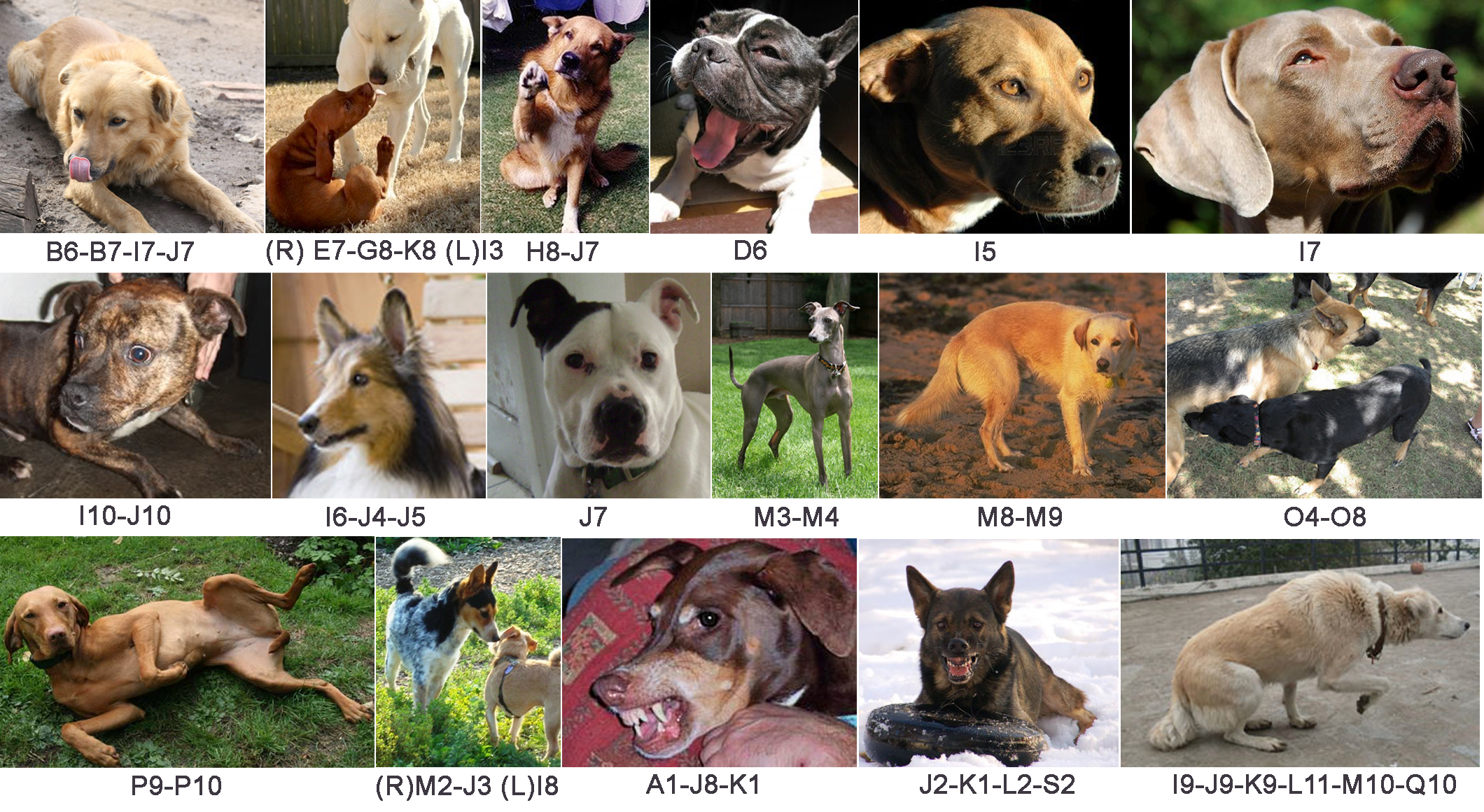






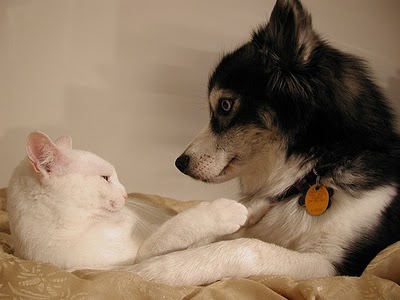




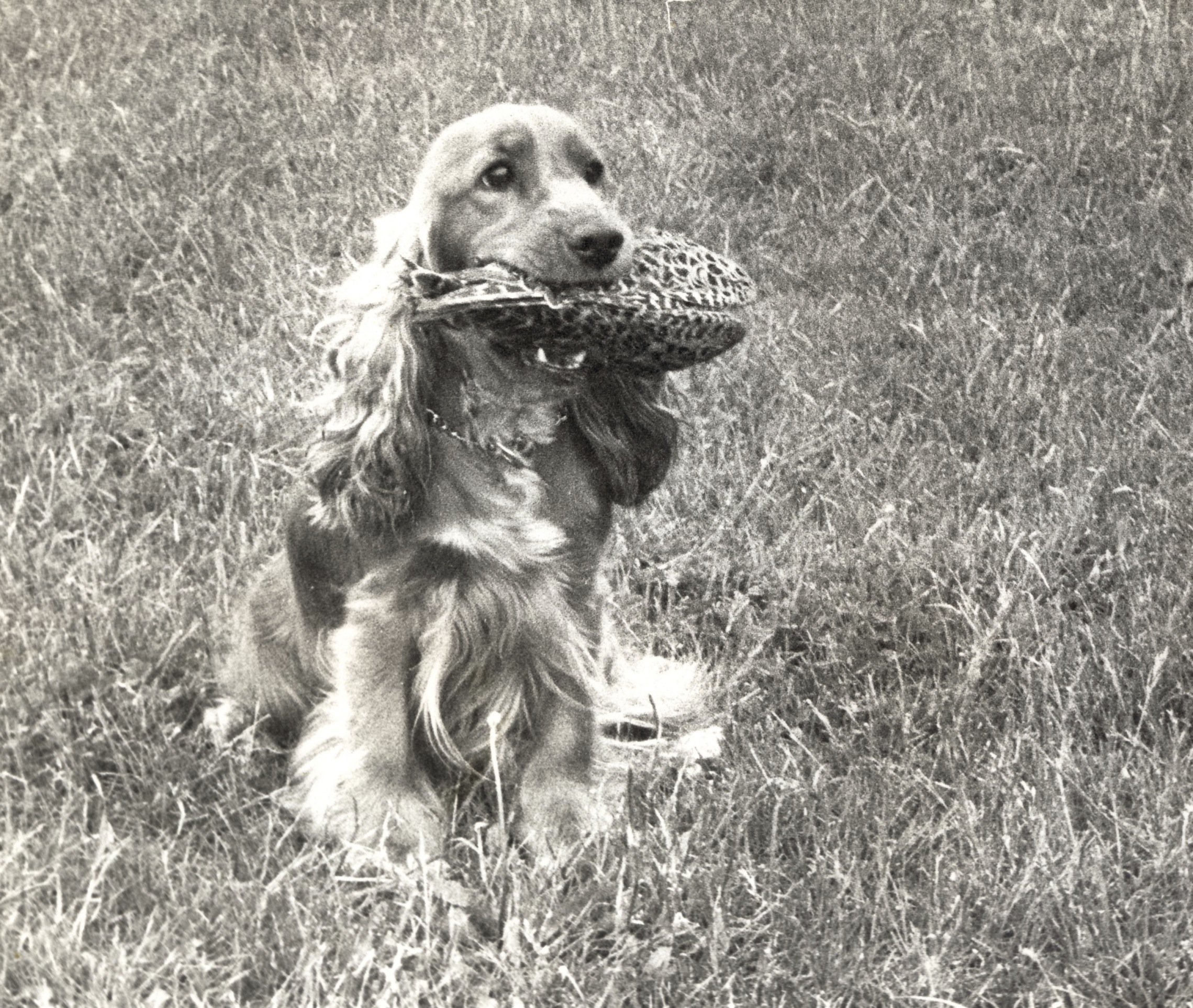
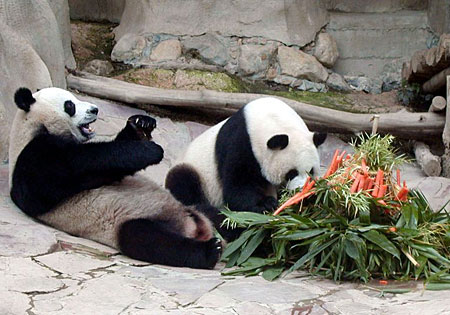





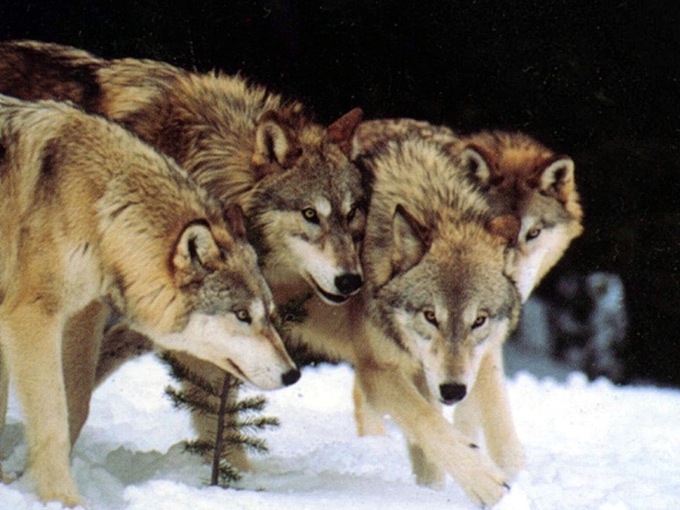

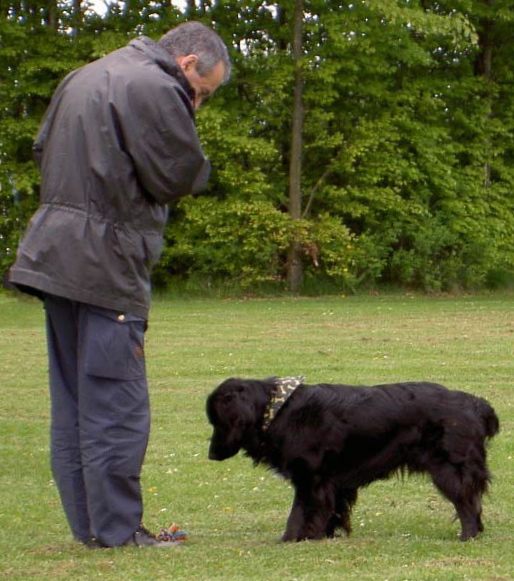


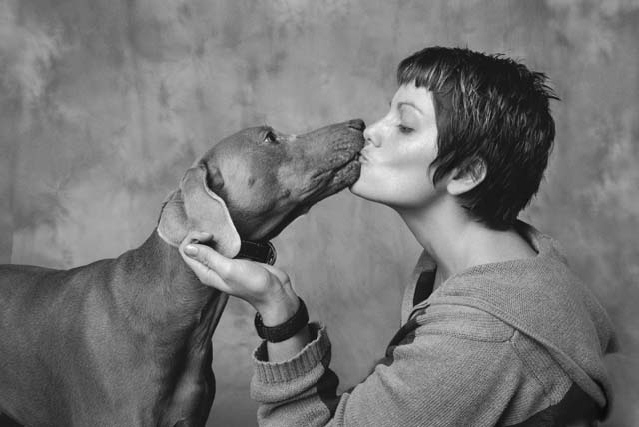
 Roger Abrantes