Dogs also exhibit the muzzle grasp behavior (photo by Marco de Kloet).
A “Muzzle grasp” (or muzzle grab) is a common behavior shown by social canines, e.g., wolves (Canis lupus lupus), dingoes (Canis lupus dingo), and dogs (Canis lupus familiaris). The primary function of this behavior is to confirm a relationship rather than to settle a dispute. The more self-confident or higher-ranking individual will muzzle-grasp a more insecure or lower-ranking partner to assert its social position. The more insecure individual does not resist the grasp; on the contrary, it often displays submissive behavior, literally inviting its partner to muzzle-grasp it. Even though we sometimes see this behavior at the end of a dispute, wolves and dogs only use it toward individuals they know well—pack members—as a kind of saying, “You’re still a cub (pup).” The dispute itself tends not to be serious, merely a low-key challenge, often over access to a resource. Youngsters, cubs, and pups sometimes solicit adults to muzzle-grasp them. This behavior appears reassuring to them.
The muzzle-grasp behavior emerges early in development. Canine mothers muzzle-grasp their puppies (sometimes accompanied by a growl) to deter them from suckling during weaning. Field observations confirm this mechanism. As Packard, Mech, and Ream (1992, p. 1274) report, “In the context of playing, begging, and sharing, pups did not leave when another wolf muzzled, snapped, or lunged. In contrast, the muzzling by the nurser in the context of suckling terminated the pups’ attempts to gain access to nipples.” This observation illustrates the early communicative value of the muzzle contact as both a mild inhibitory and relational signal. Cubs and pups also muzzle-grasp one another during play, typically between six and nine weeks of age. They probably learn through play that the muzzle-grasp is an effective way of stopping an opponent from doing something, while also learning bite inhibition. If they bite too hard, they elicit a fight and risk injury. A muzzle-grasp, therefore, does not involve biting, only grasping. This behavior helps develop a relationship of trust between both parties—“we don’t hurt one another.”
Similar tactile interactions, including muzzle-to-muzzle contact, also occur in post-conflict and affiliative contexts among wolves. Cordoni and Palagi (2019) describe reciprocal muzzle-licking between adults and immature pack members following mild conflicts—acts that function as “consolation” and reinforce social bonds. Although a muzzle-grasp differs mechanically from muzzle-licking, both share an underlying functional value: the restoration or affirmation of trust within a dyad. These tactile gestures exemplify the nuanced physical vocabulary through which canids maintain cohesion and mitigate tension within the pack.
Classic naturalist observations (Zimen, 1981) describe frequent muzzle-to-muzzle contacts and note adults seizing pups’ muzzles during play and weaning; together with quantitative field data (Packard, Mech, & Ream, 1992), this supports the view that muzzle contact is an early-emerging, ritualised tactile signal rather than an aggressive act.
When used to settle a dispute, a muzzle-grasp may appear more violent and usually ends with the individual being muzzle-grasped exhibiting passive, submissive behavior. Yet participants very seldom, if ever, get hurt, an occurrence that would undermine the behavior’s function.
Left: Cubs and pups muzzle grasp one another during play. Right: Muzzle grasp in adult wolves (photos by Monty Sloan).
A muzzle-grasp requires self-control. Higher-ranking wolves and dogs muzzle-grasp their pack members (teammates) and, by doing so, confirm their rank while displaying restraint. Lower-ranking wolves and dogs often engage in muzzle-grasping behavior to affirm their social position and reassure themselves that they remain included in the group.
The muzzle-grasp behavior probably originated as both a form of maternal (and later paternal) control and as a play behavior among cubs. As it appears to have been beneficial to all parties involved, it may have become a factor favored by natural selection, spreading from generation to generation and evolving as any other trait that enhances the fitness of individuals within cohesive social groups.
In domestic dogs, when puppies are about five to seven weeks old, their mother regularly muzzle-grasps them to deter suckling. At first, her behavior frightens them, and they may whimper excessively, even though she does not harm them. Later, when grasped by the muzzle, the puppy immediately shows passive submissive behavior—lying on its back and exposing its ventral side. Previously, it was assumed that the mother needed to pin the puppy to the ground; however, Packard et al. (1992) observed that, in wolves, in practice, “[…] on the occasions when the nurser winced or muzzled the pups, the pups did not persist” and that “[…] counter-tactics for overcoming nurser rejection did not occur (pp. 1271–1272).” Most puppies submit voluntarily. Over time, this behavior pattern assumes variations. Wolf cubs and puppies often invite the alpha male (the leader of the pack and, in wolves, usually their father) as well as other adults to grasp them by the muzzle, thereby soliciting a demonstration of their elders’ superiority and self-control while simultaneously showing their own acceptance and submissiveness. This is among the most reassuring behaviors an adult can show a youngster.
Domestic dogs sometimes approach their owners puffing gently with their noses. By gently placing a hand around their muzzle, we may reassure them of acceptance, demonstrate self-control, and convey that they can trust us. That is speaking dog-language to the best of our abilities. After being muzzle-grasped for a while, the dog will usually show a nose-lick, perhaps yawn, and then walk calmly away. It is as if the dog were saying, “I’m still your puppy,” and the owner replied, “I know—and I’ll take good care of you.”
The muzzle-grasp behavior can be challenging to classify. Some researchers see it as social or affiliative, others as agonistic, and still others as pacifying. Because its primary function is to confirm and maintain relationships, it may best be considered a social behavior—a ritualized, low-intensity interaction that reinforces trust and cohesion within the group.
Next time your dog gently nudges or invites a muzzle‑grasp, pause for a moment—what you see as a simple dog behavior is, in canine language, a subtle conversation of trust and understanding.
References
Abrantes, R. (1987). Hundesprog. Borgen Forlag, Copenhagen.
Abrantes, R. (1997). The Evolution of Canine Social Behavior. Naperville, IL: Wakan Tanka Publishers.
Cordoni, G., & Palagi, E. (2019). Back to the future: A glance over wolf social behavior to understand dog–human relationship. Animals, 9(11), 991. https://doi.org/10.3390/ani9110991
Zimen, E. (1981). The wolf: His place in the natural world. Souvenir Press Ltd. ISBN 9780285624115
Note: I first wrote about the muzzle grasp behavior in canids in my Danish book Hundesprog (1987), where I called it “mund om snuden,” which translates directly as “mouth around the snout.” This term became “muzzle grasp” in the first English edition of the book, titled Dog Language. I later wrote Muzzle Grab Behavior in Canids on April 25, 2012. Two years afterward, on March 13, 2014, I revised it as Canine Muzzle Grasp Behavior—Advanced Dog Language. True to my philosophy of updating articles and papers as new evidence emerges, I have once again revised this work. The latest version, published in November 2025, appears here under the title Muzzle Grasp Behavior in Canids.
您不需要為您的作風或者您的狗兒找合理化的藉口。只要在您不打擾任何人(狗)的狀況下,您有權做您喜歡的方式並且作你自己。您不需要對任何事都非常擅長,不論是服從訓練、敏捷犬、與狗共舞、在音樂中讓狗狗腳側行進、飛球活動、護衛犬、牧羊犬、嗅覺活動、動物輔助治療、雪橇犬比賽、跳水狗活動、Field、Earthdog、Rally-O、Weight Pulling、Carting、Trials、 Dock Dogs、Dog Diving、Disc Dogs、Ultimate Air Dogs、Super Retriever、Hang Time、Lure Course Racing or Treibball; 關於您做不到的事情,您不需為自己解釋不擅長的原因。當然,您也無需說明您的狗沒有標準坐姿的原因。另一方面,針對您想要改變並且能被改變的事物來努力;別把時間跟精力花在去想您不想要的、不需要的或無法改變的事物。無論您與您的狗享受的是什麼,就去做吧!只要您們喜歡,您跟狗狗才可以同時是快樂的。就是這麼簡單!
“Whether you (or I) follow a particular line of morality is not a necessary consequence of any model of social behavior. Moral stances are solely your (or my) decision” (Picture by Lisa J. Bains).
The dog trainers’ dispute about training methods blazes on unabated, with the erroneous and emotive use of terms such as dominance, punishment and leadership only adding fuel to the fire. There is no rational argumentation between the two main factions, one of which advocates a “naturalistic” approach and the other a “moralistic” stance. The term ‘dominance’ generates particular controversy and is often misinterpreted. We can detect, in the line of arguing about this topic, the same fundamental mistakes committed in many other discussions. By taking the controversy over dominant behavior as my example, I shall attempt to put an end to the feud by proving that neither side is right and by presenting a solution to the problem. Plus ratio quam vis—let reason prevail over force!
I shall demonstrate that the dispute is caused by:
(1) Blurring the boundaries between science and ethics. While ethics and morality deal with normative statements, science deals with factual, descriptive statements. Scientific statements are not morally right or wrong, good or bad.
(2) Unclear definitions. We cannot have a rational discussion without clear definitions of the terms used. Both sides in the dispute use unclear, incomplete definitions or none at all.
(3) Logical fallacies. The opposing sides commit either the ‘naturalistic fallacy,’ ‘the moralistic fallacy,’ or both. We cannot glean normative statements from descriptive premises, nor can we deduce facts from norms. The fact that something is does not imply that it ought to be; conversely, just because something oughtto be does not mean that it is.
(4) Social conditioning and emotional load. As a result of inevitable social conditioning and emotional load, some terms develop connotations that can affect whether we like or dislike, accept or reject them, independent of their true meaning.
(5) Unclear grammar. The term dominance (an abstract noun) leads us to believe it is a characteristic of certain individuals, not an attribute of behavior. The correct use of the term in the behavioral sciences is as an adjective to describe a behavior, hence dominant behavior.
Bottom line: We need to define terms clearly and use them consistently; otherwise rational discussion is not possible. We must separate descriptive and normative statements, as we cannot derive what is from what oughtto be or vice versa. Therefore, we cannot use the scientific concept of dominant behavior (or any descriptive statement) to validate an ethical principle. Our morality, what we think is right or wrong, is a personal choice; what is, or is not, is independent of our beliefs and wishes (we don’t have a choice).
Solution to the problem: The present dispute focuses on whether we believe it is right or wrong to dominate others (as in, totally control, have mastery over, command). It is a discussion of how to achieve a particular goal, about means and ends. It is a moral dispute, not a scientific quest. If both sides have similar goals in training their dogs, one way of settling the dispute is to prove that one strategy is more efficient than the other. If they are equally efficient, the dispute concerns the acceptability of the means. However, if either side has different goals, it is impossible to compare strategies.
My own solution of the problem: I cannot argue with people who believe it is right to dominate others (including non-human animals) as, even though I can illustrate how dominating others does not lead to harmony, I can’t make anyone choose harmony or define it in a particular way. I cannot argue with people who think it acceptable to hurt others in order to achieve their goals because such means are inadmissible to me. I cannot argue with people who deny or affirm a particular matter of fact as a means of justifying their moral conduct, because my mind rejects invalid, unsound arguments. With time, the rational principles that govern my mind and the moral principles that regulate my conduct may prove to be the fittest. Meanwhile, as a result of genetic pre-programming, social conditioning and evolutionary biology, I do enjoy being kind to other animals, respecting them for what they are and interacting with them on equal terms; I don’t believe it is right to subjugate them to my will, to command them, to change them; and I don’t need a rational justification as to why that’s right for me*.
“I do enjoy being kind to other animals, respecting them for what they are and interacting with them on equal premises; I don’t find it right to subjugate them to my will and dispositions, to command them, to change them; and I don’t need a rational justification for why that’s right for me” (Picture by Lisa J. Bain).
Argument
1 Science and ethics are not the same
Science is a collection of coherent, useful and probable predictions. All science is reductionist and visionary in a sense, but that does not mean that all reductionism is equally useful or that all visions are equally valuable or that one far-out idea is as acceptable as any other. Greedy reductionism is bound to fail because it attempts to explain too much with too little, classifying processes too crudely, overlooking relevant detail and missing pertinent evidence. Science sets up rational, reasonable, credible, useful and usable explanations based on empirical evidence, which is not connected per se. Any connections are made via our scientific models, ultimately allowing us to make reliable and educated predictions. A scientist needs to have an imaginative mind in order to think the unthinkable, discover the unknown and formulate initially far-fetched but verifiable hypotheses that may provide new and unique insights; as Kierkegaard writes, “This, then, is the ultimate paradox of thought: to want to discover something that thought itself cannot think.”
There are five legitimate criteria when evaluating a scientific theory or model: (1) evidence, (2) logic, (3) compatibility, (4) progression, and (5) flexibility.
(1) Evidence: a scientific theory or model must be based on credible and objective evidence. If there is credible evidence against it, we dismiss it. It must be testable and falsifiable.
(2) Logic: If a theory or model is based on logically invalid arguments or its conclusion are logically unsound, e.g. drawing valid conclusions from false premises, we must also dismiss it.
(3) Compatibility: If a theory or model shows crucial incompatibility with the whole body of science, then it is probably incorrect. If it is incompatible with another model, then we have a paradox. Paradoxes are not to be discarded, instead worked on and solved (or not solved as the case may be). Since “Paradoxes do not exist in reality, only in our current models of reality, […] they point the way to flaws in our current models. They therefore also point the way to further research to improve those models, fix errors, or fill in missing pieces.” In short, “scientists love paradoxes,” in the words of Novella.
(4) Progression: A scientific theory or model must explain everything that has already been explained by earlier theories, whilst adding new information, or explaining it in simpler terms.
(5) Flexibility: A theory or model must be able to accept new data and be corrected. If it doesn’t, then it is a dogma, not a scientific theory. A dogma is a belief accepted by a group as incontrovertibly true.
Science provides facts and uncovers important relationships between these facts. Sciencedoes not tell us how we should behave or what we ought to do. Science is descriptive, not normative. In other words: we decide what is right or wrong, good or bad, not necessarily depending on what science tells us.
Morality and science are two separate disciplines. I may not like the conclusions and implications of some scientific studies, I may even find their application immoral; yet, my job as a scientist is to report my findings objectively. Reporting facts does not oblige me to adopt any particular moral stance. The way I feel about a fact is not constrained by what science tells me. I may be influenced by it but, ultimately, my moral decision is independent of scientific fact. Science tells me men and women are biologically different in some aspects, but it does not tell me whether or not they should be treated equally in the eyes of the law. Science tells me that evolution is based on the algorithm “the survival of the fittest,” not whether or not I should help those that find it difficult to fit into their environment. Science informs me of the pros and cons of eating animal products, but it does not tell me whether it is right or wrong to be a vegetarian.
Ethologists study behavior on a biological and evolutionary basis, define the terms they use, find causal relationships, construct models for the understanding of behavior and report their findings. Ethologists are not concerned with morality. They simply inform us that the function of x behavior is y. They don’t tell us that because animal x does y, then y is right or wrong, good or bad, or that we ought or ought not do y.
The model I present in “Dominance—Making Sense of the Nonsense” is a scientific model that complies with all five of the requirements listed above.
(1) It is based on overwhelming data, i.e. given my definition of ‘dominant behavior,’ one cannot argue that it does not exist.
(2) The conclusions are logically consistent with the premises.
(3) It is consistent with our body of knowledge, particularly in the fields of biology and evolutionary theory.
(4) It explains what has been explained before and in more carefully defined terms.
(5) It accepts new data, adjustments and corrections (the current version is an updated version of my original from 1986). The model tells us nothing about morality. No single passage suggests that we should classify any particular relationship with our dogs as morally right or wrong. You will have to decide that for yourself. As an ethologist, I’m not concerned with what ought to be, only with what is. Echoing Satoshi Kanazawa, if I conclude something that is not supported by evidence, I commit a logical fallacy, which I must correct, and that’s my problem, but if my conclusion offends your beliefs, then that’s your problem.
Therefore, whether you (or I) follow a particular line of morality is not a consequence of any model of social behavior. Moral stances are solely your (or my) decision. It is not correct to draw normative judgments from descriptive claims. If you do so, you either commit the ‘naturalistic fallacy,’ the ‘moralistic fallacy’ or both, as I shall explain below (see point 3).
2 Unclear definitions
Having just pointed out the rigors of science, I must concede that the scientific community does bear some responsibility for the present dispute in as much as definitions and use of terms have sometimes been sloppy. Some researchers use particular terms (in this case ‘dominance’) without defining them properly and with slightly different implications from paper to paper.
Wikipedia writes: “Dominance (ethology) can be defined as an ‘individual’s preferential access to resources over another’ (Bland 2002). Dominance in the context of biology and anthropology is the state of having high social status relative to one or more other individuals, who react submissively to dominant individuals. This enables the dominant individual to obtain access to resources such as food or access to potential mates, at the expense of the submissive individual, without active aggression. The opposite of dominance is submissiveness. […] In animal societies, dominance is typically variable across time, […] across space […] or across resources. Even with these factors held constant, perfect dominant hierarchies are rarely found in groups of any size” (Rowell 1974 and Lorenz 1963).
It explains a dominance hierarchy as follows: “Individuals with greater hierarchical status tend to displace those ranked lower from access to space, to food and to mating opportunities. […] These hierarchies are not fixed and depend on any number of changing factors, among them are age, gender, body size, intelligence, and aggressiveness.”
Firstly, defining ‘dominance’ instead of ‘dominant behavior’ seems somewhat imprudent for a science that is intrinsically based on observational facts. It suggests we are dealing with an abstract quality when in fact we are referring to observable behavior (see point 5 below). Secondly, it implicitly equates ‘dominance’ with hierarchy (social status), which is misleading because some hierarchies may be supported by conditions other than dominant behavior. The use of the term ‘dominance hierarchy’ creates a false belief. Clearly, the terms dominance and dominant behavior are attributed with varying meanings, a highly unadvisable practice, particularly in stringently scientific matters.
As John Locke wrote in 1690 (An Essay Concerning Human Understanding), “The multiplication and obstinacy of disputes, which have so laid waste the intellectual world, is owing to nothing more than to this ill use of words. For though it be generally believed that there is great diversity of opinions in the volumes and variety of controversies the world is distracted with; yet the most I can find that the contending learned men of different parties do, in their arguings one with another, is, that they speak different languages. ”This has contributed […] to perplex the signification of words, more than to discover the knowledge and truth of things.”
To remedy this, I propose in “Dominance—Making Sense of the Nonsense” a set of carefully constructed definitions that are compatible with behavioral science and evolutionary theory, whilst paying special attention to the logical validity and consistency of the arguments. I’m convinced that we would avoid many pointless disputes if all those dealing with the behavioral sciences were to adopt such definitions.
Roughly speaking, there are currently two main schools of thought in dog training. For our present purpose, we shall call them ‘Naturalistic Dog Training’ and ‘Moralistic Dog Training.’ Of course, there are various other stances in between these two extremes, including a significantly large group of bewildered dog owners who do not adhere to any particular ideology, not knowing which way to turn.
Naturalistic Dog Training (aka the old school) claims their training echoes the dog’s natural behavior. They don’t provide a proper definition of dominance, but use it with connotations of ‘leader,’ ‘boss,’ ‘rank,’ implying that dominance is a characteristic of an individual, not of a behavior. In their eyes, some dogs are born dominant, others submissive, but all dogs need to be dominated because their very nature is to dominate or be dominated. They use this belief to justify their training methods that often involve punishment, flooding, coercion, and even shock collars, if deemed necessary, by the more extreme factions. For them, a social hierarchy is based on (assertive) dominance and (calm) submission, the leader being the most dominant. Their willingness to accept the existence of dominant behavior is motivated by their desire to validate their training theories, but their interpretation of the term is far from what ethologists understand by it.
Moralistic Dog Training (aka positive reinforcement training) distances itself from punishment, dominance, and leadership. They don’t define ‘dominance’ properly either, but use it with connotations of ‘punishment,’ ‘aggression,’ ‘coercion,’ ‘imposition.’ They claim dominance does not exist and regard it as a mere construct of philosophers and ethologists aimed at justifying the human tendency to dominate others. Their view is that we should nurture our dogs as if they were part of our family and should not dominate them. Therefore, they also distance themselves from using and condoning the use of terms like ‘alpha,’ ‘leader’ and ‘pack.’ The more extreme factions claim to refrain from using any aversive or signal that might be slightly connected with an aversive (like the word ‘no’) and deny their using of punishers (which, given the consensually accepted scientific definition of punishment, is a logical impossibility). Their refusal to accept the existence of dominant behavior is motivated by their desire to validate their training morality, but their interpretation of the term is again far from what ethologists understand by it.
An ethological definition of ‘dominant behavior’ is (as I suggest in “Dominance—Making Sense of the Nonsense”): “Dominant behavior is a quantitative and quantifiable behavior displayed by an individual with the function of gaining or maintaining temporary access to a particular resource on a particular occasion, versus a particular opponent, without either party incurring injury. If any of the parties incur injury, then the behavior is aggressive and not dominant. Its quantitative characteristics range from slightly self-confident to overtly assertive.”
This is a descriptive statement, a classification of a class of behaviors, so we can distinguish it from other classes of behaviors, based on the observable function of behavior (according to evolutionary theory). It is clearly distinguishable from the statements of both opposing mainstream dog-training groups in that it does not include any normative guidance.
3 Logical fallacies
A logical fallacy is unsound reasoning with untrue premises or an illogical conclusion. Logical fallacies are inherent in the logic structure or argumentation strategy and suit irrational desires rather than actual matters of fact.
An argument can be valid or invalid; and valid arguments can be sound or unsound. A deductive argument is valid if, and only if, the conclusion is entailed by the premises (it is a logical consequence of the premises). An argument is sound if, and only if, (1) the argument is valid and (2) all of its premises are true. The pure hypothetical syllogism is only valid if it has the following forms:
If P ⇒ Q and Q ⇒ R, then P ⇒ R
If P ⇒ ~R and ~R ⇒ ~Q, then P ⇒ ~Q
This mixed hypothetical syllogism has two valid forms, affirming the antecedent or “modus ponens” and denying the consequent or “modus tollens”:
If P ⇒ Q and P, then Q (modus ponens)
If P ⇒ Q and ~Q, then ~P (modus tollens)
It has two invalid forms (affirming the consequent and denying the antecedent).
The naturalistic fallacy is the mistake of identifying what is good with a natural property. In this fallacy, something considered natural is usually considered to be good, and something considered unnatural is regarded as bad. The structure of the argument is “P is natural, therefore P is moral” or “P is natural and non-P is unnatural, natural things are moral and unnatural things immoral, therefore P is moral and non-P immoral.” G. E. Moore coined the term naturalistic fallacy in 1903 in “Principia Ethica.” It is related to the ‘is-ought problem,’ also called ‘Hume’s Law’ or ‘Hume’s Guillotine,’ described for the first time by David Hume in 1739 in “A Treatise of Human Nature.” The ‘is-ought fallacy’ consists of deriving an ought conclusion from an is premise. The structure of the argument is “P is, what is ought to be, therefore P ought to be.”
The moralistic fallacy is the reverse of the naturalistic fallacy. It presumes that what ought to be preferable is what is, or what naturally occurs. In other words: what things should be is the way they are. E. C. Moore used the term for the first time in 1957 in “The Moralistic Fallacy.” The structure of the argument is, “P ought to be, therefore P is.”
“There is no evidence that dogs attempt to dominate others or that they don’t. On the contrary, all evidence suggests that dogs (as most animals) use different strategies depending on conditions including costs and benefits. Sometimes they display dominant behavior, other times they display submissive behavior, and yet other times they display some other behavior” Picture by (L’Art Au Poil École).
The line of argumentation of Naturalistic Dog Training is: Dogs naturally attempt to dominate others; therefore, we ought to dominate them. We can transcribe this argument in two ways (argument 1a and 1b):
Argument 1a
(A) If the nature of dogs is to attempt to dominate others, then I ought to train dogs according to their nature. (P⇒Q)
(B) It is the nature of dogs to attempt to dominate others. (P)
Therefore: I ought to train dogs by attempting to dominate them. (Q)
Argument 1b
(A) If dogs dominate others, then it’s right to dominate others. (P⇒Q)
(B) If it’s right to dominate others, then I have to do the same to be right. (Q⇒R)
Therefore: If dogs dominate others, then I have to do the same to be right. (P⇒R)
We cannot derive ‘ought’ from ‘is.’ Arguments 1a and 1b commit the ‘naturalistic fallacy.’ Both arguments seem formally valid, except that they derive a norm from a fact. There is no logical contradiction in stating, “I ought not to train dogs according to their nature.” They are also unsound (the conclusions are not correct) because premises P are not true.
There is no evidence that dogs attempt to dominate others or that they don’t. On the contrary, all evidence suggests that dogs (like most animals) use different strategies depending on conditions, which include costs and benefits. Sometimes they display dominant behavior, other times they display submissive behavior, and other times they display other behavior. Even when particular dogs are more prone to use one strategy rather than another, we are not entitled to conclude that this is the nature of dogs.
Conclusion: whether science proves that dogs display or don’t display dominant behavior has nothing to do with whether or not it is morally right for us to dominate our dogs.
The line of argumentation of Moralistic Dog Training is: We ought not to attempt to dominate our dogs; therefore, dogs do not attempt to dominate us. We can transcribe this argument in two ways (argument 2a and 2b):
Argument 2a
(A) Dominance is bad. (P⇒Q)
(B) Dogs are not bad. (R⇒~Q)
Therefore: Dogs do not dominate. (R⇒~P)
Argument 2b
(A) If [dominance exists], it is . (P⇒Q)
(B) If it is , [dogs don’t do it]. (Q⇒R)
Therefore: if [dominance exists], [dogs don’t do it]. (P⇒R)
We cannot derive ‘is’ from ‘ought.’ Arguments 2a and 2b commit the ‘moralistic fallacy.’ Argument 2a is formally invalid even if the premises were true because the conclusion is not entailed in the premises (it is the same as saying red is a color, blood is not a color, so blood is not red). Argument 2b sounds a bit odd (in this form), but it is the only way I have found of formulating a valid argument from the moralistic trainers’ argument. It is formally valid but it is unsound because it commits the moralistic fallacy: in its second line, it derives a fact from a norm. It assumes that nature doesn’t do wrong (or what is good is natural), but there is no contradiction in assuming the opposite.
Conclusion: the fact we believe it is morally wrong to dominate our dogs does not mean that dogs do not display dominant behavior. We are entitled to hold such a view, but it does not change the fact that dogs display dominant behavior.
4 Social conditioning and emotional load
The choice of word by ethologists to coin the behavior in English, i.e. ‘dominant,’ also contributes to the dispute. Curiously enough, the problem does not exist in German where dominant and submissive behaviors are ‘überlegenes verhalten’ and ‘unterlegenes verhalten.’
All words we use have connotations due to accidental social conditioning and emotional load. A scientist knows he** cannot afford his judgment to be clouded by his own accidental social conditioning or emotions. A defined term means that and only that. It’s not good, not bad, not right, not wrong, and the issue of whether he likes it or not does not even enter the equation. As an individual he may have his own personal opinion and moral viewpoint, but he does not allow them to affect his scientific work. As individuals, we all have our own likes and dislikes because we are constantly being conditioned by our environment. Culture, trends, movements, environments, relationships and moods, all bias our attitudes towards particular terms. Nowadays, for reasons I will leave to historians and sociologists to analyze, the words ‘dominance’ and ‘submission’ have negative connotations for many people. When people, all of whom are subject to social conditioning, fail to distinguish between the scientific meaning of the words and their everyday connotations, they repudiate them, which is understandable.
Conclusion: a class of behavior that animals use to solve conflicts without harming one another is what ethologists call dominant and submissive behavior. This behavior, in the way I describe and define, exists (see above). You may not like the terms or indeed the behaviors, but that doesn’t mean they don’t exist. ‘Red’ is a characteristic of an object that provides particular information to our eyes as a result of the way it reflects or emits light. We can argue (and we do) about the definition of ‘red,’ what is red, what is not, when it becomes orange, but we do not deny that red exists. You may object to the name ‘red’ but objects will continue to reflect or emit light in a particular way that produces what we call red (or whatever we choose to call it). A ‘red flower’ (or a display of ‘dominant behavior’) is not an abstract concept, but a real, detectable thing, whilst the concept of ‘redness’ is an abstract notion, as are the concepts of ‘dominance,’ ‘height,’ ‘weight,’ ‘strength,’ etc…
5 Unclear grammar
Another problem is that we use the word dominance as a noun (an abstract noun in contrast to a concrete noun) when in this case it is (or should be) a ‘disguised adjective.’ Adjectives don’t make sense without nouns (except for adjectival nouns). Dominance is an abstract noun, something that by definition does not exist (otherwise it wouldn’t be abstract), except as an abstract notion of ‘showing dominant behavior’ and as in ‘dominant allele,’ ‘dominant trait,’ ‘dominant ideology,’ ‘dominant eye,’ etc. However, the behavior of alleles, traits, ideologies and eyes, which we call dominant or classify as dominant, exists. For example, the question “Do dogs show dominance towards humans?” uses the abstract noun ‘dominance’ as an adjectival noun instead of the more correct ‘dominant behavior’. This can be confusing for some as it suggests that dominance is an intrinsic quality of the individual, not the behavior. Therefore, I suggest that, in the behavioral sciences, we henceforth drop the adjectival noun and only use the term as an adjective to behavior. This is a very important point and a source of many misunderstandings and misconceptions regarding the character of behavior.
Behavior is dynamic and changeable. An individual displays one behavior at one given moment and another a while later. The popular view maintains the notion of a ‘dominant individual’ as the one that always shows dominant behavior and the ‘submissive individual’ as the one that always shows submissive behavior, which is not true. Dominant and submissive (dominance and submission) are characteristics of behavior, not individuals. Individuals may and do change strategies according to a particular set of conditions, although they may exhibit a preference for one strategy rather than another.
It is the ability to adopt the most beneficial strategy in the prevailing conditions that ultimately sorts the fittest from the less fit—moral strategies included.
Have a great day,
R—
______________
* This is my normative judgment and as such no one can contest it.
** The most correct form would be ‘he/she,’ or ‘he or she,’ but since I find it extremely ugly from a linguistic point of view (my normative judgment) to use this expression repeatedly, I chose to write, ‘he’ though not by any means neglecting the invaluable and indisputable contribution of my female colleagues.
Hewitt, S. E., Macdonald, D. W., & Dugdale, H. L. 2009. Context-dependent linear dominance hierarchies in social groups of European badgers, Meles meles. Animal Behaviour, 77, 161-169.
Hume, D. 1739. A Treatise of Human Nature. Oxford University Press, Oxford, 1967, edition.
Pinker, S. How the Mind Works. New York: W. W. Norton & Company, 1997.
Popper, K. 1963. Conjectures and Refutations. Routledge and Kegan Paul, London, UK.
Popper, K. Objective Knowledge: An Evolutionary Approach. Oxford University Press.
Rachels, J. 1990. Created From Animals. Oxford University Press.
Rowell, T. E. 1974. The Concept of Social Dominance. Behavioral Biology, 11, 131-154.
Ruse, M. 1986. Taking Darwin seriously: a naturalistic approach to philosophy. Prometheus Books.
Thanks to Anabela Pinto-Poulton (PhD, Biology), Simon Gadbois (PhD, Biology), Stéphane Frevent (PhD, Philosophy), Victor Ross (Graduate Animal Trainer EIC), Parichart Abrantes (MBA), and Anna Holloway (editor) for their suggestions to improve this article. The remaining flaws are mine, not theirs.
Aquí tienes una lista de 16 cosas que debería dejar de hacer para tener una vida con tu perro más feliz y una relación más fuerte. ¿Difícil? Para nada. Sólo necesitas querer hacerlo y, a continuación, simplemente hacerlo. Puede comenzar tan pronto como termines de leer esto.
Como la mayor parte de cosas en la vida, ser un perfeccionista tiene sus ventajas y desventajas. Cuando posees un perro, tiendes a vivir según la Ley de Murphy. Cualquier cosa que puede ir mal irá mal. Hay tantos variables que las cosas rara vez van 100% la manera esperada. Puedes y debes planear y entrenar, pero tienes que estar preparado para aceptar todo tipo de variaciónes, improvisaciones y pequeños percances a lo largo del camino, siempre que nadie se haga daño, por supuesto. ¿Después de todo, en la mayor parte de situaciones, menos que perfecto es mejor que bueno, entonces, por qué la preocupación sobre la perfección, un concepto que sólo existe en tu cabeza y no hace a nadie feliz, ni a ti, ni a tu perro?
2. Deja de ser demasiado serio—Ríete (have a laugh)
Si no tienes buen sentido del humor, no vivas con un perro. Ser propietario de perro da ocasión a contratiempos donde la risa es la mejor salida. Los contratiempos sólo son embarazosas en nuestras mentes. Tu perro no sabe siquiera lo que quiere decir verguenza, deberias seguir su ejemplo. Mientras nadie se haga daño, riete de los errores que cometeis tu y tu perro.
3. Deten tu deseo de controlarlo todo—Tomarlo como viene (take it as it comes)
Cuando la vida con un perro es a menudo dictada por la ley de Murphy, si intenta controlar cada movimiento de tu perro, acabara con una úlcera o caeras en una depresión. Renuncie tu necesidad de control. Por supuesto, debe tener un control razonable sobre tu perro por razones de seguridad, pero debe dejar ir todo aquello que no es una cuestión de vida o muerte. Reglas razonables sirven un propósito, pero el control total es innecesaria y contraproducente. Tomarlo como viene y seguir sonriendo!
Cuando las cosas van mal, y lo harán, les aseguro, no pierda el tiempo repartiendo culpas. ¿Fue tu culpa, culpa del perro, o culpa del gato del vecino? ¿A quién le importa? Sigue adelante aunque toda la escena te produjo tristeza, intenta prever una situación similar en el futuro y como evitarlo. Si no ha sido gran cosa, olvidate del asunto.
5. Deja de creer en los cuentos de vieja—Sé crítico (be critical)
El mundo está lleno de cuentos de viejas, irracionales y sin fundamento. Hoy día, el Internet nos proporciona rápido y fácil acceso a mucha información valiosa—y tambien un montón de basura: malos argumentos, malas definiciones, reclamaciones infundadas, falacias, estados emocionales, pseudociencia, promociones de ventas, agendas políticas ocultas, predicaciónes religiosos, etc… Por supuesto, en nombre de la libertad de expresión, creo todos deberían poder publicar cualquierles gusta, incluso la bazofia más pura y más refinada, pero tanto yo como tu también tenemos el derecho a no creernoslo, haciendo caso omiso de ello. Utilice tu pensamiento crítico. No deje de preguntar “¿Cómo puede ser?” y “¿Cómo llegó a esa conclusión?” Suspende el juicio y la acción hasta que hayas tenido tiempo para reflexionar, si es necesario, busca una segunda o tercera opinión. Si el argumento es sólido y le gusta, entonces hágalo. Si el argumento es sólido pero no te gusta, no hacerlo y pensar más sobre ello. Si el argumento es poco sólido, rechazalo y no pienses más sobre ello. Convencete a ti mismo y haz lo que piensas es correcto.
6. Deja de preocuparte por etiquetas—Sé libre (be free)
Estamos sobre-inundados por las etiquetas porque las etiquetas venden, pero sólo venden si los compramos. ¿Deberias ser positivo, ultra-positivo, R+, R++, R+ P-, equilibrado, naturalista, moralista, conservador, realista, progresivo, o dueño clickeriano o autoritario del perro? Deje de preocuparte sobre qué etiqueta debe portar. Cuando disfrutas de un gran momento con tu perro, la etiqueta que llevas es irrelevante. Una etiqueta es una carga; te restringe y te quita tu libertad. Las etiquetas son para personas inseguras que necesitan esconderse detrás de una imagen. Cree en ti mismo, sea el tipo de propietario de perro que quieres ser y no necesitará etiquetas.
7. Deja de preocuparte sobre lo que piensan los demás—Vive tu vida (live your life)
Pasas muy poco tiempo con la mayoría de la gente que conoces, significativamente más con la familia y amigos cercanos, pero vives toda la vida contigo mismo. Así que, ¿qué importa lo que otras personas piensan acerca de su habilidad como propietario de perro, o del comportamiento de tu perro, cuando es probable que no les veas de nuevo o sólo les veremos esporádicamente? Si les gusta tu y tu perro, bien. Si no, realmente no es tu problema.
Sólo tienes un problema cuando hay una discrepancia entre la forma en que las cosas son y lo que esperas que sean. Si tus expectativas son realistas, probar de hacer algo para alcanzarlas. Si no lo son, deja de quejarte, es un desperdicio de tiempo y energía. Si puede hacer algo al respecto, hazlo. Si no puedes, sigue adelante. Punto.
9. Deja de pedir disculpas—Sé tu mismo (be yourself)
No tienes que pedir disculpas ni por ti ni por tu perro por la forma en que sois. Mientras no molesteis a nadie, podeis hacer lo que querais y ser quien quereis ser. No tienes que ser bueno en nada, como Obedience, Agility, Musical Free Style, Heel Work to Music, Flyball, Frisbee Dog, Earth Dog, Ski-Joring, Bike-Joring, Earthdog, Rally-O, Weight Pulling, Carting, Schutzhund, Herding, Nose Work, Therapy, Field Trials, Dock Dogs, Dog Diving, Disc Dogs, Ultimate Air Dogs, Super Retriever, Splash Dogs, Hang Time, Lure Course Racing, Sled Dog Racing or Treibball; y no necesitas excusarte por ello. No hay que escusarse tampoco si tu perro no sabe sentar bien. Cambia lo que quieras y puedas cambiar y no pierdas tiempo y energia pensando sobre lo que no quieres, no necesitas o no puedas cambiar. Haz lo que tu y tu perro os gusta, como querais hacerlo, asi los dos resultais contentos. Es tan simple como eso!
Si no estás conforme con algún aspecto de tu vida con tu perro, haz algo para cambiarlo. Identifique el problema y establezca un objetivo, haz un plan e implementalo. Sentirse mal y culpable no ayuda a nadie—esto no te ayudara ni a ti, ni a tu perro, o los que mas quieres y con quienes compartes tu vida.
11. Pare tu impulso de poseer—Sé un compañero (be a mate)
La propiedad de los seres vivos es esclavitud; y afortunadamente la esclavitud ha sido abolido No te consideres como el dueño de tu perro. Piensa en tu perro como un compañero del cual eres responsable. No posees a tus hijos, tu pareja y tampoco tus amigos.
Amor nada tiene que ver con la dependencia, obsesión y el deseo, sino todo lo contrario. Ame su perro, pero no creas una dependencia mutua. Tenga vida propia y dé a su perro algún espacio. Tu perro y tu sois dos individuos independientes. Disfrute de vivir juntos como personas independientes, no siendo enviciado el uno al otro. Deje de proyectarse en su perro.
13. Deja de convertir tu perro en un sustituto—Muestra respeto (show respect)
Un perro es un perro y en efecto es un notable ser vivo. Ámelo, disfrute de su compañía, pero no le haga un sustituto para un compañero humano, un amigo, un hijo o un cónyuge. Esperar que cualquiera pueda ser un sustituto es el mayor desrespeto que pueda cometer tanto hacia otro humano como hacia cualquier animal no humano, y a ti mismo. Dejarle cesar al perro en seguirte tu guion y comienza a amarlo como el perro que es.
Todas las relaciones son intercambios: das y tomas. No hay nada malo con esto mientras hay equilibrio. Tienes que ser honesto contigo mismo: Que te da tu perro y que le das a tu perro? Si ves que uno de los dos es mayoritariamente uno que da o recibe, piensalo y reestablece el equilibrio. Tu perro te necesita tanto como tu a el, y no hay nada malo en ello, mientras los dos daís y recibís. No teneis el perro solo para salvar el pobre, pequeña criatura. Tienes el perro para que ambos podais gozar de una relacion solida y fructifera.
Esto es una característica humana muy común: siempre quiere lo que no tiene y es ciego a todo el bien que realmente tiene. Tu perro ya te da muchisimo y los dos podeis ser absolutamente felices juntos, aun cuando tu perro no es particularmente bueno en algo. Es asombroso como los dueños de perros suelen decir que ellos aman sus perros y aún asi pasan la mayor parte del tiempo tratando de cambiar su comportamiento. Concéntrese en lo que tiene, no en lo que no, aprécielo y agradezelo.
16. Deja de luchar contratigo mismo—Siga tu corazon (follow your heart)
Hay muchas maneras de ser un buen propietario de perro y el tuyo es unico y diferente a todos los demás. Es tu vida. Mientras que no perjudique a nadie, viva en la forma que te siente bien. Escuche a expertos, reflexione sobre su consejo, pero, al final de día, haga lo que siente es correcto para tí, siga tu corazón.
Cover photo from the author’s book from 1986 “Hunden, vor ven” (The Dog, Our Friend) (photo by Ole Suszkievicz).
Here is a list of 16 things you should stop doing in order to make life with your dog happier and your relationship stronger. Difficult? Not at all. You just need to want to do it and then simply do it. You can begin as soon as you finish reading this.
Like most things in life, being a perfectionist has its advantages and disadvantages. When you own a dog, you tend to live by Murphy’s Law. Anything that can go wrong will go wrong. There are so many variables that things seldom go 100% the way you expect. You can and should plan and train, but be prepared to accept all kinds of variations, improvisations and minor mishaps along the way as long as no one is injured, of course. After all, in most situations less than perfect is better than good, so why worry about perfection, a concept that only exists in your head and doesn’t make anyone happy, neither you nor your dog?
If you don’t have a good sense of humor, don’t live with a dog. Dog ownership gives rise to many mishaps where laughter is the best way out. Mishaps are only embarrassing in our minds. Your dog doesn’t even know what embarrassment is and you should follow its example. As long as no one gets hurt, just laugh at you and your dog’s mistakes.
When life with a dog is often dictated by Murphy’s Law, if you attempt to control your dog’s every move, you’ll end up with an ulcer or fall into a depression. Give up your need to control. Of course, you should have reasonable control over your dog for safety’s sake, but you should let go of anything that is not a matter of life or death. Reasonable rules serve a purpose, but total control is unnecessary and self-defeating. Take it as it comes and keep smiling!
When things go wrong, and they will, I assure you, don’t waste your time apportioning blame. Was it your fault, the dog’s fault, or the neighbor’s cat’s fault? Who cares? Move on and, if you found the scenario all rather upsetting, try to foresee a similar situation in the future and avoid it. If it was no big deal, forget about it.
The world is full of irrational, unfounded old wives’ tales. These days, the Internet provides us with quick and easy access to a lot of valuable information—and a lot of junk as well: bad arguments, bad definitions, unsubstantiated claims, fallacies, emotional statements, pseudo-science, sales promotions, hidden political agendas, religious preaching, etc. Of course, in the name of freedom of expression, I believe everyone should be allowed to post whatever they like, even the purest and most refined crap—but both you and I also have the right not to believe it, to disregard it. Use your critical thinking. Don’t stop asking yourself “How can that be?” and “How did he/she come to that conclusion?” Suspend judgment and action until you have had time to ponder on it and, if necessary, seek a second and third opinion. If the argument is sound and you like it, then do it. If the argument is sound but you don’t like it, don’t do it and think more about it. If the argument is unsound, reject it and think no more about it. Make up your own mind and do what you think is right.
We are over swamped by labels because labels sell, but they only sell if you buy them. Should you be a positive, ultra-positive, R+, R++, R+P-, balanced, naturalistic, moralistic, conservative, realistic, progressive, clickerian or authoritarian dog owner? Stop caring about what label you should bear. When you enjoy a great moment with your dog, the label you bear is irrelevant. A label is a burden; it restricts you and takes away your freedom. Labels are for insecure people that need to hide behind an image. Believe in yourself, be the type of dog owner you want to be and you won’t need labels.
You spend very little time with most of the people you meet, significantly more with family and close friends, but you live your whole life with yourself. So, why care about what other people think about your ability as a dog owner or your dog’s behavior, when you probably won’t see them again or will only ever see them sporadically? If they like you and your dog, fine. If they don’t, it’s really not your problem.
You only have a problemwhen there is a discrepancy between the way things are and the way you expect them to be. If your expectations are realistic, try and do something about achieving them. If they’re not, stop complaining, it’s a waste of time and energy. If you can do something about it, do it. If you can’t, move on. Period.
You don’t have to excuse yourself or your dog for the way you are. As long as you don’t bother anyone, you are both entitled to do what you like and be the way you are. You don’t need to be good at anything, whether it be Obedience, Agility, Musical Free Style, Heel Work to Music, Flyball, Frisbee Dog, Earth Dog, Ski-Joring, Bike-Joring, Earthdog, Rally-O, Weight Pulling, Carting, Schutzhund, Herding, Nose Work, Therapy, Field Trials, Dock Dogs, Dog Diving, Disc Dogs, Ultimate Air Dogs, Super Retriever, Splash Dogs, Hang Time, Lure Course Racing, Sled Dog Racing or Treibball; and you don’t need excuses as to why not. You don’t even need to excuse the fact that your dog can’t sit properly. Change what you want to change and can change; and don’t waste time and energy thinking about what you don’t want to, don’t need to or can’t change. Do whatever you and your dog enjoy, however you like, so that both you and your dog are happy. It’s as simple as that!
If you’re unhappy with any particular aspect of your life with your dog, do something to change it. Identify the problem, set a goal, make a plan and implement it. Feeling bad and guilty doesn’t help anyone—it doesn’t help you, your dog, or the cherished ones you share your life with.
The ownership of living beings is slavery; and thankfully slavery was abolished. Don’t regard yourself as the owner of your dog. Think of your dog as a mate you are responsible for. You don’t own your children, your partner or your friends either.
Love has nothing to do with dependency, obsession and craving, quite the contrary. Love your dog but don’t create mutual dependency. Have a life of your own and give your dog some space. You and your dog are two independent individuals. Enjoy living together as free agents, not being addicted each other. Stop projecting yourself onto your dog.
13. Stop turning your dog into a substitute—show respect
A dog is a dog and it is indeed a remarkable living being. Love it, enjoy its company, but don’t make it a substitute for a human partner, a friend, a child or a spouse. To expect anyone to be a substitute is the greatest disrespect you can show to a human as well as non-human animal—and to yourself. Stop letting your dog play a role for you and begin to love your dog as a dog.
All relationships are trades: you give and you take. There’s nothing wrong with that as long as there is balance. Be honest with yourself: what does your dog give you and what do you give your dog? If you find that one of you is almost solely a giver or a taker, think about it and redress the balance. Your dog needs you, just as you need your dog and there’s nothing wrong with that, as long as you both are givers and takers. You didn’t get your dog just to save the poor, little creature. You got your dog so you could both enjoy a solid and fruitful partnership.
This is a very common human characteristic: you always want what you haven’t got and you are blind to all the good you do have. Your dog already gives you a great deal and the two of you can be perfectly happy together, even if your dog is not particularly good at anything. It’s amazing how dog owners say they love their dogs and yet they spend most of the time trying to change their behavior. Focus on what you do have, not on what you don’t, appreciate it and be grateful for it.
There are many different ways of being a good dog owner and yours is your own and different to everyone else’s. It’s your life. As long as you don’t harm anyone, live it the way that feels good for you. Listen to experts, ponder on their advice, but, at the end of the day, do what you feel is right for you, follow your heart. Be yourself.
Natural selection favors behaviors that prolong the life of an animal and increase its chance of reproducing; over time, a particularly advantageous behavior spreads throughout the population. The disposition (genotype) to display a behavior is innate (otherwise the phenotype would not be subject to natural selection and evolution), although it requires maturation and/or reinforcement for the organism to be able to apply it successfully. Behavior is, thus, the product of a combination of innate dispositions and environmental factors. Some behaviors require little conditioning from the environment for the animal to display it while other behaviors requires more.
Behavior is the response of the system or organism to various stimuli, whether internal or external, conscious or subconscious, overt or covert, and voluntary or involuntary.
Behavior does not originate as a deliberate and well-thought strategy to control a stimulus. Initially, all behavior is probably just a reflex, a response following a particular anatomical or physiological reaction. Like all phenotypes, it happens by chance and evolves thereafter.
Pictures illustrating canine social and agonistic behavior. For the classification of the behavior, please see ethogram below. Behavior is dynamic (not static). All interpretations are therefore only approximate and as pictures allow.
An organism can forget a behavior if it does not have the opportunity to display it for a period of a certain length, or the behavior can be extinguished if it is not reinforced for a period.
Evolution favors a systematic bias, which moves behavior away from maximization of utility and towards maximization of fitness.
Social behavior is behavior involving more than one individual with the primary function of establishing, maintaining, or changing a relationship between individuals, or in a group (society).
Most researchers define social behavior as the behavior shown by members of the same species in a given interaction. This excludes behavior such as predation, which involves members of different species. On the other hand, it seems to allow for the inclusion of everything else such as communication behavior, parental behavior, sexual behavior, and even agonistic behavior.
Sociologists insist that behavior is an activity devoid of social meaning or social context, in contrast to social behavior, which has both. However, this definition does not help us much because all above mentioned behaviors do have a social meaning and a context unless ‘social’ means ‘involving the whole group’ (society) or ‘a number of its members.’ In that case, we should ask how many individuals are needed in an interaction to classify it as social. Are three enough? If so, then sexual behavior is not social behavior when practiced by two individuals, but becomes social when three or more are involved, which is not unusual in some species. We can use the same line of arguing for communication behavior, parental behavior, and agonistic behavior. It involves more than one individual and it affects the group (society), the smallest possible consisting of two individuals.
Agonistic behavior includes all forms of intraspecific behavior related to aggression, fear, threat, fight or flight, or interspecific when competing for resources. It explicitly includes behaviors such as dominant behavior, submissive behavior, flight, pacifying, and conciliation, which are functionally and physiologically interrelated with aggressive behavior, yet fall outside the narrow definition of aggressive behavior. It excludes predatory behavior.
Dominant behavior is a quantitative and quantifiable behavior displayed by an individual with the function of gaining or maintaining temporary access to a particular resource on a particular occasion, versus a particular opponent, without either party incurring injury. If any of the parties incur injury, then the behavior is aggressive and not dominant. Its quantitative characteristics range from slightly self-confident to overtly assertive.
Dominant behavior is situational, individual and resource related. One individual displaying dominant behavior in one specific situation does not necessarily show it on another occasion toward another individual, or toward the same individual in another situation.
Dominant behavior is particularly important for social animals that need to cohabit and cooperate to survive. Therefore, a social strategy evolved with the function of dealing with competition among mates, which caused the least disadvantages.
Aggressive behavior is behavior directed toward the elimination of competition while dominance, or social-aggressiveness, is behavior directed toward the elimination of competition from a mate.
Fearful behavior is behavior directed toward the elimination of an incoming threat.
Submissive behavior, or social-fear, is behavior directed toward the elimination of a social-threat from a mate, i.e. losing temporary access to a resource without incurring injury.
Resources are what an organism perceives as life necessities, e.g. food, mating partner, or a patch of territory. What an animal perceives to be its resources depends on both the species and the individual; it is the result of evolutionary processes and the history of the individual.
Mates are two or more animals that live closely together and depend on one another for survival.
Aliens are two or more animals that do not live close together and do not depend on one another for survival.
A threat is everything that may harm, inflict pain or injury, or decrease an individual’s chance of survival. A social-threat is everything that may cause the temporary loss of a resource and may cause submissive behavior or flight, without the submissive individual incurring injury. Animals show submissive behavior by means of various signals, visual, auditory, olfactory and/or tactile.
Canine ethogram covering social and agonistic behavior.
The diagram does not include a complete list of behaviors.
As always, have a great day!
R—
PS—I apologize if by chance I’ve used one of your pictures without giving you due credit. If this is the case, please e-mail me your name and picture info and I’ll rectify that right away.
Lockwood, R. (1979) Dominance in wolves–useful construct or bad habit.In The Behavior and Ecology of Wolves. Edited by E. Klinghammer. Garland Press: 1st ed.
This Rottweiler female shows me friendly behavior licking my face and ear. I show that I accept her friendly behavior by turning my face away from her, closing my eyes and mouth and making champing noises. Mostly, dogs show friendly and pacifying behavior to humans as they do to other dogs (photo by Lisa J. Bain).
Pacifying behavior (Latin pacificare, from pax = peace and facere, facio = to make) is all behavior with the function of decreasing or suppressing an opponent’s aggressive or dominant behavior. There are two ways of classifying pacifying behavior: (1) to include all behaviors with the function of diffusing social conflict, and (2) to restrict it to a particular range within the broader spectrum of conflict decreasing behavior (see diagram below). This author prefers the latter because the broad use of the term in the first option makes it synonymous with conflict decreasing behavior in general, without reference to any particular sub-class of this behavior.
Pacifying behavior is closely related to friendly behavior (including greeting behavior), insecure, submissive and fearful behavior. In general, the differences between these behavior displays are quantitatively small, but we can classify them separately and qualitatively according to their respective sub-functions. An animal pacifies another by means of a complex sequence of different behaviors as we can see in the diagram below. An animal very seldom shows a single behavior. Also, the same behavior may achieve different functions depending on its intensity and the sum of all behaviors displayed at a given moment.
Pacifying behavior did not originate as a deliberate and well-thought strategy to manipulate an opponent. Initially, it was probably just a reflex. Like all phenotypes, it happened by chance and evolved thereafter.
Pacifying behavior in dogs: licking own lips, licking and pawing (images by Alanic05 and Colorado Great Pyrenee Rescue Community).
Natural selection favors behaviors that prolong the life of an animal and increase its chance of reproducing; over time pacifying behavior spread throughout the population. Evolution favors a systematic bias, which moves behavior away from maximization of utility and towards maximization of fitness.
Many species show pacifying displays in their behavior repertoire (photos by J. Frisch, AFP and Aleixa).
The origin of pacifying behavior—Animal A facing aggressive opponent B registers (sensory system) B’s behavior, processes it (neurological system) and responds with a behavior. This behavior (probably an infantile behavior) is then registered by aggressive animal B; some behaviors tend to pacify it (probably eliciting parental behavior) while others do not. The pacified state of B benefits A and reinforces its behavior, i.e. it is likely it will repeat the same behavior in similar circumstances. Most importantly, animals that show appropriate pacifying behavior (such as A) survive conflicts and avoid injury more often than not and subsequently pass their genes onto the next generation.
Pacifying behavior also pacifies the pacifier, which is an important feature of this behavior. By displaying pacifying behavior, an insecure animal attempts to regain some security (homeostasis) by displaying a behavior it knows well and has previously served to reassure it.
Cat and dog use the pacifying behavior of their own species to communicate with one another successfully because of the common characteristics of the behavior (photo by Malau).
Some pacifying behavior has its origins in neonatal and infantile behavior and only becomes pacifying behavior through redirection and eventually ritualization. Other forms of pacifying behavior rely on concealing all signs of aggressive behavior. Sexual behavior can also function as pacifying. Young animals of social species learn pacifying behavior at a very early age; it is important that young animals are able to pacify adults when they begin interacting with them. The disposition (genotype) to display the behavior is innate (otherwise the phenotype would not be subject to natural selection and evolution), although it requires reinforcement for the young animal to be able to apply it successfully. In canines, adults (initially the mother at the time of weaning) teach the cubs/pups the intricacies of pacifying behavior, a skill they will need to master in order to prevent or resolve hostilities that could cause serious injuries.
Even though pacifying behavior is more relevant and developed in social species, we also find pacifying displays in the behavior repertoire of less social species. Animals use successfully the pacifying behavior characteristic of their own species with individuals belonging to other species (if possible) because of the common elements of pacifying behavior across species. It is not unusual to see our domestic animals, dogs, cats and horses interacting peacefully and exchanging pacifying signals. Dogs also show friendly, insecure, pacifying or submissive behavior to their owners and other humans with species characteristic displays; licking, nose poking, muzzle nudging, pawing and twisting are common behaviors that dogs offer us.
This diagram shows the placement of pacifying behavior in the spectrum of behavior in canids. The diagram does not include a complete list of behaviors. A conflict is any serious disagreement, dispute over a resource, which may lead to one or both parts showing aggressive behavior. Resources are what an organism perceives as life necessities, e.g. food, mating partner, or a patch of territory. What an animal perceives to be its resources depends on both the species and the individual; it is the result of evolutionary processes and the history of the individual.
The spectrum of pacifying behavior in canids (by R. Abrantes). The colored background illustrates and emphasizes that behavior is a continuum with fading thresholds between the various behaviors. The vertical lines are our artificial borders, a product of definition and convention.
Fox, M. 1972. Behaviour of Wolves, Dogs, and Related Canids. Harper and Row.
Lopez, Barry H. (1978). Of Wolves and Men. J. M. Dent and Sons Limited.
Mech, L. D. 1970. The wolf: the ecology and behavior of an endangered species. Doubleday Publishing Co., New York.
Mech, L. David (1981). The Wolf: The Ecology and Behaviour of an Endangered Species. University of Minnesota Press.
Mech, L. D. 1988. The arctic wolf: living with the pack. Voyageur Press, Stillwater, Minn.
Mech. L. D. and Boitani, L. 2003. Wolves: Behavior, Ecology, and Conservation. University of Chicago Press.
Scott, J. P. and Fuller, J. L. 1998. Genetics and the Social Behavior of the Dog. University of Chicago Press.
Zimen, E. 1975. Social dynamics of the wolf pack. In The wild canids: their systematics, behavioral ecology and evolution. Edited by M. W. Fox. Van Nostrand Reinhold Co., New York. pp. 336-368.
Zimen, E. 1982. A wolf pack sociogram. In Wolves of the world. Edited by F. H. Harrington, and P. C. Paquet. Noyes Publishers, Park Ridge, NJ.
This paper challenges the prevailing confusion and debate around the concept of dominance in dogs and other social animals, elucidating dominance from an ethological and evolutionary perspective. It argues that dominance is an observable, behavioral characteristic shared across species, not merely a human-imposed social construct. It defines dominance and submission as dynamic, situational behaviors aimed at gaining or temporarily maintaining access to resources without injury, distinct from aggression. Hierarchies, where they exist, are Evolutionarily Stable Strategies (ESS) that arise from individuals’ dominant or submissive behavior, adapted to the context. The paper emphasizes the importance of accurate, pragmatic definitions to avoid misunderstandings and advocates for viewing relationships—e.g., human-dog ones—as partnerships built on cooperation rather than rigid hierarchies. Dominance behavior, properly understood, is instrumental in resolving social conflicts and maintaining group stability, rather than being a fixed rank or power status. The paper calls for clear, science-based reasoning rather than emotional or ideological dismissals of dominance.
A relationship is a natural thing! (Photo by Monty Sloan)
Introduction
Stable and profitable relationships are not built in the long run through a series of dominant and submissive displays. Instead, these behaviors are necessary for resolving inevitable social conflict. Both humans and dogs (and wolves, of course) form relationships based on the need for partnership in overcoming common problems related to survival and, preferably, achieving an acceptable level of comfort. Relationships are not founded on hierarchies; however, hierarchies do exist and play a significant role in certain circumstances—for humans as well as dogs (and wolves, of course)—sometimes more, sometimes less, and sometimes not at all (Schenckel, 1947; Zimen, 1976; Mech, 1999; Chase et al., 2002).
Illustration showing the possible combinations of aggressive, fearful, dominant, and submissive behavior in social canines (From “Dog Language” by Roger Abrantes, illustration by Alice Rasmussen). Copyrighted illustration.
In everyday language, dominance refers to having “power and influence over others.” It means supremacy, superiority, ascendancy, preeminence, predominance, mastery, power, authority, rule, command, and control (Cambridge Dictionary; Merriam-Webster). The term has so many meanings and connotations that we cannot simply pick a dictionary definition and employ it as a scientific term in the behavioral sciences. We need to define terms accurately to avoid misunderstandings, meaningless discussions, and nonsensical claims. Unfortunately, the scientists who use the term dominance and its derivatives (as well as those who reject it) have not satisfactorily defined it, thereby contributing to the current confusion about the nature and function of dominant behavior (Drews, 1993).
I intend to remedy this by:
(1) demonstrating that dominance is an observable characteristic of behavior, not a trait of an individual;
(2) establishing that it refers to one and the same class of behaviors independent of species;
(3) presenting a precise, pragmatic, and verifiable definition of the term, which is compatible with evolutionary theory and our body of biological knowledge;
(4) arguing that, even though it is true that a good (in terms of being profitable and stable) relationship does not rely on continuous displays of dominance/submission from the same individuals toward the same other individuals, that does not imply that dogs cannot show dominant behavior.
Denying that dominant behavior exists in dogs has become a popular argument to defend the claim that we must not ‘dominate’ our dogs.
Indeed, the discussion on dominance has run away with us. There is only one thing more absurd and futile than attempting to prove that dominant behavior exists, and that is trying to prove that it does not. In the following, I shall commit the first of these futile acts.
In a stable pack, wolves mostly display dominant and submissive behavior and seldom aggressive and fearful behavior (photo by Monty Sloan).
On the similarities and differences of species
It is absurd to argue that dominance (as an attribute or property) does not exist when we have so many words for it, varying by context and nuance. If it didn’t exist, neither would all these terms (Wittgenstein, 1953; Millikan, 1984; Saussure, 2011). The numerous synonyms and connotations suggest that while the term is difficult to define, we have recognized a behavioral property whose characteristics are distinct enough from others to warrant classification in a specific category and a name. Whether the chosen names are suitable or well-defined is a separate issue and does not affect the behavior itself. We can argue that this attribute (dominance) has been observed and that (1) it only applies to certain human relationships, or that (2) it applies to certain relationships among humans as well as some other animal species. The second option seems more appealing, given that it is unlikely that a specific condition exists in only one species. That would contradict everything we know about the relatedness and evolution of species (Darwin, 1871; Mayr, 1982).
However, there is nothing implausible about stating that the term does not apply to the behavior of a particular species. On the contrary, two species that diverged from a common ancestor billions of years ago evolve and develop their own characteristics, ultimately differing from one another and from their common ancestor. By the same token, closely related species, which diverged from a single common ancestor a few thousand years ago, will exhibit various characteristics similar to or equal to those of the common ancestor and to one another. Some species share many common attributes in terms of phenotype, genotype, and behavior (which is a phenotype); others share fewer, and some none at all. It all depends on their shared ancestry and their adaptation to the environment (Dobzhansky, 1973; Futuyma, 1998).
Wolf-dog hybrid (Image via Wikipedia).
Humans and chimpanzees (Homo sapiens and Pan troglodytes) diverged from a common ancestor about six to seven million years ago (maybe up to 13), so we can expect them to have fewer common attributes than wolves and dogs (Canis lupus lupusand Canis lupus familiaris), which only diverged from a common ancestor about 15 to 20 thousand years ago and definitely no more than 100 thousand years ago according to recent studies (Vilà et al., 1997; Savoilanen et al., 2002; Kumar et al., 2005)
The DNA of humans and chimpanzees differs more than that of wolves and dogs (which is almost identical except for a few mutations). Humans cannot interbreed with chimpanzees (Disotell, 2006; Presgraves & Yi, 2009); wolves and dogs can interbreed and produce fertile offspring. Thus, humans and chimpanzees are two entirely distinct species, whereas wolves and dogs are two subspecies of the same species (Wayne & Ostrander, 1999; Nowak, 2003).
Considering these facts, we can expect wolves and dogs to share a significant number of similarities, which indeed they do, not only physically but also behaviorally—and any layman would attest to that. Their similarities at certain levels enable them to mate, produce fertile offspring, and communicate effectively (Zimen 1981). Nobody questions that wolves and dogs share an extensive repertoire of communication behaviors, and rightly so, as multiple observations have confirmed that they communicate well (Feddersen-Petersen, 2004). Their facial expressions and bodily postures are remarkably similar. Dogs (most breeds) and wolves share similar facial musculature, although domestication has produced some structural differences in dogs that facilitate communication with humans (Coppinger & Coppinger, 2001), and dogs appear to have some limitations in producing the same range of affective facial expressions as wolves (Miklósi et al., 1998). However, these are relatively minor differences between the two subspecies, significantly smaller than the cultural differences observed among humans from geographically separated settlements.
If wolves and dogs can communicate, it suggests that the fundamental elements of their languages must be the same or very similar. That indicates that, despite evolving in seemingly different environments, they have preserved the essential aspects of their genotypic characteristics. There could be several reasons for this: (1) the common genotypes are vital to the organism, (2) the environments were not so crucially distinct after all, (3) evolution needs more time and more selective conditions (since it acts on phenotypes) for the genotypes to begin to differ radically.
Point (1) above means that there are more ways not to be alive than there are ways to be alive. In other words, evolution needs time to come up with different, viable life forms (Darwin, 1859; Mayr, 1963; Futuyma, 1998). Point (2) indicates that although wolves and (pet) dogs currently live in entirely different environments, the phenomenon is still too recent. It is only in the last century that dogs have become so over-domesticated. Before that, they were our companions, domestic animals that retained a considerable degree of freedom and relied (mainly) on the same successful selective factors as always. They were still not pets, and breeding was not predominantly controlled by human selection. Point (3) suggests that, given enough time—a million years or so—we may eventually have two entirely distinct species: wolves and dogs. By then, they will not mate, will not produce fertile offspring, and may exhibit completely different characteristics. Then, we may even change the domestic dog’s scientific name from Canis lupus familiaris to Canis civicus, or Canis homunculus. However, we are not there yet!
On similarities and differences
Recent trends suggest that “dominant behavior” does not exist in dogs (please check the internet), which poses some serious problems. There are two ways to argue in favor of this line of thinking. The first is to dismiss “dominant behavior” outright, which is absurd, as, for the aforementioned reasons, the term does exist, we have a rough understanding of what it means, and we use it in conversation. It must, therefore, refer to a class of behaviors that we have observed (Wittgenstein, 1953; Millikan, 1984; Saussure, 2011). The second way of arguing is to claim that wolves and dogs are entirely different and, therefore, even though we can apply the term to describe wolf behavior, we cannot use it to describe dog behavior. If they were completely different, the argument could be valid, but they are not, as we have seen. On the contrary, they are very similar, and, therefore, this argument is invalid (Copi, 1999).
A third alternative is to propose a brand new theory to explain how two such closely related species, as the wolf and the dog (actually a subspecies), can have developed in such a short period (thousands of years) with so many radically different characteristics in one single aspect, but not in others. This would amount to a massive revision of our entire body of biological knowledge, with implications far beyond wolves and dogs—an alternative I find unrealistic (Bromham, 2009).
That said, when comparing different species’ behavioral strategies, including social structures, we must be careful not to blindly extrapolate across species without regard for the particular ecology and evolution of each species. Comparing involves finding similarities and differences. For example, wolf societies, although similar to stray and feral dog societies in many respects, also (as expected) differ radically in others. Even within the same subspecies—wolves and dogs, respectively—societies vary slightly depending on ecological factors, such as the age of their members, pack size, and prey availability (Zimen, 1976 and 1982; Abrantes, 1997; Mech, 1999; Cafazzo et al., 2010).
Appeal to consequences
A far more appealing approach, it seems to me, is to analyze the concepts we use and define them properly. This would allow us to use them meaningfully when dealing with different species without running into incompatibilities with the entire body of science.
An accurate definition of “dominant behavior” is important because the behavior it describes is crucial to the survival of a particular type of individual, as we shall see.
Dismissing the existence of facts that underlie a term simply because that term is ill-defined or politically incorrect—meaning it doesn’t serve our immediate goals—seems to me to be a flawed approach. That is known as the appeal to consequences fallacy (argumentum ad consequentiam) and represents an error in reasoning (Copi 1999). Dominant behavior exists, but it is poorly defined (if defined at all). Most discussions involving dominant behavior are meaningless because neither party knows precisely what the other is referring to. However, we don’t need to throw the baby out with the bath water!
Definitions
Therefore, I propose that we establish precise definitions of dominant behavior and identify and define the factors necessary to understand what it is, what it is not, how it evolved, and how it functions. Thus:
Dominant behavior (or dominantness) is quantitative and quantifiable behavior displayed by an individual with the function of gaining or maintaining temporary access to a particular resource on a particular occasion, versus a particular opponent, without either party incurring injury. If any party is injured, the behavior is aggressive, not dominant. Its quantitative characteristics range from slightly self-confident to overtly assertive.
Dominant behavior is situational, individual, and resource-related. One individual displaying dominant behavior in a specific situation does not necessarily exhibit it on another occasion, either toward another individual or toward the same individual in a different situation.
Resources are what an organism considers to be life necessities, e.g., food, a mating partner, or a patch of territory. The perception of what an animal finds a resource is both species- and individual-related.
Aggressiveness (aggressive behavior) is behavior directed toward eliminating competition, while dominance (social aggressiveness) is behavior directed toward eliminating competition from a mate.
Mates are two or more animals that live closely together and depend on one another for survival. Aliens are two or more animals that do not live closely together and do not depend on one another for survival. Please note that I’m using the term ‘mate’ as it is commonly used in the UK, Australia, and New Zealand, without any sexual connotations.
Dominant behavior is particularly important for social animals that need to cohabit and cooperate to survive. Therefore, a particular social strategy evolved with the function of dealing with competition among mates, whilst conferring the greatest benefit at the least cost (Abrantes, 1997).
Animals display dominant behavior through various signals: visual, auditory, olfactory, and/or tactile.
While fearfulness (fearful behavior) is behavior directed toward the elimination of an incoming threat, submissiveness (submissive behavior), or social-fearfulness, is behavior directed toward the elimination of a social threat from a mate, i.e., losing temporary access to a resource without incurring injury.
A threat is a stimulus that most often precedes a behavior that may harm, inflict pain or injury, or decrease an individual’s chance of survival. A social threat is a threat (a threatening behavior) from another individual or group of individuals that may cause submissive behavior or flight, resulting in the temporary loss of a resource, but not injury.
Animals show submissive behavior through various signals: visual, auditory, olfactory, and/or tactile.
Dynamics of Behavior and Evolutionarily Stable Strategies
Persistent dominant or submissive behavior from the same individuals toward the same other individuals may or may not result in a temporary hierarchy of a particular configuration, depending on species, social organization, and environmental circumstances. In stable groups confined to a defined territory, temporary hierarchies will develop more readily. In unstable groups under changing environmental conditions or in undefined or non-established territories, hierarchies will not develop. Hierarchies, or rather the strategies involved, are Evolutionarily Stable Strategies (ESS), which are always slightly unstable, swinging forth and back around an optimal value, depending on the number of individuals in the group and the strategy each individual adopts at any given time (Maynard Smith & Price, 1973; Hines, 1987). Hierarchies are not necessarily linear, although in small groups and over time, non-linear hierarchies tend to become more linear (Noë et al., 1980; Chase et al., 2002).
Some individuals have a stronger tendency to exhibit dominant behavior, while others tend to show submissive behavior. That may depend on their genetic makeup, early learning, maturity, experiences, etc. There is no single factor that determines this; rather, it is a complex interplay of factors. Let us call this a natural tendency; this is not to say it is not modifiable. It is a fact that some individuals are more assertive than others, while others are less so. Neither is ‘good’ nor bad’ in a moral sense, simply more or less advantageous, depending on context. It is all a question of costs and benefits (Real, 1991; Krebs & Davies, 1993). In one-to-one encounters, all things being equal, individuals are more likely to adopt the strategy they feel most comfortable with, thereby maintaining their history of predominantly displaying either dominant or submissive behavior.
In larger groups, individuals tend to play roles that they feel most comfortable with. However, this can change due to the accidental makeup of the group. Imagine a group with a large proportion of individuals that are prone to showing submissive rather than dominant behavior, and with only a few members showing the opposite tendency. In this scenario, an individual with a tendency to primarily exhibit submissive behavior would be more likely to gain access to resources by adopting more dominant behavior. Success breeds success, and progressively, this individual, who tends to display submissive behavior, increasingly opts for a dominant strategy. If the scenario prompts one individual to change its preferred strategy, then others will also have the same opportunities. The number of individuals exhibiting dominant behavior will increase, but only to a point, as the group cannot sustain too many individuals adopting a dominant strategy. To avoid the risk of injury, it will eventually be more advantageous to adopt or revert to a submissive strategy, depending on the incurred benefits and costs (Maynard Smith & Price, 1973; Houston & McNamara, 1991; McNamara et al., 1991).
Therefore, the number of dominant and submissive individuals in a group (i.e., individuals adopting one of the two strategies as their preferred strategy) depends not only on individuals’ natural tendencies but also on the proportions of behavioral strategies within the group. Whether it pays off to play a dominant or a submissive role is ultimately a function of benefits and costs, as well as the number of individuals who adopt one particular strategy.
Understanding the relationship between dominant and submissive behavior as an ESS (Evolutionarily Stable Strategy) opens up exciting perspectives and could help explain the behavior adopted by any given individual at any given time. An individual will learn to display submissive behavior toward those who act more dominantly and display dominant behavior toward those who act more submissively. That means that no individual always behaves dominantly or submissively as a principle; instead, it all depends on the opponent’s choice of strategy and, of course, the value of the potential benefits and estimated costs (Maynard Smith, 1982; Gross, 1996; Dugatkin & Reeve, 1998).
As a corollary, hierarchies (when they exist) will always be slightly unstable, depending on the strategies adopted by individuals in the group; and will not be linear, except in small groups or subgroups (Chase, 2002).
In the opinion of this author, the mistake we have committed hitherto has been to regard dominance and submission (or, more correctly, dominantness and submissiveness) as more or less static. We haven’t taken into account that these behavioral characteristics, like all phenotypes, are constantly under the scrutiny and pressure of natural selection. They are adaptive, highly variable, and highly quantitative and quantifiable (Fisher, 1930; Lande, 1976; Roff, 1997)
As such, dominance and submission are dynamic features that depend on various variables, a view that is compatible with the ontogeny of behavior at the individual level, including the interaction of genetic predispositions and environmental factors, learning processes, adaptations, and, not least, the broader framework of evolutionary theory.
Dominance and submission are beautiful mechanisms from an evolutionary perspective. They enable (social) animals to live together and survive until they reproduce and pass their (dominant and submissive behavior) genes to the next generation. Without these mechanisms, we wouldn’t have social animals such as humans, chimpanzees, wolves, and dogs, among others.
Suppose an animal resolved all inter-group conflicts with aggressive and fearful behavior. It would be exhausted when subsequently compelled to find food, a mating partner, or a safe place to rest or take care of its progeny (all of which decrease the chances of its own survival and that of its genes). Thus, the alien and mate strategy originated and evolved (see my definitions above). It is impossible to fight everybody all of the time, so a mate is confronted using energy-saving procedures.
Submissive and dominant behavior also control population density, since they rely on individual recognition. The number of individuals an animal can recognize is limited by constraints on brain size and information-processing capacity (Dunbar, 1998; Cheney & Seyfarth, 1990). If this number exceeds a certain level, recognition becomes inefficient and hinders the alien/mate strategy; fearful/aggressive displays then replace submissive/dominant behavior.
The strategy of submission is sound. Instead of vainly engaging in a desperate fight, waiting may prove more rewarding. By employing pacifying and submissive behavior strategies, subordinates often shadow dominantly behaving animals and gain access to vital resources. By exhibiting submissive behavior, they retain their membership in the group, which also confers them several advantages—particularly defense against rivals.
Hierarchies
Hierarchies work because a subordinate will often move away, showing typical pacifying behavior, without too obvious signs of fear. Thus, the higher-ranking animal may displace a lower-ranking animal when feeding or at a desirable site. Hierarchies in nature are often subtle, making them difficult for an observer to decipher. The reason for this subtlety is the raison d’être of the dominance-submission strategy itself: the lower-ranking animal (adopting the submissive strategy) generally avoids conflicts, and the higher-ranking (adopting the dominance strategy) is not too keen on running into skirmishes either.
Fighting involves a certain amount of risk and can lead to serious injury or even death. Evolution, therefore, tends to favor the development of mechanisms that restrain the intensity of aggressive behavior. Most species exhibit clear signals indicating acceptance of defeat and an end to combat before injury occurs (Matsumura & Hayden, 2006; Natarajan & Caramaschi, 2010).
Sign stimuli, a venerable ethology term, designate specific stimuli that trigger instinctive behavior sequences (Tinbergen, 1951 and 1952). For infants, recognizing these sign stimuli is crucial for their survival immediately after birth. After mastering these essential life-saving responses, the most relevant lesson a social youngster learns is compromise. This skill is vital to maintaining a group’s cohesion and fitness. Natural selection has proven this, favoring those individuals who develop the particular behaviors that enable them to stay together when necessary for their survival and reproduction. In contrast, solitary predators, for example, need no such social traits as they have evolved alternative strategies to ensure their survival and reproduction.
Learning to be social
Learning to be social involves mastering the art of compromise. Social animals spend significant amounts of time together, making conflicts inevitable. It is therefore crucial for them to develop efficient mechanisms to manage hostilities. Limiting aggressive and fearful behavior through inhibition and ritualization is only partially efficient (and safe). For highly social, potentially aggressive animals, it is crucial to have more advanced mechanisms in place to prevent injury. Inhibited aggression is still a form of aggression—it’s like playing with fire on a windy day. It works reasonably well for less social or less potentially aggressive animals. However, animals that are both highly social and potentially highly aggressive need better strategies to ensure that the benefits of group living outweigh its costs (Alexander, 1974; Wilson, 1975; Creel & Creel, 1995).
In the long run, relying on aggression and fear to constantly address trivial problems would become too dangerous and exhausting. Animals exhibit signs of pathological stress when they face persistent threats or are repeatedly forced to attack others. That suggests that social predators require mechanisms beyond mere aggressiveness and fearfulness to resolve social animosities. I suggest that, through the ontogeny of aggressiveness and fearfulness, social animals have also developed two other equally important social behaviors. If the function of aggression is to convey “go away, drop dead, never bother me again,” then the function of social-aggression is to communicate “go away, but not too far, or for too long.” Similarly, social fear expresses “I won’t bother you if you don’t hurt me,” whereas existential fear leaves no room for compromise—“It’s either you or me.”
The key difference between the two types of aggressive behavior lies in their functions. Aggressiveness is directed toward an alien, whereas social aggressiveness is directed toward a mate. Conversely, fearfulness and social fearfulness pertain to the alien and the mate. These are qualitative distinctions that justify the coining of new terms, hence dominance (dominantness) and submission (submissiveness).
What implications does all this have on how we understand and connect with our dogs?
We, as all highly social animals, display dominant behavior (i.e., self-confident, assertive, firm, forceful) as well as submissive behavior (i.e., insecure, accepting, consenting, yielding) depending on many factors including our state of mind, social position, available resources, health status, and the presence of a particular opponent—humans as well as dogs (and wolves, of course). There’s nothing inherently wrong with exhibiting either behavior, except when we display dominant behavior where it would be more beneficial to show submissive behavior, or the other way around. Sometimes we may act more dominantly or submissively, and other times, less so. Our tendencies to act dominantly or submissively vary widely, influenced by numerous factors, since these behaviors are highly quantitative and quantifiable. There is no single, universally correct strategy. Like all Evolutionarily Stable Strategies (ESS), the appropriate behavioral strategy depends on the costs and benefits incurred and on the strategies adopted by others. One strategy cannot exist without the alternative(s). Each strategy keeps the others honest (Maynard Smith, 1982).
Stable and profitable relationships do not develop in the long run through a series of dominant and submissive displays. Instead, these behaviors are necessary for resolving inevitable social conflict. Both humans and dogs (and wolves, of course) form relationships out of a need for partnership in overcoming shared problems related to survival and, preferably, achieving an acceptable level of comfort. Relationships are not necessarily built on hierarchies, but hierarchies do exist and they play a crucial role in certain circumstances—for humans as well as dogs (and wolves, of course)—sometimes more, sometimes less, and sometimes not at all (Chase et al., 2002).
Epilogue (a kind of)
We establish a positive relationship with our dogs based on partnership. Our dogs provide us with a sense of accomplishment we often can’t find elsewhere. In return, they rely on us for essential needs such as food, protection, healthcare, a safe environment, and companionship, as they are social animals. It’s too hard to be a little dog all alone out there in the big world! Sometimes, in this relationship, one of the parties resorts to dominant or submissive behavior, and there’s nothing wrong with that, as long as they do not both show the same behavior at the same time. If both resort to the same behavior, they have a problem: they either run into a conflict that they will usually resolve without injury (the beauty of the dynamics of dominance and submission), or one of them will have to get their act together and find their bearings for both.
A good relationship with our dogs does not involve any mysterious mechanisms. It’s basically the same as in all good relationships, whilst taking into account the particular characteristics of the species and individuals involved. We need no new terms. We need no new theories to explain it. We aren’t, after all, that special, nor are our dogs. We are all made from the same fundamental components: phosphate, deoxyribose, and four nitrogen bases (A, T, G, C) (Alberts et al., 2002).
All we need are clear definitions and a more rational, less emotional approach. Use your heart to enjoy life with other living beings (including your dog), and your reason to explain it (if you need to)—not the other way around. If you don’t like my definitions, feel free to propose better ones (with more advantages and fewer disadvantages), but don’t waste your time, or anyone else’s, on meaningless discussions and knee-jerk reactions. Life is precious, and like with a tasty cake, every moment you waste is like one bite of that yummy cake that you’ve devoured without even realizing it.
Cafazzo, S., Valsecchi, P., Bonanni, R., & Natoli, E. (2010). Dominance in relation to age, sex, and competitive contexts in a group of free-ranging domestic dogs. Behavioral Ecology, 21(3), 443–455. https://doi.org/10.1093/beheco/arq001
Chase, I. D., Tovey, C., Spangler‑Martin, D., & Manfredonia, M. (2002). Individual differences versus social dynamics in the formation of animal dominance hierarchies. Proceedings of the National Academy of Sciences, 99(8), 5744–5749. https://doi.org/10.1073/pnas.082104199
Chela‑Flores, J. (2007). Testing the universality of biology: A review. International Journal of Astrobiology, 6(3), 241–248. https://doi.org/10.1017/S147355040700376X
Cheney, D. L., & Seyfarth, R. M. (1990). How monkeys see the world: Inside the mind of another species. University of Chicago Press.
Copi, I. M. (1999). Symbolic logic (5th ed.). Pearson.
Coppinger, R., & Coppinger, L. (2001). Dogs: A new understanding of canine origin, behavior, and evolution. University of Chicago Press.
Creel, S., & Creel, N. M. (1995). Communal hunting and pack size in African wild dogs, Lycaon pictus.Animal Behaviour, 50(5), 1325–1339. https://doi.org/10.1016/0003-3472(95)80048-4
Creel, S., Creel, N. M., Mills, M. G. L., & Monfort, S. L. (1997). Rank and reproduction in cooperatively breeding African wild dogs: Behavioural and endocrine correlates. Behavioural Ecology, 8(3), 298–306. https://doi.org/10.1093/beheco/8.3.298
Darwin, C. (1872). The expressions of the emotions in man and animals (original edition). John Murray.
Disotell, T. R. (2006). ‘Chumanzee’ evolution: The urge to diverge and merge. Evolutionary Anthropology, 15(6), 229–237. https://doi.org/10.1002/evan.20148
Dobzhansky, T. (1973). Nothing in biology makes sense except in the light of evolution. The American Biology Teacher, 35(3), 125–129. https://doi.org/10.2307/4444260
Drews, C. (1993). The concept and definition of dominance in animal behaviour. Behaviour, 125(3–4), 283–313. https://www.jstor.org/stable/4535117
Dugatkin, L. A., & Reeve, H. K. (1998). Game theory and animal behavior. Oxford University Press.
Eaton, B. (2011). Dominance in dogs—fact or fiction? Dogwise Publishing.
Estes, R. D., & Goddard, J. (1967). Prey selection and hunting behavior of the African wild dog. Journal of Wildlife Management, 31, 52–70.
Feddersen‑Petersen, D. (2004). Hundepsychologie: Sozialverhalten und Wesen [Dog psychology: Social behavior and character]. Verlag Eugen Ulmer.
Fentress, J. C., Ryon, J., McLeod, P. J., & Havkin, G. Z. (1987). A multidimensional approach to agonistic behavior in wolves. In H. Frank (Ed.), Man and wolf: Advances, issues, and problems in captive wolf research. Dr. W. Junk Publishers.
Fisher, R. A. (1930). The genetical theory of natural selection. Clarendon Press.
Fox, M. (1971). Socio-ecological implications of individual differences in wolf litters: A developmental and evolutionary perspective. Behaviour, 41, 298–313.
Fox, M. (1972). Behaviour of wolves, dogs, and related canids. Harper and Row.
Futuyma, D. J. (1998). Evolutionary biology (3rd ed.). Sinauer Associates.
Gollery, M., Harper, J., Cushman, J., Woolsey, J., Hegeman, A., Liu, J., & Yao, J. (2006). What makes species unique? The contribution of proteins with obscure features. Genome Biology, 7(7), R57. https://doi.org/10.1186/gb-2006-7-7-r57
Gross, M. R. (1996). Alternative reproductive strategies and tactics: Diversity within sexes. Trends in Ecology & Evolution, 11(2), 92–98. https://doi.org/10.1016/0169-5347(96)81050-0
Hines, W. G. S. (1987). Evolutionarily stable strategies: A review of basic theory. Theoretical Population Biology, 31(2), 195–272. https://doi.org/10.1016/0040-5809(87)90029-3
Houston, A. I., & McNamara, J. M. (1991). Evolutionarily stable strategies in the repeated hawk–dove game. Behavioral Ecology, 2(3), 219–228. https://doi.org/10.1093/beheco/2.3.219
Krebs, J. R., & Davies, N. B. (1993). An introduction to behavioral ecology (3rd ed.). Blackwell Science.
Kumar, S., Filipski, A., Swarna, V., Walker, A., & Hedges, S. B. (2005). Placing confidence limits on the molecular age of the human–chimpanzee divergence. Proceedings of the National Academy of Sciences, 102(52), 18842–18847. https://doi.org/10.1073/pnas.0509585102
Lopez, B. H. (1978). Of wolves and men. J. M. Dent and Sons.
Maynard Smith, J. (1982). Evolution and the theory of games. Cambridge University Press.
Maynard Smith, J., & Price, G. R. (1973). The logic of animal conflict. Nature, 246(5427), 15–18. https://doi.org/10.1038/246015a0
Mayr, E. (1982). The growth of biological thought: Diversity, evolution, and inheritance. Harvard University Press.
Matsumura, S., & Hayden, T. J. (2006). When should signals of submission be given? A game theory model. Journal of Theoretical Biology, 240(3), 425–433. https://doi.org/10.1016/j.jtbi.2005.10.002
McNamara, J. M., Merad, S., & Collins, E. J. (1991). The hawk–dove game as an average-cost problem. Advances in Applied Probability, 23(4), 667–682. https://doi.org/10.2307/1427669
Mech, L. D. (1970). The wolf: The ecology and behavior of an endangered species. Doubleday Publishing Co.
Mech, L. D. (1988). The arctic wolf: Living with the pack. Voyageur Press.
Mech, L. D., Adams, L. G., Meier, T. J., Burch, J. W., & Dale, B. W. (1998). The wolves of Denali. University of Minnesota Press.
Mech, L. D. (1999). Alpha status, dominance, leadership, and division of labor in wolf packs. Canadian Journal of Zoology, 77(8), 1196–1203. https://doi.org/10.1139/z99-099
Mech, L. D., & Boitani, L. (2003). Wolves: Behavior, ecology, and conservation. University of Chicago Press.
Mech, L. D. (2000). Alpha status, dominance, and division of labor in wolf packs. Northern Prairie Wildlife Research Center.
Millikan, R. G. (1984). Language, thought, and other biological categories: New foundational essays on the philosophy of language. MIT Press.
Miklósi, Á., Polgárdi, R., Topál, J., & Csányi, V. (1998). Use of experimenter-given cues in dogs. Animal Cognition, 1(2), 113–121. https://doi.org/10.1007/s100710050016
Noë, R., de Waal, F. B. M., & van Hooff, J. A. R. A. M. (1980). Types of dominance in a chimpanzee colony. Folia Primatologica, 34(1–2), 90–110. https://doi.org/10.1159/000155949
Nowak, R. M. (2003). Wolf evolution and taxonomy. In L. D. Mech & L. Boitani (Eds.), Wolves: Behavior, ecology, and conservation (pp. 239–258). University of Chicago Press.
O’Heare, J. (2003). Dominance theory and dogs. DogPsych Publishing.
Packard, J. M., Mech, L. D., & Ream, R. R. (1992). Weaning in an arctic wolf pack: Behavioral mechanisms. Canadian Journal of Zoology, 70, 1269–1275.
Presgraves, D. C., & Yi, S. V. (2009). Doubts about complex speciation between humans and chimpanzees. Trends in Ecology & Evolution, 24(10), 533–540. https://doi.org/10.1016/j.tree.2009.04.007
Real, L. A. (1991). Animal choice behavior and the evolution of cognitive architecture. Science, 253(5023), 980–986. https://doi.org/10.1126/science.1887231
Roff, D. A. (1997). Evolutionary quantitative genetics. Chapman & Hall.
Rothman, R. J., & Mech, L. D. (1979). Scent-marking in lone wolves and newly formed pairs. Animal Behaviour, 27, 750–760.
Scott, J. P., & Fuller, J. L. (1998). Genetics and the social behavior of the dog. University of Chicago Press.
Saussure, F. de. (2011). Course in general linguistics (W. Baskin, Trans.). Columbia University Press. (Original work published 1916)
Savolainen, P., Zhang, Y. P., Luo, J., Lundeberg, J., & Leitner, T. (2002). Genetic evidence for an East Asian origin of domestic dogs. Science, 298(5598), 1610–1613. https://doi.org/10.1126/science.1073906
Tinbergen, N. (1951). The study of instinct. Oxford University Press.
Tinbergen, N. (1952). The Herring Gull’s World: A study of the social behavior of birds. Oxford University Press.
Van Hooff, J. A. R. A. M., & Wensing, J. A. B. (1987). Dominance and its behavioral measures in a captive wolf pack. In H. Frank (Ed.), Man and wolf: Advances, issues, and problems in captive wolf research. Dr. W. Junk Publishers.
Vilà, C., Savolainen, P., Maldonado, J. E., Amorim, I. R., Rice, J. E., Honeycutt, R. L., Crandall, K. A., Lundeberg, J., & Wayne, R. K. (1997). Multiple and ancient origins of the domestic dog. Science, 276(5319), 1687–1689. https://doi.org/10.1126/science.276.5319.1687
Wayne, R. K., & Ostrander, E. A. (1999). Origin, genetic diversity, and genome structure of the domestic dog. BioEssays, 21(3), 247–257. https://doi.org/10.1002/(SICI)1521-1878(199903)21:3<247::AID-BIES9>3.0.CO;2-Z
Wilson, E. O. (1975). Sociobiology. Belknap Press of Harvard University Press.
Wittgenstein, L. (1953). Philosophical investigations (G. E. M. Anscombe, Trans.). Blackwell. (Original work published 1953)
Zimen, E. (1975). Social dynamics of the wolf pack. In M. W. Fox (Ed.), The wild canids: Their systematics, behavioral ecology and evolution (pp. 336–368). Van Nostrand Reinhold.
Zimen, E. (1981). The wolf: His place in the natural world. Souvenir Press.
Zimen, E. (1982). A wolf pack sociogram. In F. H. Harrington & P. C. Paquet (Eds.), Wolves of the world. Noyes Publishers.
Thanks to Simon Gadbois (merci), Tilde Detz (tak), Victor Ros (gracias), Sue McCabe (go raibh math agate), Parichart Abrantes (ขอบคุณครับ), and Anna Holloway (thank you) for conversations, exchange of messages, and suggestions to improve this paper. Any remaining flaws are mine, not theirs.
Note from the author: In September 2025, I have edited a few paragraphs to correct typos and improve clarity and conciseness.
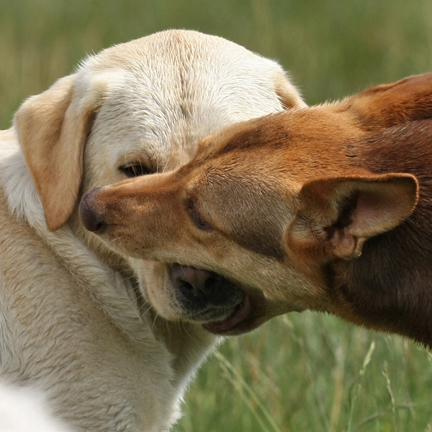
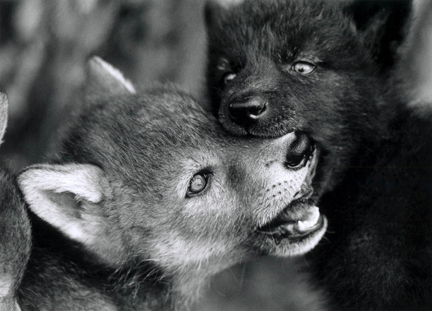


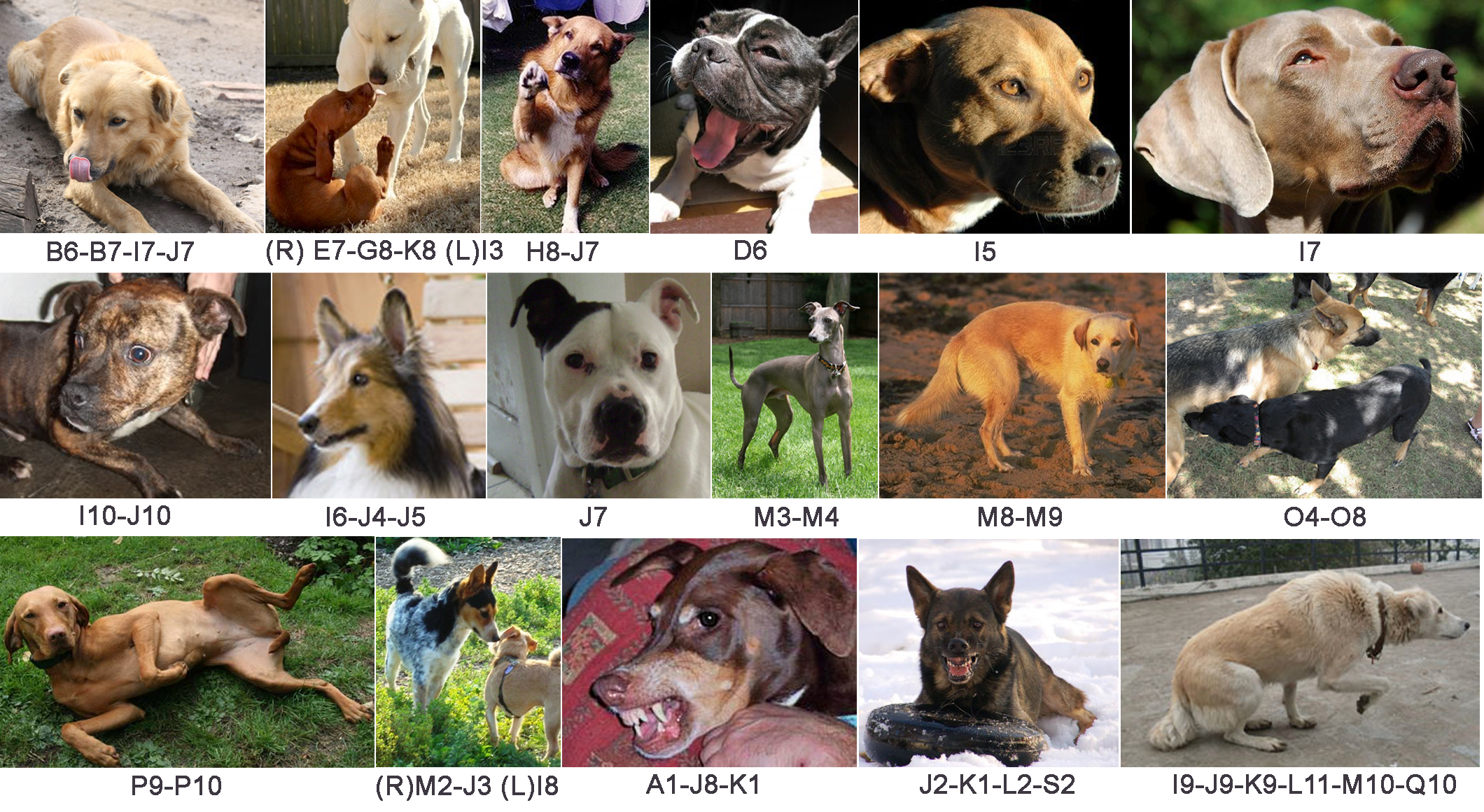


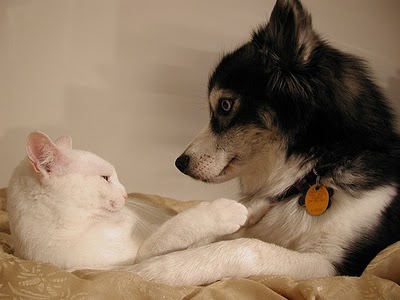


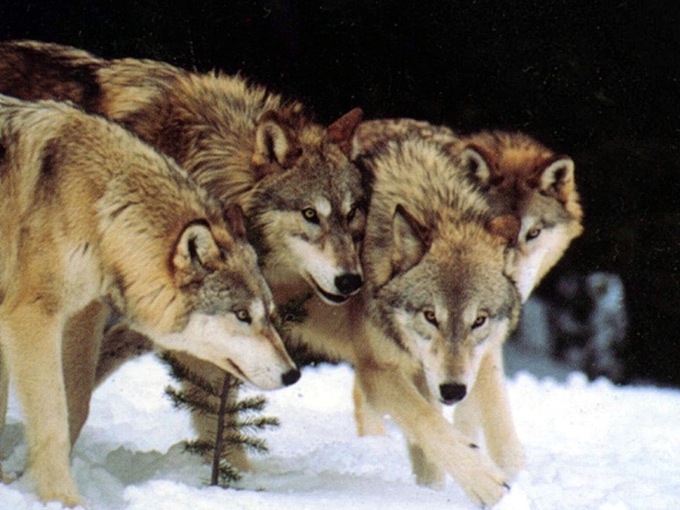

 Roger Abrantes