Abstract
This paper challenges the prevailing confusion and debate around the concept of dominance in dogs and other social animals, elucidating dominance from an ethological and evolutionary perspective. It argues that dominance is an observable, behavioral characteristic shared across species, not merely a human-imposed social construct. It defines dominance and submission as dynamic, situational behaviors aimed at gaining or temporarily maintaining access to resources without injury, distinct from aggression. Hierarchies, where they exist, are Evolutionarily Stable Strategies (ESS) that arise from individuals’ dominant or submissive behavior, adapted to the context. The paper emphasizes the importance of accurate, pragmatic definitions to avoid misunderstandings and advocates for viewing relationships—e.g., human-dog ones—as partnerships built on cooperation rather than rigid hierarchies. Dominance behavior, properly understood, is instrumental in resolving social conflicts and maintaining group stability, rather than being a fixed rank or power status. The paper calls for clear, science-based reasoning rather than emotional or ideological dismissals of dominance.

Introduction
Stable and profitable relationships are not built in the long run through a series of dominant and submissive displays. Instead, these behaviors are necessary for resolving inevitable social conflict. Both humans and dogs (and wolves, of course) form relationships based on the need for partnership in overcoming common problems related to survival and, preferably, achieving an acceptable level of comfort. Relationships are not founded on hierarchies; however, hierarchies do exist and play a significant role in certain circumstances—for humans as well as dogs (and wolves, of course)—sometimes more, sometimes less, and sometimes not at all (Schenckel, 1947; Zimen, 1976; Mech, 1999; Chase et al., 2002).

In everyday language, dominance refers to having “power and influence over others.” It means supremacy, superiority, ascendancy, preeminence, predominance, mastery, power, authority, rule, command, and control (Cambridge Dictionary; Merriam-Webster). The term has so many meanings and connotations that we cannot simply pick a dictionary definition and employ it as a scientific term in the behavioral sciences. We need to define terms accurately to avoid misunderstandings, meaningless discussions, and nonsensical claims. Unfortunately, the scientists who use the term dominance and its derivatives (as well as those who reject it) have not satisfactorily defined it, thereby contributing to the current confusion about the nature and function of dominant behavior (Drews, 1993).
I intend to remedy this by:
(1) demonstrating that dominance is an observable characteristic of behavior, not a trait of an individual;
(2) establishing that it refers to one and the same class of behaviors independent of species;
(3) presenting a precise, pragmatic, and verifiable definition of the term, which is compatible with evolutionary theory and our body of biological knowledge;
(4) arguing that, even though it is true that a good (in terms of being profitable and stable) relationship does not rely on continuous displays of dominance/submission from the same individuals toward the same other individuals, that does not imply that dogs cannot show dominant behavior.
Denying that dominant behavior exists in dogs has become a popular argument to defend the claim that we must not ‘dominate’ our dogs.
Indeed, the discussion on dominance has run away with us. There is only one thing more absurd and futile than attempting to prove that dominant behavior exists, and that is trying to prove that it does not. In the following, I shall commit the first of these futile acts.
On the similarities and differences of species
It is absurd to argue that dominance (as an attribute or property) does not exist when we have so many words for it, varying by context and nuance. If it didn’t exist, neither would all these terms (Wittgenstein, 1953; Millikan, 1984; Saussure, 2011). The numerous synonyms and connotations suggest that while the term is difficult to define, we have recognized a behavioral property whose characteristics are distinct enough from others to warrant classification in a specific category and a name. Whether the chosen names are suitable or well-defined is a separate issue and does not affect the behavior itself. We can argue that this attribute (dominance) has been observed and that (1) it only applies to certain human relationships, or that (2) it applies to certain relationships among humans as well as some other animal species. The second option seems more appealing, given that it is unlikely that a specific condition exists in only one species. That would contradict everything we know about the relatedness and evolution of species (Darwin, 1871; Mayr, 1982).
However, there is nothing implausible about stating that the term does not apply to the behavior of a particular species. On the contrary, two species that diverged from a common ancestor billions of years ago evolve and develop their own characteristics, ultimately differing from one another and from their common ancestor. By the same token, closely related species, which diverged from a single common ancestor a few thousand years ago, will exhibit various characteristics similar to or equal to those of the common ancestor and to one another. Some species share many common attributes in terms of phenotype, genotype, and behavior (which is a phenotype); others share fewer, and some none at all. It all depends on their shared ancestry and their adaptation to the environment (Dobzhansky, 1973; Futuyma, 1998).

Humans and chimpanzees (Homo sapiens and Pan troglodytes) diverged from a common ancestor about six to seven million years ago (maybe up to 13), so we can expect them to have fewer common attributes than wolves and dogs (Canis lupus lupus and Canis lupus familiaris), which only diverged from a common ancestor about 15 to 20 thousand years ago and definitely no more than 100 thousand years ago according to recent studies (Vilà et al., 1997; Savoilanen et al., 2002; Kumar et al., 2005)
The DNA of humans and chimpanzees differs more than that of wolves and dogs (which is almost identical except for a few mutations). Humans cannot interbreed with chimpanzees (Disotell, 2006; Presgraves & Yi, 2009); wolves and dogs can interbreed and produce fertile offspring. Thus, humans and chimpanzees are two entirely distinct species, whereas wolves and dogs are two subspecies of the same species (Wayne & Ostrander, 1999; Nowak, 2003).
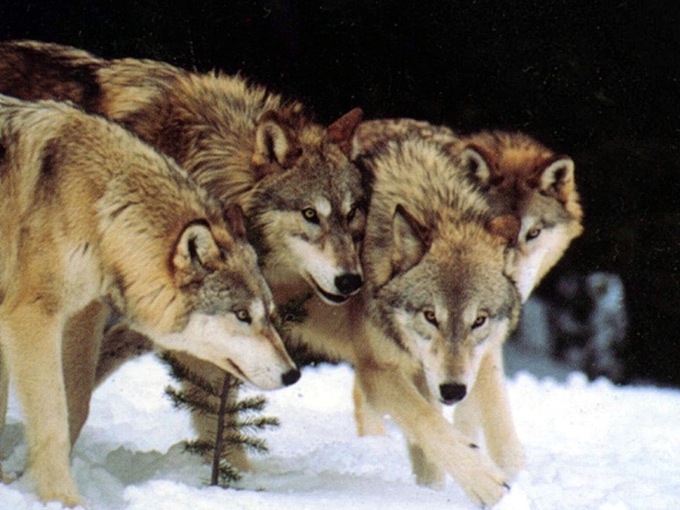
Considering these facts, we can expect wolves and dogs to share a significant number of similarities, which indeed they do, not only physically but also behaviorally—and any layman would attest to that. Their similarities at certain levels enable them to mate, produce fertile offspring, and communicate effectively (Zimen 1981). Nobody questions that wolves and dogs share an extensive repertoire of communication behaviors, and rightly so, as multiple observations have confirmed that they communicate well (Feddersen-Petersen, 2004). Their facial expressions and bodily postures are remarkably similar. Dogs (most breeds) and wolves share similar facial musculature, although domestication has produced some structural differences in dogs that facilitate communication with humans (Coppinger & Coppinger, 2001), and dogs appear to have some limitations in producing the same range of affective facial expressions as wolves (Miklósi et al., 1998). However, these are relatively minor differences between the two subspecies, significantly smaller than the cultural differences observed among humans from geographically separated settlements.
If wolves and dogs can communicate, it suggests that the fundamental elements of their languages must be the same or very similar. That indicates that, despite evolving in seemingly different environments, they have preserved the essential aspects of their genotypic characteristics. There could be several reasons for this: (1) the common genotypes are vital to the organism, (2) the environments were not so crucially distinct after all, (3) evolution needs more time and more selective conditions (since it acts on phenotypes) for the genotypes to begin to differ radically.
Point (1) above means that there are more ways not to be alive than there are ways to be alive. In other words, evolution needs time to come up with different, viable life forms (Darwin, 1859; Mayr, 1963; Futuyma, 1998). Point (2) indicates that although wolves and (pet) dogs currently live in entirely different environments, the phenomenon is still too recent. It is only in the last century that dogs have become so over-domesticated. Before that, they were our companions, domestic animals that retained a considerable degree of freedom and relied (mainly) on the same successful selective factors as always. They were still not pets, and breeding was not predominantly controlled by human selection. Point (3) suggests that, given enough time—a million years or so—we may eventually have two entirely distinct species: wolves and dogs. By then, they will not mate, will not produce fertile offspring, and may exhibit completely different characteristics. Then, we may even change the domestic dog’s scientific name from Canis lupus familiaris to Canis civicus, or Canis homunculus. However, we are not there yet!
On similarities and differences
Recent trends suggest that “dominant behavior” does not exist in dogs (please check the internet), which poses some serious problems. There are two ways to argue in favor of this line of thinking. The first is to dismiss “dominant behavior” outright, which is absurd, as, for the aforementioned reasons, the term does exist, we have a rough understanding of what it means, and we use it in conversation. It must, therefore, refer to a class of behaviors that we have observed (Wittgenstein, 1953; Millikan, 1984; Saussure, 2011). The second way of arguing is to claim that wolves and dogs are entirely different and, therefore, even though we can apply the term to describe wolf behavior, we cannot use it to describe dog behavior. If they were completely different, the argument could be valid, but they are not, as we have seen. On the contrary, they are very similar, and, therefore, this argument is invalid (Copi, 1999).
A third alternative is to propose a brand new theory to explain how two such closely related species, as the wolf and the dog (actually a subspecies), can have developed in such a short period (thousands of years) with so many radically different characteristics in one single aspect, but not in others. This would amount to a massive revision of our entire body of biological knowledge, with implications far beyond wolves and dogs—an alternative I find unrealistic (Bromham, 2009).
That said, when comparing different species’ behavioral strategies, including social structures, we must be careful not to blindly extrapolate across species without regard for the particular ecology and evolution of each species. Comparing involves finding similarities and differences. For example, wolf societies, although similar to stray and feral dog societies in many respects, also (as expected) differ radically in others. Even within the same subspecies—wolves and dogs, respectively—societies vary slightly depending on ecological factors, such as the age of their members, pack size, and prey availability (Zimen, 1976 and 1982; Abrantes, 1997; Mech, 1999; Cafazzo et al., 2010).
Appeal to consequences
A far more appealing approach, it seems to me, is to analyze the concepts we use and define them properly. This would allow us to use them meaningfully when dealing with different species without running into incompatibilities with the entire body of science.
An accurate definition of “dominant behavior” is important because the behavior it describes is crucial to the survival of a particular type of individual, as we shall see.
Dismissing the existence of facts that underlie a term simply because that term is ill-defined or politically incorrect—meaning it doesn’t serve our immediate goals—seems to me to be a flawed approach. That is known as the appeal to consequences fallacy (argumentum ad consequentiam) and represents an error in reasoning (Copi 1999). Dominant behavior exists, but it is poorly defined (if defined at all). Most discussions involving dominant behavior are meaningless because neither party knows precisely what the other is referring to. However, we don’t need to throw the baby out with the bath water!
Definitions
Therefore, I propose that we establish precise definitions of dominant behavior and identify and define the factors necessary to understand what it is, what it is not, how it evolved, and how it functions. Thus:
Dominant behavior (or dominantness) is quantitative and quantifiable behavior displayed by an individual with the function of gaining or maintaining temporary access to a particular resource on a particular occasion, versus a particular opponent, without either party incurring injury. If any party is injured, the behavior is aggressive, not dominant. Its quantitative characteristics range from slightly self-confident to overtly assertive.
Dominant behavior is situational, individual, and resource-related. One individual displaying dominant behavior in a specific situation does not necessarily exhibit it on another occasion, either toward another individual or toward the same individual in a different situation.
Resources are what an organism considers to be life necessities, e.g., food, a mating partner, or a patch of territory. The perception of what an animal finds a resource is both species- and individual-related.
Aggressiveness (aggressive behavior) is behavior directed toward eliminating competition, while dominance (social aggressiveness) is behavior directed toward eliminating competition from a mate.
Mates are two or more animals that live closely together and depend on one another for survival. Aliens are two or more animals that do not live closely together and do not depend on one another for survival. Please note that I’m using the term ‘mate’ as it is commonly used in the UK, Australia, and New Zealand, without any sexual connotations.
Dominant behavior is particularly important for social animals that need to cohabit and cooperate to survive. Therefore, a particular social strategy evolved with the function of dealing with competition among mates, whilst conferring the greatest benefit at the least cost (Abrantes, 1997).
Animals display dominant behavior through various signals: visual, auditory, olfactory, and/or tactile.
While fearfulness (fearful behavior) is behavior directed toward the elimination of an incoming threat, submissiveness (submissive behavior), or social-fearfulness, is behavior directed toward the elimination of a social threat from a mate, i.e., losing temporary access to a resource without incurring injury.
A threat is a stimulus that most often precedes a behavior that may harm, inflict pain or injury, or decrease an individual’s chance of survival. A social threat is a threat (a threatening behavior) from another individual or group of individuals that may cause submissive behavior or flight, resulting in the temporary loss of a resource, but not injury.
Animals show submissive behavior through various signals: visual, auditory, olfactory, and/or tactile.
Dynamics of Behavior and Evolutionarily Stable Strategies
Persistent dominant or submissive behavior from the same individuals toward the same other individuals may or may not result in a temporary hierarchy of a particular configuration, depending on species, social organization, and environmental circumstances. In stable groups confined to a defined territory, temporary hierarchies will develop more readily. In unstable groups under changing environmental conditions or in undefined or non-established territories, hierarchies will not develop. Hierarchies, or rather the strategies involved, are Evolutionarily Stable Strategies (ESS), which are always slightly unstable, swinging forth and back around an optimal value, depending on the number of individuals in the group and the strategy each individual adopts at any given time (Maynard Smith & Price, 1973; Hines, 1987). Hierarchies are not necessarily linear, although in small groups and over time, non-linear hierarchies tend to become more linear (Noë et al., 1980; Chase et al., 2002).
Some individuals have a stronger tendency to exhibit dominant behavior, while others tend to show submissive behavior. That may depend on their genetic makeup, early learning, maturity, experiences, etc. There is no single factor that determines this; rather, it is a complex interplay of factors. Let us call this a natural tendency; this is not to say it is not modifiable. It is a fact that some individuals are more assertive than others, while others are less so. Neither is ‘good’ nor bad’ in a moral sense, simply more or less advantageous, depending on context. It is all a question of costs and benefits (Real, 1991; Krebs & Davies, 1993). In one-to-one encounters, all things being equal, individuals are more likely to adopt the strategy they feel most comfortable with, thereby maintaining their history of predominantly displaying either dominant or submissive behavior.
In larger groups, individuals tend to play roles that they feel most comfortable with. However, this can change due to the accidental makeup of the group. Imagine a group with a large proportion of individuals that are prone to showing submissive rather than dominant behavior, and with only a few members showing the opposite tendency. In this scenario, an individual with a tendency to primarily exhibit submissive behavior would be more likely to gain access to resources by adopting more dominant behavior. Success breeds success, and progressively, this individual, who tends to display submissive behavior, increasingly opts for a dominant strategy. If the scenario prompts one individual to change its preferred strategy, then others will also have the same opportunities. The number of individuals exhibiting dominant behavior will increase, but only to a point, as the group cannot sustain too many individuals adopting a dominant strategy. To avoid the risk of injury, it will eventually be more advantageous to adopt or revert to a submissive strategy, depending on the incurred benefits and costs (Maynard Smith & Price, 1973; Houston & McNamara, 1991; McNamara et al., 1991).
Therefore, the number of dominant and submissive individuals in a group (i.e., individuals adopting one of the two strategies as their preferred strategy) depends not only on individuals’ natural tendencies but also on the proportions of behavioral strategies within the group. Whether it pays off to play a dominant or a submissive role is ultimately a function of benefits and costs, as well as the number of individuals who adopt one particular strategy.
Understanding the relationship between dominant and submissive behavior as an ESS (Evolutionarily Stable Strategy) opens up exciting perspectives and could help explain the behavior adopted by any given individual at any given time. An individual will learn to display submissive behavior toward those who act more dominantly and display dominant behavior toward those who act more submissively. That means that no individual always behaves dominantly or submissively as a principle; instead, it all depends on the opponent’s choice of strategy and, of course, the value of the potential benefits and estimated costs (Maynard Smith, 1982; Gross, 1996; Dugatkin & Reeve, 1998).
As a corollary, hierarchies (when they exist) will always be slightly unstable, depending on the strategies adopted by individuals in the group; and will not be linear, except in small groups or subgroups (Chase, 2002).
In the opinion of this author, the mistake we have committed hitherto has been to regard dominance and submission (or, more correctly, dominantness and submissiveness) as more or less static. We haven’t taken into account that these behavioral characteristics, like all phenotypes, are constantly under the scrutiny and pressure of natural selection. They are adaptive, highly variable, and highly quantitative and quantifiable (Fisher, 1930; Lande, 1976; Roff, 1997)
As such, dominance and submission are dynamic features that depend on various variables, a view that is compatible with the ontogeny of behavior at the individual level, including the interaction of genetic predispositions and environmental factors, learning processes, adaptations, and, not least, the broader framework of evolutionary theory.
Dominance and submission are beautiful mechanisms from an evolutionary perspective. They enable (social) animals to live together and survive until they reproduce and pass their (dominant and submissive behavior) genes to the next generation. Without these mechanisms, we wouldn’t have social animals such as humans, chimpanzees, wolves, and dogs, among others.
Suppose an animal resolved all inter-group conflicts with aggressive and fearful behavior. It would be exhausted when subsequently compelled to find food, a mating partner, or a safe place to rest or take care of its progeny (all of which decrease the chances of its own survival and that of its genes). Thus, the alien and mate strategy originated and evolved (see my definitions above). It is impossible to fight everybody all of the time, so a mate is confronted using energy-saving procedures.
Submissive and dominant behavior also control population density, since they rely on individual recognition. The number of individuals an animal can recognize is limited by constraints on brain size and information-processing capacity (Dunbar, 1998; Cheney & Seyfarth, 1990). If this number exceeds a certain level, recognition becomes inefficient and hinders the alien/mate strategy; fearful/aggressive displays then replace submissive/dominant behavior.
The strategy of submission is sound. Instead of vainly engaging in a desperate fight, waiting may prove more rewarding. By employing pacifying and submissive behavior strategies, subordinates often shadow dominantly behaving animals and gain access to vital resources. By exhibiting submissive behavior, they retain their membership in the group, which also confers them several advantages—particularly defense against rivals.
Hierarchies
Hierarchies work because a subordinate will often move away, showing typical pacifying behavior, without too obvious signs of fear. Thus, the higher-ranking animal may displace a lower-ranking animal when feeding or at a desirable site. Hierarchies in nature are often subtle, making them difficult for an observer to decipher. The reason for this subtlety is the raison d’être of the dominance-submission strategy itself: the lower-ranking animal (adopting the submissive strategy) generally avoids conflicts, and the higher-ranking (adopting the dominance strategy) is not too keen on running into skirmishes either.
Fighting involves a certain amount of risk and can lead to serious injury or even death. Evolution, therefore, tends to favor the development of mechanisms that restrain the intensity of aggressive behavior. Most species exhibit clear signals indicating acceptance of defeat and an end to combat before injury occurs (Matsumura & Hayden, 2006; Natarajan & Caramaschi, 2010).
Sign stimuli, a venerable ethology term, designate specific stimuli that trigger instinctive behavior sequences (Tinbergen, 1951 and 1952). For infants, recognizing these sign stimuli is crucial for their survival immediately after birth. After mastering these essential life-saving responses, the most relevant lesson a social youngster learns is compromise. This skill is vital to maintaining a group’s cohesion and fitness. Natural selection has proven this, favoring those individuals who develop the particular behaviors that enable them to stay together when necessary for their survival and reproduction. In contrast, solitary predators, for example, need no such social traits as they have evolved alternative strategies to ensure their survival and reproduction.
Learning to be social
Learning to be social involves mastering the art of compromise. Social animals spend significant amounts of time together, making conflicts inevitable. It is therefore crucial for them to develop efficient mechanisms to manage hostilities. Limiting aggressive and fearful behavior through inhibition and ritualization is only partially efficient (and safe). For highly social, potentially aggressive animals, it is crucial to have more advanced mechanisms in place to prevent injury. Inhibited aggression is still a form of aggression—it’s like playing with fire on a windy day. It works reasonably well for less social or less potentially aggressive animals. However, animals that are both highly social and potentially highly aggressive need better strategies to ensure that the benefits of group living outweigh its costs (Alexander, 1974; Wilson, 1975; Creel & Creel, 1995).
In the long run, relying on aggression and fear to constantly address trivial problems would become too dangerous and exhausting. Animals exhibit signs of pathological stress when they face persistent threats or are repeatedly forced to attack others. That suggests that social predators require mechanisms beyond mere aggressiveness and fearfulness to resolve social animosities. I suggest that, through the ontogeny of aggressiveness and fearfulness, social animals have also developed two other equally important social behaviors. If the function of aggression is to convey “go away, drop dead, never bother me again,” then the function of social-aggression is to communicate “go away, but not too far, or for too long.” Similarly, social fear expresses “I won’t bother you if you don’t hurt me,” whereas existential fear leaves no room for compromise—“It’s either you or me.”
The key difference between the two types of aggressive behavior lies in their functions. Aggressiveness is directed toward an alien, whereas social aggressiveness is directed toward a mate. Conversely, fearfulness and social fearfulness pertain to the alien and the mate. These are qualitative distinctions that justify the coining of new terms, hence dominance (dominantness) and submission (submissiveness).
What implications does all this have on how we understand and connect with our dogs?
We, as all highly social animals, display dominant behavior (i.e., self-confident, assertive, firm, forceful) as well as submissive behavior (i.e., insecure, accepting, consenting, yielding) depending on many factors including our state of mind, social position, available resources, health status, and the presence of a particular opponent—humans as well as dogs (and wolves, of course). There’s nothing inherently wrong with exhibiting either behavior, except when we display dominant behavior where it would be more beneficial to show submissive behavior, or the other way around. Sometimes we may act more dominantly or submissively, and other times, less so. Our tendencies to act dominantly or submissively vary widely, influenced by numerous factors, since these behaviors are highly quantitative and quantifiable. There is no single, universally correct strategy. Like all Evolutionarily Stable Strategies (ESS), the appropriate behavioral strategy depends on the costs and benefits incurred and on the strategies adopted by others. One strategy cannot exist without the alternative(s). Each strategy keeps the others honest (Maynard Smith, 1982).
Stable and profitable relationships do not develop in the long run through a series of dominant and submissive displays. Instead, these behaviors are necessary for resolving inevitable social conflict. Both humans and dogs (and wolves, of course) form relationships out of a need for partnership in overcoming shared problems related to survival and, preferably, achieving an acceptable level of comfort. Relationships are not necessarily built on hierarchies, but hierarchies do exist and they play a crucial role in certain circumstances—for humans as well as dogs (and wolves, of course)—sometimes more, sometimes less, and sometimes not at all (Chase et al., 2002).
Epilogue (a kind of)
We establish a positive relationship with our dogs based on partnership. Our dogs provide us with a sense of accomplishment we often can’t find elsewhere. In return, they rely on us for essential needs such as food, protection, healthcare, a safe environment, and companionship, as they are social animals. It’s too hard to be a little dog all alone out there in the big world! Sometimes, in this relationship, one of the parties resorts to dominant or submissive behavior, and there’s nothing wrong with that, as long as they do not both show the same behavior at the same time. If both resort to the same behavior, they have a problem: they either run into a conflict that they will usually resolve without injury (the beauty of the dynamics of dominance and submission), or one of them will have to get their act together and find their bearings for both.
A good relationship with our dogs does not involve any mysterious mechanisms. It’s basically the same as in all good relationships, whilst taking into account the particular characteristics of the species and individuals involved. We need no new terms. We need no new theories to explain it. We aren’t, after all, that special, nor are our dogs. We are all made from the same fundamental components: phosphate, deoxyribose, and four nitrogen bases (A, T, G, C) (Alberts et al., 2002).
All we need are clear definitions and a more rational, less emotional approach. Use your heart to enjoy life with other living beings (including your dog), and your reason to explain it (if you need to)—not the other way around. If you don’t like my definitions, feel free to propose better ones (with more advantages and fewer disadvantages), but don’t waste your time, or anyone else’s, on meaningless discussions and knee-jerk reactions. Life is precious, and like with a tasty cake, every moment you waste is like one bite of that yummy cake that you’ve devoured without even realizing it.
That’s how I see it—enjoy your cake!
R~
Related articles
- Dog Training—Let Reason Prevail Over Force!
- Wolves in France – the Hunting is on
- The primary ancestors of the domestic dog
- Someone’s wrong on the internet, Part II
References
Abrantes, R. (1997). The evolution of canine social behavior. Wakan Tanka Publishers.
Alberts, B., Johnson, A., Lewis, J., Raff, M., Roberts, K., & Walter, P. (2002). Molecular biology of the cell (4th ed.). Garland Science.
Bromham, L. (2009). Why do species vary in their rate of molecular evolution? Biology Letters, 5(3), 401–404. https://doi.org/10.1098/rsbl.2009.0136
Cafazzo, S., Valsecchi, P., Bonanni, R., & Natoli, E. (2010). Dominance in relation to age, sex, and competitive contexts in a group of free-ranging domestic dogs. Behavioral Ecology, 21(3), 443–455. https://doi.org/10.1093/beheco/arq001
Cambridge University Press. (2011). Dominance. In Cambridge Dictionary. Retrieved September 27, 2011, from https://dictionary.cambridge.org/dictionary/english/dominance
Chase, I. D., Tovey, C., Spangler‑Martin, D., & Manfredonia, M. (2002). Individual differences versus social dynamics in the formation of animal dominance hierarchies. Proceedings of the National Academy of Sciences, 99(8), 5744–5749. https://doi.org/10.1073/pnas.082104199
Chela‑Flores, J. (2007). Testing the universality of biology: A review. International Journal of Astrobiology, 6(3), 241–248. https://doi.org/10.1017/S147355040700376X
Cheney, D. L., & Seyfarth, R. M. (1990). How monkeys see the world: Inside the mind of another species. University of Chicago Press.
Copi, I. M. (1999). Symbolic logic (5th ed.). Pearson.
Coppinger, R., & Coppinger, L. (2001). Dogs: A new understanding of canine origin, behavior, and evolution. University of Chicago Press.
Creel, S., & Creel, N. M. (1995). Communal hunting and pack size in African wild dogs, Lycaon pictus. Animal Behaviour, 50(5), 1325–1339. https://doi.org/10.1016/0003-3472(95)80048-4
Creel, S., Creel, N. M., Mills, M. G. L., & Monfort, S. L. (1997). Rank and reproduction in cooperatively breeding African wild dogs: Behavioural and endocrine correlates. Behavioural Ecology, 8(3), 298–306. https://doi.org/10.1093/beheco/8.3.298
Darwin, C. (1859). On the origin of species by means of natural selection, or the preservation of favoured races in the struggle for life. John Murray. Retrieved from https://darwin-online.org.uk/content/frameset?itemID=F373&viewtype=text
Darwin, C. (1872). The expressions of the emotions in man and animals (original edition). John Murray.
Disotell, T. R. (2006). ‘Chumanzee’ evolution: The urge to diverge and merge. Evolutionary Anthropology, 15(6), 229–237. https://doi.org/10.1002/evan.20148
Dobzhansky, T. (1973). Nothing in biology makes sense except in the light of evolution. The American Biology Teacher, 35(3), 125–129. https://doi.org/10.2307/4444260
Drews, C. (1993). The concept and definition of dominance in animal behaviour. Behaviour, 125(3–4), 283–313. https://www.jstor.org/stable/4535117
Dugatkin, L. A., & Reeve, H. K. (1998). Game theory and animal behavior. Oxford University Press.
Dunbar, R. I. M. (1998). The social brain hypothesis. Evolutionary Anthropology, 6(5), 178–190. https://doi.org/10.1002/(SICI)1520-6505(1998)6:5<178::AID-EVAN3>3.0.CO;2-8
Eaton, B. (2011). Dominance in dogs—fact or fiction? Dogwise Publishing.
Estes, R. D., & Goddard, J. (1967). Prey selection and hunting behavior of the African wild dog. Journal of Wildlife Management, 31, 52–70.
Feddersen‑Petersen, D. (2004). Hundepsychologie: Sozialverhalten und Wesen [Dog psychology: Social behavior and character]. Verlag Eugen Ulmer.
Fentress, J. C., Ryon, J., McLeod, P. J., & Havkin, G. Z. (1987). A multidimensional approach to agonistic behavior in wolves. In H. Frank (Ed.), Man and wolf: Advances, issues, and problems in captive wolf research. Dr. W. Junk Publishers.
Fisher, R. A. (1930). The genetical theory of natural selection. Clarendon Press.
Fox, M. (1971). Socio-ecological implications of individual differences in wolf litters: A developmental and evolutionary perspective. Behaviour, 41, 298–313.
Fox, M. (1972). Behaviour of wolves, dogs, and related canids. Harper and Row.
Futuyma, D. J. (1998). Evolutionary biology (3rd ed.). Sinauer Associates.
Gollery, M., Harper, J., Cushman, J., Woolsey, J., Hegeman, A., Liu, J., & Yao, J. (2006). What makes species unique? The contribution of proteins with obscure features. Genome Biology, 7(7), R57. https://doi.org/10.1186/gb-2006-7-7-r57
Gross, M. R. (1996). Alternative reproductive strategies and tactics: Diversity within sexes. Trends in Ecology & Evolution, 11(2), 92–98. https://doi.org/10.1016/0169-5347(96)81050-0
Hines, W. G. S. (1987). Evolutionarily stable strategies: A review of basic theory. Theoretical Population Biology, 31(2), 195–272. https://doi.org/10.1016/0040-5809(87)90029-3
Houston, A. I., & McNamara, J. M. (1991). Evolutionarily stable strategies in the repeated hawk–dove game. Behavioral Ecology, 2(3), 219–228. https://doi.org/10.1093/beheco/2.3.219
Krebs, J. R., & Davies, N. B. (1993). An introduction to behavioral ecology (3rd ed.). Blackwell Science.
Kumar, S., Filipski, A., Swarna, V., Walker, A., & Hedges, S. B. (2005). Placing confidence limits on the molecular age of the human–chimpanzee divergence. Proceedings of the National Academy of Sciences, 102(52), 18842–18847. https://doi.org/10.1073/pnas.0509585102
Lande, R. (1976). Natural selection and random genetic drift in phenotypic evolution. Evolution, 30(2), 314–334. https://doi.org/10.1111/j.1558-5646.1976.tb00911.x
Lopez, B. H. (1978). Of wolves and men. J. M. Dent and Sons.
Maynard Smith, J. (1982). Evolution and the theory of games. Cambridge University Press.
Maynard Smith, J., & Price, G. R. (1973). The logic of animal conflict. Nature, 246(5427), 15–18. https://doi.org/10.1038/246015a0
Mayr, E. (1982). The growth of biological thought: Diversity, evolution, and inheritance. Harvard University Press.
Matsumura, S., & Hayden, T. J. (2006). When should signals of submission be given? A game theory model. Journal of Theoretical Biology, 240(3), 425–433. https://doi.org/10.1016/j.jtbi.2005.10.002
McNamara, J. M., Merad, S., & Collins, E. J. (1991). The hawk–dove game as an average-cost problem. Advances in Applied Probability, 23(4), 667–682. https://doi.org/10.2307/1427669
Mech, L. D. (1970). The wolf: The ecology and behavior of an endangered species. Doubleday Publishing Co.
Mech, L. D. (1988). The arctic wolf: Living with the pack. Voyageur Press.
Mech, L. D., Adams, L. G., Meier, T. J., Burch, J. W., & Dale, B. W. (1998). The wolves of Denali. University of Minnesota Press.
Mech, L. D. (1999). Alpha status, dominance, leadership, and division of labor in wolf packs. Canadian Journal of Zoology, 77(8), 1196–1203. https://doi.org/10.1139/z99-099
Mech, L. D., & Boitani, L. (2003). Wolves: Behavior, ecology, and conservation. University of Chicago Press.
Mech, L. D. (2000). Alpha status, dominance, and division of labor in wolf packs. Northern Prairie Wildlife Research Center.
Millikan, R. G. (1984). Language, thought, and other biological categories: New foundational essays on the philosophy of language. MIT Press.
Miklósi, Á., Polgárdi, R., Topál, J., & Csányi, V. (1998). Use of experimenter-given cues in dogs. Animal Cognition, 1(2), 113–121. https://doi.org/10.1007/s100710050016
Natarajan, D., & Caramaschi, D. (2010). Animal violence demystified. Frontiers in Behavioral Neuroscience, 4, 9. https://doi.org/10.3389/fnbeh.2010.00009
Noë, R., de Waal, F. B. M., & van Hooff, J. A. R. A. M. (1980). Types of dominance in a chimpanzee colony. Folia Primatologica, 34(1–2), 90–110. https://doi.org/10.1159/000155949
Nowak, R. M. (2003). Wolf evolution and taxonomy. In L. D. Mech & L. Boitani (Eds.), Wolves: Behavior, ecology, and conservation (pp. 239–258). University of Chicago Press.
O’Heare, J. (2003). Dominance theory and dogs. DogPsych Publishing.
Packard, J. M., Mech, L. D., & Ream, R. R. (1992). Weaning in an arctic wolf pack: Behavioral mechanisms. Canadian Journal of Zoology, 70, 1269–1275.
Presgraves, D. C., & Yi, S. V. (2009). Doubts about complex speciation between humans and chimpanzees. Trends in Ecology & Evolution, 24(10), 533–540. https://doi.org/10.1016/j.tree.2009.04.007
Real, L. A. (1991). Animal choice behavior and the evolution of cognitive architecture. Science, 253(5023), 980–986. https://doi.org/10.1126/science.1887231
Roff, D. A. (1997). Evolutionary quantitative genetics. Chapman & Hall.
Rothman, R. J., & Mech, L. D. (1979). Scent-marking in lone wolves and newly formed pairs. Animal Behaviour, 27, 750–760.
Schenkel, R. (1947). Expression studies of wolves: Captivity observations. Behaviour, 1(2), 81–129. https://archive.org/stream/SchenkelCaptiveWolfStudy.compressed/schenkel%20captive%20wolf%20study.compressed_djvu.txt
Scott, J. P., & Fuller, J. L. (1998). Genetics and the social behavior of the dog. University of Chicago Press.
Saussure, F. de. (2011). Course in general linguistics (W. Baskin, Trans.). Columbia University Press. (Original work published 1916)
Savolainen, P., Zhang, Y. P., Luo, J., Lundeberg, J., & Leitner, T. (2002). Genetic evidence for an East Asian origin of domestic dogs. Science, 298(5598), 1610–1613. https://doi.org/10.1126/science.1073906
Tinbergen, N. (1951). The study of instinct. Oxford University Press.
Tinbergen, N. (1952). The Herring Gull’s World: A study of the social behavior of birds. Oxford University Press.
Van Hooff, J. A. R. A. M., & Wensing, J. A. B. (1987). Dominance and its behavioral measures in a captive wolf pack. In H. Frank (Ed.), Man and wolf: Advances, issues, and problems in captive wolf research. Dr. W. Junk Publishers.
Vilà, C., Savolainen, P., Maldonado, J. E., Amorim, I. R., Rice, J. E., Honeycutt, R. L., Crandall, K. A., Lundeberg, J., & Wayne, R. K. (1997). Multiple and ancient origins of the domestic dog. Science, 276(5319), 1687–1689. https://doi.org/10.1126/science.276.5319.1687
Wayne, R. K., & Ostrander, E. A. (1999). Origin, genetic diversity, and genome structure of the domestic dog. BioEssays, 21(3), 247–257. https://doi.org/10.1002/(SICI)1521-1878(199903)21:3<247::AID-BIES9>3.0.CO;2-Z
Wilson, E. O. (1975). Sociobiology. Belknap Press of Harvard University Press.
Wittgenstein, L. (1953). Philosophical investigations (G. E. M. Anscombe, Trans.). Blackwell. (Original work published 1953)
Zimen, E. (1975). Social dynamics of the wolf pack. In M. W. Fox (Ed.), The wild canids: Their systematics, behavioral ecology and evolution (pp. 336–368). Van Nostrand Reinhold.
Zimen, E. (1976). On the regulation of pack size in wolves. Zeitschrift für Tierpsychologie, 40, 300–341. https://doi.org/10.1111/j.1439-0310.1976.tb00939.x
Zimen, E. (1981). The wolf: His place in the natural world. Souvenir Press.
Zimen, E. (1982). A wolf pack sociogram. In F. H. Harrington & P. C. Paquet (Eds.), Wolves of the world. Noyes Publishers.
Thanks to Simon Gadbois (merci), Tilde Detz (tak), Victor Ros (gracias), Sue McCabe (go raibh math agate), Parichart Abrantes (ขอบคุณครับ), and Anna Holloway (thank you) for conversations, exchange of messages, and suggestions to improve this paper. Any remaining flaws are mine, not theirs.
Note from the author: In September 2025, I have edited a few paragraphs to correct typos and improve clarity and conciseness.
 Roger Abrantes
Wonderful article Roger! I believe you have clearly explained how dominance is used to obtain or maintain a resource to solve conflictual problems. It is not a hierarchy like a ranking position like Sgt, Lt., Captain, etc. However, dominance as defined, exists contrary to what some people will try to say that it does not. We want to seek partnership with our dogs as that builds healthy relationships but dominance and submission does exist, it is not static and it serves to avoid conflicts. It was a great read and I believe it will be very helpful for dog owners as well as dog trainers. Thank you!
GREAT! I ´VE TO USE TRANSLATOR BESAUCE IT´S A LITTLE BIT DIFFICULT FOR ME…
REGARDS FOR SHARING IT!
MARCELA
I found this a very interesting and convincing argument; you’re right about the importance of defining our terms and not arguing on the basis of knee-jerk responses to what we think certain concepts mean.
But I would be very interested in your elaboration on one of your statements (maybe it would require another blog post): You said, “We build our particular (good) relationship with our dogs on partnership. We need them because they give us a sense of accomplishment that we don’t seem to get anywhere else.”
Accomplishment in what sense?
Finally!!!!! An intelligent discussion and a sensible definition of dominant and submissive behavior. Guess what? Your dog is NOT dominant. His *behavior* is dominant in certain circumstances and submissive in others, just like your own. Imagine how your behavior might change in this scenario; you have a crappy boss who mistreats you. You cannot dominate him because he would fire you, so you just keep going to work every day, even if you don’t like it, just so you can pay your mortgage. Then, one fine day, voila, you finally hit the lottery jackpot. Think you would still be submissive with the same individual then???
I agree with what you explain except for one thing… Du mission dominance hierarchy exist between individuals of a dame specie but bot in interaction of différent species… So there is no dominance or hierarchy between a Hunan and a dog.
But who is making such claims that dominance does not exist?
great article.been at the seminar today.very interesting.so much to think about.thankyou
Yeah! This is the point I have been trying to make in my own head. Its about the definitions and because everyone seems to have a different definition it is impossibel to have a meaningful dicussion of dominance issues.
So Roger, dominance exists, and it affects our dog’s behaviour. But still the motivation behaind the dominant behaviour seems to me the important factor. So when a client asks me if their dog is being dominant I say…. “well, yes but thats not really whats important here” and go on to explain the reason they are behaving the way they are is because of the anxiety underlying the situation… (in many cases). I try to use the example that parents are dominant to their children but in happy families there is no aggression or fear involved in that dominance. It just is.
The type of family raltionships that create well behaved but happy children would seem to be the pattern to follow when findong a way to live with our dogs.
This is the picture I have been forming in my head too.
It seems too simplistic to address the ‘dominance’ when one should be addressing the cause of the behaviour.
I have always said dominance was fluid, my clients think I’m crazy! Great article, reiterates my thoughts
I believe people try to avoid the word dominance because of the emotional prejudice it holds. If one is dominated then it has no power, control, or chance at reaching the “top”, whatever that might mean, and struggle to stay alive.
The emotion is projected on to dogs, and other species; consequently, dogs are no longer allowed to display dominance. I believe this is not only an unproductive debate, it is detrimental to the animal.
Dominance does does serve a purpose, but on the flip side, is not synonymous with aggression. The belief in the idea dominance does not exist is a failed attempts at gaining one’s power back.
A secondary reason to dispel dominance as a fact can be directly attributed to abuse. Many people believe that to control is non negotiable. Nothing could be further from the truth. Dominance and submission is about compromise. Your boss pays you and you agree to do your job. If he forced you into the work we would describe it as slavery!
I love this debate because I too believe in dominance but not in abuse :-)
As always, a well written and delightful article to read.
Boa tarde, já tive inúmeros discussões a respeito desse assunto!! OBRIGADA por ter escrito um artigo tão bem argumentado, concordo a 100% com o que foi dito.
abraço do Porto
Having heard Dr Abrantes talk about this yesterday, and having read the article, I am in agreement with it. The idea that dogs do not show dominant and submissive behaviours when they share the vast majority of their facial expressions and body postures with wolves and can communicate with them has long sat uncomfortably with me. If dogs show the same facial expressions and body postures that wolves use to show submission/dominance, then how can these mean anything different when used by dogs? If dogs do not show submissive/dominant behaviour then why do they use the same facial expressions and body postures as wolves? For what purpose? Why would they expend energy to use facial expressions/body postures which are meaningless? How very refreshing to read an article which is logical, and pulls together the science without pandering to political correctness, trends or fashions. Well done Dr Abrantes!
espero que com estas definições tenhamos menos profissionais a ditar hierarquias lineares e estudos de aves para justificar uma lineariedade que não é fixa, preocupante ver colegas dizerem que um cão que está verticalmente acima do outro é dominante com fotos de cães sentados em cima de sofás, que os donos devem comer primeiro, ou a considerar copular com a perna da mesa um comportamento dominante.
Entender o conceito acima de tudo é importante e o romanticismo e falta de objectividade cega e impede de proceder à análise clara e objectiva do que é dominância e não do que gostariamos que fosse.
Dominância implica recursos indivíduos e relacionamentos e acima de tudo existe para evitar conflitos sociais e relacionais graves.
As definições são claras e objectivas, já bem conhecidas no mundo da etologia e comportamento animal, a Dra Sophia Yin ou a colega etóloga Dra Patricia Macconnell descrevem estas mesmas definições.
Para modificar comportamentos “SMAFo” – será util quando as pessoas deixarem de teorizar e passarem mais tempo a aplicar uma linguagem isenta objectiva e eficaz para atingirem objectivos práticos.
Obrigada pelas definições
Bravo.
Those who claim that dogs do not form hierarchies at all, or do not display dominant or submissive behavior, or that there are no individuals who trend towards one or the other strategy, sometimes strongly, or that dominance and submission somehow cannot play out across species boundaries when every other social behavior does so in the human-canine relationship, whether in a healthy and productive way or otherwise, spend a lot of time inventing strawmen — rigid and immutable hierarchies, dominance reimagined as mere aggression or bullying, submission reduced to abject surrender.
Pingback: Dominance, Submission and Evolution |
Uh oh. Someone’s going to have to tell all those dog psychologists that “dominance aggression” is a silly, misguided concept. (By the way, this is me NOT volunteering.)
Moving on…. I like the article; LOVE how well defined and concise the definitions are set up….
….but….
I’m having trouble not swearing due to the idea that something as silly as dominance needs explaining. Everything said here seems [insert politically correct word that has due to with “duh” or “common sense” or a combination of both].
Then again, we’re dealing with people…and people notoriously….. Well, dogs do dog things, so I guess it makes sense that people do people-like things, like rejecting valid concepts, rationalizing silly ones, and refusing to see logic even after it bites them in the a– butt a few times.
[As an aside, I can only picture a conversation between you and a dog psychologist resulting in steam blowing out of the “psychologists'” ears. In fact, I wouldn’t be surprised if a brain or two exploded.]
Thank you for bringing clarity to fog and scientific evidence to an emotional trend! Above all, thank you for helping our dogs be better understood in an increasingly worrying canine world.
Pingback: Hiérarchie théorie de la dominance : Blog Educateur Canin
My studies of evolution were a few decades ago so perhaps i haven’t kept up on the latest, but when i studied it, there were a variety of different ideas about it. And one well respected theory that wasn’t universally held, but that had credibility among some scientists nonetheless was the idea of punctuated equilibrium where some evolution did take place very rapidly. Are these theorists still around or has it been totally and universally discounted or is there still a division in the field? Whatever, if some evolutionary biologists still believe in it, then that would be an argument for the possibility that dogs can be very different from wolves. maybe it also depends what characteristics one is referring to. It seems to me that at least in personalities in the way they relate to humans, dogs are very very different from wolves.
This article was such a joy to read. Thank you for drawing such clear and understandable “word pictures” to illustrate this often muddy concept. I particularly enjoyed how you wrapped this up, pointing out that a relationship with your dog doesn’t need to revolve around the concept of who is winning and who is losing. Like every other relationship, it requires good communication, understanding and effort.
Reblogged this on EQUILIBRE Gaiá.
Hi Roger,
Thank you for your post. I think it gives a very clear explanation about such polemic terms as dominance, hierarchy and aggressiveness. The conclusions about how to keep a good relationship with our pet dogs are the most valuable part of this article, though.
It’s a pity your blog is not written in Spanish. Many people in my country would need to read articles like these…!
Alba
Pingback: Much ado about…something? « Modern Hound
Tenho lido regularmente seus artigos e obras. Me identifico muito com suas posturas e pensamentos. Aprecio muito sua forma de abordagem dos temas. Parabéns pelo trabalho, espero poder compartilhar ainda mais de tais temas. Grato. José Luis Vettorazzo Biazini (Jota) – Brasil.
Pingback: Pacifying Behavior—Origin, Function and Evolution | Roger Abrantes
Pingback: Pacifying Behavior in Dogs | Dog Training and Stuff
Pingback: Pacifying Behavior—Origin, Function and Evolution « Responsible Dog ~ It’s all about dogs
Pingback: Brad Pattison: Submissiveness is Really Dominance | Science of Dogs
I don’t understand what “pingbacks” are, but Brad Pattison is extremely cruel and so I am not sure why anything from him is considered suitable by the poster above. The title alone gives him carte blanche for being so vicious in his training! Arrrrgh. See how the idea of dominance can cause upset when used in some ways!
I don’t really agree with the idea that dogs are dominant any more, but it is very interesting to read a well thought out and well considered article by a respected ethologist. We must all keep open minds and keep learning. I do think ethologists and behaviourists think differently about this, but that does not mean that either one is wrong. Perhaps it is a matter of perspective? Or even experience?
Whatever, a good article and thank you for posting it.
Hi Imp by the sea,
Thanks for you comments. Pattison does not make sense at all: no definitions, no consistency. What is he talking about? I allowed the pingback because it is a good example of the problem we have in the dog world (as elsewhere). The pingbacked blog (the author is not identified) does not endorse Pattison at all, quite the opposite. The author writes about Pattison: “You just stepped into Bizarro World.”
I believe that the only way we can change misinterpretations about life, the world and other living beings is thru education. As you have noticed the crucial difference between my way or arguing and Pattison’s, so have many other readers. You have noticed that I define terms carefully, that I analyze evidence, that I move logically from one premise to another and to a conclusion, that I constantly check for compatibility with the whole body of science—and you don’t ‘buy’ Pattison any longer. It is my goal to give my readers the ability to think critically and to encourage them to do so. ‘Love,’ ‘democracy,’ ‘justice,’ ‘good,’ to mention only a few, are all concepts that people can use (and do use) to many different purposes, even to harm others. Not speaking about issues or changing terms does not do it: thinking critically does it.
Next time someone mentions ‘dominant behavior’ in a conversation, ask them to define it and refuse to continue the conversation until you have a valid and sound definition. If they can’t give you one, suggest mine.
Have a great day,
R—
Pingback: Pacifying Behavior in Dogs | Dog Training Sites
Pingback: Pacifying Behavior in Dogs | Real Estate Blog
I liked this blog, Roger. Investigating dominance-submission relationships is something I am interested in academically. I usually highlight to people that dominance is just a scientific concept, it is a researcher’s invention to categorise observable patterns of behaviour. It is up to us to apply that concept accurately, or not apply it if we need to shape it to such an extent that is changes meaning completely. I also see dominance-submission relationships as controlled by simple associative conditioning between animals too: classical and operant conditioning procedures can account for the behaviours we see a lot of the time, it is us who then makes the inference. I guess dominance would be seen as an emergent behaviour in some respects, i.e. more than the sum of its parts. It emerges (as do hierarchies) from more simple underlying mechanisms, to which we observe dominance relationships and dominance hierarchies.
Pingback: Musing on ‘dominance’ among other things « A Natural Life for Jet and Walle
Pingback: So you want to be a good dog trainer! | Roger Abrantes
Pingback: E così vorresti diventare un buon educatore cinofilo! | Roger Abrantes
Pingback: Combattre la Dominance
Hi Roger,
Apparently I am late to the game on this article as it has been around for a minute. I breed German Shepherd Puppies and this is the best information I have ever read about dog behavior and dominance. Absolutely fascinating to read.
Would you be interested in letting me use this as a guest post on my blog? We have around 30K fans on Facebook and get pretty good readership on the blog. I think many of my reads would love to read this. You can check us out here: http://www.farnorthkennel.com.
Again, thanks for the article. It was the article on dominance that I’ve been waiting to find my entire career.
Best,
JB
Dr. Abrantes, hi, it’s Gwen from Guinea Pig Camp in Florida, I thought you might find this video of a pet rat demonstrating very strong submission behaviors, towards his dance partner rat who declines to reciprocate with dominance. One thought I have is that often when we see dominance/submission “in action”, we think the submitting animal doesn’t have a choice. This video seems like a great example of the conscious choice the submitting animal has. Would love to hear your thoughts. http://www.joinrats.com/TRAINING/RethinkingSubmission/30824154_xs7tkR
Pingback: Why does everyone hate Cesar Millan (The Dog Whisperer)? ← Canine Discourse
Pingback: Dominance - Working Dog Forum
Pingback: Dominance—Making Sense of the Nonsense. | Canid Science Library
Pingback: What Can Mayor Bloomberg Teach You About Dog Training? | Pet Care Blog Articles
Pingback: What Can Mayor Bloomberg Teach You About Dog Training? | Pet Health Articles Around the Web
Hello! I really liked your article, but I have a question that confuses me a lot: if we are the resource manager in our home, and the dog doesn’t have to create hierarchies (because everything he/she needs is avaiable), whyt would the dog demonstrate dominance behavior? You said that dominance was about winning resouces against other mates, what’s the point of that in a environment that doesn’t ask for competition or suvival?
Sorry for possible bad english
Have a good day!
That’s a pertinent question, you ask. Group-living animals almost universally display some form of hierarchy, with rare cases where social structures are highly egalitarian or lack rigid hierarchy. Among primates, Muriqui monkeys (Brachyteles spp.) seem to have no formal dominance hierarchy. However, even in the most egalitarian societies, subtle forms of assertiveness or contextual dominance can exist. Entirely hierarchy-free is an extreme rarity among group-living animals. That suggests that there is a strong genetic foundation for the development of some form of behavior that leads to the formation of hierarchies, even when they are not strictly necessary. It’s indeed an interesting fact from an evolutionary point of view.
See also:
de Waal, F. B. M. (1998). Chimpanzee politics: Power and sex among apes (Reissue edition). Johns Hopkins University Press (it is about chimpanzees, but very good on social hierarchies).
Bonanni, R., Valsecchi, P., Natoli, E., & Cafazzo, S. (2010). Dominance in relation to age, sex, and competitive contexts in a group of free-ranging domestic dogs. Behavioral Ecology, 21(3), 443–455. https://doi.org/10.1093/beheco/arq001 (it’s about free-ranging dogs, but interesting anyway).
Enjoy your reading!
Pingback: What Can Mayor Bloomberg Teach You About Dog Training? | Blog for Discount Denosyl
Pingback: La fin de Lee Charles Kelly sur Psychology Today. »
Pingback: What Can Mayor Bloomberg Teach You About Dog Training? | Fortiflora for Dogs
Pingback: What Can Mayor Bloomberg Teach You About Dog Training? | Blog for Discount Dasuquin
Pingback: Peter Pan Horsemanship | Equilibre Ethology & Horses
Pingback: Peter Pan Horsemanship – Traducido | Equilibre Ethology & Horses
Pingback: SPARCS Conference and Social Signals | Natural Dog Training
“Dominant behavior is a quantitative and quantifiable behavior displayed by an individual with the function of gaining or maintaining temporary access to a particular resource on a particular occasion, versus a particular opponent, without either party incurring injury. If any of the parties incur injury, then the behavior is aggressive and not dominant. Its quantitative characteristics range from slightly self-confident to overtly assertive.”
I’ve always read, per the texts and various definitions from reputable sources, that dominance is for obtaining more than just temporary access, that dominance only occurs when that individual is deferred to for the particular valued resource in question.
Thoughts, please? Otherwise, I’m not sure how it differs from just non-violent conflict/skirmishes in general?
Pingback: 5 April Science 7 Revisiting “a tangled bank” — finishing Teosinte — dog ethogram | Dr. Frazier's Middle School Science Blog
Pingback: 7 April Science 7 Independent projects–exporing: Genetics, Canid and Primate behavior and evolution, History of explaining evolution | Dr. Frazier's Middle School Science Blog
Pingback: Dominância—uma visão científica – PT Ethology Institute
Pingback: Dominance—a scientific view – PT Ethology Institute
Pingback: Dominância nos cães: Uma compilação científica - Roberto Barata
Pingback: Dominance in dogs: A comprehensive scientific compilation - Roberto Barata
Pingback: Quand nos loups hurleront-ils ? - Notre Nature
Hi Roger! I always get confused about this. I understand perfectly the definition of dominance-submission. What I still get tangled with is dominance aggression…it is stated that aggression itself will eliminate a competitor (alien), while dominance will only eliminate or control the competition of a mate. But what about dominance aggression? Does it exist? Dogs that meet each other for the first time can show dominance-submission rituals but some will scale to real fights over a resource/space/fear by one of them so it reacts defensively. So…if it is a matter of competition, is it caused first by dominance behavior? I get confused since people nowadays call it non-existent. I am sorry if this is a late or dumb question, but I would love to get an answer from an expert like you. Thank you!
Hi Melissa, if you follow my model and accept my definitions, then the term “dominance aggression” is misleading. Dominance and aggression—or rather dominance and aggressiveness—have two distinct functions. One can display aggressiveness and dominance or aggressiveness and submissiveness, but that does not entail that the former is caused by the latter, just that they coincide in time. To be 100% correct, dominance should be called dominantness, but nobody knows that word except musicians. In the end, it’s all a question of definitions and explanatory models. I haven’t yet found a better model than mine. Have you? Keep smiling!
Pingback: Dominance in Dogs: A Comprehensive Scientific Compilation - Roberto Barata
Pingback: Dominance in Dogs: A Comprehensive Scientific Compilation
Pingback: The So-Called "Predatory Aggression"- A Critical Analysis
Heello mate great blog
Pingback: Why Do Dogs Lick Our Faces? | Roger Abrantes