Confidence plays a far greater role in animal training than most people realize. It’s a circular affair: confidence breeds success, and success breeds confidence.
Training often fails—not because the animal doesn’t understand, but because you don’t believe it will work. Doubt is contagious. The moment you hesitate, your body betrays you—and your animal reads you like an open book.
Dogs, horses, cats, even guinea pigs are experts in body language. They sense uncertainty long before you utter a word or make your first move. If you don’t know or aren’t sure of what you want, why should they feel safe following your lead?
So, here’s your plan of action: think it through, then act—with calm determination. Don’t worry about controlling the animal; control yourself. If you do that, the rest usually follows.
And if it still doesn’t work? You may ask. Tough luck—sometimes it doesn’t. In that case, go back to square one, revise your plan, and try again. Each failure sharpens your skill and, if you let it, strengthens your confidence.
Enjoy your training—but above all, enjoy the privilege of sharing time with another living being.
____________________
Note: This article was initially called “The Importance of Confidence in Animal Training.” I changed it in October 2025 while editing it because I realized the title could be ambiguous. It could suggest trusting animal training methods or confidence in the field itself, rather than the trainer’s self-confidence and the animal’s confidence in the trainer (as a result of the former).
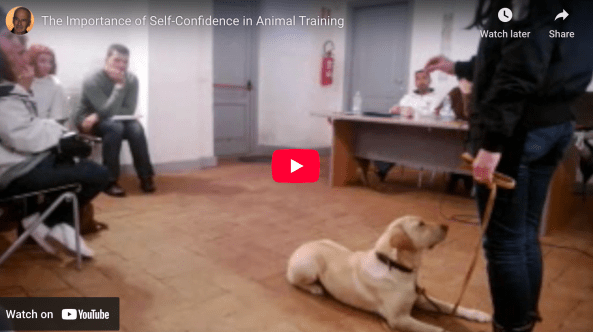
Featured video: Credits at the end of the video.
 Roger Abrantes
Wow, this really made me see training in a whole new way. I just tried some stuff with my dog, acting more sure of myself, and it worked great. Thanks a lot! It was super easy. Can’t believe I never thought of it before.
You’re welcome, I’m glad it helped. Feel free to browse through my whole site here. Perhaps you’ll find some more good ideas. 😊
I tried it too and it worked. My dog looked at me kind of weird, like he was thinking, what’s up with you? But then he kept following me around and staring at me. I only gave him a treat at the end after I said finished, so I know it wasn’t the treats.
Yes, when you show self-confidence and that you know what you want and where you’re going, the dog, all of a sudden, sees you in a different light—and will follow you more readily.